Geology Bites Podcast Por Oliver Strimpel arte de portada

Geology Bites

Geology Bites

De: Oliver Strimpel
Escúchala gratis

What moves the continents, creates mountains, swallows up the sea floor, makes volcanoes erupt, triggers earthquakes, and imprints ancient climates into the rocks? Oliver Strimpel, a former astrophysicist and museum director asks leading Earth science researchers to divulge what they have discovered and how they did it. To learn more about the series, and see images that support the podcasts, go to geologybites.com. Instagram: @GeologyBites Bluesky: GeologyBites X: @geology_bites Email: geologybitespodcast@gmail.comOliver Strimpel Ciencia Ciencias Geológicas
Episodios
  • Esther Sumner on Turbidity Currents
    Mar 26 2026

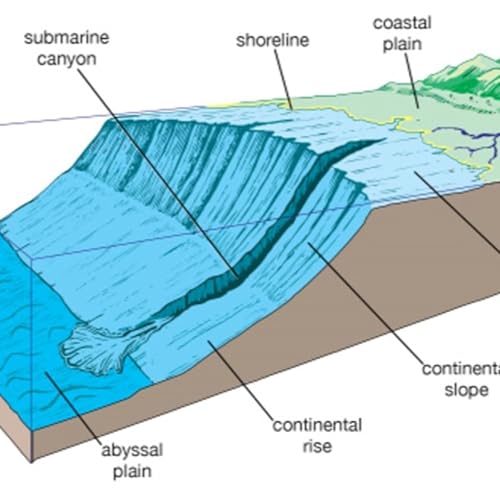
    Though turbidity currents are massive and frequent underwater events, we have rarely observed them directly. Esther Sumner is one of the few researchers who has. In the podcast, she describes what it's like to instrument an active submarine canyon, what these flows have revealed about the way sediment moves across the seafloor — and the day her team accidentally flew an underwater robot into a live turbidity current in the Mendocino canyon off the coast of California. She is an Associate Professor of geology and geophysics at the University of Southampton.

    Más Menos
    31 m
  • Hal Levison on the Mission to Jupiter's Trojan Asteroids
    Mar 6 2026

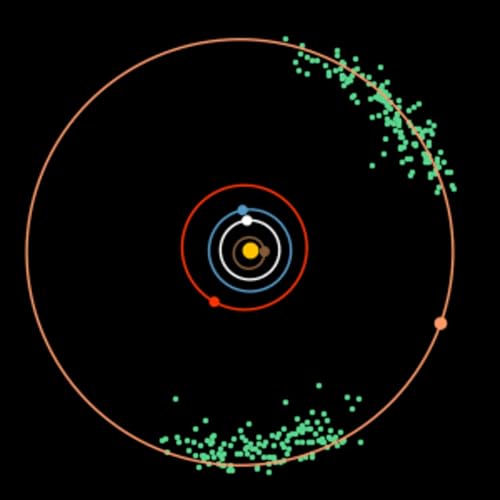
    A key question about the early history of the Solar System is whether the giant planets formed roughly at the distances from the Sun they presently occupy, or, as some theories predict, much closer to the Sun. The discovery of other solar systems with radically different configurations of planets has made this question more pressing, since it appears that the configuration of the Solar System might be atypical.

    In the podcast, Hal Levison explains why the Trojan asteroids of Jupiter offer us the best opportunity to discriminate between the various models of Solar System evolution. And that is why a spacecraft called Lucy is now well on its way to a rendezvous with these asteroids.

    Hal Levison is the Principal Investigator of the Lucy mission. He studies the dynamics of astronomical objects and, in particular, the formation and long-term behavior of solar system bodies. He is one of the original proponents of the Nice model (named after the city where it was conceived), a scenario that proposes the migration of the giant planets from an initial compact configuration closer to the Sun to their present positions. He is Chief Scientist in the Department of Space Sciences at the Southwest Research Institute in Boulder, Colorado.


    Más Menos
    37 m
  • Sara Pruss on the First Reef Builders
    Feb 11 2026

    The first multicellular animals to build reefs lived in the Early Cambrian around the time of the Cambrian explosion. They were sponges called archaeocyaths. In the podcast, Sara Pruss suggests that the rise of the archaeocyaths fostered an increase in animal diversity. But they were relatively short-lived, and when they died out in the Middle Cambrian, the diversity declined. Over geological time, reef-building organisms appear and disappear again and again until the corals we have today appeared in the Middle Triassic, about 240 million years ago.

    Pruss is currently trying to understand why reefs are such a persistent feature of the geological record, despite the environmental stresses imposed on them. She is a Professor of Geosciences at Smith College.

    Más Menos
    23 m
Todas las estrellas
Más relevante
Challenging topics, brilliant lecturers, all of the highest professional reputation. I strongly recommend to those who already possess at least basic knowledge of our planets processes.

Excellent podcast

Se ha producido un error. Vuelve a intentarlo dentro de unos minutos.

The topics are very interesting. Guests are very knowledgeable. Guests deep insights, knowledge and enthusiasm are evident in the discussion. I learn something new every episode. Oliver Strimpel does an excellent job of summarizing/outlining the points made by the guests.

Host asks insightful questions.

Se ha producido un error. Vuelve a intentarlo dentro de unos minutos.

Can't wait for more episodes. Very informative on a wide range of geological subjects.

Amazing geology podcast

Se ha producido un error. Vuelve a intentarlo dentro de unos minutos.

I love the wide variety of topics. I’ve always wanted to pretend to be a geologist now I can experience that vicariously.

Fantastic format

Se ha producido un error. Vuelve a intentarlo dentro de unos minutos.

really intelligent conversation with people who are pushing the boundaries of our understanding and topics where we don't yet know fully what's going on.

Going deep on cutting edge science

Se ha producido un error. Vuelve a intentarlo dentro de unos minutos.

Ver más opiniones