Episodios

  • How WBN Is Becoming an AI-First Company
    Apr 14 2026

    Most companies treat AI as an efficiency play, bolt it onto existing workflows and hope for faster output. Rob Levin went deeper. After recognizing AI's potential in early 2023 and spending two years experimenting, he made a pivotal decision: transform WorkBetterNow into an AI-first company. This isn't about doing the same work faster; it's about redesigning workflows from the ground up where AI does the heavy lifting and humans design and oversee the process.


    Episode Highlight
    "Any workflow that can be done by AI, any process that can be done by AI will be done by AI. It's not about evolving an existing workflow, it's about building that workflow from the ground up where AI is doing the work and humans are designing and overseeing the process."


    Actionable Insights

    1. Recognize that AI-first requires a fundamental mindset shift, not incremental tweaking: Rob spent the first two years of AI's emergence running show-and-tell sessions and encouraging experimentation. The breakthrough came after a hands-on AI course where he built an actual business concept and website using AI in two hours. For your team: stop thinking about "how do we do our current work with AI?" Start asking "what workflows would we build from scratch if AI existed?" This distinction unlocks 10x impact rather than 10% efficiency gains. [02:26]

    2. Hire or reallocate for AI oversight, not AI replacement: Rob's commitment on day one was clear: no layoffs. What's necessary instead is retraining people to move from "doing work" to "managing AI that does work." WorkBetterNow's IT department showed exactly how this scales: they built an AI chatbot for first-level IT support, which freed the team to focus on automation and integrations—higher-value work. [04:53]

    4. Document and share your AI journey so your clients level up too: Rob is doing something rarely seen: instead of hoarding competitive advantage, WorkBetterNow is documenting every AI workflow transformation and publishing it for clients and the broader market. They're also retooling their WBN Academy to include AI enablement. [09:44]

    • Read: Inside WBN's AI Transformation

    Ready to apply these insights to your own business? Download the free Action Kit

    More About Rob Levin & WorkBetterNow

    Like this show? Click on over and subscribe to our YouTube channel!
    Follow Rob Levin on Substack.
    Out now! The New Talent Playbook: The Ultimate Guide to Building Your Dream Team 📕 Available on Amazon or visit thenewtalentplaybook.com and get the free scorecard.

    Más Menos
    11 m
  • Don't Have an Assistant? You are One. (Stings a little, doesn't it?)
    Apr 7 2026

    Most business owners are leaving $100,000+ on the table every year doing administrative work that costs $25/hour while their time is worth $200–$1,000+/hour. Rob Levin breaks down why an assistant is no longer a luxury—it's a necessity—and delivers a step-by-step playbook for hiring one, whether full-time, part-time, onshore, nearshore, or offshore. You'll learn to calculate your true hourly rate, identify what to delegate in three days, and avoid the costly mistakes most owners make (like hiring part-time). Within two months of hiring the right assistant, you'll reclaim 16–30 hours per week to spend on growth, customer relationships, and the high-leverage work only you can do. This is Rob's battle-tested framework from 11 years of managing assistants—and having built a company, WorkBetterNow, entirely around helping business owners get great ones.


    Episode Highlight
    "If you don't have an assistant, you are one." — Jack Daly

    Actionable Insights

    1. Calculate your true hourly rate and stop doing $25/hour work: Take your target annual compensation (salary + distributions), divide by 2,000 hours, and face the math. Most business owners are worth $200–$1,000+/hour yet spend 40–65% of their time on low-payoff administrative tasks. That $400,000/year owner is literally wasting $160,000 annually on email, scheduling, and document searching. [05:39]

      • Read: The Hire That Multiplies Results Without Multiplying Payroll

    2. Plan what you'll do with 16–30 reclaimed hours before hiring: More time is worthless if you don't know how to spend it. Write down your priorities: More customer time? Focus time to think strategy? Family and rest? This clarity motivates you to actually delegate and hire. Dan Sullivan's principle: spend 80% of your time on your unique ability. Assistants make that possible. [10:53]

      • Read: The 3 Things That Separate Business Owners Who Lead from Those Who Just Keep Up

    3. Go full-time, even if you think you don't have 40 hours of work: Part-time assistants create gaps where urgent-but-not-important tasks fall back on your plate. You'll find 40 hours of work quickly as you delegate more. Part-timers often leave for full-time roles elsewhere, forcing you to restart. Full-time is the only model that actually works. [12:52]

    Ready to apply these insights to your own business? Download the free Action Kit

    More About Rob Levin & WorkBetterNow

    Like this show? Click on over and subscribe to our YouTube channel!
    Follow Rob Levin on Substack.
    Out now! The New Talent Playbook: The Ultimate Guide to Building Your Dream Team 📕 Available on Amazon or visit thenewtalentplaybook.com and get the free scorecard.

    Más Menos
    22 m
  • Steady Leadership in an AI-Driven World | Ryan Paugh
    Mar 31 2026

    Every headline screams that AI will transform your business overnight. Most SMB leaders find themselves caught between two extremes: either diving recklessly into every new tool, or staying frozen on the sidelines. Ryan Paugh, publisher of Senior Executive and co-founder of Community.co, cuts through the noise with a pragmatic framework that works for small and mid-size businesses. Rather than chasing unicorn-level AI deployment or ignoring the shift entirely, Paugh reveals what the most successful companies are actually doing: staying steady, experimenting in calculated bites, and treating AI adoption as a cultural conversation, not a technology mandate.


    About the Guest

    Ryan Paugh is a Publisher, Senior Executive, Co-Founder, President & COO of Community.co, a company that creates vetted communities to help ambitious professionals grow their networks and expand business opportunities. He is also the author of Superconnector: Stop Networking and Start Building Business Relationships That Matter, and a renowned thought leader on creating strong communities and teams.


    Episode Highlight
    "The truth lies in the middle. Going crazy off the deep end thinking you need to compete with Fortune 500s on AI, or ignoring it entirely—both are tragic missteps. Stay steady, find ways to make adoption work slowly for your company." (00:03:00)

    Actionable Insights

    1. AI Adoption Isn't Speed, It's Steadiness: Most SMB leaders react to headlines by overcommitting to AI or avoiding it entirely. The real playbook is the middle path: experiment slowly, pick one workflow at a time, and avoid the sunk cost of "solutions that may or may not work." [03:41]
    2. Work-Life Blend Beats Work-Life Balance, And It's a Retention Engine: One-size-fits-all employment is dead. Matching how people work to how they want to live isn't benevolence—it's a lever for better talent, lower turnover, and faster growth. [13:00]
    3. Over-Communication Isn't Over-Communication in a Remote-First Company: Distributed teams across 35 states and four continents require a different cadence. What feels like repetitive messaging to you is actually the baseline people need to feel connected to mission and to each other. [16:41]

    Ready to apply these insights to your own business? Download the free Action Kit

    More About Ryan Paugh

    Check out Community Co
    Connect with Ryan on LinkedIn.
    Grab your copy of Superconnector

    More About Rob Levin & WorkBetterNow

    Like this show? Click on over and subscribe to our YouTube channel!
    Follow Rob Levin on Substack.
    Out now! The New Talent Playbook: The Ultimate Guide to Building Your Dream Team 📕 Available on Amazon or visit thenewtalentplaybook.com and get the free scorecard.

    Más Menos
    27 m
  • 7 Culture Moves Behind a Fast-Growing Company
    Mar 24 2026

    Culture isn't a recruitment tactic, it's your competitive advantage. In this solo episode, Rob Levin reveals seven concrete practices that transformed WorkBetterNow into a fast-growing company. You'll walk away with immediately actionable systems: peer-driven recognition that reinforces values and clarity frameworks that eliminate "mutual mystification" (that silent killer of remote teams). Rob draws from hard-won lessons; his first venture failed partly because he deprioritized culture despite knowing better, and shares exactly what changed when he led with core values from day one.

    Episode Highlight
    "Recognizing people is just a really easy way to emphasize when people are doing things that are consistent with the culture that you want to have."

    Actionable Insights

    • Build core values intentionally, they're the foundation for everything else: Start with 4–6 core values developed with your A-players, not handed down from leadership. Use them to guide hiring, recognition, and decisions. At Work Better Now, "Put Talent First" is the first value and shapes every system.
      • Read: This Overlooked Factor Will Add or Subtract Millions From Your Business
    • Install culture practices today: Rob walks through exactly what WorkBetterNow does: recognition (W Awards), humanizing people (My Story presentations), clarity + KPIs, in-person connection, transparency, remote bonding, and continuous education. Pick one and commit to it for 90 days.
      • Read: 7 Culture Practices Worth Stealing
    • Make clarity + accountability your competitive advantage: Avoid "mutual mystification" by using simple frameworks (EOS, KPIs, Rocks). Overcommunicate: video + email. Review progress weekly. This removes friction and builds trust faster than anything else.
      • Read: How to Make Remote Work at Your Company

    Ready to apply these insights to your own business? Download the free Action Kit to get started.

    More About Rob Levin & WorkBetterNow

    Like this show? Click on over and subscribe to our YouTube channel!
    Follow Rob Levin on Substack.
    Out now! The New Talent Playbook: The Ultimate Guide to Building Your Dream Team 📕 Available on Amazon or visit thenewtalentplaybook.com and get the free scorecard.

    Más Menos
    13 m
  • Stop Sabotaging Innovation in Your Own Business | JL Heather
    Mar 17 2026

    Innovation isn't the exclusive domain of tech startups, it's the competitive edge every small and mid-size business must build into their DNA. But most owners centralize innovation within themselves, missing their biggest advantage: the ability to move faster than corporations. JL Heather reveals why innovation is fundamentally a cultural challenge, not a structural one. You'll learn concrete steps to build psychological safety, shift from assigning work to assigning problems, and avoid sabotage patterns, especially when integrating AI.

    About the Guest

    JL Heather is an innovation coach and co-founder of Centered who has spent 20 years helping teams solve problems faster without enterprise complexity. He specializes in translating agile and design thinking into practical methods for small and mid-size teams where everyone wears multiple hats. His approach cuts through buzzwords to deliver systems that actually work.

    Episode Highlight

    "Innovation is just the ability to continually move beyond your customer's expectations, because if all you're doing is meeting those expectations, someone's gonna catch up, someone's gonna surpass you."

    Action items

    1. Culture is where innovation lives, not in separate teams: Leadership sets direction, but culture lives in people. Skip skunkworks models; they disempower everyone else by saying "you innovate, the rest do your jobs." That kills distributed thinking. [00:04:00–00:06:00]
    2. Switch from assigning work to assigning problems: Work assignments create doers who avoid trouble; problem statements empower teams to engage their brains. Use design sprints to validate with customers, then build prototypes over 3–9 months. [00:10:00–00:12:00]
    3. Don't let tools drive your organization: When adopting AI, resist top-down implementation. Align on what "AI first" means, engage teams in defining how it supports their work, and let them experiment. This takes longer upfront but is vastly cheaper than getting it wrong. [00:21:00–00:25:00]

    Ready to apply these insights to your own business? Download the free Action Kit

    More About JL Heather

    Check out Centered
    Connect with Mike on LinkedIn.
    Grab your copy of Breakthrough Innovation

    Other Resources

    Check out JL's podcast: Breakthrough Innovation

    More About Rob Levin & WorkBetterNow

    Like this show? Click on over and subscribe to our YouTube channel!
    Follow Rob Levin on Substack.
    Out now! The New Talent Playbook: The Ultimate Guide to Building Your Dream Team 📕 Available on Amazon or visit thenewtalentplaybook.com and get the free scorecard.

    Más Menos
    26 m
  • Talent Density: The Growth & Profit Multiplier
    Mar 10 2026

    Traditional annual reviews fail because they focus on output alone, leaving companies wondering why growth stalls. Rob Levin interviews leadership coach Mike Goldman on a practical alternative: the Talent Density framework—treating people growth as profit growth's true driver. Learn to evaluate performance beyond theater, separate real results from "busy," and implement a quarterly leadership cadence that builds resilience without bottlenecking HR.

    About the Guest

    Mike Goldman is a leadership team coach with 35+ years of experience helping organizations build high-performing teams, from global brands like Disney and Verizon to small and midsize businesses. He's the USA Today bestselling author of The Strength of Talent and a TEDx speaker who regularly presents to business leadership communities like Vistage and EO. He also hosts the Better Leadership Team Show, where he goes deep on building teams that drive durable growth.

    Episode Highlight

    "Unclear expectations don't lead to unclear results—they lead to unacceptable results."

    Actionable Insights

    1. Stop confusing "performance" with output alone, score productivity and culture fit: Stop rating high-output people who damage team culture. Make trade-offs visible. [06:28]
    2. Run a quarterly talent assessment as a leadership team (not as secret HR paperwork): CEO and direct reports calibrate together on "level one down"—eliminates bias and vague labels. [10:00]
    3. Move faster on low culture fit than low productivity (because it's rarely coachable): Culture gaps rarely coach out; productivity gaps develop. Test: coachable vs. fakeable. [14:26]

    Ready to apply these insights to your own business? Download the free Action Kit

    More About Mike Goldman

    Check out Mike Goldman and The Strenght of Talent
    Connect with Mike on LinkedIn.
    Grab your copy of The Strength of Talent.

    Other Resources

    Your next reads: Breakthrough Leadership Team and Performance Breakthrough

    Listen to the Better Leadership Team Show

    More About Rob Levin & WorkBetterNow

    Like this show? Click on over and subscribe to our YouTube channel!
    Follow Rob Levin on Substack.
    Out now! The New Talent Playbook: The Ultimate Guide to Building Your Dream Team 📕 Available on Amazon or visit thenewtalentplaybook.com and get the free scorecard.

    Más Menos
    29 m
  • Why Talent Is the New Growth Lever
    Mar 9 2026

    In this episode, Rob Levin (Founder of Work Better Now and author of The New Talent Playbook) distills the biggest concepts from the book into one clear framework, and introduces a key reframe: this isn't a temporary "talent crisis," it's a permanent talent shift. Rob breaks down what the top ~15% of companies do differently to attract and retain great people, why culture and core values are the foundation, how to fix retention and hiring for today's reality, why global/remote expands your options dramatically, and how AI makes great talent even more important.

    Episode Highlight

    "Talent deserves the same strategic attention you give revenue."

    Actionable Insights

    • Stop waiting for "back to normal", treat this as a permanent talent shift: In your next leadership meeting, make the language change explicit ("temporary crisis" → "structural shift"), then pick 1–2 systems you will redesign this quarter.
      • Read: 88% of Small Businesses Can't Find Qualified People. The Other 12% Are Doing This.

    • Win candidates before they apply: clean up your employer brand (starting with Glassdoor): Go look at your Glassdoor profile today, read the reviews honestly, decide whether you have a culture problem or a visibility problem (or both), and ask 3–5 current employees for honest reviews if your culture is solid.
      • Read: Before Job Candidates Apply, They Check This. Have You?

    • Retention that compounds: install a simple recognition + upskilling cadence: Launch one lightweight program this month (values-based recognition like the W Awards, an upskilling stipend + time, or a connection ritual like "story time").
      • Read: 3 Simple (and Proven) Ways to Turn a Good Team Into a Great One

    Ready to apply these insights to your own business?

    Download the free Action Kit to get started.

    More About Rob Levin & WorkBetterNow

    Like this show? Click on over and subscribe to our YouTube channel!
    Follow Rob Levin on Substack.
    Out now! The New Talent Playbook: The Ultimate Guide to Building Your Dream Team 📕 Available on Amazon or visit thenewtalentplaybook.com and get the free scorecard.

    Más Menos
    15 m
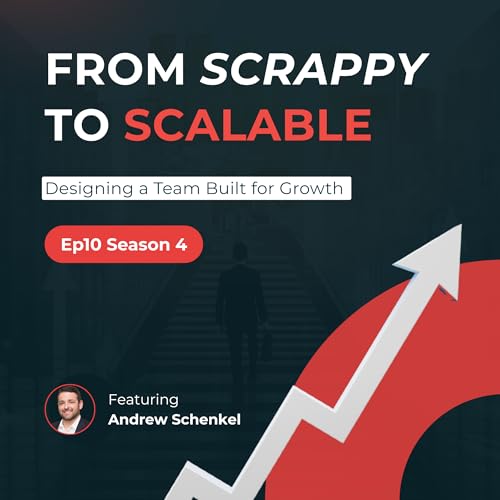
  • From Scrappy to Scalable: Designing a Team Built for Growth
    Dec 23 2025

    In this episode, Rob Levin sits down with Andrew Schenkel, founder of Double Play Marketing and Sales, to explore what it really takes to scale a marketing agency through intentional team design, systems, and leadership. Andrew shares how his approach to talent has evolved since launching the business in 2020, why EOS and DISC became foundational tools, and how nearshore talent and AI are shaping the future of his company. This conversation is a practical look at how great talent decisions drive great business outcomes.

    About the Guest

    Andrew Schenkel is an entrepreneur with a strong background in marketing and sales. He founded Double Play Marketing and Sales in 2020 as an outsourced marketing department and lead generation partner for growth-oriented companies. His agency takes a data-driven approach to building brand awareness, generating qualified leads, and delivering measurable ROI.

    Episode Highlight

    "In the beginning, it's who can we afford. As you grow, it becomes about having the right people in the right seats."

    Actionable Insights

    • Hire for clarity, not convenience: Early-stage teams often wear many hats. As companies mature, clearly defined roles and expectations become critical to sustainable growth. [01:55]
    • Treat nearshore talent as true team members: Integrating nearshore professionals into meetings, PTO policies, and professional development strengthens performance and culture. [11:41]
    • AI works best as an assistant, not a replacement: From process automation to content support, AI enhances efficiency—but still requires human judgment and creativity. [14:01]

    Ready to apply these insights to your own business?

    Download the free workbook to get started.

    More About Andrew Schenkel

    Check out Double Play Agency
    Connect with Andrew on LinkedIn.

    Other Resources

    Check out EOS and DISC Personality Assessment

    More About Rob Levin & WorkBetterNow

    Like this show? Click on over and subscribe to our YouTube channel!
    Follow Rob Levin on Substack.
    Out now! The New Talent Playbook: The Ultimate Guide to Building Your Dream Team 📕 Available on Amazon or visit thenewtalentplaybook.com and get the free scorecard.

    Más Menos
    18 m