Episodios

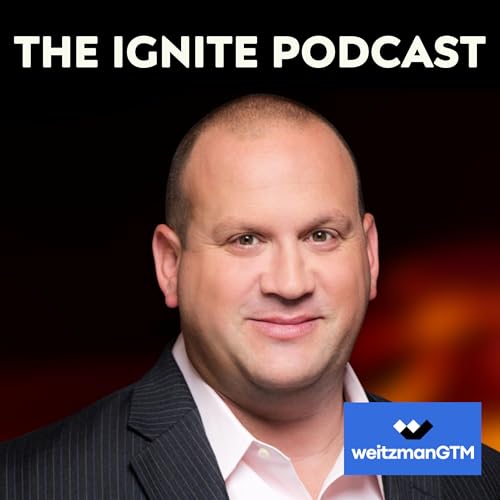
  • Ignite GTM: Data-Driven Growth Strategies for Early Startups with Neil Weitzman | Ep258
    Apr 16 2026

    What if your biggest GTM problem isn’t your strategy—but your refusal to change it?


    Neil Weitzman has seen this play out dozens of times. Founders think they need more leads, more calls, more hires. What they actually need is a system—and the discipline to follow it.


    Neil is a fractional CRO and GTM advisor who’s worked across Deloitte, Nielsen, and now early-stage startups through his firm weitzmanGTM. He’s also the founder of Porch, a community supporting immigrant entrepreneurs across North America. Today, he works hands-on with founders to turn messy, reactive sales efforts into repeatable revenue engines.


    In Today's Episode We Discuss:

    00:01 – Introduction to Neil Weitzman

    02:55 – Founder Leadership Gaps

    05:00 – When Founders Aren’t a Fit for Help

    06:18 – When to Bring in GTM Support

    09:36 – Building GTM Early

    11:55 – Defining “What Good Looks Like”

    12:47 – When to Scale GTM Teams

    15:48 – Risks of Scaling Too Early

    16:45 – Identifying Product-Market Fit

    19:30 – Importance of GTM Data and Systems

    20:25 – GTM Tech Stack Essentials

    22:44 – LinkedIn and Sales Navigator Strategy

    26:29 – Effective, Non-Salesy Outreach

    31:04 – Hiring a Fractional CRO

    35:11 – Execution vs Strategy

    36:02 – Fractional CRO Engagement Model

    38:14 – Transitioning to Full-Time CRO

    40:52 – Systems vs Sales Talent

    41:31 – Porch and Immigrant Founder Support

    45:15 – Early GTM Priorities

    48:13 – Network-Led Early Sales


    A few sharp takeaways:


    “Until you know what good looks like and can prove it works, you’re not scaling—you’re guessing.”

    “Adding more people to a broken system doesn’t fix it. It just makes the problem bigger.”


    This conversation connects a clear thread: from corporate leadership training to advising founders in the trenches, Neil’s edge is pattern recognition. He’s seen what works, what fails, and why most GTM problems aren’t tactical—they’re behavioral.


    If you’re building from zero, this episode will save you time, money, and a few painful mistakes.


    Subscribe on Spotify: https://open.spotify.com/show/6Ga6v0YUsHotLhjap67uu5


    Subscribe on Apple Podcasts: https://podcasts.apple.com/us/podcast/ignite-conversations-on-startups-venture-capital-tech/id1709248824


    Follow Neil Weitzman on LinkedIn: https://www.linkedin.com/in/neilweitzman/


    Follow Neil Weitzman on X: https://x.com/weitzmangtm


    Follow Brian on Linkedin: https://www.linkedin.com/in/bblinkedin/


    Visit Our Website: https://www.teamignite.ventures


    Subscribe to Our Newsletter: https://insights.teamignite.ventures/


    👂🎧 Watch, listen, and follow on your favorite platform: https://tr.ee/S2ayrbx_fL


    🙏 Join the conversation on your favorite social network: https://linktr.ee/theignitepodcast

    Más Menos
    51 m
  • Ignite Sales: Building a Repeatable Sales System That Drives Revenue with Glenn Poulos | Ep257
    Apr 15 2026

    What happens when you “become a millionaire”… and end up with nothing 18 months later?


    Glenn Poulos has lived both sides of the founder journey—building, exiting, losing it all, and starting again from zero. Today, he leads ProgUSA, a company operating at the center of power infrastructure just as AI and data centers are driving unprecedented demand for energy and grid capacity.


    A serial entrepreneur and author of Never Sit in the Lobby, Glenn brings 40+ years of sales and operating experience—from scaling an 8-figure business to navigating failed exits, private equity deals, and rebuilding from scratch.


    In Today's Episode We Discuss:

    00:01 Introduction to Glenn Poulos

    02:30 Early Career and Entry into Sales

    05:00 First Company and Entrepreneurial Leap

    08:00 The $30M Exit and Losing It All

    12:00 Lessons from a Failed Exit

    16:00 Rebuilding from Zero at 40

    20:00 Scaling the Second Company

    24:00 Near Collapse and Hard Reset

    28:00 Pandemic Growth and Private Equity Exit

    32:00 Understanding Deal Structures and Earnouts

    36:00 Life After Exit and Starting Again

    40:00 Acquiring ProgUSA and Market Opportunity

    44:00 Power Infrastructure and AI Demand

    48:00 Third-Time Founder Playbook

    52:00 Sales Systems and EOS Framework

    56:00 Using AI in Sales and Operations

    01:00:00 Sales Philosophy and Core Principles

    01:04:00 Lessons from “Never Sit in the Lobby”

    01:07:30 Final Advice and Rapid Fire Insights


    “Freedom begins with no.”


    “You only get forever to make another impression.”


    Glenn went from fixing weather equipment… to rebuilding companies under pressure—and his playbook is simple: treat sales like a system, not a personality trait, or pay for it later.


    Subscribe on Spotify: https://open.spotify.com/show/6Ga6v0YUsHotLhjap67uu5


    Subscribe on Apple Podcasts: https://podcasts.apple.com/us/podcast/ignite-conversations-on-startups-venture-capital-tech/id1709248824


    Follow Glenn Poulos on LinkedIn: https://www.linkedin.com/in/glennpoulos/


    Follow Glenn Poulos on X: https://x.com/GlennPoulos


    Follow Brian on Linkedin: https://www.linkedin.com/in/bblinkedin/


    Visit Our Website: https://www.teamignite.ventures


    Subscribe to Our Newsletter: https://insights.teamignite.ventures/


    👂🎧 Watch, listen, and follow on your favorite platform: https://tr.ee/S2ayrbx_fL


    🙏 Join the conversation on your favorite social network: https://linktr.ee/theignitepodcast

    Más Menos
    1 h y 10 m
  • Ignite Startups: Building a Startup Without Coding or Funding with Henrik Werdelin | Ep256
    Apr 14 2026

    What if the next billion-dollar startup doesn’t come from a Stanford grad with a pitch deck—but from a mom in Texas building a niche fitness app after childbirth?


    That’s not a thought experiment. That’s exactly the future Henrik Werdelin is building toward.


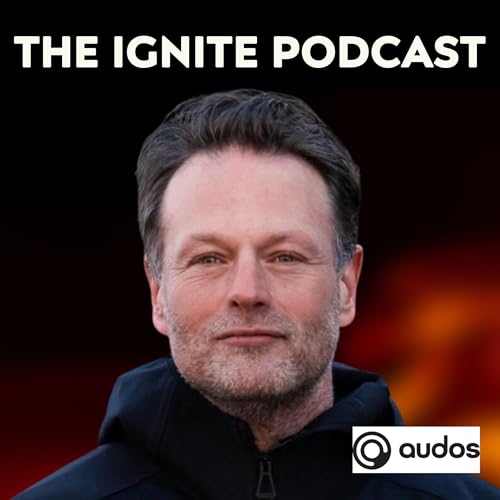
    Henrik isn’t your typical founder. He broke into an MTV studio at 2am to launch a show no one approved, became Head of Product at MTV in his early 20s, co-founded Bark (yes, BarkBox), and helped pioneer the venture studio model before it was cool. Now, with Audos, he’s asking a bigger question: what if we could turn everyone into an entrepreneur?


    Henrik Werdelin is a serial founder, co-founder of Bark, and architect of one of the earliest venture studios, Prehype. Today, he’s building Audos, an AI-powered platform designed to help everyday people start and scale businesses—without needing technical skills or venture funding. Instead of chasing unicorns, Audos is betting on “donkeycorns”: small, profitable businesses that serve real customers and generate meaningful income.


    In Today's Episode We Discuss:

    00:01 Introduction to Henrik Werdelin

    00:30 Early Life and Entrepreneurial Roots

    01:30 MTV, Internet Era, and Product Development

    03:20 Storytelling and Entrepreneurial Traits

    04:40 Moving to New York and Startup Mindset Shift

    07:10 Prehype Origins and “In-Between Time”

    10:00 Venture Studio Model Before It Was Trendy

    14:20 The BarkBox Origin Story

    17:50 Lessons from Building Bark

    19:40 The Acorn Method Explained

    21:30 Why Corporates Fail at Innovation

    25:00 How Amazon and Big Tech Build New Products

    27:10 Evolving Views on Venture Building

    30:00 Enter Audos and AI-Powered Startups

    33:00 Relationship Capital as the New Moat

    35:00 Donkeycorns vs Unicorns

    38:50 The Future of Entrepreneurship with AI

    40:50 What Henrik Would Build Today

    43:30 Rapid Fire: Tools, Books, and Ideas

    47:00 Founder Health and Sustainable Work

    49:00 Trends: Overhyped vs Underrated

    50:50 Legacy and Closing Thoughts


    Subscribe on Spotify: https://open.spotify.com/show/6Ga6v0YUsHotLhjap67uu5


    Subscribe on Apple Podcasts: https://podcasts.apple.com/us/podcast/ignite-conversations-on-startups-venture-capital-tech/id1709248824


    Follow Henrik Werdelin on LinkedIn: https://www.linkedin.com/in/werdelin/


    Follow Henrik Werdelin on X: https://x.com/werdelin


    Follow Brian on Linkedin: https://www.linkedin.com/in/bblinkedin/


    Visit Our Website: https://www.teamignite.ventures


    Subscribe to Our Newsletter: https://insights.teamignite.ventures/


    👂🎧 Watch, listen, and follow on your favorite platform: https://tr.ee/S2ayrbx_fL


    🙏 Join the conversation on your favorite social network: https://linktr.ee/theignitepodcast
    Más Menos
    51 m
  • Ignite Legal: What Every Founder Needs to Know About IP Strategy with Dina Blikshteyn | Ep255
    Apr 13 2026

    What if the biggest risk to your startup isn’t competition—but saying too much, too early?


    In a world where founders race to ship, pitch, and publish, Dina Blikshteyn sits on the other side of the chessboard—watching brilliant ideas quietly slip into the public domain before they’re ever protected. It’s not that founders don’t value IP. It’s that they realize its importance… about six months too late.


    Dina Blikshteyn is a Partner at Haynes Boone, co-chair of its AI practice, and a rare hybrid: former engineer turned IP strategist. She began her career building high-frequency trading systems on Wall Street before pivoting into law—now advising companies at the bleeding edge of AI, patents, and tech regulation. At Haynes Boone, she works with startups and enterprises alike to navigate one of the most misunderstood battlegrounds in tech today: how to actually own innovation in the age of AI.


    In Today's Episode We Discuss:

    00:01 Introduction to Dina Blikshteyn and AI + IP background

    00:42 Dina’s origin story: engineering, Wall Street, and law

    01:47 How technical background shapes IP and AI legal work

    02:23 Key challenges in patenting AI and emerging tech

    03:03 Why startups delay IP—and the consequences

    03:59 Patent basics: filing vs protection timeline

    05:04 International patent strategy for startups

    06:26 Common founder misconceptions about patentability

    07:41 Patent vs trade secrets vs trademarks vs copyright

    08:19 Risks of NDAs and IP leakage in startups

    09:35 Publishing vs protecting IP in AI research

    10:53 Patent surprises and broad claims in emerging tech

    12:05 OpenAI, patents, and shifting strategies in AI

    14:21 Comparing AI to past platform shifts

    15:07 Patent enforcement and proving infringement

    17:39 Litigation, settlements, and patent dispute dynamics

    19:18 Famous patent cases and startup vs big tech battles

    21:41 Lessons for startups from major IP cases

    22:45 How AI tools are changing patent workflows

    24:24 Are moats dead? Rethinking defensibility in AI

    25:19 What AI startups should actually patent

    26:25 Patent lifespan vs fast-moving tech cycles

    27:54 Open source vs proprietary IP strategies

    29:24 Evolution of AI regulation (US vs states vs EU)

    31:23 How regulation impacts innovation and startups

    34:04 AI governance frameworks (NIST, ISO)

    35:04 Future of AI regulation and legal landscape

    36:01 AI copyright lawsuits and fair use debate

    38:01 Derivative works, copyright, and AI-generated content

    40:22 Implications for creators and content economics

    41:03 Rapid fire: AI and IP misconceptions

    45:14 Closing thoughts and future of AI + law


    Sharp takeaways you won’t forget:


    “By the time startups realize they need a patent… it’s already too late.”


    “You don’t need to patent everything—but you better protect your crown jewels.”


    Subscribe on Spotify: https://open.spotify.com/show/6Ga6v0YUsHotLhjap67uu5


    Subscribe on Apple Podcasts: https://podcasts.apple.com/us/podcast/ignite-conversations-on-startups-venture-capital-tech/id1709248824


    Follow Dina Blikshteyn on LinkedIn: https://www.linkedin.com/in/dina-blikshteyn-7a59551/


    Follow Brian on Linkedin: https://www.linkedin.com/in/bblinkedin/


    Visit Our Website: https://www.teamignite.ventures


    Subscribe to Our Newsletter: https://insights.teamignite.ventures/


    👂🎧 Watch, listen, and follow on your favorite platform: https://tr.ee/S2ayrbx_fL


    🙏 Join the conversation on your favorite social network: https://linktr.ee/theignitepodcast

    Más Menos
    45 m
  • Ignite Startups: Turning Unstructured Data Into a Strategic Superpower with AI with DROdio | Ep254
    Apr 9 2026

    What if the biggest bottleneck in your company isn’t execution, but the fact that your data can’t talk to itself?

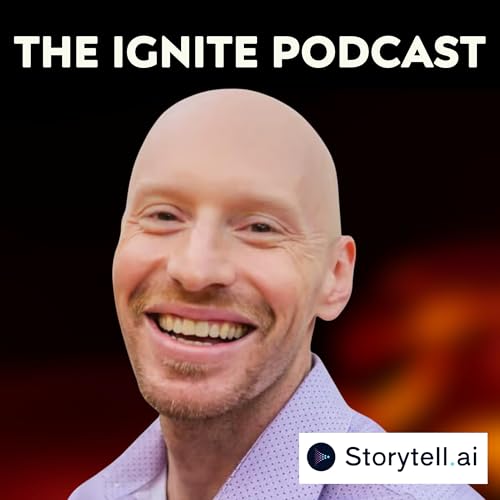
    That’s the problem DROdio has been quietly obsessing over for decades. And now, with Storytell, he’s betting that fixing it doesn’t just make companies more efficient. It fundamentally upgrades how humans think.

    DROdio is a repeat founder and former YC-backed CEO who has built through multiple platform shifts, from early web development to DevOps to AI. After raising $83M and landing enterprise giants like JP Morgan and Sony at Armory, he’s now building Storytell, a platform turning fragmented, incompatible company data into a strategic advantage, right when AI makes that finally possible.

    In Today’s Episode We Discuss:

    00:01 Introduction & Guest Background
    02:30 Early Entrepreneurial Roots & First Lessons
    04:00 GE Experience & Operating Discipline (Ownership + Deadlines)
    06:00 Recognizing Platform Shifts (From Mobile to AI)
    08:00 The Builder Mindset & Vibe Coding
    10:30 Consistency Across Startups & Leveraging Technology
    13:00 Empowering Non-Technical Builders
    15:00 Co-Founder Dynamics & Evolving YC Advice
    18:30 Product-Market Fit vs Learning First
    21:00 Armory: Building, Scaling, and Enterprise Sales
    24:30 Fundraising Strategy & The FRAP Framework
    29:00 Open Source to Enterprise Lessons
    32:00 Founder Conflict & “Clean Communication” Framework
    38:30 Storytell Origin: The Data Problem Inside Companies
    43:00 Concept Graphs & Making Data Actionable
    47:00 Real-World Use Cases (Paramount, Retail, Ad Tech)
    50:30 Competing in the AI Stack (LLMs, Context, Agents)
    53:30 Future of Work & AI as a Thought Partner
    56:00 Final Thoughts & Where to Find Daniel

    “The answers are already out there. You’re just not asking the right question.”
    “Build the right thing fast instead of the wrong thing right.”

    Subscribe on Spotify: https://open.spotify.com/show/6Ga6v0YUsHotLhjap67uu5
    Subscribe on Apple Podcasts: https://podcasts.apple.com/us/podcast/ignite-conversations-on-startups-venture-capital-tech/id1709248824

    Follow Daniel R. Odio on LinkedIn: https://www.linkedin.com/in/drodio/
    Follow Daniel R. Odio on X: https://x.com/drodio

    Follow Brian on LinkedIn: https://www.linkedin.com/in/bblinkedin/

    Visit our website: https://www.teamignite.ventures
    Subscribe to our newsletter: https://insights.teamignite.ventures/

    Watch, listen, and follow on your favorite platform: https://tr.ee/S2ayrbx_fL
    Join the conversation: https://linktr.ee/theignitepodcast

    Más Menos
    57 m
  • Ignite Startups: How LainaHealth Is Redesigning Healthcare Workflows for Scale with Ryan Eder |Ep253
    Apr 8 2026

    What if the most broken part of healthcare isn’t the medicine—but the paperwork quietly suffocating it?


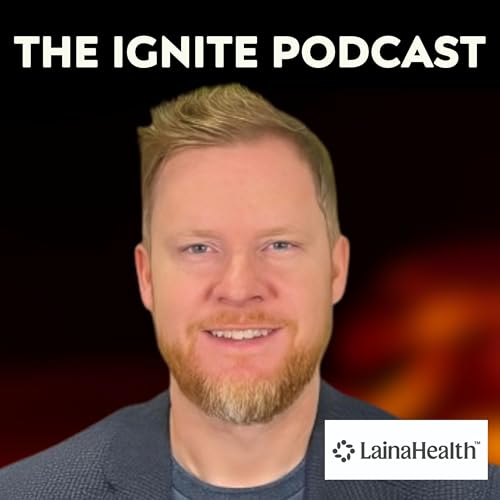
    Ryan Eder has spent his career staring directly at that invisible bottleneck. Now, as the founder of LainaHealth, he’s building infrastructure to fix one of healthcare’s least glamorous—but most consequential—problems: how data, billing, and administrative workflows actually move (or don’t).


    Ryan is the co-founder of LainaHealth, a company rethinking healthcare operations from the ground up. With a background at the intersection of healthcare and technology, he’s tackling a system where inefficiency isn’t just costly—it’s existential. LainaHealth sits in a critical layer of the stack, helping providers operate faster, smarter, and with fewer administrative headaches at a time when margins are tighter than ever.


    In Today's Episode We Discuss:

    00:01 – The Hidden Crisis in Healthcare Operations

    02:10 – Ryan Eder’s Background & Path to LainaHealth

    05:00 – Why Healthcare Feels Broken (But Isn’t Where You Think)

    08:15 – The “Unsexy” Opportunity in Admin & Workflows

    11:40 – Understanding Healthcare’s Complex Stakeholders

    15:05 – Why Innovation Struggles to Scale in Healthcare

    18:20 – Building in a Highly Regulated Industry

    22:10 – Founder Mindset: Patience vs Speed

    25:30 – Identifying Infrastructure Plays Early

    29:00 – Misaligned Incentives Across the System

    32:15 – How LainaHealth Approaches Workflow Redesign

    36:00 – Lessons from Building in Healthcare

    39:10 – Contrarian Bets in HealthTech

    42:00 – The Future of Healthcare Operations

    45:00 – Final Thoughts & Advice for Founders


    Along the way, Ryan shares a perspective many founders miss: sometimes the best startups don’t invent something new—they untangle something old.


    “The real problem isn’t lack of innovation—it’s that the system can’t absorb it.”

    “If you fix the workflow, you don’t just save time—you unlock the entire system.”


    Ryan didn’t set out to make healthcare more efficient. But somewhere along the way, he realized that fixing the pipes might matter more than inventing the next drug—and that’s exactly where LainaHealth is placing its bet.


    Subscribe on Spotify: https://open.spotify.com/show/6Ga6v0YUsHotLhjap67uu5


    Subscribe on Apple Podcasts: https://podcasts.apple.com/us/podcast/ignite-conversations-on-startups-venture-capital-tech/id1709248824


    Follow Ryan Eder on LinkedIn: https://www.linkedin.com/in/ryaneder/


    Follow Brian on Linkedin: https://www.linkedin.com/in/bblinkedin/


    Visit Our Website: https://www.teamignite.ventures


    Subscribe to Our Newsletter: https://insights.teamignite.ventures/


    👂🎧 Watch, listen, and follow on your favorite platform: https://tr.ee/S2ayrbx_fL


    🙏 Join the conversation on your favorite social network: https://linktr.ee/theignitepodcast

    Más Menos
    47 m
  • Ignite LP: The Hidden Decision Framework Powering Elite VCs with Aram Attar | Ep252
    Apr 6 2026

    Most investors think venture capital is about spreadsheets. Aram Attar thinks it’s closer to poker—played in the dark, with incomplete cards, and a brain wired to trick you.


    What if the real edge in venture isn’t better data—but better thinking?


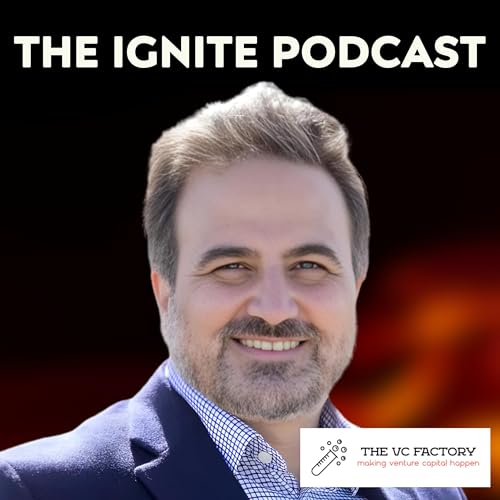
    In this episode, Aram Attar—General Partner at The VC Factory—unpacks a deceptively simple idea: in a world of extreme uncertainty, how you decide matters more than what you know. After 15+ years and ~50 deals across LBOs, growth equity, and VC, he’s now building a new framework—mindset-based investing—to decode how the best investors actually make decisions when the data is messy (which, in venture, is always).


    Aram has trained 50+ VCs globally and now focuses on thought leadership, helping both GPs and LPs rethink how capital gets allocated in the earliest, riskiest stages of innovation.


    In Today's Episode We Discuss:

    00:01 – Intro & Aram Attar Background

    02:30 – Transition from LBO to Venture Capital

    05:00 – Intuition vs Data in VC

    08:00 – How Investment Committees Really Work

    11:30 – Missing Deals & Veto Dynamics

    14:00 – Move to Austin & VC Factory Vision

    16:30 – Mindset-Based Investing Framework

    20:00 – Founder Evaluation & Drive

    23:00 – Promotion vs Prevention Mindset

    26:00 – COVID Insight & Decision Psychology

    29:00 – LP Mistakes in Evaluating GPs

    32:00 – Track Record vs True Signals

    35:00 – The Six Key Criteria for Emerging Managers

    38:00 – Portfolio Construction Debate

    42:00 – Power Laws & High-Volume Investing

    46:00 – Deal Flow, Networks & YC Strategy

    50:00 – AI in Venture Decision-Making

    54:00 – System Design as a VC Advantage

    58:00 – Pattern Recognition vs Bias

    01:02:00 – Common Cognitive Biases in VC

    01:06:00 – Investment Committee Blind Spots

    01:10:00 – Venture Market Shifts & Barbell Effect

    01:14:00 – Advice for Emerging Managers

    01:17:00 – Rapid Fire Insights

    01:20:00 – Closing Thoughts & Legacy


    🔥 Pull Quotes


    “In venture, intuition doesn’t work—at least not the way you think. The best investors delay it.”


    “The question isn’t ‘Is this a good deal?’ It’s ‘Am I trying to win—or just not lose?’”


    🧩 The Bigger Idea


    Zoom out, and you start to see a pattern.


    Finance used to be about information asymmetry—whoever had the best data won.

    Now, information is everywhere. Everyone has the same decks, the same metrics, the same AI tools.


    So the game has shifted.


    The new edge is decision asymmetry—who can think clearer, resist bias, and act decisively under uncertainty.


    Aram is betting that the next generation of great investors won’t just have better access—they’ll have better mental models.


    Subscribe on Spotify: https://open.spotify.com/show/6Ga6v0YUsHotLhjap67uu5


    Subscribe on Apple Podcasts: https://podcasts.apple.com/us/podcast/ignite-conversations-on-startups-venture-capital-tech/id1709248824


    Follow Aram Attar on LinkedIn: https://www.linkedin.com/in/aram-attar/


    Follow Brian on Linkedin: https://www.linkedin.com/in/bblinkedin/


    Visit Our Website: https://www.teamignite.ventures


    Subscribe to Our Newsletter: https://insights.teamignite.ventures/


    👂🎧 Watch, listen, and follow on your favorite platform: https://tr.ee/S2ayrbx_fL


    🙏 Join the conversation on your favorite social network: https://linktr.ee/theignitepodcast

    Más Menos
    1 h y 21 m
  • Ignite Startups: How AI Engineers Are Replacing Dev Teams with Karan Grover | Ep251
    Apr 5 2026

    What if your next engineer doesn’t write code… but ships entire products while you sleep?


    That’s not a thought experiment anymore—it’s happening. One team scoped a 3-month build. Two days later, it was live in production.


    Karan Grover is a three-time founder, former Amazon ML engineer, and YC alum now building Kanu AI—an “AI engineer” that takes a company’s roadmap from prompt to production. Kanu doesn’t just generate code—it handles QA, cloud infra, and deployment inside your own AWS environment.

    And it’s already being used by enterprise teams to compress months of engineering work into days.


    In Today's Episode We Discuss:

    00:01 Introduction & Karan Grover Background

    02:25 Early Career Shift: From Pre-Med to Computer Science

    02:58 Building for Impact: SoundVision & Accessibility Startup

    03:47 Winning the Ericsson Innovation Award

    04:58 Learning Concise Communication as a Founder

    07:34 Early Career Lessons from Deloitte & Best Buy

    08:48 Journey to Amazon & ML Engineering Experience

    09:22 First Startup & YC Experience (Winter 2022)

    11:17 Building a Housing Startup & Lessons from Failure

    14:07 Returning to Amazon & Rediscovering the Founder Itch

    15:54 Origin Story of Kanu AI

    17:01 Finding the Right Co-Founder

    19:41 Building an AI Engineer: From Prompt to Production

    22:53 AWS Marketplace, Trust & Enterprise Adoption

    25:01 Human-in-the-Loop AI & Engineering Abstraction

    26:23 Amazon Principles & System Thinking in Startups

    27:37 Early Customer Wins & 3 Months to 2 Days Insight

    29:03 Real Bottlenecks in Software Development

    30:06 YC vs A16Z Speedrun: Accelerator Insights

    34:50 Where AI Engineering Tools Win First

    35:42 The Future of Software Development Roles

    39:02 Deploying AI Agents in Enterprise Environments

    41:18 Long-Term Vision for Kanu AI

    42:58 Skills, Beliefs & Founder Lessons

    45:47 Surprising Use Cases & AI Capabilities


    Karan’s journey mirrors that shift. He walked out of the MCAT mid-exam, decided to chase tech, landed at Amazon, built startups, and learned the hard way that external dependencies can kill even the smartest businesses overnight.


    Now he’s building Kanu with a different philosophy:

    Remove the busywork → elevate the human → compress time itself.


    Two lines from this episode stick:


    “Every word you say should cost a quarter.”


    “We’re not removing engineers—we’re turning them into staff engineers by default.”


    The irony? Karan started by walking away from medicine because he didn’t like solving problems he didn’t care about. Now he’s building a world where engineers don’t have to either.


    Subscribe on Spotify: https://open.spotify.com/show/6Ga6v0YUsHotLhjap67uu5


    Subscribe on Apple Podcasts: https://podcasts.apple.com/us/podcast/ignite-conversations-on-startups-venture-capital-tech/id1709248824


    Follow Karan Grover on LinkedIn: https://www.linkedin.com/in/kgrover1/


    Follow Karan Grover on X: https://x.com/itskarangrover


    Follow Brian on Linkedin: https://www.linkedin.com/in/bblinkedin/


    Visit Our Website: https://www.teamignite.ventures


    Subscribe to Our Newsletter: https://insights.teamignite.ventures/


    👂🎧 Watch, listen, and follow on your favorite platform: https://tr.ee/S2ayrbx_fL


    🙏 Join the conversation on your favorite social network: https://linktr.ee/theignitepodcast

    Más Menos
    47 m