Episodios

  • Legal News for Weds 4/15 - NAACP Sues xAI, $773m Opioid Deal with Albertsons, Amazon's Push into Satellite Internet and a TX Law Student's Free Speech Fight
    Apr 15 2026
    This Day in Legal History: McDonald’s Franchise OpeningOn this day in 1955, Ray Kroc opened his first franchise location for McDonald’s in Des Plaines, Illinois, marking a turning point in American business and legal history. Although franchising existed before this moment, Kroc’s model introduced a new level of uniformity and control that reshaped how franchise systems operate. He required strict adherence to standardized procedures, branding, and product quality, which became central features of modern franchise agreements. These agreements are legally binding contracts that define the relationship between franchisors and franchisees, including fees, territorial rights, and operational obligations. As McDonald’s expanded rapidly, it exposed gaps in existing business laws governing franchising practices. This growth led to increased scrutiny over issues such as disclosure requirements and fairness in contract terms.By the 1970s, concerns about deceptive practices and unequal bargaining power prompted regulatory responses, including the Federal Trade Commission’s Franchise Rule. This rule requires franchisors to provide detailed disclosures to prospective franchisees, improving transparency and reducing fraud. Kroc’s model also raised legal questions about liability, particularly whether franchisors could be held responsible for the actions of independently owned franchise locations. Courts have since developed tests to determine the level of control necessary to establish such liability. Additionally, franchise law has evolved to address disputes over termination rights and non-compete clauses. The McDonald’s system became a case study in how private contracts can shape an entire industry’s legal framework. Today, franchising remains a major part of the global economy, with legal standards that can be traced back to the system Kroc helped popularize.The NAACP filed a lawsuit against xAI in federal court in Mississippi, alleging that the company violated environmental laws while operating a gas-powered plant tied to its data center near Memphis. The complaint claims xAI built and ran the plant without obtaining required permits under the Clean Air Act. According to the NAACP, the plant emits harmful pollutants such as nitrogen oxides and formaldehyde, which are linked to serious health risks including asthma, heart conditions, and cancer. The organization argues that these emissions disproportionately affect nearby communities with large Black populations.The lawsuit also alleges that xAI deliberately avoided regulatory oversight by skipping the permitting process, which would have required pollution controls and environmental review. The plant is described as a major regional source of smog-forming emissions, potentially releasing large quantities of pollutants into the air. The NAACP is seeking court orders to halt operations until proper permits are obtained, require emission controls, and impose financial penalties for violations. The case reflects broader concerns about environmental justice, corporate compliance, and the rapid expansion of infrastructure supporting artificial intelligence technologies.NAACP Sues Musk’s XAI Over Data Center Pollution In Miss. - Law360Albertsons has agreed in principle to pay $773 million to resolve claims brought by several states, local governments, and Native American tribes over its alleged role in the opioid crisis. The agreement involves attorneys general from states including California, Colorado, Illinois, and Oregon, though some terms—such as requirements for future conduct—are still being negotiated. The states claim the company contributed to the public health crisis through its pharmacy operations, while Albertsons maintains the settlement does not admit wrongdoing.This deal is part of a broader wave of opioid-related litigation targeting companies across the pharmaceutical supply chain. Governments have accused pharmacies, distributors, and manufacturers of contributing to widespread addiction through improper practices. Other major settlements, including those involving Purdue Pharma and the Sackler family, have pushed total payouts in opioid cases beyond $50 billion nationwide.Funds from the Albertsons settlement are expected to support addiction treatment, prevention, and recovery programs, with allocation plans already in place in some states. Officials emphasized that these settlements aim to both address past harm and fund ongoing efforts to combat the opioid epidemic.State AGs, Albertsons Chain Reach $773M Opioid Deal - Law360Amazon has agreed to acquire Globalstar for about $11.6 billion as part of its push into satellite-based internet services. The deal will give Amazon access to Globalstar’s satellite network, spectrum rights, and infrastructure, helping expand its low Earth orbit (LEO) system aimed at providing global connectivity without relying on traditional cell towers.Under the agreement, Globalstar shareholders...
    Más Menos
    7 m
  • Legal News for Tues 4/14 - Trump Taps Personal Attorney for 2nd Circuit, $70m Baby Formula Verdict Includes Punitive Damages and QOZs 2.0 Just as Broken
    Apr 14 2026
    This Day in Legal History: Lincoln is Shot at Ford’s TheatreOn April 14, 1865, Abraham Lincoln was shot at Ford’s Theatre by John Wilkes Booth, an act that would alter the trajectory of Reconstruction and American legal history. Lincoln’s life story makes the moment even more striking: born in poverty in a Kentucky log cabin, largely self-educated, and rising through persistence rather than privilege, he embodied a form of democratic possibility rare among world leaders. Over time, his legal and political thinking evolved in meaningful ways, particularly on questions of equality and civil rights. While early in his career he held more limited views, the Civil War years reshaped his outlook, pushing him toward support for Black suffrage and, by some accounts, openness to broader enfranchisement, including for women.Frederick Douglass, who met with Lincoln during the war, captured this complexity well, noting that Lincoln was “preeminently the white man’s President,” yet also “the first to show any respect for the rights of the black man.” Douglass emphasized that Lincoln’s greatness lay not in perfection, but in growth—his capacity to move, under pressure and moral reflection, toward justice. By April 1865, Lincoln was publicly advocating limited Black voting rights, particularly for Black soldiers and educated men, a position that suggested further expansion might follow in his second term.That possibility was cut short on the night of April 14, when Booth entered the presidential box during a performance and fired a single shot at close range. Lincoln died the following morning, and with him vanished a moderating but increasingly progressive force in Reconstruction policy. In the years that followed, many of the shortcomings we associate with Reconstruction—including the narrowing of federal protections seen in cases like United States v. Cruikshank—took hold in a political environment Lincoln never had the chance to shape. His assassination opened the door to a more fractured and often less protective approach to civil rights enforcement.A little-known but striking footnote to this story involves Edwin Booth, the brother of Lincoln’s assassin, who months earlier had unknowingly saved the life of the president’s son, Robert Todd Lincoln. At a crowded train platform in Jersey City, Robert slipped and fell between the train and the platform just as the car began to move. Edwin Booth, standing nearby, quickly grabbed him by the collar and pulled him to safety, preventing what could have been a fatal accident. The two men did not recognize each other at the time, and Booth only later learned whose life he had saved. The incident has since taken on a symbolic quality in legal and historical writing, illustrating the strange intersections of fate surrounding the Lincoln family in the days leading up to April 1865.Legally and historically, April 14 stands as a hinge moment: not only the loss of a president, but the loss of a developing constitutional vision. Lincoln’s trajectory suggests that Reconstruction might have unfolded differently under his continued leadership, particularly on voting rights and federal protection of equality. Douglass later reflected that Lincoln’s legacy should be judged not by where he began, but by how far he traveled. That journey—from humble origins to an evolving commitment to equality—remains central to understanding both the promise and the unfinished work of American law.After his death, Abraham Lincoln’s body was carried on a funeral train that retraced, in reverse, the route he had taken to Washington as president-elect in 1861, passing through many of the same stations and drawing massive crowds at every stop. The train’s journey from Washington, D.C. to Springfield became a rolling national mourning, with citizens lining the tracks to pay their respects to the fallen leader. In a deeply symbolic sense, the trip marked the completion of Lincoln’s final journey—returning him to the place where his political life had taken root, even as the nation he led struggled to carry forward the work he unwittingly left unfinished.President Donald Trump announced plans to nominate Matthew Schwartz, his personal lawyer in the New York hush money case, to the U.S. Court of Appeals for the Second Circuit. Schwartz is a longtime partner at Sullivan & Cromwell LLP and joined Trump’s legal team in 2025 to handle the appeal after prior attorneys moved into government roles. Trump praised Schwartz as a strong opponent of government overreach and highlighted his experience in high-level federal and state litigation. In addition to the criminal appeal, Schwartz is also representing Trump in a civil fraud case brought by Letitia James, where his team recently urged the state’s highest court to dismiss the claims as politically motivated. Schwartz previously clerked for Samuel Alito and worked at Cravath Swaine & Moore LLP, and he is a graduate of ...
    Más Menos
    7 m
  • Legal News for Mon 4/13 - ICE Crackdown on "Birth Tourism," Meta Youth Addiction Lawsuit in MA and Takes Down Ads Recruiting New Plaintiffs
    Apr 13 2026
    This Day in Legal History: Colfax MassacreOn April 13, 1873, one of the most violent and legally significant event of the Reconstruction era unfolded in Louisiana with the Colfax Massacre. The conflict arose from a disputed gubernatorial election, as competing groups claimed control of local government in Grant Parish. Black citizens, many of them formerly enslaved, gathered at the courthouse in Colfax to defend the Republican-backed election outcome. White supremacist militias, determined to overturn Reconstruction governments, attacked the courthouse with overwhelming force. By the end of the confrontation, dozens of Black men had been killed, many after surrendering, making it one of the deadliest incidents of racial violence during Reconstruction.In the aftermath, federal prosecutors sought to hold members of the attacking group accountable under the Enforcement Acts, which were designed to protect the civil rights of newly freed citizens. These prosecutions led to the landmark Supreme Court case United States v. Cruikshank. The Court ultimately overturned the convictions, ruling that the federal government’s authority to prosecute such crimes was limited. It held that the Fourteenth Amendment constrained only state actions, not the conduct of private individuals. This interpretation sharply narrowed the scope of federal power to intervene in cases of racial violence and civil rights violations.The decision effectively left Black citizens in the South vulnerable to attacks by private groups, as state authorities were often unwilling to prosecute perpetrators. It also signaled a broader retreat from Reconstruction policies, undermining efforts to enforce equality through federal law. For decades, this ruling stood as a major barrier to civil rights enforcement, shaping the legal landscape well into the twentieth century. The legacy of Colfax and Cruikshank illustrates how judicial interpretation can either strengthen or weaken constitutional protections, particularly during periods of social and political upheaval.U.S. Immigration and Customs Enforcement (ICE) has launched a new initiative aimed at investigating so-called “birth tourism” networks. These are groups that allegedly help pregnant foreign nationals enter the United States on temporary visas with the goal of giving birth so their children obtain U.S. citizenship. The effort is part of a broader immigration crackdown under President Donald Trump’s administration, which has emphasized stricter controls on both legal and illegal immigration.An internal ICE directive instructs agents to identify fraud and organized operations that may be facilitating these activities. While giving birth in the U.S. is not illegal, authorities are focusing on potential misuse of visas and false statements in applications. A 2020 regulation already bars individuals from using tourist visas primarily for the purpose of securing citizenship for a child, meaning violations could lead to fraud charges.The administration has also used birth tourism as a justification for attempting to limit birthright citizenship, a right grounded in the Fourteenth Amendment. Trump issued an executive order seeking to deny citizenship to children born in the U.S. to non-citizen parents, but multiple courts have blocked the policy, and the issue is now before the Supreme Court. Government lawyers argue that birthright citizenship has encouraged an industry built around these practices, though data suggests such cases represent only a small fraction of total U.S. births.ICE’s initiative will focus on uncovering fraud and dismantling organized networks, similar to past prosecutions involving “birth houses” that catered to foreign clients. However, the overall scale of birth tourism remains unclear, and officials have not indicated how many cases they expect to pursue.Exclusive: ICE launches new effort to uncover US ‘birth tourism schemes’ | ReutersThe Massachusetts Supreme Judicial Court ruled that Meta Platforms must face a lawsuit brought by Massachusetts Attorney General Andrea Joy Campbell. The lawsuit claims that Instagram was intentionally designed to be addictive for children and teenagers. This decision is significant because it is the first time a state high court has addressed whether Section 230 of the Communications Decency Act can shield a company from claims focused on platform design rather than user-generated content.The court unanimously found that the case can proceed because it targets Meta’s own conduct, not the content posted by users. Specifically, the lawsuit argues that Instagram’s features—such as notifications, “likes,” and endless scrolling—exploit young users’ psychological vulnerabilities. It also alleges that Meta misled the public about the platform’s safety and ignored internal research showing harm to teenagers.Meta disagrees with the ruling and maintains that the distinction between content and design is flawed, ...
    Más Menos
    7 m
  • Legal News for Fri 4/10 - Epic v. Google Ongoing, DOJ Probes NFL for Antitrust Broadcasting, Pentagon Press Freedom Ruling, Court Weighs Trump's 10% Global Tariffs
    Apr 10 2026
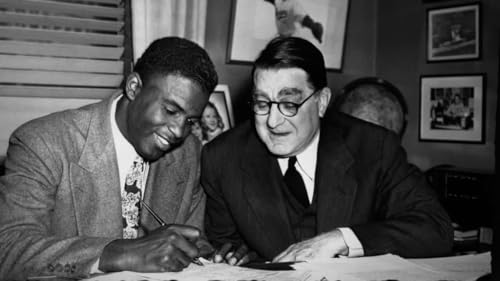
    This Day in Legal History: Jackie Robinson Signs with DodgersOn April 10, 1947, Jackie Robinson signed his contract with the Brooklyn Dodgers, marking a pivotal moment in both sports and legal history. At the time, racial segregation was deeply entrenched in American society, including in professional athletics, where informal but rigid “color lines” excluded Black players. Robinson’s signing, orchestrated by Dodgers executive Branch Rickey, directly challenged this exclusionary system. Although no court decision mandated integration in baseball, the move carried significant legal implications by undermining accepted norms of segregation.Robinson’s entry into Major League Baseball occurred just years before landmark civil rights rulings, including Brown v. Board of Education, which declared racial segregation in public schools unconstitutional. His success on the field helped shift public opinion, demonstrating that integration was both possible and beneficial. This cultural shift played an indirect but meaningful role in supporting broader legal challenges to segregation. At the same time, Robinson faced hostility, threats, and discriminatory treatment, highlighting the gap between evolving social practices and existing legal protections.The federal legal framework addressing discrimination was still underdeveloped in 1947, with major statutes like the Civil Rights Act of 1964 nearly two decades away. Robinson’s breakthrough contributed to the growing momentum for such legislation by exposing the injustice and inefficiency of segregated systems. His experience also illustrated the limits of private action in achieving equality without formal legal enforcement mechanisms. Over time, his role became part of a larger narrative demonstrating how social change can precede and influence legal reform.Robinson’s signing stands as an example of how non-judicial actions can shape the development of law by altering public attitudes and expectations. It underscores the interplay between private institutions and constitutional principles, particularly in the realm of equal protection. The event remains a key reference point in discussions about the relationship between cultural progress and legal change in the United States.A California federal judge has ordered another evidentiary hearing in the ongoing dispute between Epic Games and Google over proposed changes to an antitrust injunction governing Android app distribution. U.S. District Judge James Donato expressed frustration that each revised proposal introduces new elements, warning the parties that the court will not continue reviewing endless iterations. The latest proposal follows Epic’s earlier trial victory, where a jury found Google had monopolized the Android app marketplace.Although the companies claim their revised plan better aligns with the original injunction, the judge raised concerns about potential anticompetitive effects. In particular, he questioned Google’s idea of a “registered app store” program, suggesting it might create barriers for rival app stores. He also flagged possible issues with fees that could undermine competition. As a result, the court will require more detailed explanations before deciding whether to approve the changes.The dispute stems from litigation filed in 2020 challenging restrictions that limited alternative app stores and required developers to use Google’s billing system. After Epic’s win, the court imposed an injunction requiring Google to open its platform to competitors. While the revised proposal keeps some pro-competition measures—such as allowing alternative billing and preventing exclusionary deals—it has drawn mixed reactions.Supporters argue the new terms still promote competition, but critics, including Microsoft and advocacy groups, say the changes weaken the original order. They highlight concerns about new fees and provisions that could make it harder for competitors to enter the market. Some also argue that shifting key terms into private agreements reduces judicial oversight. Judge Donato indicated this upcoming hearing will likely be the final step before a decision, emphasizing the need to resolve the matter without further revisions.‘Not Going To Keep Doing This,’ Judge Warns Epic, Google - Law360The U.S. Department of Justice has launched an investigation into whether the National Football League is engaging in anticompetitive practices that could harm consumers. While the exact scope of the probe is unclear, it appears to focus on how the league distributes broadcasting rights for its games. Concerns have grown among regulators, lawmakers, and broadcasters about the increasing shift of sports content from free television to paid streaming platforms.Critics argue that this trend makes it harder and more expensive for fans to watch games, with some estimates suggesting it could cost over $1,500 annually to access all NFL broadcasts across multiple services. The NFL...
    Más Menos
    8 m
  • Legal News for Thurs 4/9 - DLA Piper Fired Pregnant Attorney, Court Fight over RFK HHS Gutting, and John Deere's Right to Repair Settlement
    Apr 9 2026
    This Day in Legal History: Civil Rights Act of 1866On April 9, 1866, the United States Congress took a decisive step in shaping post-Civil War legal order by overriding President Andrew Johnson’s veto of the Civil Rights Act of 1866. This marked the first time in American history that a major piece of civil rights legislation became law over a presidential veto. The Act established that all persons born in the United States were citizens, directly challenging the legacy of Dred Scott v. Sandford, which had denied citizenship to African Americans. By affirming equal protection under the law, Congress sought to secure basic civil rights for newly freed individuals in the aftermath of the Civil War. The override demonstrated a powerful assertion of legislative authority during the Reconstruction era.The law also reflected growing tensions between Congress and the executive branch over how to rebuild the nation. Johnson had argued that the Act overstepped federal authority, but Congress rejected that view, signaling a shift toward stronger federal protection of individual rights. This moment helped redefine the balance of power within the federal government. It also underscored the role of Congress in enforcing civil rights when the executive resisted such measures. The Civil Rights Act of 1866 would later serve as a foundation for the Fourteenth Amendment to the United States Constitution, which constitutionalized its key principles.In practical terms, the Act granted citizens the right to make contracts, sue in court, and own property regardless of race. Although enforcement remained uneven, the statute represented a critical legal milestone in the transition from slavery to citizenship. It also set an enduring precedent for future civil rights legislation. The events of April 9, 1866, illustrate how constitutional mechanisms like veto overrides can shape the trajectory of American law.A former DLA Piper associate, Anisha Mehta, testified in federal court that she was unexpectedly fired shortly after announcing her pregnancy, despite receiving positive feedback on her work. She told the jury she handled significant responsibilities, including managing trademark portfolios for major corporate clients, and believed her performance was strong. Mehta said her supervisor initially reacted supportively to her pregnancy but soon raised vague performance concerns that she had not previously encountered. She described feeling shocked and distressed when she was terminated during a call with her supervisor and an HR representative in August 2022.Mehta claims the firm violated federal and New York City laws by discriminating against her based on pregnancy, while DLA Piper maintains she was dismissed for poor performance. She testified that she attempted to challenge the termination and requested to go through a formal evaluation process, but was denied. After her firing, she continued working briefly until her system access was cut off when she declined a severance agreement.Following her termination, Mehta applied to hundreds of jobs while pregnant but struggled to find employment. She eventually secured a position at eBay in 2024, earning significantly less than her prior salary. During cross-examination, the defense highlighted several alleged mistakes, including minor errors in client communications and administrative oversights, to support its claim of poor performance. Mehta acknowledged some errors but characterized them as minor and not indicative of overall poor work.At the center of the case is whether Mehta’s termination was motivated by unlawful pregnancy discrimination or legitimate performance concerns. The legal issue involves employment protections under anti-discrimination laws, which prohibit adverse actions based on pregnancy while still allowing employers to terminate at-will employees for lawful reasons.Pregnant DLA Piper Atty Recounts Firing: ‘This Feels Wrong’ - Law360A federal judge in Rhode Island ruled that a coalition of states can proceed with their lawsuit challenging a major restructuring of the U.S. Department of Health and Human Services led by Robert F. Kennedy Jr.. U.S. District Judge Melissa DuBose denied the federal government’s motion to dismiss, finding that the states presented plausible claims under both the Constitution and the Administrative Procedure Act. She also criticized the government for repeating jurisdictional arguments that had already been rejected earlier in the case and by the appellate court.The lawsuit, brought by 19 states and Washington, D.C., challenges a sweeping overhaul that aimed to significantly reduce the agency’s workforce and restructure key programs. The states argue that the changes disrupted essential public health services, including disease detection, tobacco control efforts, and lead poisoning prevention. They also claim the restructuring caused missed regulatory deadlines, canceled health initiatives, and confusion around federal...
    Más Menos
    7 m
  • Legal News for Weds 4/8 - Trump DOJ Influence, Yale Loses Top Law School Spot, AI Startups Descend on Law Schools
    Apr 8 2026
    This Day in Legal History: Seventeenth Amendment RatifiedOn April 8, 1913, the Seventeenth Amendment to the United States Constitution became part of the Constitution after receiving the necessary number of state ratifications. This amendment fundamentally changed the method of selecting U.S. senators, shifting the power from state legislatures directly to voters. Prior to its adoption, senators were chosen by state lawmakers, a process that had increasingly drawn criticism for corruption and political deadlock. Reformers argued that legislative selection allowed special interests to exert undue influence over Senate seats. The amendment emerged during the Progressive Era, a period marked by widespread efforts to make government more democratic and transparent. By mandating direct elections, it aimed to increase accountability and restore public trust in the federal government. The change also reduced the frequency of vacancies caused by legislative gridlock in the states. Supporters viewed the amendment as a necessary correction to a system that had strayed from democratic principles. Critics, however, warned that it weakened the role of states within the federal structure. The ratification process itself reflected strong public pressure for reform across many states. Over time, the amendment reshaped the political dynamics of the Senate, making senators more responsive to public opinion. It also aligned the Senate more closely with the House of Representatives in terms of democratic legitimacy. Today, the Seventeenth Amendment remains a cornerstone of how Americans participate in federal elections, illustrating the enduring impact of Progressive Era reforms.Acting Attorney General Todd Blanche said that Donald Trump has both the right and responsibility to influence federal investigations, including those involving people Trump views as adversaries. Speaking publicly for the first time since taking the role, Blanche rejected claims that the Justice Department was improperly targeting Trump’s opponents. He argued that a president is expected to guide national priorities, even when that includes investigations tied to personal or political conflicts.The Justice Department has recently pursued multiple investigations involving individuals connected to past inquiries into Trump, as well as political opponents and donors. Some of these efforts have faced resistance in court, with judges and grand juries limiting or dismissing certain cases. Blanche pointed to past prosecutions against Trump as justification, saying the president is seeking accountability for what he views as misuse of the legal system.Blanche’s appointment followed Trump’s firing of former Attorney General Pam Bondi, reportedly due to frustration over the pace and results of investigations. Blanche did not say whether he wants to remain in the role permanently, emphasizing that the decision rests with Trump. He also indicated he would step aside if asked, expressing loyalty to the president.Acting DOJ chief Blanche says Trump has ‘right’ to influence investigations | ReutersYale Law School lost its long-held No. 1 position in the latest U.S. News & World Report law school rankings, marking the first time in 36 years it has not topped the list. Stanford Law School now holds the sole No. 1 spot, while Yale is tied for second with University of Chicago Law School. A slight drop in Yale’s employment rate for graduates appears to have contributed to the shift, though other metrics like bar passage and LSAT scores remained stable.The rankings also saw broader changes among the traditionally top 14 law schools, known as the “T-14.” University of California, Berkeley School of Law and Georgetown University Law Center both fell out of that group, while Cornell Law School and Vanderbilt University Law School moved up in the rankings. Other schools, including University of Pennsylvania Carey Law School and University of Virginia School of Law, saw smaller gains, while Harvard Law School remained steady.These fluctuations reflect changes in the ranking methodology introduced in recent years after several top schools, including Yale and Berkeley, criticized the system. The updated approach relies more heavily on data reported to the American Bar Association, making small differences in employment and bar passage rates more influential.Yale loses longtime No. 1 spot on latest US law school ranking | ReutersAI startups are increasingly targeting law students as part of a broader effort to capture the legal services market. Companies like Harvey AI and Legora are offering free access and training at top law schools, hoping students will continue using their tools once they enter law firms and corporate legal roles. This strategy comes as the legal AI sector expands rapidly, fueled by advances in generative AI since the rise of ChatGPT.These startups compete with established providers like LexisNexis and Westlaw, which have long dominated ...
    Más Menos
    6 m
  • Legal News for Tues 4/7 - YouTube Creator Lawsuit Against Amazon, SCOTUS State Secrets Remand, and IRS Modernization Efforts Fall Short
    Apr 7 2026
    This Day in Legal History: WHO EstablishedOn April 7, 1948, the World Health Organization (WHO) was officially established when its constitution entered into force, marking a pivotal moment in the development of international law. The creation of the WHO reflected a growing recognition among nations that public health challenges transcend borders and require coordinated legal and institutional responses. Its constitution set out a broad definition of health as a fundamental human right, helping to shape future legal frameworks and policy discussions worldwide. By joining the organization, member states accepted binding obligations, particularly in the areas of disease surveillance, reporting, and cooperation. These obligations were designed to promote transparency and rapid response to emerging health threats, which had historically spread unchecked due to limited coordination.The WHO’s legal framework also empowered the organization to issue regulations and recommendations, including what would later become the International Health Regulations, a key tool in managing global health emergencies. This marked an important shift toward formalized international governance in public health, moving beyond informal cooperation to structured legal commitments. The constitution further established the World Health Assembly, giving member states a forum to negotiate and adopt health-related policies with legal and political significance. Over time, the WHO has played a central role in shaping international responses to pandemics, vaccination efforts, and health equity initiatives. Its authority, while not absolute, carries significant influence in both legal and diplomatic contexts.A group of YouTube creators has filed a proposed class action lawsuit against Amazon, alleging that the company improperly used their copyrighted videos to train its AI video-generation tool, Nova Reel. The plaintiffs claim Amazon bypassed YouTube’s technological safeguards to access and download large amounts of video content without permission. According to the complaint, Amazon used automated scraping tools and techniques like rotating IP addresses to avoid detection while extracting videos at scale. The creators argue that this conduct violated both YouTube’s terms of service and federal copyright law.The lawsuit specifically alleges violations of the Digital Millennium Copyright Act, focusing on Amazon’s alleged circumvention of technological protection measures designed to safeguard content. Plaintiffs claim their videos were then used for Amazon’s commercial benefit in developing its AI system, without compensation or consent. They also argue that once content is used to train AI models, it cannot be effectively removed, causing lasting harm to creators. The complaint challenges Amazon’s characterization of its training data as “publicly available,” arguing that availability does not equal lawful use.The creators seek to represent a nationwide class of individuals whose content may have been similarly used. They are asking for damages, injunctive relief, and a declaration that Amazon’s actions were willful. The case highlights broader tensions between content creators and AI developers over data sourcing practices. Similar lawsuits have been filed against other AI companies, reflecting a growing wave of litigation in this area.YouTube Creators Say Amazon Scrapes Videos To Train AI - Law360The Supreme Court of the United States has sent a long-running lawsuit over alleged FBI surveillance of Muslims in Southern California back to a lower court for reconsideration. The case, brought by several individuals including Sheikh Yassir Fazaga, claims the FBI unlawfully monitored their community using an informant after 9/11. The justices did not rule on the merits but instead instructed the lower courts to revisit the case in light of new factual developments and the government’s motion to dismiss.At the center of the dispute is the state secrets privilege, a legal doctrine that allows the government to block litigation if it risks exposing national security information. The FBI has argued that continuing the case could reveal sensitive intelligence methods and weaken this protection. Previously, the United States Court of Appeals for the Ninth Circuit allowed parts of the lawsuit to move forward, reasoning that courts should not dismiss claims too early without fully examining whether secret evidence is truly necessary. The appellate court suggested possible ways to proceed while protecting classified information, such as limited judicial review of sensitive materials.The Supreme Court’s earlier 2022 decision confirmed that the state secrets privilege applies but left open how it should be used in this case. The Ninth Circuit later revived some claims, while still dismissing others against individual agents. The government challenged that ruling, arguing it forces courts to rely on protected information in ways ...
    Más Menos
    7 m
  • Legal News for Mon 4/6 - Powell Subpoenas Blocked Again, Ruling Against Federal College Race-data Demands and WH Ballroom Fight Continues
    Apr 6 2026
    This Day in Legal History: Civil Rights Act of 1968On April 6, 1968, President Lyndon B. Johnson signed the Civil Rights Act of 1968 into law, marking a major expansion of federal civil rights protections. Commonly known as the Fair Housing Act, the legislation aimed to eliminate discrimination in the sale, rental, and financing of housing. It prohibited unequal treatment based on race, religion, and national origin, later expanding to include sex and other protected characteristics. The law emerged during a period of national unrest, passed just days after the assassination of Martin Luther King Jr.. King had long advocated for fair housing as a central component of racial equality, particularly in Northern cities.The Act addressed systemic practices such as redlining, steering, and discriminatory lending that had historically segregated communities. It gave the federal government authority to enforce fair housing standards, though early enforcement mechanisms were relatively weak. Over time, amendments strengthened the law, adding protections for people with disabilities and families with children. The statute also allowed individuals to file complaints with the Department of Housing and Urban Development or pursue private lawsuits. Courts have since played a key role in interpreting the scope of the Act, especially in recognizing claims based on disparate impact.A central legal concept tied to the Fair Housing Act is disparate impact, which refers to policies that appear neutral but disproportionately harm protected groups. Unlike intentional discrimination, disparate impact does not require proof of discriminatory intent, only that a practice has an unequal effect. This theory became firmly established in housing law through later litigation and was upheld by the Supreme Court in cases interpreting the Act. It remains a critical tool for challenging structural inequality in housing markets.The passage of the Civil Rights Act of 1968 represented both a response to national tragedy and a continuation of the broader civil rights movement’s legislative achievements.A federal judge refused to reverse his earlier decision blocking subpoenas targeting Federal Reserve Chair Jerome Powell, effectively pausing a criminal investigation and setting up a likely appeal. Chief Judge James Boasberg ruled that prosecutors failed to show any valid basis for suspecting wrongdoing and criticized the lack of evidence supporting fraud allegations. He had previously found that the subpoenas were issued for an improper purpose, suggesting they were meant to pressure Powell to lower interest rates or step down.The subpoenas, issued by prosecutor Jeanine Pirro, sought information about cost overruns at the Federal Reserve’s headquarters and Powell’s prior congressional testimony. However, the court found no good-faith basis for believing a crime had occurred. Prosecutors argued the judge applied too strict a standard and misread the timeline of the investigation, but the court rejected those claims. Pirro’s office has said it will appeal the ruling, a move supported by Justice Department leadership.The dispute reflects broader tensions between Powell and allies of President Donald Trump, with Powell arguing the investigation is an attempt to influence Federal Reserve policy. The appeal could delay efforts to confirm Kevin Warsh as a replacement for Powell, as some lawmakers have pledged to block the nomination while the case continues. Powell has said he will remain in his role until the legal challenge is resolved.US judge upholds block on subpoenas to Fed’s Powell, teeing up likely appeal | ReutersA federal judge blocked the Trump administration from requiring public universities in 17 states to provide extensive admissions data related to race and sex. Judge F. Dennis Saylor IV issued a preliminary injunction after state attorneys general challenged the policy, arguing it was imposed too quickly and created legal risks for schools. The data request came from the Department of Education, which sought seven years of information to evaluate whether colleges were complying with the Supreme Court’s decision in Students for Fair Admissions v. Harvard that ended affirmative action in higher education.The states argued that the reporting requirement was confusing and could expose universities to penalties for accidental errors. The court agreed that the rollout was “rushed and chaotic,” noting that officials failed to properly consider concerns raised by universities. At the same time, the judge acknowledged that the Department of Education does have legal authority to collect such data in general. The issue, he emphasized, was how the policy was implemented, not necessarily the underlying power itself.The ruling also pointed to practical problems, including staffing shortages within the agency after workforce reductions, which made it harder to manage the data collection process. Officials in states like New ...
    Más Menos
    6 m