Episodios

  • Artemis II returned safely from the moon—but was it worth it?
    Apr 13 2026
    In this episode of Science Quickly, we unpack NASA’s Artemis II mission after its safe return from lunar orbit, asking what the long‑awaited comeback to the moon actually achieved and whether it was worth the cost. Scientific American journalists debate the promise of future lunar missions alongside concerns about money and climate effects and the question of what space exploration should mean at a time of global strain. Recommended Reading: NASA’s Artemis II moon mission splashes down NASA’s Artemis II mission’s return to Earth, hour by hour NASA’s Artemis moon missions are a game changer for astronomy NASA’s Artemis II astronauts celebrate epic lunar flyby with stunning new images E-mail us at sciencequickly@sciam.com if you have any questions, comments or ideas for stories we should cover! Discover something new everyday: subscribe to Scientific American and sign up for Today in Science, our daily newsletter. Science Quickly is produced by Kendra Pierre-Louis, Fonda Mwangi, Sushmita Pathak and Jeff DelViscio. This episode was edited by Alex Sugiura, with fact-checking by Shayna Posses and Aaron Shattuck. Our theme music was composed by Dominic Smith. Learn more about your ad choices. Visit megaphone.fm/adchoices
    Más Menos
    24 m
  • Alexis Hall turns Moby-Dick into a wild sci‑fi adventure
    Apr 10 2026
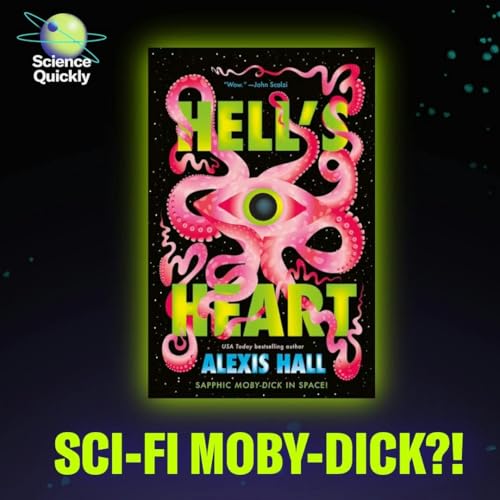
    In this episode of Science Quickly, author Alexis Hall discusses Hell’s Heart, their sci‑fi reimagining of Moby-Dick. Hall dives into how a lockdown reread of Herman Melville’s novel sparked a vision of space whales, artificial intelligence navigators, and Jupiter’s wild physics and explains the blend of real science, irreverent humor and queer storytelling that powers the novel. Recommended Reading: Hell’s Heart. Alexis Hall. Tor Books, 2026 E-mail us at sciencequickly@sciam.com if you have any questions, comments or ideas for stories we should cover! Discover something new everyday: subscribe to Scientific American and sign up for Today in Science, our daily newsletter. Science Quickly is produced by Kendra Pierre-Louis, Fonda Mwangi, Sushmita Pathak and Jeff DelViscio. This episode was co-hosted by Bri Kane and edited by Alex Sugiura. Shayna Posses and Aaron Shattuck fact-check our show. Our theme music was composed by Dominic Smith. Learn more about your ad choices. Visit megaphone.fm/adchoices
    Más Menos
    21 m
  • U.S. measles cases surge as vaccination rates drop
    Apr 8 2026
    In this episode of Science Quickly, we examine the surge in measles cases across the U.S., exploring how falling measles, mumps and rubella (MMR) vaccination rates, the rising use of exemptions and pockets of misinformation are creating hot spots where the highly contagious virus can spread. SciAm’s associate editor for health and medicine Lauren Young and public health experts break down why outbreaks are intensifying. Recommended Reading: Measles outbreak erupts in one of U.S.’s largest ICE detention centers The U.S. just surpassed a grim measles milestone Brain swelling is one of measles’ nastiest side effects, and it’s happening in South Carolina As the U.S. marks a year of measles outbreaks, is the disease back for good? E-mail us at sciencequickly@sciam.com if you have any questions, comments or ideas for stories we should cover! Discover something new everyday: subscribe to Scientific American and sign up for Today in Science, our daily newsletter. Science Quickly is produced by Kendra Pierre-Louis, Fonda Mwangi, Sushmita Pathak and Jeff DelViscio. This episode was edited by Alex Sugiura, with fact-checking by Shayna Posses and Aaron Shattuck. Our theme music was composed by Dominic Smith. Learn more about your ad choices. Visit megaphone.fm/adchoices
    Más Menos
    15 m
  • Artemis II, endangered species and oil, snowpack crisis
    Apr 6 2026
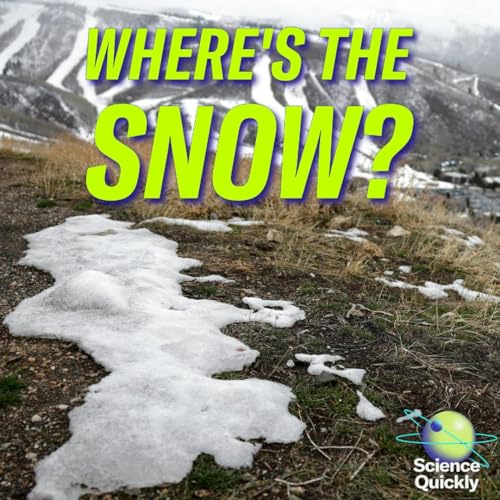
    In this episode of Science Quickly, we give you a quick update on NASA’s Artemis II moon mission before digging into a move by the Trump administration that could endanger wildlife in the Gulf of Mexico. Later Andrea Thompson, senior desk editor for life science at Scientific American, joins host Kendra Pierre-Louis to discuss the alarmingly low snowpack in the western U.S. Recommended Reading: NASA Returns to the Moon April 1 is supposed to be peak snow. But this year’s western snowpack is utterly dismal E-mail us at sciencequickly@sciam.com if you have any questions, comments or ideas for stories we should cover! Discover something new everyday: subscribe to Scientific American and sign up for Today in Science, our daily newsletter. Science Quickly is produced by Kendra Pierre-Louis, Fonda Mwangi, Sushmita Pathak and Jeff DelViscio. This episode was edited by Alex Sugiura, with fact-checking by Shayna Posses and Aaron Shattuck. Our theme music was composed by Dominic Smith. Learn more about your ad choices. Visit megaphone.fm/adchoices
    Más Menos
    12 m
  • Why NASA is betting big on Artemis II moon mission
    Apr 3 2026
    In this episode of Science Quickly, we break down the successful launch of NASA’s Artemis II mission—the first crewed journey toward the moon in more than 50 years—as space editor Lee Billings explains how the Orion spacecraft will slingshot around the moon, what risks still lie ahead, why this test flight matters for future lunar landings, and how everything from heat‑shield concerns to the spacecraft’s upgraded toilet fits into NASA’s larger plan to build a long‑term presence on the moon. Recommended Reading: Live: NASA’s Artemis II moon mission launches Artemis II’s journey to the moon, day by day NASA’s moon mission day one: a toilet mishap and spacecraft maneuvers NASA’s Artemis II launches on first crewed moon mission of the 21st century E-mail us at sciencequickly@sciam.com if you have any questions, comments or ideas for stories we should cover! Discover something new everyday: subscribe to Scientific American and sign up for Today in Science, our daily newsletter. Science Quickly is produced by Kendra Pierre-Louis, Fonda Mwangi, Sushmita Pathak and Jeff DelViscio. This episode was edited by Alex Sugiura, with fact-checking by Shayna Posses and Aaron Shattuck. Our theme music was composed by Dominic Smith. Learn more about your ad choices. Visit megaphone.fm/adchoices
    Más Menos
    20 m
  • We weren’t supposed to have chins
    Apr 1 2026
    Humans are the only species that has chins. How this unique trait evolved has always been somewhat of a mystery. In this episode of Science Quickly, host Kendra Pierre-Louis talks to paleoanthropologist Lauren Schroeder, who co-authored a recent study that sheds light on the evolutionary riddle of the chin and the ways that evolution can sometimes occur unexpectedly. Recommended Reading: “Is the Human Chin a Spandrel? Insights from an Evolutionary Analysis of Ape Craniomandibular Form,” by Noreen von Cramon-Taubadel et al, in PLOS One, Vol. 21, No. 1; January 29, 2026 E-mail us at sciencequickly@sciam.com if you have any questions, comments or ideas for stories we should cover! Discover something new every day: subscribe to Scientific American and sign up for Today in Science, our daily newsletter. Science Quickly is produced by Kendra Pierre-Louis, Fonda Mwangi, Sushmita Pathak and Jeff DelViscio. This episode was edited by Alex Sugiura, with fact-checking by Shayna Posses and Aaron Shattuck. Our theme music was composed by Dominic Smith. Learn more about your ad choices. Visit megaphone.fm/adchoices
    Más Menos
    14 m
  • NASA’s nuclear spacecraft, Iran war climate fallout and a promising new Lyme shot
    Mar 30 2026
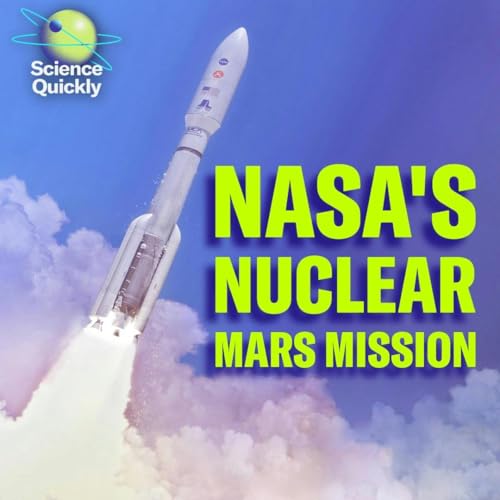
    In this episode of Science Quickly, we dig into NASA’s bold push toward a nuclear‑powered mission to Mars and plans for a long‑term lunar base, examine how the Iran war has triggered massive carbon emissions and a looming climate cost from the needed reconstruction and break down the promising latest results from Pfizer and Valneva’s new Lyme disease vaccine—all packed into your weekly science news roundup. Recommended Reading: NASA announces nuclear-powered Mars mission by 2028 NASA unveils ambitious new moon base plans Why Iran is targeting Qatar’s liquid natural gas trains E-mail us at sciencequickly@sciam.com if you have any questions, comments or ideas for stories we should cover! Discover something new everyday: subscribe to Scientific American and sign up for Today in Science, our daily newsletter. Science Quickly is produced by Kendra Pierre-Louis, Fonda Mwangi, Sushmita Pathak and Jeff DelViscio. This episode was edited by Alex Sugiura, with fact-checking by Shayna Posses and Aaron Shattuck. Our theme music was composed by Dominic Smith. Learn more about your ad choices. Visit megaphone.fm/adchoices
    Más Menos
    11 m
  • You’ve been lied to about pain—here’s the truth
    Mar 27 2026
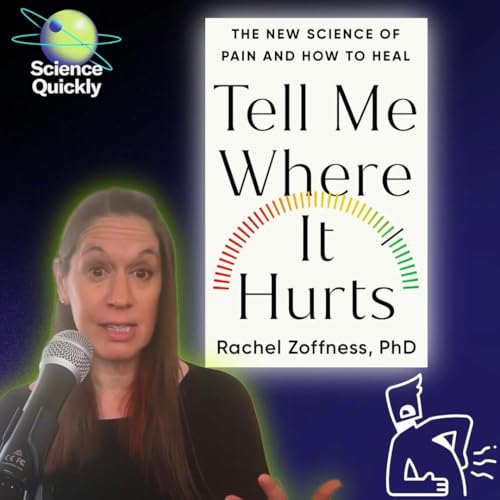
    In this episode of Science Quickly, pain scientist Rachel Zoffness reveals why pain isn’t just a body problem but also a brain‑driven warning system that we’ve been misunderstanding for decades. She and host Kendra Pierre‑Louis unpack wild examples, hidden factors that dial pain up or down and simple, science‑backed practical strategies from Zoffness’s new book Tell Me Where It Hurts that can help you feel better. Recommended Reading: Tell Me Where It Hurts. Rachel Zoffness. Grand Central Publishing, 2026 E-mail us at sciencequickly@sciam.com if you have any questions, comments or ideas for stories we should cover! Discover something new every day: subscribe to Scientific American and sign up for Today in Science, our daily newsletter. Science Quickly is produced by Kendra Pierre-Louis, Fonda Mwangi, Sushmita Pathak and Jeff DelViscio. This episode was edited by Alex Sugiura, with fact-checking by Shayna Posses and Aaron Shattuck. Our theme music was composed by Dominic Smith. Learn more about your ad choices. Visit megaphone.fm/adchoices
    Más Menos
    23 m