Episodios

  • How will EPR affect small businesses?
    Apr 14 2026

    In the UK, Extended Producer Responsibility (EPR) is likely to have a more nuanced impact on small brands because of the specific turnover and packaging thresholds built into the policy. Businesses with an annual turnover under £1 million and handling less than 25 tonnes of packaging are largely exempt, while those between £1–2 million and 25–50 tonnes face lighter reporting requirements without full fee obligations. This means many truly small brands will avoid the heaviest financial burden, at least initially.

    This episode of Recycled Content, is the 'Rubbish Question' from episode 33 of Talking Rubbish, which first aired on 13th March 2025.

    While every effort has been made to provide the most accurate information, recycling guidance changes quickly and some advice may become outdated over time. Always check with your local council for the rules that apply to recycling in your area. On the main Talking Rubbish podcast, we include an additions and corrections section where we update anything we may have got wrong.

    These clips come from the weekly show, Talking Rubbish - The Recycling Podcast

    We would love you to join our community on Discord

    Special thanks to our sponsor, Ecosurety

    To get exclusive videos and clips, follow us on Instagram, TikTok, X, Threads or Facebook; @rubbishpodcast or YouTube: @talkingrubbishpodcast

    Or you can contact James and Robbie with questions or just general rubbish musings using the email address talkingrubbishpodcast@gmail.com or by texting them via WhatsApp on 07356 069 232

    Music licence ID: 3GXXBILNPGLYRUZF

    Más Menos
    5 m
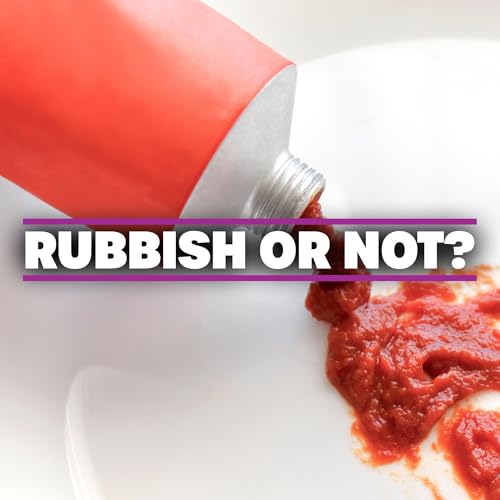
  • Are tomato puree tubes recyclable?
    Apr 13 2026

    Tomato purée tubes are recyclable, although as always it is worth checking with your local collection rules. Even though they’re made from a mix of aluminium and plastic, the recycling process is designed to handle this: the tubes are heated so that any leftover food residue and the thin plastic layer are burned off, leaving behind clean aluminium. That aluminium can then be melted down and reused to make new products, meaning the material stays in circulation and reduces the need for virgin resources.

    This episode of Recycled Content, is the 'Rubbish or Not' from episode 33 of Talking Rubbish, which first aired on 13th March 2025.

    While every effort has been made to provide the most accurate information, recycling guidance changes quickly and some advice may become outdated over time. Always check with your local council for the rules that apply to recycling in your area. On the main Talking Rubbish podcast, we include an additions and corrections section where we update anything we may have got wrong.

    These clips come from the weekly show, Talking Rubbish - The Recycling Podcast

    We would love you to join our community on Discord

    Special thanks to our sponsor, Ecosurety

    To get exclusive videos and clips, follow us on Instagram, TikTok, X, Threads or Facebook; @rubbishpodcast or YouTube: @talkingrubbishpodcast

    Or you can contact James and Robbie with questions or just general rubbish musings using the email address talkingrubbishpodcast@gmail.com or by texting them via WhatsApp on 07356 069 232

    Music licence ID: 3GXXBILNPGLYRUZF

    Más Menos
    5 m
  • How are lightbulbs recycled?
    Apr 12 2026

    Lightbulbs are recycled through specialised processes that safely separate their different components so valuable materials can be recovered and reused. Once collected, bulbs are sorted by type, such as LEDs, fluorescent tubes, or traditional incandescent bulbs. By breaking lightbulbs down into their raw materials, recycling helps reduce hazardous waste, conserve resources, and support a more circular approach to everyday products.

    This episode of Recycled Content, is the 'Rubbish Process' from episode 34 of Talking Rubbish, which first aired on 20th March 2025.

    While every effort has been made to provide the most accurate information, recycling guidance changes quickly and some advice may become outdated over time. Always check with your local council for the rules that apply to recycling in your area. On the main Talking Rubbish podcast, we include an additions and corrections section where we update anything we may have got wrong.

    These clips come from the weekly show, Talking Rubbish - The Recycling Podcast

    We would love you to join our community on Discord

    Special thanks to our sponsor, Ecosurety

    To get exclusive videos and clips, follow us on Instagram, TikTok, X, Threads or Facebook; @rubbishpodcast or YouTube: @talkingrubbishpodcast

    Or you can contact James and Robbie with questions or just general rubbish musings using the email address talkingrubbishpodcast@gmail.com or by texting them via WhatsApp on 07356 069 232

    Music licence ID: 3GXXBILNPGLYRUZF

    Más Menos
    8 m
  • How are lightbulbs collected?
    Apr 11 2026

    Lightbulbs are typically collected through dedicated recycling schemes rather than regular household waste because many types, especially fluorescent tubes, contain small amounts of hazardous materials like mercury. In most areas, households can take used bulbs to local recycling centres, supermarket collection points, or designated drop-off bins often found in hardware stores. Even LEDs, which don’t contain mercury, are still collected this way so valuable materials such as metals and electronic components can be recovered instead of ending up in landfill.

    This episode of Recycled Content, is the 'Rubbish Process' from episode 33 of Talking Rubbish, which first aired on 13th March 2025.

    While every effort has been made to provide the most accurate information, recycling guidance changes quickly and some advice may become outdated over time. Always check with your local council for the rules that apply to recycling in your area. On the main Talking Rubbish podcast, we include an additions and corrections section where we update anything we may have got wrong.

    These clips come from the weekly show, Talking Rubbish - The Recycling Podcast

    We would love you to join our community on Discord

    Special thanks to our sponsor, Ecosurety

    To get exclusive videos and clips, follow us on Instagram, TikTok, X, Threads or Facebook; @rubbishpodcast or YouTube: @talkingrubbishpodcast

    Or you can contact James and Robbie with questions or just general rubbish musings using the email address talkingrubbishpodcast@gmail.com or by texting them via WhatsApp on 07356 069 232

    Music licence ID: 3GXXBILNPGLYRUZF

    Más Menos
    10 m
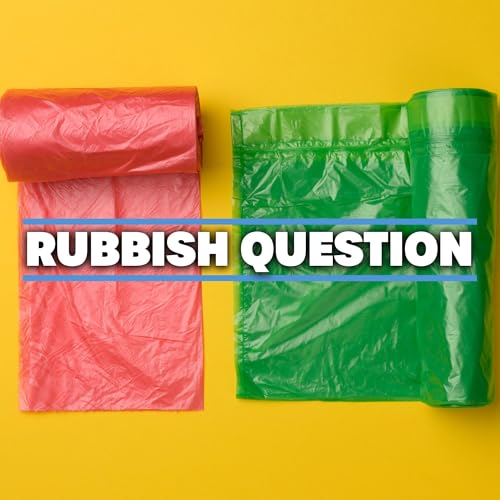
  • What plastic should you use as a bin liner?
    Apr 10 2026

    When choosing a plastic bin liner, prioritising recycled content is one of the most effective ways to reduce environmental impact without sacrificing performance. Liners made from recycled polyethylene, are a great outlet for plastic waste, cutting down on the need for new raw materials and lowering overall carbon emissions. These bags can be just as strong and reliable as virgin plastic options, especially when designed for specific uses like heavy household waste or lighter office rubbish. By opting for high recycled-content liners, you’re helping close the loop in the plastic lifecycle, supporting a more circular economy while still getting a practical, durable product for everyday use.

    This episode of Recycled Content, is the 'Rubbish Question' from episode 32 of Talking Rubbish, which first aired on 6th March 2025.

    While every effort has been made to provide the most accurate information, recycling guidance changes quickly and some advice may become outdated over time. Always check with your local council for the rules that apply to recycling in your area. On the main Talking Rubbish podcast, we include an additions and corrections section where we update anything we may have got wrong.

    These clips come from the weekly show, Talking Rubbish - The Recycling Podcast

    We would love you to join our community on Discord

    Special thanks to our sponsor, Ecosurety

    To get exclusive videos and clips, follow us on Instagram, TikTok, X, Threads or Facebook; @rubbishpodcast or YouTube: @talkingrubbishpodcast

    Or you can contact James and Robbie with questions or just general rubbish musings using the email address talkingrubbishpodcast@gmail.com or by texting them via WhatsApp on 07356 069 232

    Music licence ID: 3GXXBILNPGLYRUZF

    Más Menos
    5 m
  • Are glass candle holders recyclable?
    Apr 9 2026

    Glass candle holders are often recyclable, but it depends on their type and condition. If the holder is made from standard container glass (like clear jars), it can usually go in household recycling once all wax, labels, and metal parts are removed. However, heat-resistant glass may not be accepted by local recycling systems because it melts at a different temperature. In those cases, it’s better to reuse the holder or check with your local recycling guidelines. Cleaning out leftover wax and separating any non-glass components is key to making sure the item can be processed properly.

    This episode of Recycled Content, is the 'Rubbish or Not' from episode 32 of Talking Rubbish, which first aired on 6th March 2025.

    While every effort has been made to provide the most accurate information, recycling guidance changes quickly and some advice may become outdated over time. Always check with your local council for the rules that apply to recycling in your area. On the main Talking Rubbish podcast, we include an additions and corrections section where we update anything we may have got wrong.

    These clips come from the weekly show, Talking Rubbish - The Recycling Podcast

    We would love you to join our community on Discord

    Special thanks to our sponsor, Ecosurety

    To get exclusive videos and clips, follow us on Instagram, TikTok, X, Threads or Facebook; @rubbishpodcast or YouTube: @talkingrubbishpodcast

    Or you can contact James and Robbie with questions or just general rubbish musings using the email address talkingrubbishpodcast@gmail.com or by texting them via WhatsApp on 07356 069 232

    Music licence ID: 3GXXBILNPGLYRUZF

    Más Menos
    4 m
  • What is the purpose of the Green Dot?
    Apr 8 2026

    The “green dot” in the UK is often misunderstood, but it’s actually a symbol linked to packaging waste recovery rather than a guarantee of recyclability. It shows that the producer has contributed financially to a system that supports the recycling and recovery of packaging materials. Unfortunately, it is not relevant to the UK market, making it relatively useless.

    This episode of Recycled Content, is the 'Rubbish Question' from episode 31 of Talking Rubbish, which first aired on 27th February 2025.

    While every effort has been made to provide the most accurate information, recycling guidance changes quickly and some advice may become outdated over time. Always check with your local council for the rules that apply to recycling in your area. On the main Talking Rubbish podcast, we include an additions and corrections section where we update anything we may have got wrong.

    These clips come from the weekly show, Talking Rubbish - The Recycling Podcast

    We would love you to join our community on Discord

    Special thanks to our sponsor, Ecosurety

    To get exclusive videos and clips, follow us on Instagram, TikTok, X, Threads or Facebook; @rubbishpodcast or YouTube: @talkingrubbishpodcast

    Or you can contact James and Robbie with questions or just general rubbish musings using the email address talkingrubbishpodcast@gmail.com or by texting them via WhatsApp on 07356 069 232

    Music licence ID: 3GXXBILNPGLYRUZF

    Más Menos
    4 m
  • Is the widget in a Guinness can recyclable?
    Apr 7 2026

    The Guinness widget, found inside cans of Guinness, is a small plastic capsule that helps create the beer’s signature smooth head when poured. While the can itself is widely recyclable, the widget is typically made from plastic that is not easily separated during standard recycling processes. As a result, although the aluminium can is recyclable, the widget often ends up as waste. However, some recycling facilities are improving their ability to handle mixed materials, so sustainability efforts around packaging like this are gradually evolving.

    This episode of Recycled Content, is the 'Rubbish or Not' from episode 31 of Talking Rubbish, which first aired on 27th February 2025.

    While every effort has been made to provide the most accurate information, recycling guidance changes quickly and some advice may become outdated over time. Always check with your local council for the rules that apply to recycling in your area. On the main Talking Rubbish podcast, we include an additions and corrections section where we update anything we may have got wrong.

    These clips come from the weekly show, Talking Rubbish - The Recycling Podcast

    We would love you to join our community on Discord

    Special thanks to our sponsor, Ecosurety

    To get exclusive videos and clips, follow us on Instagram, TikTok, X, Threads or Facebook; @rubbishpodcast or YouTube: @talkingrubbishpodcast

    Or you can contact James and Robbie with questions or just general rubbish musings using the email address talkingrubbishpodcast@gmail.com or by texting them via WhatsApp on 07356 069 232

    Music licence ID: 3GXXBILNPGLYRUZF

    Más Menos
    6 m