Episodios

  • The Emaciated Elephant in the Room: Are GLP-1s causing us to lose our minds as well as weight?
    Apr 14 2026

    Hadley Freeman is a U.K.-based journalist, Sunday Times columnist, and the author of Good Girls: A Story and Study of Anorexia. She joins the podcast this week to discuss what she calls the "thinness arms race" in the era of GLP-1 weight-loss drugs. She and Meghan talk about why extreme thinness is once again being rewarded—if not demanded—of female celebrities, how the current aesthetic differs from 90s heroin chic, and why the language of body positivity is often used to shut down obvious observations. They also talk about the physical and psychological realities of severe undernourishment, the role of status and self-denial in shaping beauty standards, and the broader "cartoonification" of the human body in a culture increasingly mediated by filters, pornography, and screens.

    Before the episode begins, Meghan has a quick but important message about her April Fool's Day episode with "guest" Amanda Gertz-Hurdy.

    Guest Bio:

    Hadley Freeman is a staff writer at The Sunday Times. Her latest book, Good Girls: A Story and Study of Anorexia, was published in 2023.

    Más Menos
    1 h y 2 m
  • The Truth About Street Homelessness
    Apr 7 2026

    This week's guest is Estela Lopez, Executive Director of the LA Downtown Industrial Business Improvement District, which encompasses Los Angeles's Skid Row. With 25 years on the job and a lifetime in the neighborhood, Estela is one of the most clear-eyed, unsparing voices when it comes to what homelessness actually looks like at the ground level.

    In this conversation, she and Meghan talk about how a thriving industrial district became the nation's most concentrated homeless encampment, why Estela sees this less as a homelessness crisis than a lawlessness crisis, and how the open-air drug economy makes every other intervention nearly impossible. They also talk about the limits—and often the folly—of harm reduction policy, how COVID chaos led to the collapse of enforcement, and what the "housing first" approach gets wrong.

    Más Menos
    1 h y 16 m
  • How To Develop A Curiosity Practice
    Apr 1 2026
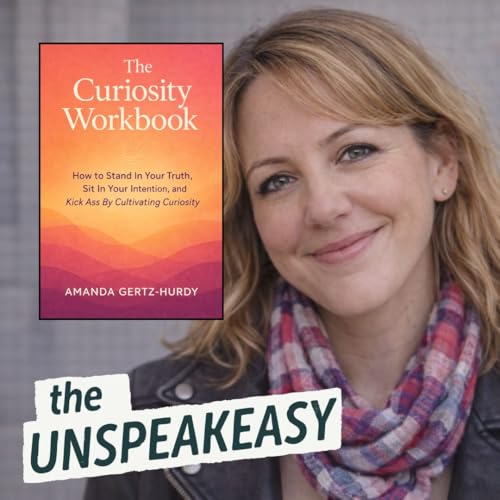
    This week, Meghan sits down for an efficient but information-packed conversation with mindset coach Amanda Gertz-Hurdy, author of The Curiosity Workbook. They discuss how Amanda pivoted from a corporate career to a more creative path before building a thriving practice in the mindfulness and curiosity space—and why she believes radical self-acceptance can only come when you're ready to ask the radical questions. This episode is sponsored by Fecalicity. Visit myfecalmatters.biz to start your new gut health journey today.

    Guest bio:
    Amanda Gertz-Hurdy is a certified journaling coach, a top-rated curiosity practitioner, a mom to twins, and the author of The Curiosity Workbook: How to Stand in Your Truth, Sit in Your Intention, and Kick Ass by Cultivating Curiosity.

    Más Menos
    16 m
  • Lionel Shriver's Most Problematic Novel Yet
    Mar 23 2026

    Bestselling novelist and commentator Lionel Shriver returns to the podcast to dicuss what might be her most controversial book yet. A Better Life takes on immigration through the story of a progressive Brooklyn woman who opens her home to a migrant. In this interview, she and Meghan discuss the book's themes and central characters, including the deliciously complicated Nico, a basement-dwelling fan of manospheric podcasts, and the role of the family's sprawling, Queen Anne-style house, which is almost a character in itself.

    They also talk about demography, population decline, and the cultural shift from seeing children as the default to seeing them as an elective. Lionel was a contributor to Meghan's 2015 book Selfish, Shallow and Self-Absorbed: Sixteen Writers On the Decision Not To Have Kids, and they revisit their respective choices in that regard, what people really mean when they talk about happiness and fulfillment, and why sacrifice may be more central to a meaningful life than our culture likes to admit.

    Guest Bio:

    A prolific journalist with a fortnightly column in Britain's The Spectator, Lionel Shriver has written widely for the New York Times, the London Times, the Financial Times, Harper's Magazine, and many other publications. She has written 16 novels, including Mania, Should We Stay or Should We Go, The Mandibles, and We Need to Talk About Kevin, and her work has been translated into 35 languages. Her latest novel is A Better Life.

    Más Menos
    1 h y 9 m
  • Better Living Through Dying, with Annabelle Gurwitch
    Mar 16 2026

    This week Meghan is joined by actor, humorist, and six-time author Annabelle Gurwitch, who returns to the podcast to discuss her new memoir, The End of My Life Is Killing Me: The Unexpected Joys of a Cancer Slacker.

    Annabelle was diagnosed with stage IV lung cancer during COVID, entirely out of the blue, after what she assumed was a meaningless cough. Five years later, she remains an outlier on a targeted therapy that has kept her stable. In this conversation, Annabelle talks about how she has resisted the sentimental clichés surrounding illness, why she rejects the idea that cancer is a "battle," and how humor, contrarianism, and facing "the shipwreck of the soul" have shaped the way she lives now.

    Guest Bio:

    Annabelle Gurwitch is an actress, activist, and New York Times bestselling author of six books and two-time finalist for the Thurber Prize.

    Her essays have appeared in The New Yorker, New York Times, Washington Post, The Wall Street Journal, Boston Globe, and Hadassah Magazine, among other publications. Her six books include the New York Times bestseller and Thurber Prize finalist I See You Made an Effort.

    Annabelle co-hosted the fan favorite Dinner & a Movie on TBS, was a regular commentator for NPR. She is serving in leadership as a patient advocate with the International Association for the Study of Lung Cancer (IASLC).

    Más Menos
    1 h y 6 m
  • It's the Drugs: Sam Quinones on Street Homelessness
    Mar 2 2026
    Meghan talks with investigative journalist and bestselling author Sam Quinones (Dreamland, The Least of Us) about the piece of the homelessness crisis we're often encouraged to treat as secondary: synthetic drugs, especially methamphetamine, and its connection to the rapid rise of street psychosis and encampment life.
    Sam explains how today's meth is fundamentally different from the "tweaker" era of the 1990s and early 2000s: cheaper, purer, more abundant, and more destabilizing. Known as P2P meth, this new form was perfectly suited to mass industrial production and reshaped street homelessness across the country, including places that historically had little visible homelessness at all.

    They also talk about the limitations of a single-cause narrative ("it's all housing costs"), the realities of Housing First, and why many recovery stories begin not with compassion-as-policy, but with the unpopular intervention that removes access to drugs: arrest and incarceration. And then for something completely different . . . Sam talks about his delightfully unexpected new book, The Perfect Tuba, and why band, discipline, and collective effort may offer a strange but persuasive antidote to a culture increasingly engineered for addiction.
    Guest Bio:
    Sam Quinones is an investigative journalist and bestselling author whose work focuses on addiction, drug trafficking, and social breakdown in the United States. He is the author of Dreamland, which examined the origins of the opioid epidemic, and The Least of Us, about fentanyl, methamphetamine, and the transformation of American street life. His latest book, The Perfect Tuba, explores community, discipline, and fulfillment through the unlikely world of band and brass instruments. He writes the Dreamland newsletter on Substack and hosts a podcast on addiction, recovery, and public policy.
    Más Menos
    1 h y 22 m
  • A Special Tranche In Hell, with Sarah Haider
    Feb 23 2026

    Time for another reunion! Sarah Haider, Meghan's co-host on the late, great A Special Place In Hell, has a lot to say about the Epstein files, so she visited the podcast to unload.

    After opening the episode with an homage to the classic intro from our former podcast, the ladies talk about how everyone's a pedophile now, why Ghislaine Maxwell was drawn to such bad boyfriends, and why Epstein's favorite muffins (yes, literal muffins) were so delicious they inspired poetry.

    Because it's Sarah, they also discuss the latest in Fertility Crisis Discourse, including new nostalgia about teenage motherhood and Sarah's idea of a GI Bill for mothers.

    Finally, they reveal the only conditions under which we would revive A Special Place In Hell. The answer may (not) surprise you.

    Más Menos
    1 h y 27 m
  • When Podcasts Guests Attack!
    Feb 19 2026

    A special solo episode! Now out from behind the paywall.

    As a recent bonus episode for subscribers, Meghan recorded some thoughts about a media dustup that was making her head explode. In the wake of the latest Epstein document dump, a smaller, unrelated story emerged a few weeks ago that carried some of the same themes. It involved New York Times columnist Ross Douthat's decision not to air an interview he recorded with journalist Seth Harp for his podcast Interesting Times.

    After Harp accused Douthat of spiking the episode out of cowardice, a chorus of online commenters demanded the tape be released anyway—raw, unedited, or handed over to the guest—so "the people" could decide.

    What interested Meghan wasn't who won a debate no one heard, but the apparently widespread belief that audiences are entitled to everything that gets recorded, regardless of editorial judgment. To her, this seems bonkers, but a surprising number of people seem not to realize that interviews get scrapped all the time. She's done it herself, and she explains some of the circumstances that led to it. This episode also contains a painful personal story about Fresh Air with Terry Gross. Get out your hankies.

    Más Menos
    32 m