Workplace Stories by RedThread Research Podcast Por Stacia Garr & Dani Johnson arte de portada

Workplace Stories by RedThread Research

Workplace Stories by RedThread Research

De: Stacia Garr & Dani Johnson
Escúchala gratis

Workplace Stories is a podcast for HR and people leaders who are tired of noise and need clarity that actually holds up. It is hosted by Stacia Garr and Dani Johnson of RedThread Research.

Each episode features candid conversations with practitioners, thinkers, and executives who are navigating real decisions inside complex organizations. Not hypotheticals. Not vendor promises. Real tradeoffs, real experiments, and real lessons learned along the way.

You’ll hear how leaders are making sense of skills, AI, organizational design, and culture when there’s no clear playbook and pressure to show progress is high. The focus is always the same: what’s actually working, what isn’t, and what leaders are doing next.

Workplace Stories helps you make sense of complexity, build credibility with evidence, and move from ideas to action with more confidence.

Want to be part of the conversation? Join our community for free and connect with others shaping the future of work.

Learn more about RedThread Research here: https://redthreadresearch.com/homeRedThread Research 2026
Economía Gestión Gestión y Liderazgo
Episodios
  • Designing Future Narratives in a Changing Workplace: Lisa Kay Solomon and Jeffrey Rogers
    Apr 15 2026
    In this episode, we welcome Lisa Kay Solomon, designer-in-residence at Stanford's d.school and host of the "How We Future" podcast, and Jeffrey Rogers, principal of Learning and Facilitation at Radical and co-founder of Projectory. We discuss why foresight—the ability to anticipate and design the futures we want—is everybody's job, not just the domain of senior leaders or specialized futurists. They challenge the idea that organizations operate on an "official future" built from unexamined assumptions, and explore how narrative shapes both our approach to work and our readiness for rapid change, especially in the face of AI disruption. You will want to hear this episode if you are interested in...[00:00] Rethinking future-focused leadership[03:39] HR's evolving role in shaping the future[07:18] Understanding contested narratives and the potential to challenge them [21:50] The importance of adopting futures thinking through broad learning across multiple perspectives[25:47] Strategic foresight and future practices[35:13] Rethinking knowledge and learning priorities[39:21] Reflecting on AI adoption barriers[47:08] Helping leaders develop future-oriented skills[51:14] Looking ahead to the futureThe Leadership Muscle We Forget to UseOne of the most powerful ideas to emerge from the conversation is that of foresight as a "leadership muscle." Most leaders are trained and incentivized to focus on quarterly results and annual plans. The urgent often squeezes out the important, leaving little room for the kind of long-term, strategic thinking that anticipates disruption rather than simply reacts to it.Foresight isn't someone else’s job—it's every leader's job. Yet, most organizations have let this muscle atrophy. Through scenario planning and immersive exercises like those facilitated at last year’s Summit, the hosts argue that HR and organizational leaders can rediscover the collective ability to inquire, imagine, and influence the future, rather than endure it.Challenging the "Official Future" and the Power of NarrativeEvery organization operates on an "official future," a set of unspoken assumptions about what tomorrow holds. In stable times, these guiding narratives are rarely questioned. But when the world is in flux, from technological disruptions like AI to geopolitical shocks, such narratives become vulnerabilities.Leaders, especially in HR, have a responsibility to both recognize and challenge prevailing stories about the future. Wherever there’s a narrative, there’s also the possibility for a counter-narrative, and organizations need to cultivate the skill of holding multiple possible futures in mind, letting diverse perspectives inform strategic choices rather than defaulting to inherited assumptions.Building Organizational Foresight: Tools, Skills, and CommunityThe value of events like the Red Thread Summit lies in three core takeaways: the experience of stepping back to envision the future, a toolkit of practices that can be applied immediately, and the creation of a community dedicated to learning and experimentation.There are three critical skills:Recognizing the narrative: Are you taking assumptions as fact, or seeing them as just one possible story?Crafting your own narratives: Are you able to articulate clear, alternative futures?Communicating vision: Can you equip others to see and believe in those visions?Perhaps nowhere is the need for foresight and narrative-shaping more acute than in the realm of AI and automation. Today’s leaders are under immense pressure to adopt and justify new technologies, to navigate uncertainty, and to avoid being blindsided by change.A key theme is the emerging digital (and AI) divide: those who are experimenting, learning, and shaping technology are pulling ahead, while those waiting for certainty risk being left behind. Learning, experimentation, and cross-pollination are essential. Creating the Conditions for Resilient FuturesRather than chasing after blueprints or one "correct" answer, try to cultivate a design mindset: creating organizational conditions in which new ideas and approaches can flourish. This means expanding our definition of leadership to include not just the preservation of knowledge, but the nurturing of curiosity, experimentation, collaboration, and adaptability. Resources & People MentionedPeter DruckerArticles by Lisa Kay Solomon Pascal Finette on LinkedIn Implications WheelView from the Future at Stanford d.school Hazel HendersonConnect with Lisa Kay Solomon and Jeffrey RogersLisa Kay Solomon on LinkedIn Jeffrey Rogers on LinkedIn Connect With Red Thread ResearchWebsite: Red Thread ResearchOn LinkedInOn FacebookOn TwitterSubscribe to WORKPLACE STORIES
    Más Menos
    53 m
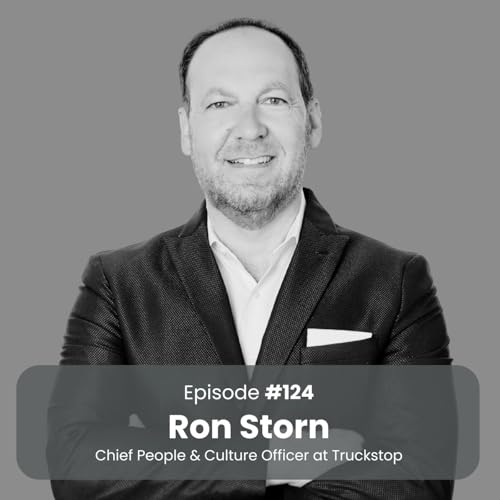
  • How Workplace Culture Shapes Business Success: Ron Storn
    Apr 1 2026
    This week, we’re sitting down with Ron Storn, Chief People and Culture Officer at Truckstop, to discuss culture—how it forms, who owns it, and how it scales in growing organizations. We explore the relationships between systems, processes, and cultural values, and discuss signs of cultural breakdown and the keys to recovery. We also discuss how AI is reshaping workplace dynamics, hiring practices, and performance management, and Ron offers practical, research-based insights and strategies for understanding and supporting positive workplace culture. You will want to hear this episode if you are interested in...00:00 How company culture is formed09:19 Building strong HR and leadership systems11:54 Creating a positive culture for business success18:59 Scaling and preserving company culture22:53 Defining team behaviors and principles29:26 Aligning culture with decision-making32:13 Signs of a broken workplace36:50 Challenges with management and team culture41:45 Advantages of remote vs in-person work44:56 AI's impact on workplace cultureDefining CultureSome companies treat culture as little more than a list of values on the wall, disconnected from the day-to-day decisions and actions that define what it’s really like to work there. Ron believes culture is best understood as a set of shared behaviors, decision rights, and expectations to determine how a company actually executes its strategy when no one is watching. It’s how decisions are made, how people are hired or rewarded, and how work gets done when leadership isn’t in the room.In smaller organizations, culture often starts with a clear vision or set of norms, and systems are built around it. As organizations scale, systems and practices increasingly shape (and sometimes reshape) the prevailing culture, the challenge is finding ways to make culture systemic, woven into processes, rewards, and leadership behaviors, so that the company’s values endure as it grows.Who Owns Culture? Leadership, HR, and SystemsWhile HR is often perceived as the “owner” of culture, Ron believes it should be a shared responsibility, with ultimate ownership being at the very top. CEOs and founders define and embody desired cultural norms, while executive leaders model and cascade those norms through decisions and behaviors. HR’s role is to craft the mechanisms for how people are hired, evaluated, and developed to reinforce the company culture at scale. If only HR champions culture while leadership pays lip service or models different behaviors, culture will break down. Everyone, especially managers, must reinforce and live the culture for it to endure.Signs of Cultural Erosion and How to RecoverWhen culture unravels, it’s usually a gradual process, increasing decision friction, high performers becoming disengaged, and inconsistent behaviors creeping in across teams. If left unchecked, the result is a loss of trust, bureaucracy, and top talent walking out the door.Recovery is possible, but it needs radical transparency and recommitment.Ron recommends that organizations in crisis go back to their roots and principles, engaging teams in candid conversations about what must change. Leaders should model vulnerability, drive clarity on decision-making and expectations, and ensure every manager is accountable for rebuilding the cultural fabric. Resources & People MentionedTruckstop.com Connect with Ron StornRon Storn on LinkedIn Connect With Red Thread ResearchWebsite: Red Thread ResearchOn LinkedInOn FacebookOn TwitterSubscribe to WORKPLACE STORIES
    Más Menos
    56 m
  • A Culture of Development at the Federal Reserve Bank of New York: Jenna Filipkowski
    Mar 18 2026
    On this episode, we’re with Jenna Filipkowski, the Head of Learning and Development at the Federal Reserve Bank of New York. With a background in organizational psychology and research, Jenna brings a fresh, outsider perspective to the world of L&D, challenging traditional approaches and driving innovation within the unique environment of the Fed.We discuss the importance of team development over individual learning, the shift from self-directed "Netflix of learning" approaches to more guided, in-person experiences, and the crucial role of branding and communication in building credibility for L&D organizations. You will want to hear this episode if you are interested in...00:00 Team-based learning evolution05:06 Improving the workforce experience07:59 Embracing opportunity in HR leadership15:46 Team coaching as facilitation19:56 Aligning learning with business goals25:40 In-person vs. virtual leadership training33:12 Improving organizational learning through data37:46 Cohesive branding and storytelling40:20 Leadership accountability and developmentFrom Individual Focus to Team DevelopmentHistorically, L&D programs have targeted individual upskilling and career navigation. At the Federal Reserve Bank of New York, Jenna Filipkowski is pioneering an approach grounded in 6 Team Conditions, a research-backed model that moves beyond one-off workshops.Her Energize program uses diagnostics, assessments like Hogan and Insights Discovery, and customized workshops to identify and strengthen the underlying conditions for team success. Rather than a one-size-fits-all or quick-fix model, teams undergo a tailored process, allowing for deeper systemic improvement. It’s about giving teams the tools and support to accelerate their performance because they’re set up for success, not just treating every challenge as an off-the-shelf problem.The Death of Netflix of LearningFor years, L&D has been swept up by the promise of Netflix learning, providing endless on-demand content and empowering employees to self-direct their learning journeys. But this laissez-faire model has started to unravel, because organizations and individuals are craving more structure and intentionality. At the New York Fed, the move to in-person, cohort-based programs is intentional. In-person learning provides social connection, time to focus, and shared experience, resulting in deeper reflection and lasting impact. While technical upskilling may still leverage digital and asynchronous methods. Blending modalities based on program intent, not defaulting to digital just because it’s easier.Branding L&DStanding out in a large, multifaceted organization is a challenge for any L&D team, and Jenna’s approach is to treat L&D as a brand. Programs at the Fed share unified branding with cohesive names and visual identity, making offerings memorable and fostering a sense of exclusivity and aspiration.Branding goes hand-in-hand with effective communication. Frequent roadshows, town halls, engaging graduation ceremonies, and leadership conferences help communicate value not only to employees but also to senior leadership. Measurement and AccountabilityAt the Fed, Jenna and her team use a mix of reach, participant demand, stakeholder feedback, and practical business cases solved to demonstrate L&D’s value. They push to correlate L&D participation with metrics like engagement and retention—demonstrating impact beyond traditional learning outcomes. The vision for the future includes more robust, passive data collection and real-time intelligence—but for now, using multiple data sources creatively is key.As workplaces shift once again, the future of L&D will center on three things: helping people grow in their roles, building strong leaders, and fostering connection through learning alongside others. The journey away from content chaos and toward strategic, human-centered, and measurement-driven L&D is just beginning. Resources & People MentionedHogan Development Survey Insights Discovery® 6 Team ConditionsConnect with Jenna FilipkowskiJenna Filipkowski on LinkedIn Connect With Red Thread ResearchWebsite: Red Thread ResearchOn LinkedInOn FacebookOn TwitterSubscribe to WORKPLACE STORIES
    Más Menos
    47 m
Todavía no hay opiniones