whistlekick Martial Arts Radio Podcast Por whistlekick Martial Arts Radio arte de portada

whistlekick Martial Arts Radio

whistlekick Martial Arts Radio

De: whistlekick Martial Arts Radio
Escúchala gratis

Martial Arts Radio is a bi-weekly show featuring interviews and comments on traditional martial arts topics. From the famous to the not-so, we speak to people from all over the world, in every martial arts discipline. Karate, taekwondo, kung fu, jujutsu, BJJ, HEMA, capoeira, FMA, tai chi, tkd, kungfu, kickboxing, arnis, escrima, tangsoodo,kempo, and everything else you can think of. Brought to you by whistlekick.All episodes are copyright Whistlekick, LLC, All Rights Reserved. Actividad Física, Dietas y Nutrición Ejercicio y Actividad Física Higiene y Vida Saludable
Episodios
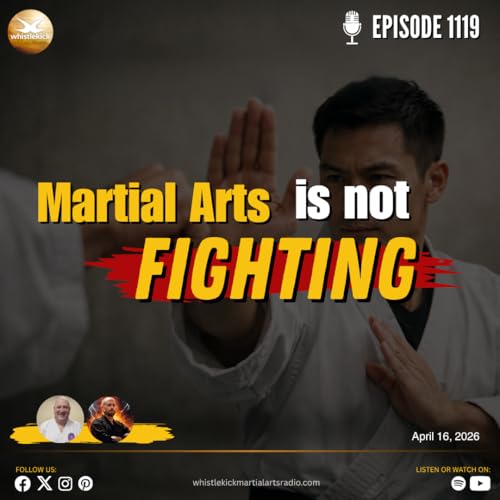
  • Episode 1119 - Martial Arts is NOT Fighting
    Apr 16 2026

    SUMMARY

    In this episode, Andrew Adams and Jeremy Lesniak delve into the often-debated distinction between martial arts and fighting. They explore the misconceptions surrounding the two, emphasizing that being a martial artist does not inherently make one a fighter. The conversation highlights the importance of understanding different types of combat and the role of training in martial arts. Through their discussion, they aim to clarify the relationship between martial arts practices and real-world fighting scenarios, ultimately advocating for a broader understanding of what martial arts encompasses. They discuss the importance of understanding the context and rules of combat, the carryover of skills from traditional martial arts to fighting, and the criticisms often faced by martial artists. The conversation highlights the value of self-awareness and the personal goals of individuals in martial arts training, while also addressing the trolling and negativity present in discussions about martial arts.

    TAKEAWAYS

    • Martial arts and fighting are not the same.
    • Being a martial artist does not mean you are a fighter.
    • Many people believe they can fight without training.
    • Fighting is often misunderstood by those outside martial arts.
    • Sparring is a key aspect of martial arts training.
    • Not all martial arts training involves fighting.
    • Professional fights operate under agreed-upon rules.
    • Combat can be categorized into different types.
    • Training in martial arts can have various goals beyond fighting.
    • Fighting and martial arts are distinct concepts.
    • Being a good martial artist does not guarantee fighting skills.
    • Context and rules play a crucial role in combat.
    • Training can be enjoyable and educational beyond just fighting.
    • Martial arts can be about personal growth, not just combat.

    Más Menos
    29 m
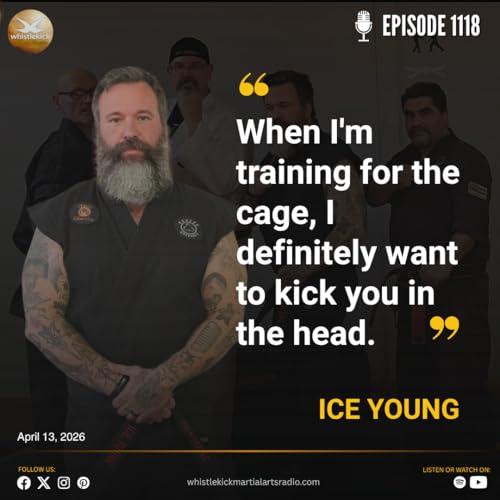
  • Episode 1118 - Ice Young
    Apr 13 2026

    SUMMARY

    In this conversation, Ice Young shares his journey through martial arts, discussing the balance of training for fights while managing various responsibilities, including running a motorcycle club and a martial arts studio. He reflects on his past neglect of forms training and the personal challenges that reignited his passion for martial arts, particularly the influence of his father, who was his first karate instructor. Ice also talks about his upcoming fight and the new challenges he faces in Sanda, a martial arts style that combines elements of kickboxing and judo. In this conversation, Ice shares his extensive journey through martial arts, beginning at a young age and evolving through various styles and experiences. He discusses the importance of legacy, particularly the influence of his father on his teaching methods and the forms he passes down. The conversation delves into the practical applications of martial arts training, the adaptation of techniques for modern practice, and the often misunderstood role of kata in martial arts. Ice emphasizes the need for a balance between tradition and practicality, ensuring that students learn effective self-defense while respecting the roots of martial arts. Ice also recounts his unique connection with Diamond Dallas Page, emphasizing the genuine care and motivation that drives him in both martial arts and life. The conversation highlights the significance of support systems and the passion that fuels a martial artist's journey.

    TAKEAWAYS

    • Forms training can be neglected but is essential for overall martial arts development.
    • Transitioning from fighting to forms can be a challenging but rewarding process.
    • New challenges in martial arts can lead to growth and development.
    • Understanding different martial arts styles enhances overall skills.
    • The journey in martial arts is often non-linear and filled with obstacles.
    • Experiences with various martial arts styles influenced his teaching.
    • Legacy plays a crucial role in his martial arts philosophy.
    • He emphasizes practical application in training.
    • Ice's teaching incorporates elements from his father's system.
    • Kata serves as a valuable tool for learning and fitness.
    • Forms are essential for understanding movement and principles.
    • Ice's approach blends tradition with contemporary practices.

    Join our EXCLUSIVE newsletter to get notified of each episode as it comes out!
    Subscribe — whistlekick Martial Arts Radio

    Más Menos
    1 h y 14 m
  • Episode 1117 - Martial Things with Andrea Harkins
    Apr 9 2026

    SUMMARY

    In this episode, Andrea Harkins and Andrew Adams engage in a free-flowing conversation about martial arts, social media, and the importance of community engagement. They discuss the evolution of Andrea's social media presence, particularly on TikTok and Facebook, where she poses thought-provoking questions to the martial arts community. The conversation also delves into the role of competition in martial arts, the definition of greatness, and the importance of motivation and inspiration in the martial arts journey. In this conversation, they delve into the multifaceted world of martial arts, discussing personal experiences, the significance of history, and the evolving nature of training. They also explore the importance of individual journeys in martial arts, the relevance of the belt system, and the value of personal growth over competition. The dialogue emphasizes that martial arts can serve various purposes beyond fighting, including self-awareness and confidence building.

    TAKEAWAYS

    • Social media can be a powerful tool for community engagement.
    • Posing questions can spark meaningful conversations in martial arts.
    • Competition is not a requirement for being a great martial artist.
    • Greatness in martial arts is subjective and personal.
    • Motivation and inspiration are key to encouraging others in martial arts.
    • Engaging with different opinions can broaden perspectives.
    • Martial arts can be pursued for various personal reasons.
    • Martial arts can be a personal journey rather than just a fighting art.
    • Understanding the history of martial arts can enhance appreciation but isn't essential for practice.
    • Competition can provide valuable pressure testing for skills learned.
    • The belt system in martial arts is often misunderstood and varies by school.
    • Martial arts training can lead to personal growth and self-discovery.
    • The reasons for training in martial arts can change over time.

    Join our EXCLUSIVE newsletter to get notified of each episode as it comes out!
    Subscribe — whistlekick Martial Arts Radio

    Más Menos
    43 m
Todavía no hay opiniones