

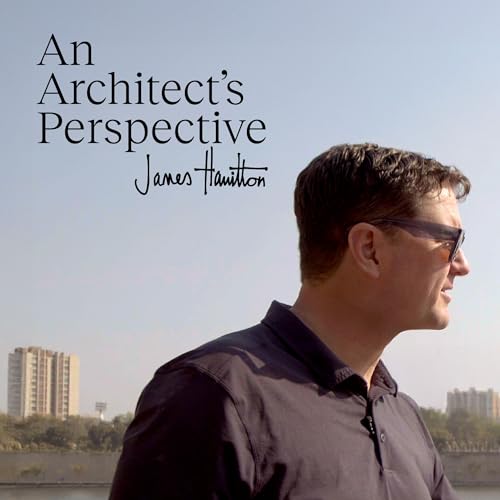
Can architecture be both strict and sensual?
Failed to add items
Add to Cart failed.
Add to Wish List failed.
Remove from wishlist failed.
Adding to library failed
Follow podcast failed
Unfollow podcast failed

Can architecture be both strict and sensual?
-
Narrated by:
-
By:
In this episode of An Architect’s Perspective, I’m joined by architect and designer Eva
Jiřičná to revisit Villa Tugendhat, Mies van der Rohe’s 1930 masterwork in Brno. We
explore how the house’s radical openness, material refinement, and structural precision
helped shape the language of early modernism - and how its influence continues to ripple
through contemporary architecture.
Eva reflects on her visits to the house, her Czech roots, and what Mies’s architecture taught
her about space, clarity, and light. This is a conversation about discipline, elegance, and the
quiet ambition of one of modernism’s most iconic homes.
Key Topics:
- Mies van der Rohe’s revolutionary use of glass and steel
- Spatial clarity as a form of elegance
- The ethics of early modernism — simplicity as principle
- How Villa Tugendhat influenced Eva Jiřičná’s own design philosophy
- Restoration, memory, and the architectural legacy of modernism
Guest Info:
Eva Jiřičná is a Czech-born architect and designer known for her precision, use of glass
and steel, and elegant spatial compositions. She has worked across Europe and is
internationally recognised for her commercial and residential projects.
Quotes from the Episode:
On early modernism:
"It wasn’t about aesthetics. It was about how people could live — with honesty, with clarity,
with light."
On Mies’s restraint:
"To use marble, steel, and glass — but with such discipline. That’s where the beauty lies."
On architectural legacy:
"The house doesn’t shout. It speaks quietly, with conviction. That’s the kind of modernism I
believe in."
Website: www.jameshamiltonarchitects.com
Instagram: @jameshamiltonarchitects
Production: OneFinePlay.com