

Major Malfunction: The Doomed Challenger Shuttle Launch
Failed to add items
Sorry, we are unable to add the item because your shopping cart is already at capacity.
Add to Cart failed.
Please try again later
Add to Wish List failed.
Please try again later
Remove from wishlist failed.
Please try again later
Adding to library failed
Please try again
Follow podcast failed
Please try again
Unfollow podcast failed
Please try again
Audible Standard 30-day free trial
Select 1 audiobook a month from our entire collection of titles.
Yours as long as you’re a member.
Get unlimited access to bingeable podcasts.
Standard auto renews for $8.99 a month after 30 days. Cancel anytime.

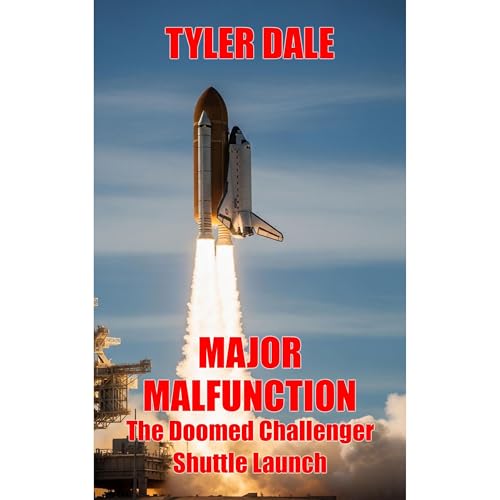
Major Malfunction: The Doomed Challenger Shuttle Launch
Narrated by:
Virtual Voice
Buy for $7.99
-
Narrated by:
-
Virtual Voice
-
By:
-
Tyler Dale

This title uses virtual voice narration
Virtual voice is computer-generated narration for audiobooks.
Seventy-three seconds after liftoff, the Space Shuttle Challenger broke apart over the Atlantic Ocean, killing all seven crew members and shaking the nation's confidence in the space program to its core. A country that had grown comfortable with the idea of routine spaceflight was suddenly forced to confront the reality that something had gone terribly and publicly wrong. The question that hung over everything in the days and weeks that followed was straightforward and devastating: how could this have happened?
This book traces the full arc of that story, from humanity's first steps toward space through the Cold War rivalries that built NASA, the hard-won victories of the moon program, the Soviet Union's own hidden space disasters, and the compromises that shaped the shuttle. It follows the seven crew members who boarded Challenger that January morning, the investigation that exposed what went wrong and why, and the long effort to return to flight while a nation watched to see whether America's reach for the stars could survive its worst day.
The answer to how it happened turned out to be more complicated and more human than anyone expected, a story not of villains but of accumulated habits, institutional blind spots, and the slow erosion of caution inside an organization that had come to believe its own success meant the risks had been conquered.
No reviews yet