

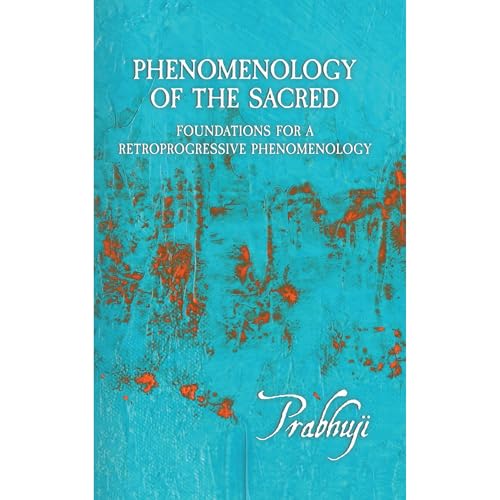
Phenomenology of the Sacred
Foundations for a Retroprogressive Phenomenology
Failed to add items
Sorry, we are unable to add the item because your shopping cart is already at capacity.
Add to Cart failed.
Please try again later
Add to Wish List failed.
Please try again later
Remove from wishlist failed.
Please try again later
Adding to library failed
Please try again
Follow podcast failed
Please try again
Unfollow podcast failed
Please try again
Audible Standard 30-day free trial
Select 1 audiobook a month from our entire collection of titles.
Yours as long as you’re a member.
Get unlimited access to bingeable podcasts.
Standard auto renews for $8.99 a month after 30 days. Cancel anytime.

Phenomenology of the Sacred
Narrated by:
Virtual Voice
Buy for $14.99
-
Narrated by:
-
Virtual Voice

This title uses virtual voice narration
Virtual voice is computer-generated narration for audiobooks.
On this basis, Prabhuji presents his Retroprogressive Phenomenology, an expanded phenomenology that inquires into revelation and the sacred, understood as the radiance of a primordial light before which consciousness opens in a receptive and meditative disposition. This perspective transforms our relationship with the world: consciousness and light are interwoven in the manifestation of Being, making perception and cognition possible. Likewise, he proposes light as the origin, principle, and ground of experience.
No reviews yet