

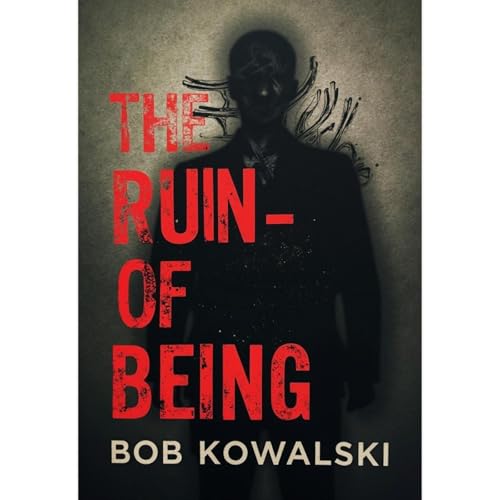
The Ruin of Being
Heidegger and Nazism
Failed to add items
Add to Cart failed.
Add to Wish List failed.
Remove from wishlist failed.
Adding to library failed
Follow podcast failed
Unfollow podcast failed
Audible Standard 30-day free trial

The Ruin of Being
Buy for $4.00
-
Narrated by:
-
Virtual Voice
-
By:
-
Bob Kowalski

This title uses virtual voice narration
The book The Ruin of Being: Heidegger and Nazism offers a critical investigation into the intersections between Martin Heidegger's philosophy and his ideological commitment to the Nazi regime. The work not only explores Heidegger's affiliation with the Nazi Party but also provides a detailed philosophical analysis of how certain aspects of his ontology, especially in Being and Time, can be read in light of the political and moral context of his time.
The author rigorously addresses the ethical implications of Heidegger's philosophy, questioning how key concepts such as "being-in-the-world" and "authenticity" might have been instrumentalized to justify or, at the very least, coexist with totalitarian ideologies. The author does not suggest that Heidegger's work is intrinsically Nazi, but rather that the lack of a clear ethical stance in his philosophy created openings for the thinker to ally with a regime that promoted extreme nationalism, racial exclusion, and oppression.
The historical review in The Ruin of Being is compelling as it examines Heidegger's speeches and writings during his time as rector of the University of Freiburg, revealing how he articulated a critique of modernity that resonated with elements of Nazi ideology, particularly his technophobic and antidemocratic views. The author highlights, for example, Heidegger's use of enigmatic and ambiguous language, which sometimes disguised his support for the regime.
However, the book goes beyond historical judgment. It questions the relevance of Heidegger's philosophy in the contemporary world, raising the provocative issue of whether we can separate the thinker's genius from the weight of his moral choices. This question is particularly relevant to philosophy and the humanities in general, which have sometimes avoided confronting the darker side of Heidegger's legacy directly.
The great merit of the work lies in its ability to conduct a thorough examination without resorting to simplifications. Instead of offering a summary condemnation, the author proposes a critical reading, allowing the reader to take a stance on the complex relationship between philosophy, politics, and ethics.
In summary, The Ruin of Being is a valuable contribution to studies on Heidegger and the ethical responsibility of philosophers and intellectuals in the world. By questioning the relevance of Heideggerian thought in a context that ignores its political implications, the book makes us reflect on the role of philosophy in times of moral and ideological crisis.