

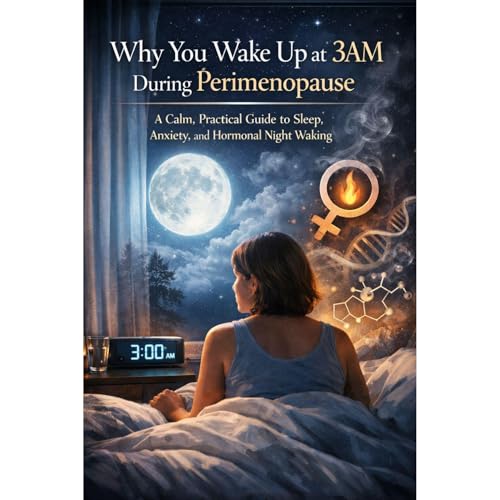
Why You Wake Up at 3AM During Perimenopause
A Calm, Practical Guide to Sleep, Anxiety, and Hormonal Night Waking
Failed to add items
Add to Cart failed.
Add to Wish List failed.
Remove from wishlist failed.
Adding to library failed
Follow podcast failed
Unfollow podcast failed
Audible Standard 30-day free trial

Why You Wake Up at 3AM During Perimenopause
Buy for $9.99
-
Narrated by:
-
Virtual Voice
-
By:
-
Elena Hartwell

This title uses virtual voice narration
If you’re waking up in the early hours of the morning—heart racing, mind alert, unable to fall back asleep—you’re not alone. For many women, sleep disruption is one of the earliest and most frustrating signs of perimenopause.
This book is written for women who fall asleep easily but wake between 2AM and 4AM, night after night, feeling anxious, wired, or exhausted. It explains why perimenopause sleep problems, 3AM wakeups, and hormonal insomniaare so common—and why typical sleep advice often stops working during this stage of life.
Rather than offering quick fixes or medical solutions, this guide focuses on understanding how hormonal changes during perimenopause affect cortisol, blood sugar, temperature regulation, and the nervous system. When you understand what’s happening internally, sleep problems feel less frightening and far more manageable.
This book offers gentle, practical ways to support sleep without pressure, perfection, or fear. The goal is not perfect sleep—but steadier nights and a calmer relationship with rest.
What You’ll Learn Inside This BookWhy perimenopause causes night waking and light sleep
The connection between 3AM wakeups and hormone fluctuations
How anxiety and cortisol affect sleep during perimenopause
Why you can feel exhausted but still wired at night
How blood sugar and temperature changes disrupt sleep
Evening routines that support calmer nights
How to reduce nighttime anxiety without forcing sleep
What helps you fall back asleep more easily
How to protect daytime energy while sleep is disrupted
This Book Is For You If:
You wake up consistently between 2AM and 4AM
You’re in your late 30s, 40s, or early 50s
You suspect perimenopause is affecting your sleep
You feel anxious or alert during night waking
You want non-medical, calming guidance
You’re tired of generic insomnia advice
You want to understand what’s happening instead of fearing it
Sleep disruption during perimenopause is not a failure of relaxation or routine. It is a biological shift that changes how the body regulates rest. Understanding this phase can help you approach sleep with less anxiety, greater clarity, and far more compassion for yourself.