• সামনে 3 Big Crisis আসছে? Iran War Could Crash the Global Economy
    Mar 16 2026

    The ongoing Iran war and the escalating conflict in the Middle East may be triggering one of the biggest global economic shocks in decades. What started as a regional conflict is now threatening to disrupt global oil supply, food security, and the financial system.In this video, we break down how a single war could lead to three massive global crises: Energy Crisis, Food Crisis, and Financial Crisis.At the center of this geopolitical crisis is the Strait of Hormuz, one of the most critical shipping routes in the world. Nearly 20% of the world's oil and a significant portion of global natural gas supplies pass through this narrow waterway every day. But with the war intensifying and attacks on oil tankers increasing, shipping in and around the Strait of Hormuz has slowed dramatically.As oil tankers are attacked and cargo ships remain stranded in the Persian Gulf, the global energy supply chain is under enormous pressure. This disruption has already pushed oil prices higher and raised fears of a massive oil shock similar to the crises of the 1970s.But the consequences go far beyond energy markets.The Gulf region is not only a major oil producer but also one of the largest suppliers of fertilizers and natural gas used in agriculture. If shipping routes remain disrupted, global fertilizer supply could be affected. That could reduce crop production and trigger a global food crisis, affecting countries from India and Brazil to Africa and Southeast Asia.At the same time, rising oil prices increase transportation costs, raise inflation, and force central banks to consider higher interest rates. This creates pressure on the global financial system and could slow economic growth worldwide.Many analysts are now warning that the conflict could evolve into a global economic crisis, impacting everything from fuel prices and food costs to jobs, investments, and household budgets.The United States has already called on several countries including the UK, Japan, France, China, and South Korea to deploy naval forces to secure the Strait of Hormuz and protect global shipping routes. However, international response has so far been cautious, raising serious questions about how long this conflict could continue and what its long-term consequences might be.If this war drags on, the ripple effects could reshape the global economy. Higher oil prices could trigger inflation, disrupt supply chains, and slow economic growth across Europe, Asia, and the United States.In this investigative documentary-style analysis, we explain:• Why the Strait of Hormuz is the world's most important energy chokepoint• How the Iran conflict could trigger the biggest oil disruption in modern history• Why fertilizer shortages could lead to a global food crisis• How rising energy prices could push the world toward inflation and recession• And how these crises could impact ordinary people through higher living costs, food prices, fuel costs, and job uncertainty.This video connects the dots between war, energy markets, agriculture, and the global financial system to understand how a single geopolitical conflict could reshape the world economy.Watch till the end to understand why experts are warning about three global crises that could change the future of the global economy.#IranWar #OilShock #StraitOfHormuz #EnergyCrisis #FoodCrisis #FinancialCrisis #GlobalEconomy #MiddleEastConflict #OilPrices #Geopolitics #WorldEconomy #IranIsraelWar #OilSupply #EconomicCrisis #GlobalCrisis

    Show more Show less
    10 mins
  • Iran War: কোন দিকে এগোচ্ছে যুদ্ধ? 10 Big Questions Explained
    Mar 11 2026

    The Middle East is once again at the center of global tension. In recent days, the Iran war crisis has escalated rapidly with missile strikes, retaliation, and growing geopolitical confrontation involving the United States, Israel, and Iran. But behind the breaking news headlines, there are deeper questions that many people around the world are asking.Why did this conflict start now? Is this really just a US vs Iran war, or are there larger geopolitical forces shaping the situation?In this investigative documentary-style video, we break down the Iran war through 10 critical questions that help explain what is really happening in the Middle East right now.We explore the latest developments in the conflict, including the rise of Mojtaba Khamenei as Iran’s new Supreme Leader, the largest US military deployment in the Middle East since the Gulf War, and the possibility that the conflict could expand into a much wider regional war.But beyond the battlefield, the story becomes even more complex.Some analysts believe the crisis may also be connected to larger geopolitical strategies, including oil politics, global energy security, and control of key trade routes such as the Strait of Hormuz.At the same time, new debates are emerging in the United States around domestic politics and whether the war is affecting political dynamics ahead of upcoming elections.Another fascinating dimension of this conflict is the role of modern technology and artificial intelligence in warfare. Military analysts are increasingly discussing how AI-driven intelligence, satellite data, drone surveillance, and real-time targeting systems may be changing the nature of modern warfare.Could AI and data-driven targeting systems be shaping the battlefield in ways we have never seen before?The video also examines why major global powers such as Russia, China, Europe, and NATO appear cautious and relatively silent despite the rapidly escalating conflict.And perhaps most importantly, we explore the potential global consequences if the conflict spreads further.If tensions in the Persian Gulf intensify and the Strait of Hormuz becomes unstable, the impact could be felt worldwide through rising oil prices, supply chain disruptions, and economic pressure on countries that depend heavily on Middle Eastern energy.This includes major economies such as India, China, Pakistan, and Bangladesh, where fuel prices and inflation could be affected by prolonged instability in the region.Through these 10 big questions, this video aims to provide a clear, balanced, and easy-to-understand explanation of one of the most complex geopolitical crises unfolding today.If you want to understand the deeper forces behind the Iran war, the power struggles shaping the Middle East, and how this conflict could affect the global economy and ordinary people around the world, this video will help you see the bigger picture.Watch the full video and let us know your thoughts in the comments.100 years of Middle East War - Why is Middle East burning Full link to the episode - https://youtu.be/_mNsLCuR_AcFull link to the playlist - https://www.youtube.com/playlist?list=PLflv4qO3BdnOOGgmmmC0XZA4wM_YMbFCdDo you think this conflict will escalate further, or will diplomacy eventually bring it to an end?Disclaimer: Some visuals in this video may include AI-generated images used for reference and educational purposes only.#IranWar #MiddleEastCrisis #IranUSWar #Geopolitics #IranIsraelConflict #WorldPolitics #MiddleEastWar #GlobalPolitics #IranWarExplained #StraitOfHormuz #OilPolitics #AIWarfare

    Show more Show less
    19 mins
  • Was Iran really betrayed? How America Turned a Friend into an Enemy!
    Mar 7 2026

    Was Iran really betrayed? Or is the story far more complicated than what we hear in the news?Today, the relationship between Iran and the United States is defined by sanctions, military tensions, nuclear threats, and geopolitical rivalry. Iran is often portrayed as one of the biggest security threats in the Middle East. Western media frequently highlights Iran’s nuclear program, its regional influence, and its role in ongoing Middle East conflicts.But the truth is far more complex.There was a time when Iran and the United States were actually close allies. During the Cold War, Iran was one of Washington’s most important strategic partners in the Middle East. The U.S. supported Iran militarily, economically, and politically. American companies helped develop Iran’s oil industry, and the Shah of Iran maintained strong diplomatic ties with the West.So what changed?How did two allies become bitter geopolitical rivals?To understand today’s tensions between Iran and the United States, we need to go back several decades and examine a series of major historical events that reshaped the Middle East.This video explores the critical turning points in Iran–US relations, including:• The 1953 CIA-backed coup in Iran, which overthrew Prime Minister Mohammad Mossadegh• The rise of Shah Mohammad Reza Pahlavi and Iran’s close alliance with the United States• The rapid modernization of Iran during the 1960s and 1970s• The growing social and political tensions that led to the 1979 Iranian Revolution• The rise of Ayatollah Khomeini and the establishment of the Islamic Republic of Iran• The Iran hostage crisis and the collapse of diplomatic relations with the United States• The devastating Iran–Iraq War (1980–1988)• Iran’s controversial nuclear program and international sanctions• The 2015 Iran Nuclear Deal (JCPOA) and its collapse after the United States withdrew in 2018• The modern geopolitical tensions shaping the Middle East todayThis story is not simply about Iran versus America.It is about power, geopolitics, national interests, and decades of mistrust.In international politics, there are rarely permanent friends or permanent enemies—only permanent interests. The history of Iran and the United States perfectly illustrates this reality.By examining the historical events that shaped this relationship, we can better understand the roots of today’s conflicts in the Middle East and why tensions between Iran and the West continue to shape global politics.Watch the full video to uncover the hidden story behind the Iran–America relationship and decide for yourself:Was Iran betrayed? Or is history repeating itself once again?Topics Covered in This Video• Iran US relations explained• CIA coup in Iran 1953• Mohammad Mossadegh and the nationalization of Iranian oil• Shah of Iran and US alliance• Iranian Revolution 1979 explained• Ayatollah Khomeini and the Islamic Republic• Iran hostage crisis• Iran Iraq war history• Iran nuclear program explained• Iran nuclear deal 2015 (JCPOA)• US sanctions on Iran• Middle East geopolitics explained• Iran vs America conflict historyFull Playlist : https://www.youtube.com/playlist?list=PLflv4qO3BdnOOGgmmmC0XZA4wM_YMbFCd#Iran #IranUS #IranUSConflict #IranHistory #IranRevolution #IranAmerica #MiddleEastConflict #Geopolitics #IranWar #Iran2026War #USIranWar #IranIsraelConflict #IranNuclear #IranNuclearDeal #MiddleEastWar #GlobalPolitics #IranCoup1953 #IranIraqWar #AyatollahKhomeini #IranGeopolitics #WorldPolitics #IranSanctions #MiddleEastTensions #IranCrisis #geopoliticsexplained #donaldtrump

    Show more Show less
    16 mins
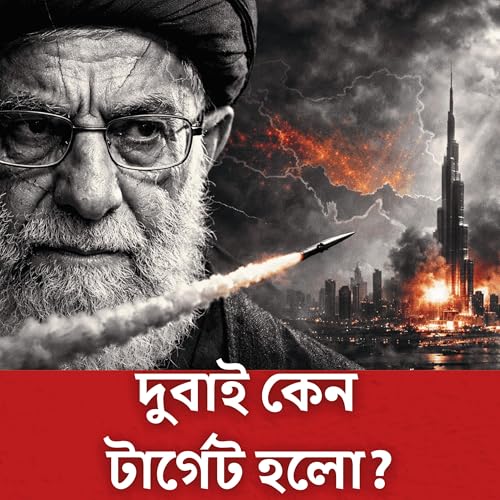
  • Why Did Iran Target Dubai? কৌশল না প্রতিশোধ? The Hidden Strategy Explained
    Mar 2 2026

    Dubai has always been seen as a global safe haven — a financial hub, luxury tourist destination, and stable business center in the Middle East. So why would Iran target Dubai amid escalating tensions with the United States and Israel?

    In this video, we break down the strategic reasons behind Iran’s move and explain:

    • Why Dubai may not be viewed as “neutral” from Iran’s perspective
    • The role of US military presence in the UAE
    • How Al Dhafra Air Base changes the geopolitical equation
    • Why Strait of Hormuz is the world's economic nervous system
    • How Dubai functions as a global financial nerve centre
    • Why major banks like Citibank, JPMorgan, Morgan Stanley operating in DIFC matter
    • The impact on global oil markets, LNG supply, and energy security
    • The financial shockwaves that could hit Wall Street and global investors
    • How AI data centers, tech hubs, and digital infrastructure increase Dubai’s strategic importance
    • Whether Iran is trying to pressure America indirectly
    • What China and Russia’s silence means
    • Possible future scenarios for the Gulf region

    This is not just about missiles or retaliation. This is about geopolitics, economic warfare, global finance, and power networks in the Middle East.

    If you want to understand the deeper strategy behind the Iran-Dubai conflict, this analysis connects the dots.

    Watch till the end to understand where this war could be headed.

    Show more Show less
    12 mins
  • How Elon Musk Became World's Richest Man | From ₹500 a day to $1 Trillion | Bengali
    Feb 19 2026

    How did Elon Musk go from an ordinary middle-class teenager to the richest man on Earth?From earning almost nothing in his early days to building companies worth hundreds of billions, Elon Musk’s journey is not just about money — it’s about vision, risk, resilience, and value creation.In this video, we break down the real story behind Elon Musk’s rise. Not the headlines. Not just the controversies. But the struggles, failures, risks, and bold decisions that shaped his path.Born in South Africa, Elon Musk did not grow up as a billionaire. He faced bullying in school. He was introverted. He read books obsessively. He taught himself programming. At just 12 years old, he created and sold his first video game. That was the beginning of a mindset — solving problems and creating value.From Zip2 to PayPal, from Tesla to SpaceX, from near bankruptcy in 2008 to becoming the world’s richest man — every step was a calculated risk. In 2008, both Tesla and SpaceX were close to collapse. He invested his last remaining money into his companies. That decision changed everything.Today, Elon Musk leads Tesla, SpaceX, X (Twitter), Neuralink, and other groundbreaking ventures. His net worth has crossed hundreds of billions of dollars, at times approaching the trillion-dollar mark in valuation influence. But the real lesson is not the number.The real lesson is how wealth is built.Wealth is not created overnight.It is created by:– Solving meaningful problems– Taking bold risks– Reinvesting profits– Thinking long-term– Staying resilient through failureThis is not just a biography. This is a breakdown of mindset, strategy, and execution.If you are interested in:• How to build wealth from scratch• Entrepreneurship mindset• How billionaires think• Elon Musk biography• Tesla success story• SpaceX innovation• Financial growth and value creation• Motivation for entrepreneursThen this video is for you.Whether you are a student, working professional, business owner, or dreamer — the journey of Elon Musk proves that starting small does not limit where you can go.You may not build rockets.You may not start a trillion-dollar company.But you can start creating value.And that is where everything begins.Watch till the end to understand the step-by-step evolution of Elon Musk — from a young coder to the richest man on Earth.Disclaimer:This video contains some AI-generated visuals used purely for storytelling and illustrative purposes. They are included to enhance the narrative experience and do not alter factual information.#elonmusk #elonmuskstory #RichestMan #worldrichestman #Motivation #entrepreneurmindset #SuccessStory #Tesla #SpaceX #billionairemindset #wealthcreation #businessmotivation #howtomake #financialfreedom #startupjourney #fromzerotohero #moneymindset #selfmadebillionaires #inspiration #successmotivation #entrepreneurlife

    Show more Show less
    24 mins
  • Iran, Israel, Palestine — How the 100-Year Conflict Began? The real secret game
    Feb 5 2026

    From the birth of civilization to the chaos of modern warfare — the Middle East has carried the scars of a century-long conflict that refuses to end.This video takes you on a cinematic journey through 100 years of power, religion, and politics, revealing how today’s wars between Iran, Israel, and Palestine were seeded over a century ago.🔥 What you’ll discover in this video:How ancient empires like Babylon, Mesopotamia, and Persia shaped the region’s destiny.The Ottoman Empire’s fall and how the Sykes–Picot Agreement (1916) secretly redrew the Middle East map.The birth of Israel and Palestine, and how one promise to Arabs and another to Jews planted the roots of endless conflict.The Cold War influence that turned oil into a weapon — creating dictators like Saddam Hussein, Gaddafi, and the Shah of Iran.How America, Russia, and China turned the region into their own geopolitical chessboard.Why Iran’s revolution, proxy wars, and nuclear ambitions still shake the balance of power.The tragedy of Palestine’s displacement, the wars of 1948, 1967, and 1973, and how history repeats itself in every new generation.The rise of ISIS, the collapse of Syria, Yemen, and Libya, and the illusion of peace that never lasts.And finally — why, after a hundred years, the region still burns… from Gaza to Tehran, from Damascus to Tel Aviv.💡 This is not just a story of war.It’s the story of human ambition, betrayal, and survival — how world powers played their games on the deserts of the Middle East while millions of ordinary people paid the price.🛢️ OIL, BLOOD & POWER: THE MIDDLE EAST’S DEADLY GAMESaddam Hussein’s Execution: Was it really about WMDs—or oil?Iran vs Saudi Arabia: The $1 TRILLION religious war fueling Yemen’s famineISIS’ True Creators: The shocking link to US intelligence and Saudi money☠️ THE FUTURE: WILL WORLD WAR 3 START HERE?The AI Arms Race: How drones and AI are changing war forever⏳ VIDEO CHAPTERS (Watch the Shocking Truth Unfold):00:00 - Intro01:07 - Ch1 Where Wars Began02:45 - Ch2 Rise & Fall 04:40 - Ch3 Britain’s Divide & Rule08:37 - Ch4 One land, 2 promises13:07 - Ch5 The Oil Curse?16:07 - Ch6 Religion or Politics?19:19 - Ch7 Revolution or New Curse?22:39 - Ch8 New Hope In this episode you will learn :- Middle East conflict explained in Bengali - Why this war is never ending?- Israel vs Palestine full history- Middle East history documentary style- Gaza war 2024 context- Oil politics, Sunni-Shia conflict- Sykes-Picot Agreement simplified- Arab Spring explained Bengali- UAE Saudi Arabia Vision 2030In this cinematic storytelling documentary (in Bengali), we uncover:- How ancient civilizations like Mesopotamia, Babylon, and the Persian Empire thrived in what is now war-torn lands.- The rise and fall of the mighty Ottoman Empire and how World War I changed the Middle East forever.- The dark colonial secrets of the **Sykes-Picot Agreement** and **Balfour Declaration** that divided the region.- The painful birth of **Israel and Palestine**, the 1948 Nakba, and the never-ending Arab-Israeli conflict.- How the discovery of **oil** turned the Middle East into a battlefield of **power, profit, and politics**.- The religious divide between **Sunni and Shia**, proxy wars led by **Saudi Arabia and Iran**, and the rise of militant groups like **Hamas**, **Hezbollah**, and **ISIS**.- The story of the Arab Spring — a revolution that began with hope but ended in civil wars and chaos.- Stories of resilience, like the rebuilding of Dubai and Saudi Arabia’s Vision 2030.- And the heartbreaking tale of Aylan Kurdi, the child whose death shook the world.From ancient history to modern war, religion to resources, empires to oil politics — this video answers the most critical questionWhy is peace still a dream in the Middle East?

    Show more Show less
    25 mins
  • Why the US Reacted So Fast After the EU–India Trade Deal | Jobs, Tariffs & Money
    Feb 4 2026

    The EU–India Trade Deal is being described as the “mother of all trade deals”.Within days of this announcement, the United States reacted by cutting tariffs on Indian goods.But beyond headlines and geopolitics, the real question is economic:What does this trade deal mean for jobs, money, exports, manufacturing, and common people in India?In this video, we break down the EU–India Free Trade Agreement purely from an economic and financial perspective. We explain how tariff reductions, expanded market access, and new trade flows could impact India’s economy over the next decade.This is not a news recap.This is a deep but simple economic analysis.What this video explains:• Why Europe urgently needs access to India’s growing consumer market• How reduced tariffs affect prices, exports, and manufacturing• Why the US responded so quickly after the EU–India deal• How global trade uncertainty is reshaping economic alliances• Which Indian sectors could see growth in jobs and income• What this means for MSMEs, manufacturing, exports, and supply chains• How trade deals translate into real employment — and when they don’t- Is Europe getting poor?We also look at how India’s recent trade agreements with multiple countries signal a shift in its economic strategy — moving away from dependence on a single market and strengthening its bargaining power in global trade.Most importantly, this video focuses on real-world impact:– Will exports actually increase?– Which sectors could see employment growth?– How does trade affect wages, factories, and small businesses?– Can India convert trade agreements into long-term economic strength?As global supply chains shift and economies search for stable markets, India is increasingly at the centre of global trade decisions. But opportunity alone is not enough — execution, competitiveness, and productivity will decide the outcome.If you are interested in economy, finance, jobs, trade, manufacturing, or how global decisions affect everyday life, this video will help you understand what’s really at stake.#IndiaEconomy #EUIndiaTradeDeal #TradeDealExplained #JobsInIndia #EuropeEconomy #IndianExports #ManufacturingIndia #MSMEIndia #Tariffs #GlobalTrade #EconomicAnalysis #europe #germany #france #spain #pooreurope

    Show more Show less
    18 mins
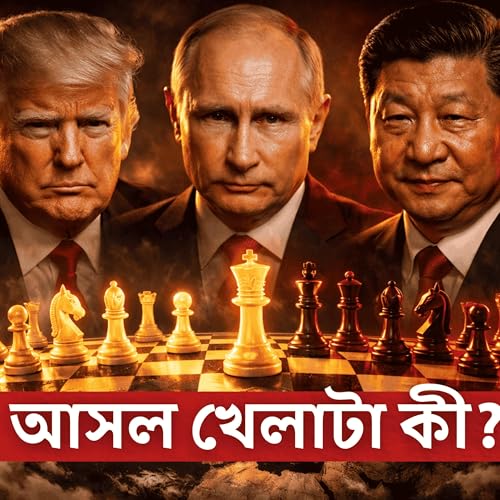
  • What Are Superpowers Really Fighting For? | USA, China, Russia
    Jan 24 2026

    What is really happening in the world right now?

    Every day, we see news about wars, conflicts, protests, tariffs, sanctions, and rising global tensions. Ukraine, the Middle East, Taiwan, Venezuela, trade wars, energy crises — it all looks chaotic and disconnected. But is it really chaos?

    In this video, we step back from daily headlines and look at the bigger picture.

    This is not just about wars.
    This is not just about countries fighting each other.
    This is about a global power race.

    In this in-depth geopolitical analysis, you’ll learn what the world’s superpowers are actually competing for — and why the actions of the United States, China, and Russia are part of a much larger pattern that has repeated throughout history.

    • Why global conflicts often increase at the same time
    • Why trade wars, tariffs, and sanctions are now used like weapons
    • Why energy security, technology, and resources matter more than territory
    • Why international institutions struggle during major power shifts
    • Why the world feels unstable even without a single global war

    We explore how history has seen similar phases before — when one dominant power begins to face challengers, and the global system starts to shift. From the rise of the United States and Germany against the British Empire, to the economic collapse of the 1930s, to the relative stability after the Cold War — and why that stability is now breaking down.

    Why is the U.S. taking strong actions far beyond its borders?
    Why are energy routes, trade pressure, tariffs, and strategic geography so important to American policy today?

    Why is Taiwan central to China’s long-term strategy?
    How do technology, semiconductor chips, infrastructure projects, and global loans fit into China’s rise as a superpower?

    Why is the war in Ukraine not just about territory?
    Why does Russia see this conflict as existential to its influence and security?

    This video connects energy security, military power, technology dominance, AI, advanced chips, trade routes, natural resources, and geopolitical influence into one clear explanation of what the global race is really about.

    We also examine why ordinary people feel the impact of these power struggles through:
    • Rising fuel prices
    • Inflation and cost of living
    • Job uncertainty
    • Market instability

    Finally, we end with a thought-provoking reflection — even centuries ago, thinkers like Nostradamus wrote about cycles of fear, power, and conflict. Without claiming predictions, we ask the question many people are already wondering:

    Are we heading toward a larger global conflict — or is this the world rearranging itself before something new emerges?

    This video does not take sides.
    It does not promote fear.
    It explains the pattern — so you can understand what’s really happening.

    👉 Watch till the end, and share your thoughts in the comments.

    🔍 What this video explains:🇺🇸 United States🇨🇳 China🇷🇺 Russia

    Show more Show less
    13 mins