Episodes

  • The Stunning King Eider
    Mar 25 2026

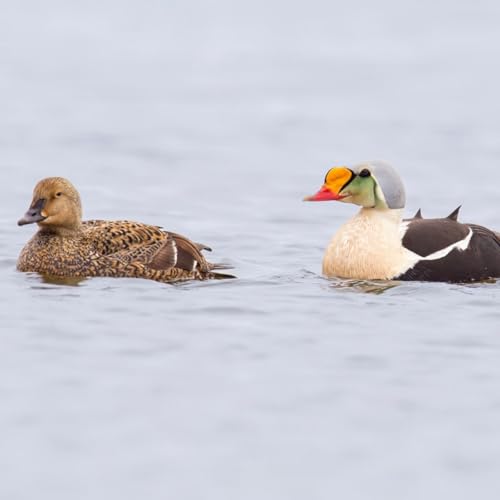
    The King Eider is one of the most striking sea ducks in the Northern hemisphere. This male King Eider is trying to woo a mate with soft coos and brilliant colors — his beak and feathers are decked out in black, white, green, grey, tangerine, yellow, and ivory. Unlike her showy suitor, the female King Eider is mottled brown — the perfect camouflage for blending into the Arctic tundra. After incubating her nest for nearly 3 weeks by herself, the female eider leads her fluffy chicks to the sea where the ducks spend the winter diving amidst the pack ice in search of tasty shellfish.

    This episode is dedicated to Gary and Liz Kennedy Ketcheson, who are grateful to BirdNote for sharing the wonder of birds with listeners around the world.

    More info and transcript at BirdNote.org.

    Want more BirdNote? Subscribe to our weekly newsletter. Sign up for BirdNote+ to get ad-free listening and other perks.

    BirdNote is a nonprofit. Your tax-deductible gift makes these shows possible.


    Hosted by Simplecast, an AdsWizz company. See pcm.adswizz.com for information about our collection and use of personal data for advertising.

    Show more Show less
    2 mins
  • How a Bird Came to Look Like a Caterpillar
    Mar 24 2026

    The Cinereous Mourner is a small, ashy-gray bird that lives in the forest understory of the Amazon Basin. And it’s taking mimicry to the next level: when viewed from above, lying alone in its cup-shaped nest, its chick is a near match to a highly toxic caterpillar — one that snakes and monkeys won’t eat. The chick even waves its head like a caterpillar, increasing the illusion.

    ¡Escuche este episodio en BirdNote en Español!

    This episode is brought to you by Wild Delight Bird Food, which aims to support wild bird populations with clean, nutritious ingredients in every blend. Available at Chewy.com.

    More info and transcript at BirdNote.org.

    Want more BirdNote? Subscribe to our weekly newsletter. Sign up for BirdNote+ to get ad-free listening and other perks.

    BirdNote is a nonprofit. Your tax-deductible gift makes these shows possible.


    Hosted by Simplecast, an AdsWizz company. See pcm.adswizz.com for information about our collection and use of personal data for advertising.

    Show more Show less
    2 mins
  • Dovekie At Sea
    Mar 23 2026

    Dovekie are robin-sized seabirds related to auks and puffins. Their compact, black-and-white bodies are perfect for life on the water. In winter, birders and boaters can sometimes spot flocks of Dovekie as far south as coastal New England. In summer, Dovekie high-tail it to the Arctic where they form massive breeding colonies on rocky islands and cliffsides. Dovekie are one of the most abundant birds in the North Atlantic, but their populations have declined drastically since the 1970s. Like many ocean species, Dovekie face lethal threats from oil spills and chemical pollution. By advocating for clean water and green energy, we can protect our global oceans for people and birds — like Dovekie.

    This episode is brought to you in loving memory of John Hardner, a father and educator who loved nature and public radio.

    More info and transcript at BirdNote.org.

    Want more BirdNote? Subscribe to our weekly newsletter. Sign up for BirdNote+ to get ad-free listening and other perks.

    BirdNote is a nonprofit. Your tax-deductible gift makes these shows possible.


    Hosted by Simplecast, an AdsWizz company. See pcm.adswizz.com for information about our collection and use of personal data for advertising.

    Show more Show less
    2 mins
  • The Lustrous Purple Gallinule
    Mar 22 2026

    What’s the most colorful bird in the U.S.? The Scarlet Tanager? Maybe the Painted Bunting? Well, consider one more lustrous candidate: the Purple Gallinule. The Purple Gallinule’s feathers are so iridescent that they might not seem real. Despite its bold style, a Purple Gallinule can be hard to spot. The colors create excellent camouflage among the greens, blues and floral highlights of a marsh.

    Support comes from Wild Delight Bird Food, offering a variety of blends designed to mimic the natural resources wild birds crave, available at Chewy.com.

    More info and transcript at BirdNote.org.

    Want more BirdNote? Subscribe to our weekly newsletter. Sign up for BirdNote+ to get ad-free listening and other perks.

    BirdNote is a nonprofit. Your tax-deductible gift makes these shows possible.


    Hosted by Simplecast, an AdsWizz company. See pcm.adswizz.com for information about our collection and use of personal data for advertising.

    Show more Show less
    2 mins
  • Chestnut-collared Longspur
    Mar 21 2026

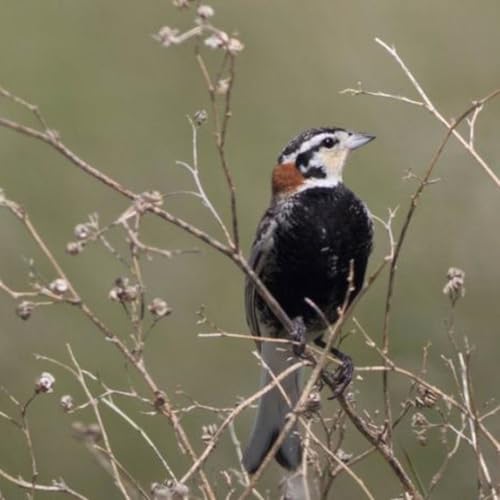
    The cheerful-voiced Chestnut-collared Longspur shares their northern prairie breeding range with grazing cattle. Although heavy grazing can have adverse effects, breeding densities of longspurs jump by two, three, or even 10 times when ranchers graze their cattle responsibly on native prairies. Two centuries ago, the birds were probably more abundant on prairies used by bison than on untouched stands of tall grass.

    More info and transcript at BirdNote.org.

    Want more BirdNote? Subscribe to our weekly newsletter. Sign up for BirdNote+ to get ad-free listening and other perks.

    BirdNote is a nonprofit. Your tax-deductible gift makes these shows possible.


    Hosted by Simplecast, an AdsWizz company. See pcm.adswizz.com for information about our collection and use of personal data for advertising.

    Show more Show less
    2 mins
  • Flying Dinosaurs: Leaping and Gliding
    Mar 20 2026

    For years, scientists debated whether the first flying dinosaurs, the ancestors of modern birds, began by running and making little hops off the ground, or leapt off a tree branch to glide. It’s called the “ground up vs. trees down” debate, for short. But a newer perspective on this mystery suggests that flying dinosaurs tried taking flight from more than one place. Recent findings suggest that the ability to fly could have evolved not just once but three separate times among dinosaurs.

    Support comes from Wild Delight Bird Food, offering a variety of blends designed to mimic the natural resources wild birds crave, available at Chewy.com.

    More info and transcript at BirdNote.org.

    Want more BirdNote? Subscribe to our weekly newsletter. Sign up for BirdNote+ to get ad-free listening and other perks.

    BirdNote is a nonprofit. Your tax-deductible gift makes these shows possible.


    Hosted by Simplecast, an AdsWizz company. See pcm.adswizz.com for information about our collection and use of personal data for advertising.

    Show more Show less
    2 mins
  • Hilarious Bird Sounds With Becca Rowland
    Mar 19 2026

    Birds make a lot of sounds — so many that author and illustrator Becca Rowland had a hard time keeping them straight. That was until Becca began picking up on familiar noises in common bird calls — like when they heard a dog’s squeaky toy in the trees. Now she’s compiled her fun and functional findings in a new guide called, Bird Talk: Hilariously Accurate Ways to Identify Birds by the Sounds they Make.

    More info and transcript at BirdNote.org.

    Want more BirdNote? Subscribe to our weekly newsletter. Sign up for BirdNote+ to get ad-free listening and other perks.

    BirdNote is a nonprofit. Your tax-deductible gift makes these shows possible.


    Hosted by Simplecast, an AdsWizz company. See pcm.adswizz.com for information about our collection and use of personal data for advertising.

    Show more Show less
    2 mins
  • Create Bird Habitat at Home with Native Plants
    Mar 18 2026

    Birds have lost many habitats they’ve called home for millions of years, but people can help create bird habitats wherever they live. It all begins with native plants. If you have a yard, or even just a few outdoor plant pots, you can offer native plants to birds, butterflies, and other wildlife. Below, find online tools that show you native plant species ideal for your location.

    More info and transcript at BirdNote.org.

    Want more BirdNote? Subscribe to our weekly newsletter. Sign up for BirdNote+ to get ad-free listening and other perks.

    BirdNote is a nonprofit. Your tax-deductible gift makes these shows possible.


    Hosted by Simplecast, an AdsWizz company. See pcm.adswizz.com for information about our collection and use of personal data for advertising.

    Show more Show less
    2 mins