Episodes

  • The Road to Zanskar
    Mar 26 2026
    "Even in winter, twice a month, the first postmen in Zanskar in the 1980s climbed rock faces and crossed frozen rivers -- if you fell in, you could die -- in a journey that took three days, to deliver the post. Then, there's the first allopathic nurse in the region, who once walked without stopping through deep snow for three nights to save a woman in labour. What extreme tourists do today for fun, these people did as part of their regular lives. I had to put down their stories before they were forgotten"- April Fonti, author, The Story Keepers; Voices from a Changing Zanskar, talks to Manjula Narayan about the many strong personalities in the region and their almost superhuman talents, faith and conflict, how modernity has both improved lives and changed the quality of intergenerational relationships, and how local people are adapting to climate change. Learn more about your ad choices. Visit megaphone.fm/adchoices
    Show more Show less
    58 mins
  • Slow and steady wins the race
    Mar 20 2026
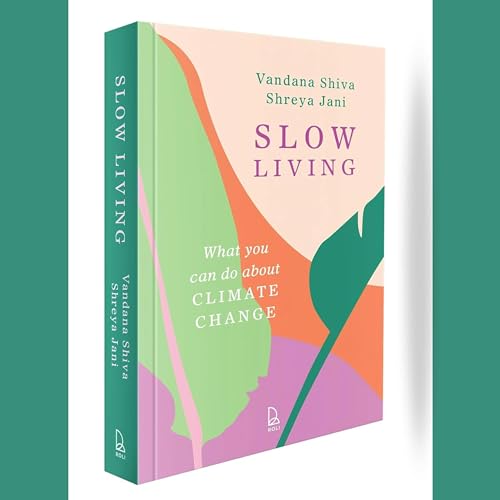
    "The fossil fuel age gave us speed. This, on the one hand, allows us to think, 'I'm going faster', but it never defines 'faster to where, and to what?' You become a victim of speed -- always trying to catch up with yourself. The climate crisis is a result of chasing speed mindlessly, endlessly. Slow living is mindful; it's caring of the earth and of community. Healing our relationship with the Earth is the most urgent matter of our times. We need to learn from the Earth how to be an intelligent species." - Vandana Shiva, environmental activist and food sovereignty advocate, talks to Manjula Narayan about her latest book, Slow Living; What You Can Do About Climate Change Learn more about your ad choices. Visit megaphone.fm/adchoices
    Show more Show less
    54 mins
  • The quiet pull of the Pune police procedural
    Mar 12 2026
    "The way I look at it, whydunnit is actually more important than whodunnit. There are only so many permutations and combinations you can think of in terms of whodunnit. It's finite whereas whydunnit is extremely important because what drives the person? I read a lot of news and I really wonder about the depths to which people can fall"- Salil Desai, author, 26 Bones; An Inspector Saralkar Mystery talks to Manjula Narayan about writing successful murder mysteries set in Pune, the biting wit of his main character, using parallel tracks in storytelling and the exacting nature of crime fiction fans Learn more about your ad choices. Visit megaphone.fm/adchoices
    Show more Show less
    48 mins
  • A return to the land
    Mar 5 2026
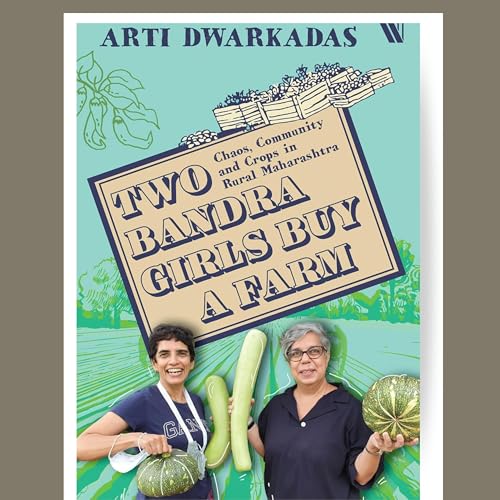
    "We went in with urban confidence and rural reality hit us in the face at every turn! Establishing a farm is probably the most difficult thing I've done. I think everybody should do it."- Arti Dwarkadas, author, Two Bandra Girls Buy a Farm, talks to me about growing varieties of rice, mangoes, tomatoes and more on the patch of land in rural Maharashtra that she and her friend Suzann have been nurturing for the last five years, their Adivasi neighbours' encyclopedic knowledge of plants, the agricultural uses of Google Lens, the wild boar attack that destroyed a whole banana patch, why the future of small farm holdings looks increasingly bleak, and winning friends and influencing people with mithai diplomacy, Learn more about your ad choices. Visit megaphone.fm/adchoices
    Show more Show less
    55 mins
  • Using stick figures to demolish dubious politics, doublespeak and more
    Feb 26 2026
    "You may try to believe that you are living in a First World country and that your reality differs from that of a poor person in your vicinity. But, at the end of the day, you will face the same existential threats that they do. Through my comics and the essays in this book, I'm trying to reach people who have the same privileges as I do; those who tend to ignore politics because it benefits them. I also wanted to make this book accessible to younger people and engage them in politics" - Rachita Taneja, author, Touching Grass; A Book of Comics, talks to Manjula Narayan on the Books & Authors podcast about exposing Indian social hypocrisy, unmanning the manosphere, fighting the unscientific temperament, infiltrating incel groups on the Internet, and striving to find community IRL Learn more about your ad choices. Visit megaphone.fm/adchoices
    Show more Show less
    1 hr and 6 mins
  • A fight against forgetting
    Feb 19 2026
    "Comics and literature allow us to enter worlds through our imagination; it is a medium of not-saying. We read because we want to get into the interior worlds of say, a family living in a room in Algiers. Cinema does not give that because the director decides, though TV sometimes does give that. But through comics and literature we get into the extraordinariness of the interior world." - Sarnath Banerjee, author, Absolute Jafar, on writing a Gen X visual history, the changing nature of fatherhood, searching for jinns in Delhi, wandering the streets of Karachi, and sketching in the parks of Berlin Learn more about your ad choices. Visit megaphone.fm/adchoices
    Show more Show less
    1 hr
  • A people willing to sacrifice their lives to save nature
    Feb 13 2026
    "The Salman Khan story reached the headlines and people thought, well, if the Bishnois can go for him so effectively, it's not safe to poach there. It has actually reduced poaching. So many Bishnoi die protecting nature; they will go unarmed against poachers. The Bishnois all share the horror of what Salman Khan did but the Lawrence Bishnoi method is completely the opposite of what the community believes should happen; they don't kill, shoot or cause threat in that way."- Martin Goodman, author, My Head for a Tree; The Extraordinary Story of the Bishnoi, the World's First Eco-Warriors talks to Manjula Narayan about the community whose belief system has nature conservation at its core Learn more about your ad choices. Visit megaphone.fm/adchoices
    Show more Show less
    55 mins
  • Jewellery: Of ornamentation and adornment
    Feb 5 2026
    "I don't think you will find anyone in India who doesn't wear a piece of jewellery [of some sort]. The Amrapali Collection is a pan Indian one. The jewels in this book are worn by pastoralists, the agricultural communities, the villagers of our country. I look at jewellery as works of art. Our villagers are no longer what they were. So it was important for me to document this art form before it vanishes and the memories of it vanishes. I think every piece of jewellery has a soul and right from birth to death, it is very much a part of our living heritage." - Usha R Balakrishnan, author, Silver & Gold; Visions of Arcadia, talks to me about the general Indian love for noble metals like gold and silver, our long traditions of finely crafted jewellery, how techniques like granulation and filigree came with the Greeks and minakari with the Portuguese, the belief that gemstones ward off malevolent planetary influences and "nazar", and how class, caste, ethnicity and marital status and more are conveyed through jewellery Learn more about your ad choices. Visit megaphone.fm/adchoices
    Show more Show less
    53 mins