• Korean Skincare Ingredients Explained: Centella, Propolis, Ginseng & Ferments Breakdown
    Mar 30 2026

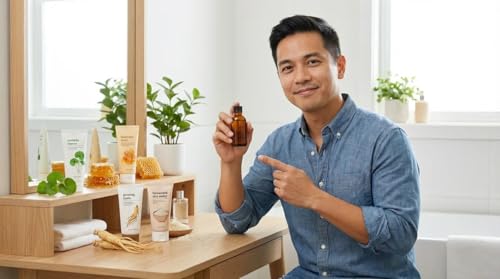
    Ever wondered why a $400 luxury cream contains less of the star ingredient than an $18 Korean serum? This episode breaks down the science behind Korean skincare's most powerful ingredients—centella asiatica, propolis, ginseng, and fermented complexes—explaining exactly how they work at the cellular level and why they're making luxury brands nervous. Whether you're trying to decode ingredient lists or figure out if that fermented essence is worth the hype, Julian Thorne delivers the cosmetic chemistry you need to shop smarter.

    • Centella asiatica (cica) increases collagen production by 58% at just 0.1% concentration after 12 weeks—comparable to tretinoin but without photosensitivity, thanks to its triterpenoids madecassoside and asiatic acid working through dual pathways of synthesis and protection.
    • Quality matters more than you think: premium centella extracts standardize triterpenoids to 40–60%, while propolis extraction methods range from basic glycerin to supercritical CO2 that concentrates specific flavonoids to pharmaceutical-grade purity.
    • Propolis delivers over 300 bioactive compounds that inhibit acne-causing bacteria as effectively as 2% salicylic acid—without disrupting your skin's microbiome diversity—while its CAPE compound suppresses the inflammatory pathway driving breakouts.
    • Fermentation transforms skincare by reducing molecular weight from 10,000+ daltons to under 500 daltons, which is the threshold for actually penetrating your skin barrier; legitimate formulations contain 50–90% ferment concentration.
    • Korean red ginseng's ginsenoside profile (Rb1, Rg1, Rg3) differs significantly from American varieties, with six-year-aged roots delivering optimal compound ratios at 3–12% concentration in quality extracts.
    • Look for specific ferment strain designations on labels (like "Saccharomyces/Rice Ferment Filtrate") rather than vague terms like "fermented essence"—manufacturing origin and domestic Korean quality standards make a measurable difference.

    Read the full article: https://luxurybeautyonabudget.com/korean-skincare-ingredients-explained

    Show more Show less
    29 mins
  • Korean Skincare Routine Checklist: Every Product You Need by Skin Type
    Mar 30 2026

    Ever stood in your bathroom surrounded by Korean skincare products with absolutely no idea what order to use them? This episode breaks down exactly which products you need based on your specific skin type—no fluff, no "optional" steps that aren't really optional. Sarah Ling-Miller shares the precise routine she developed after pregnancy melasma forced her to rebuild her entire skincare approach with only eight minutes to spare each morning. You'll get formulation breakdowns, time investments per step, and price-per-ounce comparisons so every product earns its spot on your counter.

    • The one-hour bare-face test reveals your true skin type: wash with a gentle cleanser, apply nothing, then check results after sixty minutes to determine if you're oily, dry, combination, sensitive, or dehydrated (yes, oily AND flaky at the same time is a real thing).
    • Many people mistake dehydrated skin for oily skin—over-cleansing can actually cause the breakouts you're trying to prevent, which is why proper diagnosis matters before buying anything.
    • Oil cleansers should contain under fifteen percent oil content with squalane or jojoba for oily skin types, and you can skip this step entirely on days without makeup or SPF.
    • Hyaluronic acid effectiveness depends on molecular weight—look for formulations with high (1–1.5 million Daltons), medium (50,000–500,000), and low (5,000–50,000) weights for proper hydration at different skin depths.
    • The complete oily/acne-prone routine takes six to eight minutes in the morning and eight to ten at night, costing roughly forty-five to seventy-five dollars monthly for quality Korean products.
    • When starting retinoids, apply to dry skin and wait twenty minutes before moisturizer—begin twice weekly and gradually increase to daily use to avoid irritation.

    Read the full article: https://luxurybeautyonabudget.com/korean-skincare-routine-checklist

    Show more Show less
    25 mins
  • What Is the Korean 10-Step Skincare Routine? Each Layer Explained with Active Ingredients
    Mar 30 2026

    Ten steps of skincare every single night sounds exhausting—until you realize it was never meant to be followed religiously. This episode breaks down the Korean 10-step skincare routine as what it actually is: a framework for understanding how products work together based on molecular size, texture, and skin chemistry. Whether you're a busy professional wiping down the kitchen at 10 PM or just confused about why product order matters, this deep dive covers each layer with actual ingredient percentages and honest guidance on what you can skip when life gets chaotic.

    • The Korean 10-step routine is a layering methodology based on molecular weight—smaller molecules like hyaluronic acid go first, occlusives like ceramides and squalane go last—not a rigid daily checklist.
    • Most people realistically use four to six steps daily and save the full eight to ten steps for weekend self-care sessions.
    • Korean formulas often split active ingredients across multiple products (like 2% niacinamide in a toner plus 5% in an essence) to reach therapeutic levels without the irritation risk of a single high-concentration product.
    • Oil cleansers are essential at night if you wear SPF because chemical sunscreen filters like avobenzone are lipid-soluble and won't fully remove with water-based cleansers alone.
    • Korean cleansers typically maintain a physiological pH of 4.5 to 6.0, protecting your skin's acid mantle, unlike many Western drugstore formulas that run alkaline at pH 8 to 10.
    • Exfoliation is the easiest step to skip on busy weeks—two to three times weekly is sufficient, and overdoing it compromises barrier function.

    Read the full article: https://luxurybeautyonabudget.com/what-is-the-korean-10-step-skincare-routine-each-layer-explained-with-active-ingredients

    Show more Show less
    29 mins
  • How to Build a Korean Skincare Routine for Beginners: Step-by-Step Product Order
    Mar 30 2026

    Ever stared at a shelf full of Korean skincare products wondering which bottle to use first—and whether you actually need all ten steps? This episode breaks down exactly how to build a Korean skincare routine that works for real life, not just Instagram tutorials. Sarah Ling-Miller walks through the science-backed product order based on molecular weight and pH, reveals which steps you can skip when you're rushing out the door, and shares specific ingredient percentages that deliver results without luxury price tags. If you want glass skin but also need to function as a human with a job and responsibilities, this one's for you.

    • A complete beginner Korean skincare routine takes 7–12 minutes twice daily and costs $80–$150 to build from scratch, working out to roughly 30–80 cents per application.
    • The double cleanse isn't marketing hype—oil dissolves oil-based sunscreen, makeup, and sebum that water alone can't remove, but you only need it in the evening.
    • Your water-based cleanser's pH matters more than fancy ingredients: look for pH 5.0–6.0 to avoid stripping your acid mantle and triggering that tight, uncomfortable feeling.
    • Korean toners are fundamentally different from Western astringents—they're hydrating prep layers that restore pH and should contain humectants like glycerin (3–5%) or multiple weights of hyaluronic acid for both penetration and surface hydration.
    • When you're running late, you can cut your routine from 12 minutes down to 4–6 minutes by knowing which steps are truly non-negotiable versus nice-to-have.
    • Specific active percentages that actually work: niacinamide at 5–10%, vitamin C at 10–20%, and retinol at 0.25–1%—no need for $200 serums to see results.

    Read the full article: https://luxurybeautyonabudget.com/how-to-build-a-korean-skincare-routine-for-beginners

    Show more Show less
    25 mins
  • Top 12 Korean Sunscreens Under $20: SPF Filters, Texture & White Cast Analysis
    Mar 30 2026

    Tired of sunscreens that leave you looking like a ghost or feeling like you've smeared cooking oil on your face? This episode dives deep into the world of Korean sunscreens under $20, examining the filter systems, texture profiles, and innovative chemistry that make these formulas outperform luxury European options at a fraction of the cost. Whether you have oily, dry, sensitive, or acne-prone skin, Julian Thorne breaks down exactly which budget-friendly Korean SPFs deliver invisible, breathable protection worth switching to.

    • Korean sunscreen chemists use encapsulated UV filters and nanoparticle technology to achieve SPF 50+ protection with zero white cast, even when combining physical and chemical blockers in hybrid formulas.
    • Beauty of Joseon Relief Sun combines 30% rice extract with maximum-concentration UVA filters, delivering treatment-serum-level ingredients alongside UV protection for around $9 per ounce.
    • Many Korean sunscreens include barrier-supporting ingredients like ceramides, niacinamide, and fermented probiotics at concentrations typically reserved for dedicated treatment products.
    • The Skin1004 Centella serum formula uses multi-weight hyaluronic acid (1,000 and 50 kilodaltons) paired with 49.4% centella extract, but the watery texture makes it easy to under-apply the recommended 2mg per square centimeter coverage.
    • COSRX achieves a white-cast-free hybrid formula by using titanium dioxide nanoparticles at 10–30 nanometers, small enough to scatter UV light without leaving visible residue on skin.
    • Price-per-ounce for these Korean formulas ranges from roughly $8–10, making $80 prestige European sunscreens difficult to justify from a pure performance standpoint.

    Read the full article: https://luxurybeautyonabudget.com/top-12-korean-sunscreens-under-20

    Show more Show less
    27 mins
  • Korean Snail Mucin vs Hyaluronic Acid: Which Hydrator Works Better for Dry Skin?
    Mar 30 2026

    Slathering on moisturizer but still dealing with dry, flaky skin? The culprit might be what you're layering underneath. In this episode, Julian Thorne breaks down the real differences between two cult-favorite hydrators—Korean snail mucin and hyaluronic acid—examining their molecular behavior, formulation chemistry, and price-per-ounce value. Whether you're battling pure dehydration or a compromised skin barrier with redness and texture issues, you'll learn exactly which ingredient matches your skin's actual needs rather than falling for marketing hype.

    • Hyaluronic acid is a pure humectant that binds up to 1,000 times its weight in water, but it doesn't signal any repair processes—it hydrates and nothing more.
    • Snail mucin is a bioactive cocktail containing allantoin, glycoproteins, naturally occurring glycolic acid, and antimicrobial peptides that actively stimulate cell turnover and barrier repair while providing secondary hydration benefits.
    • Multi-molecular-weight hyaluronic acid formulas are critical: low-weight HA (5–50 kDa) penetrates to plump from within, while high-weight HA (1,000+ kDa) creates a protective film that prevents water loss.
    • For snail mucin, look for 90% or higher filtrate concentration from South Korean manufacturers, where low-temperature enzyme-assisted extraction preserves the bioactive proteins that cheaper heat-processed formulas destroy.
    • Snail mucin edges ahead for compromised barriers, acne scarring, and inflammation-prone skin, while hyaluronic acid is the cleaner choice for pure dehydration without barrier damage.
    • The economics favor hyaluronic acid at $4–15 per ounce versus snail mucin at $8–18 per ounce, but the price difference reflects snail mucin's more complex manufacturing and multi-functional benefits.

    Read the full article: https://luxurybeautyonabudget.com/korean-snail-mucin-vs-hyaluronic-acid

    Show more Show less
    22 mins
  • Best Korean Moisturizers Under $25: Ceramide & Peptide Formulations Tested
    Mar 30 2026

    If your skin feels tight after cleansing, serums sting more than they should, and no amount of vitamin C is cutting through the dullness, your barrier is likely compromised. In this episode, Julian Thorne breaks down the science behind Korean moisturizers that deliver genuine repair without the luxury price tag, sharing results from testing seventeen formulations under $25. You'll learn exactly which ceramide ratios, peptide types, and fermented ingredients actually work—and why Korean brands can offer pharmaceutical-grade actives at a fraction of what Western prestige products charge.

    • The optimal ceramide ratio for barrier repair mirrors your skin's natural composition: 3 parts ceramides to 1 part cholesterol to 1 part fatty acids, with ceramide NP (the smallest molecular weight) doing the heavy lifting for preventing water loss.
    • Korean formulations often include ceramide precursors like phytosphingosine that your skin converts into exactly the lipid it needs in real-time, making the formula adaptive rather than one-size-fits-all.
    • Copper tripeptide-1 (GHK-Cu) at 0.5 to 1% concentration hits the sweet spot for stimulating collagen production without irritation, while acetyl hexapeptide-8 at around 8% concentration genuinely softens expression lines.
    • Fermented ingredients like bifida ferment lysate and galactomyces increase penetration by 40 to 60% compared to non-fermented versions by breaking down molecular structures into forms your skin absorbs without enzymatic breakdown.
    • Many Korean moisturizers under $25 are manufactured in ISO 22716 GMP-certified facilities—the same clean rooms and quality control standards used for prescription dermatological creams and luxury brands.
    • A $22 Korean moisturizer at 1.7 ounces costs roughly $12.94 per ounce, compared to around $280 per ounce for comparable ceramide complexes from prestige brands like La Mer.

    Read the full article: https://luxurybeautyonabudget.com/best-korean-moisturizers-under-25

    Show more Show less
    27 mins
  • How to Choose Barrier-Repair Ingredients for Your Skin Type
    Mar 30 2026

    That tight, uncomfortable feeling after washing your face? It's your skin barrier begging for attention—and chances are you've been treating it with the wrong ingredients. This episode breaks down exactly how to choose barrier-repair ingredients based on your actual skin type, climate, and damage level, not what social media trends suggest. Whether you're dealing with post-pregnancy skin changes, mysterious dehydration despite slathering on moisturizer, or products that suddenly sting when they never used to, you'll learn the framework for building a targeted routine that works in as little as five minutes a day.

    • Your barrier damage falls into three levels—mild, moderate, or severe—and each requires different ingredient approaches, from basic humectants for occasional tightness to medical-grade formulations with 4-5% niacinamide for extreme sensitivity.
    • Hyaluronic acid molecular weight matters more than most people realize: low molecular weight penetrates deeper but feels sticky, while high molecular weight plumps the surface, and most drugstore labels don't tell you which you're getting.
    • Climate can make your humectants work against you—glycerin in extremely dry environments (under 20% humidity) can actually pull moisture out of your skin if you don't seal it with an occlusive.
    • Panthenol (Pro-Vitamin B5) at 2-5% concentration is a seriously underrated choice for damaged barriers because it works as both a humectant and an anti-inflammatory.
    • The cost reality of barrier repair ranges dramatically: mild damage can be addressed with a $12 CeraVe product, while moderate to severe damage typically needs $35-60 in targeted products—still cheaper than a dermatologist co-pay.
    • Checking your skin in natural light (not bathroom lighting) is essential for accurate damage assessment, since moisturizer that absorbs instantly and leaves you tight 20 minutes later signals you're past the mild stage.

    Read the full article: https://luxurybeautyonabudget.com/how-to-choose-barrier-repair-ingredients-for-your-skin-type

    Show more Show less
    30 mins