• Ep 30 - How AI Is Reshaping Wealth Management and Your Future
    Mar 25 2026

    Artificial intelligence investing is no longer a concept of the future. It is reshaping wealth management today. Jeb, Ethan and Eric break down the key AI stocks and players driving this revolution, from model builders like OpenAI and Anthropic to infrastructure giants like Nvidia. They explore how portfolio diversification remains essential as AI transforms industries, including healthcare, logistics and finance. They also discuss real risks, such as hype cycles and market volatility, and share how their firm uses AI tools to serve clients better. This episode is your guide to navigating the AI era with confidence.

    What you will Learn in this Episode:

    Who the major artificial intelligence investing players really are, from foundational model builders like OpenAI and Anthropic to infrastructure leaders like Nvidia and Microsoft, and how they each fit into the broader AI stocks landscape that is transforming the global economy.

    How AI productivity gains are already delivering measurable results across wealth management, healthcare, logistics and retail, and why companies that adopt AI early are gaining a significant competitive edge over those that do not.

    Why portfolio diversification remains your most powerful tool in the AI era, and how to avoid the common mistakes of chasing hype or making concentrated bets in a fast-moving investment strategy environment.


    Tune into the Metcalf Money Moment podcast for expert insights on wealth management and retirement planning! Join Jeb, Ethan, and Eric for practical Estate Planning strategies that you can implement to unlock financial clarity and confidence. Listen now to inspire your financial journey!


    TIMESTAMPS:

    00:00 Artificial intelligence investing overview and why AI is the biggest topic in business today

    03:08 Real-world AI applications in wealth management: Jump AI and wealth.com tools explained

    06:00 Key AI stocks and players: model builders, semiconductor stocks, and cloud infrastructure

    12:00 The AI gold rush analogy and how AI productivity is improving margins at Walmart and Costco

    17:23 Market volatility, regulation, economic disruption, and investment strategy for the next decade

    23:46 There will be job disruptions in certain industries as a result of AI


    KEY TAKEAWAYS:

    You do not need to buy individual AI stocks to benefit from the artificial intelligence boom. Broad index investors already have significant exposure through the Magnificent Seven, which accounts for nearly 50% of the S&P 500's weighting today.

    Artificial intelligence investing is not only about tech companies. AI is quietly improving profit margins across healthcare, logistics, retail and finance, meaning almost every sector in a diversified portfolio stands to benefit from wider adoption.

    The professionals who embrace AI productivity tools will outpace those who do not. As Jeb, Ethan and Eric note, the financial advisor who refuses to use AI is the one most at risk, not the profession itself.


    DISCLAIMER:

    This information is not intended to be a substitute for specific individualized tax or legal advice. We recommend discussing your particular situation with a qualified tax or legal advisor.


    RESOURCES MENTIONED:

    Metcalf Partners - Website

    Jeb Graham - LinkedIn

    Ethan Hutchison - LinkedIn

    Eric Wymore - LinkedIn

    Something big is happening in AI by Matt Shumer

    Show more Show less
    27 mins
  • Ep 29 - Home Care Services and How to Fund Them with Brad Haag
    Mar 11 2026
    Most families don't think about home care services until a crisis hits. On Metcalf Money Moment, Jeb, Ethan, and Eric welcome Brad Haag of A Place at Home to guide families through the often-confusing world of senior care planning. Brad shares the telltale signs that a loved one needs help, from fall prevention concerns to early dementia care symptoms, and explains how to fund care through long-term care insurance, veterans benefits, and smart financial planning. Whether you are the sandwich generation or planning for yourself, this episode delivers clear, practical answers that could protect your family and your finances.What you will Learn in this Episode:✅ What home care services actually include and how non-medical home care differs from skilled home health services so that you can make the right choice for your aging loved one without confusion.✅ How to spot the early warning signs that a parent needs help, including fall prevention red flags, dementia care symptoms, and changes in daily behavior that signal it is time to take action. Recognizing the Signs for Needed Care - When to Step in with Aging Parents✅ The funding options available to cover senior care planning costs, including how long-term care insurance policies work, when veterans' benefits apply, and why most home care services are private pay.Tune into the Metcalf Money Moment podcast for expert insights on wealth management and retirement planning! Join Jeb, Ethan, and Eric for practical Estate Planning strategies that you can implement to unlock financial clarity and confidence. Listen now to inspire your financial journey!TIMESTAMPS: 00:00 Introduction to non-medical home care services and how A Place at Home customizes care for each client's needs05:28 The credentials behind home care staff and what families should expect from certified caregivers entering the home07:15 Why reviewing power of attorney paperwork early is one of the most critical steps in senior care planning11:21Brad Haag shares how falling is one of the first warning signs families notice in aging parents and why it matters13:55 Breaking down long-term care insurance, Medicare benefits, Medicaid, and veterans' benefits as funding options for home care18:47 Real-life example of long-term care insurance paying out and the importance of understanding your policy benefitsKEY TAKEAWAYS: 💎 Power of attorney paperwork can quickly become outdated. Brad discovered his own parents had documents more than 20 years old naming an attorney who had since retired, leaving the family without legal decision-making authority in a medical crisis. Review and update these documents now, before an emergency forces the issue.💎 Long-term care insurance is frequently misunderstood. Many families believe these policies apply only to nursing home placement, but they can also cover home care services.💎 Funding senior care rarely comes from a single source. A smart combination of private pay, veterans benefits, long-term care insurance, and creative financial planning can make quality care achievable and sustainable without draining family resources.ABOUT THE GUEST: Brad Haag is a healthcare and business professional with nearly 30 years of leadership experience. He owns and operates A Place At Home Kansas City South, a non-medical in-home care provider serving seniors in the Kansas City area. A Kansas native, Brad holds an undergraduate degree from the University and an M.B.A. from Pepperdine University. His passion for compassionate care was sparked while working with hospice patients, where he recognized the need for better in-home support for both seniors and caregivers. That insight led him to open A Place At Home in Overland Park, where he aims to deliver professional, people-centered care to the community.In-Home Senior Care & Support for Kansas City South FamiliesRecognizing the Signs for Needed Care - When to Step in with Aging ParentsMetcalf Partners - WebsiteJeb Graham - LinkedInEthan Hutchison - LinkedInEric Wymore - LinkedInDISCLAIMER:This information is not intended to be a substitute for specific individualized tax or legal advice. We recommend discussing your particular situation with a qualified tax or legal advisor.
    Show more Show less
    24 mins
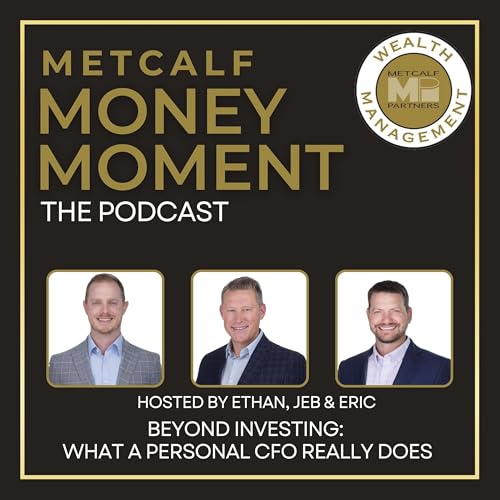
  • Ep 28 - Beyond Investing: What a Personal CFO Really Does
    Feb 25 2026

    Jeb, Ethan, and Eric from Metcalf Money Moment reveal why the personal CFO model is transforming wealth management. Rather than segmenting your financial planning into separate silos, a personal CFO integrates investment management, tax planning, and estate planning into one cohesive strategy. Learn how Roth conversion timing affects Medicare premiums, why tax-efficient investing matters as much as returns, and how proper beneficiary designation protects your legacy. The hosts share actionable strategies, including opportunistic rebalancing during market volatility and coordinating life insurance with your overall financial picture for maximum family protection.

    What you will Learn in this Episode:

    How a personal CFO coordinates investment management, tax strategies, and estate planning to create a comprehensive wealth management approach that goes far beyond traditional financial advice and maximizes your family's long-term financial goals.

    Advanced tax management techniques, including Roth conversions, capital gains harvesting, and tax-efficient asset location strategies that reduce your tax burden now and create tax-free legacy wealth for your beneficiaries in the future.

    Why understanding your portfolio risk tolerance and implementing opportunistic rebalancing during market volatility matters more than chasing returns, and how proper risk tolerance alignment eliminates anxiety during market corrections.

    Tune into the Metcalf Money Moment podcast for expert insights on wealth management and retirement planning! Join Jeb, Ethan, and Eric for practical Estate Planning strategies that you can implement to unlock financial clarity and confidence. Listen now to inspire your financial journey!


    TIMESTAMPS:

    00:00 What is a personal CFO, and a discussion of the three pillars of comprehensive wealth management

    04:00 Tax management strategies beyond April filing

    07:36 Mindset shift: supporting real-life financial goals over chasing portfolio returns

    10:33 Understanding portfolio risk through Nitrogen scoring and managing market volatility

    14:50 Estate planning essentials: beneficiaries, life insurance, disability insurance, and legacy tax planning


    KEY TAKEAWAYS:

    A personal CFO acts as your financial quarterback, coordinating all aspects of your wealth management, including investment management, tax strategies, and estate planning.

    Strategic tax management requires year-round planning, not just April meetings. Implementing Roth conversions, tax loss harvesting, and capital gains management during optimal windows can save thousands annually and create tax-efficient legacy wealth for heirs.

    Proper estate planning extends beyond wills and trusts to include beneficiary designations, life insurance, disability insurance, and long-term care planning.


    DISCLAIMER:

    This information is not intended to be a substitute for specific individualized tax or legal advice. We recommend discussing your particular situation with a qualified tax or legal advisor.


    RESOURCES MENTIONED:

    Metcalf Partners - Website

    Jeb Graham - LinkedIn

    Ethan Hutchison - LinkedIn

    Eric Wymore - LinkedIn

    Show more Show less
    21 mins
  • Ep 27 - Slash Property Taxes: Eric Owens' Proven Appeal Methods
    Feb 11 2026
    What if you could cut your property tax bill by hundreds of thousands or even millions of dollars? Eric Owens from Swartz + Associates reveals the insider tactics that most property owners never discover. On this episode of Metcalf Money Moment, hosts Jeb, Ethan, and Eric dive deep into real-world victories, including a stunning $10 million reduction on a Florida hotel and a $600,000 savings on Connecticut retail property. You'll learn why Jackson County's 2025 assessment chaos devastated businesses with 10x increases, how triple net lease tenants often miss their appeal rights, and the exact documentation strategy that wins cases. Whether you manage a multimillion-dollar portfolio or own a single investment property, Eric breaks down the appeal process from informal negotiations to district court settlements, plus reveals the critical mistake that causes new buyers to go underwater financially within their first year of ownership.What you will Learn in this Episode:Master the art of property tax appeals by gathering comparable sales data from your neighborhood and focusing exclusively on valuation evidence.Navigate state-specific assessment year cycle requirements, including Kansas's annual January 1st effective valuation date versus Missouri's odd-year schedule, ensuring you meet critical filing deadlines for informal and formal board of equalization hearings.Understand how sale price disclosure laws in both Kansas and Missouri trigger automatic valuation increases after property purchase, potentially rendering investment properties unprofitable when buyers fail to account for reassessment impacts on cash flow projections.Tune into the Metcalf Money Moment podcast for expert insights on wealth management and retirement planning! Join Jeb, Ethan, and Eric for practical Estate Planning strategies that you can implement to unlock financial clarity and confidence. Listen now to inspire your financial journey!TIMESTAMPS: 00:00 Property tax consultant Eric Owens discusses the services of Swartz + Associates02:45 Examples of clients for whom a property valuation reduction occurred06:07 Business property owners versus residential homeowners and discussion of Jackson County property tax increase crisis10:31 Appeal process stages: informal appeal process through the board of equalization to district court appeals settlements14:48 To lower valuations, documentation is essential for winning casesKEY TAKEAWAYS: Evidence trumps emotion in property tax appeals. County assessors require comparable sales data, financial projections, and documented reasoning tied to the effective valuation date, not complaints about rising tax bills or payment hardships.Contingency fee basis consulting eliminates upfront risk. Firms like Swartz and Associates only collect payment when they achieve actual real estate tax reductions, making professional representation accessible even when appeals stretch over years through the district court.Sale price disclosure requirements in Kansas and Missouri automatically trigger reassessments. Investment properties purchased without factoring in next year's valuation increase relative to the purchase price can quickly become unprofitable cash flow disasters.ABOUT THE GUEST: Eric is a licensed Certified General Appraiser and serves as a Director for Swartz + Associates, Inc. (SAI). SAI is a full-service property tax consulting firm that specializes in the review, analysis, and appeal of commercial real estate and business personal property tax valuations. SAI has experience across a wide range of property tax matters and serves multiple industries.Eric Owens - LinkedInSwartz + Associates - WebsiteDISCLAIMER:This information is not intended to be a substitute for specific individualized tax or legal advice. We recommend discussing your particular situation with a qualified tax or legal advisor. Eric Owens, and Swartz + Associates, inc is not affiliated with or endorsed by LPL Financial and Metcalf Partners Wealth Management.RESOURCES MENTIONED: Metcalf Partners - WebsiteJeb Graham - LinkedInEthan Hutchison - LinkedInEric Wymore - LinkedIn
    Show more Show less
    18 mins
  • Ep 26 - Gift Tax Exclusion: Smart Strategies For Tax-Free Giving
    Jan 28 2026

    Understanding the gift tax exclusion is essential for anyone looking to transfer wealth to family members. On this episode of Metcalf Money Moment, hosts Jeb, Ethan, and Eric break down the most popular gifting strategies, including UTMA accounts, 529 college savings plans, and structured gifting through trusts. Learn how married couples can gift up to $38,000 per person annually without gift tax reporting, explore the new Trump savings accounts that offer government contributions, and discover how to use purpose-based distributions to maintain control over gifted assets. Whether you're funding education through a 529 plan with Roth IRA rollover options or setting up a revocable trust with age-based distributions, this episode covers everything you need to know about tax-free gifting strategies.

    What you will Learn in this Episode:

    How the annual gift tax exclusion allows you to gift up to $19,000 per person ($38,000 for married couples) without any tax reporting requirements or liability

    The differences between UTMA accounts, 529 college savings plans, and new Trump savings accounts, including contribution limits, FAFSA impact, and withdrawal rules

    How to use revocable trusts with age-based distributions and purpose-based distributions to maintain control over gifted assets and prevent large windfalls to young adults

    The Roth IRA rollover strategy that allows up to $35,000 from a 529 plan to be transferred tax-free into a retirement account for the beneficiary

    Tune into the Metcalf Money Moment podcast for expert insights on wealth management and retirement planning! Join Jeb, Ethan, and Eric for practical Estate Planning strategies that you can implement to unlock financial clarity and confidence. Listen now to inspire your financial journey!


    TIMESTAMPS:

    00:00 Gifting strategies and common questions and answers about gift tax exclusion

    05:00 Deep dive into UTMA accounts and UGMA accounts, including ownership rules, FAFSA impact

    08:50 The new Trump savings accounts with government-matched contributions

    12:26 Comprehensive overview of 529 college savings plans, including contribution limits, beneficiary designation flexibility, and the Roth IRA rollover option for unused funds

    21:03 How to structure gifts using revocable trusts with age-based distributions and purpose-based distributions

    24:32 Addressing the common concern of overfunded UTMA accounts and how to transition them into trusts with beneficiary consent for better long-term control


    KEY TAKEAWAYS:

    The new Trump savings accounts launching in 2026 offer a $1,000 government contribution for children born between January 1, 2025, and December 31, 2028, with annual contribution limits of $5,000 and potential employer matching of $2,500, creating a powerful tax-deferred savings vehicle that converts to the child's IRA at age 18

    UTMA accounts and UGMA accounts are counted as the child's assets when filing FAFSA for student aid, which can significantly reduce eligibility for financial assistance, making 529 college savings plans a better option for families prioritizing federal student aid qualification

    The five-year gift tax averaging rule for 529 plans allows you to contribute $95,000 in a single year (5 years × $19,000) without triggering gift tax reporting, enabling grandparents and parents to front-load education savings and maximize tax-free growth potential


    DISCLAIMER:

    This information is not intended to be a substitute for specific individualized tax or legal advice. We recommend discussing your particular situation with a qualified tax or legal advisor.


    RESOURCES MENTIONED:

    Metcalf Partners - Website

    Jeb Graham - LinkedIn

    Ethan Hutchison - LinkedIn

    Eric Wymore - LinkedIn

    Show more Show less
    28 mins
  • Ep 25 - Innovative Tax Planning Strategies For 2026 With Christine Nosbush ​​
    Jan 14 2026
    Innovative tax planning strategies start with understanding your options before tax season arrives. In this episode of Metcalf Money Moment, hosts Jeb, Ethan, and Eric welcome enrolled agent Christine Nosbush to discuss essential tax deductions, HSA benefits, and planning opportunities for 2026. Christine explains the difference between an enrolled agent and a CPA, shares insights on avoiding IRMAA Medicare surcharges, and reveals why tax extensions can actually reduce audit risk. Whether you're a high-income earner looking to optimize Roth IRA conversions or simply want to understand current tax code changes, this conversation provides actionable strategies for working with your financial advisor to minimize tax liability and maximize retirement planning success.What you will Learn in this Episode:The key differences between an enrolled agent and a CPA, and why tax planning strategies require specialized expertise in tax code rather than just accounting knowledge.How to maximize HSA benefits with triple tax advantages and use them strategically to avoid IRMAA Medicare surcharges while creating tax-free retirement income.Why tax extensions don't increase IRS audit risk and can actually improve accuracy, plus essential tax deductions that high-income earners often miss.Smart strategies for Roth IRA conversions, 529 plans, and account consolidation to work effectively with your financial advisor for optimal retirement planning.Tune into the Metcalf Money Moment podcast for expert insights on wealth management and retirement planning! Join Jeb, Ethan, and Eric for practical Estate Planning strategies that you can implement to unlock financial clarity and confidence. Listen now to inspire your financial journey!TIMESTAMPS: 00:00 Christine, an enrolled agent, explains the role of a CPA versus an enrolled agent and how it relates to tax code expertise03:31 Tax planning strategies for the affluent families05:39 Tax deductions for high-income earners, including HSA benefits, Roth IRA contributions, and 529 plans07:53 Managing IRMAA Medicare surcharges through strategic income planning and capital gains planning13:26 Discussion of representing clients through the audit process, red flags to avoid, and the increase in fees charged by CPAs22:00 Why tax extensions reduce audit risk and scheduling tips for tax preparationKEY TAKEAWAYS: HSA benefits provide the best tax deductions available—money goes in pre-tax, grows tax-free, and comes out tax-free for medical expenses, making it superior to both traditional IRA and Roth IRA accounts for triple tax advantages.IRMAA Medicare surcharges are based on income from two years prior, so strategic Roth IRA conversions and capital gains management with your financial advisor can help high-income earners avoid significant premium increases in retirement.Tax extensions don't increase IRS audit risk—they actually decrease it by allowing more time for accurate tax preparation, and enrolled agent representation covers all audit levels except criminal investigations.ABOUT THE GUEST: Christine Nosbush is an Enrolled Agent and the founder of Nosbush Tax, a Kansas City–based tax firm serving individuals and small businesses since 2018, with clients across the United States. Known for her experience, clarity, and client-first approach, Christine helps clients navigate tax preparation and planning with confidence, earning a strong reputation for professionalism, responsiveness, and making complex tax topics easy to understand.Nosbush Tax - WebsiteNosbush Tax & Accounting Services, LLC | Kansas City MONosbush Tax & Accounting Services, LLC | LinkedInMetcalf Partners - WebsiteJeb Graham - LinkedInEthan Hutchison - LinkedInEric Wymore - LinkedInDISCLAIMER:This information is not intended to be a substitute for specific individualized tax or legal advice. We recommend discussing your particular situation with a qualified tax or legal advisor. Christine Nosbush and Nobush Tax & Accounting Services, is not affiliated with or endorsed by LPL Financial and Metcalf Partners Wealth Management.
    Show more Show less
    25 mins
  • Ep 24 - Retirement Account Consolidation: Protecting Aging Parents
    Dec 23 2025
    Retirement account consolidation is critical for protecting aging parents and simplifying their financial lives. In this episode of Metcalf Money Moment, hosts Jeb, Ethan, and Eric discuss why consolidating multiple retirement accounts helps reduce the risk of missing required minimum distributions, which carry a 25% tax penalty. They explore how scattered accounts across multiple banks and advisors create unnecessary complexity, increase paperwork, and heighten vulnerability to financial elder abuse and scams. The hosts share real client case studies and provide actionable strategies for protecting aging parents from financial scams, streamlining beneficiary designations, and ensuring smooth asset distribution after death through proper estate planning and coordination with a single financial advisor.What you will Learn in this Episode:How retirement account consolidation prevents missed required minimum distributions and costly tax penalties of up to 25% on overlooked withdrawals.Warning signs of financial elder abuse and common scams targeting seniors, including government impersonation, grandparent scams, and tech support fraud, plus protective strategies like trusted contact designations and power of attorney.Why streamlining accounts with one financial advisor simplifies beneficiary designations, reduces paperwork, and ensures faster, cleaner inheritance processes for your family.Practical communication strategies for families to protect aging parents, including establishing family code words, setting up account alerts, and having early conversations about estate planning while mental capacity is strong.Tune into the Metcalf Money Moment podcast for expert insights on wealth management and retirement planning! Join Jeb, Ethan, and Eric for practical Estate Planning strategies that you can implement to unlock financial clarity and confidence. Listen now to inspire your financial journey!TIMESTAMPS: 00:00 Protecting aging parents through account consolidation, understanding required minimum distributions, and avoiding 25% tax penalties05:16 Real case study: Client with scattered accounts across multiple banks and advisors10:02 Common scams targeting seniors: government, grandparent, and tech support scam prevention14:03 Red flags of financial elder abuse: unexplained withdrawals and spending pattern changes, and protective measures to take18:25 Post-death logistics: simplifying inheritance through retirement account consolidation23:44 Four tips for aging parents or caretakersKEY TAKEAWAYS: Retirement account consolidation with a single financial advisor dramatically reduces the risk of missing required minimum distributions, simplifies qualified charitable distributions, ensures accurate beneficiary designations across all accounts, and minimizes the 10-15+ tax forms scattered across multiple institutions that increase audit risk and filing errors.Seniors face escalating vulnerability to scam prevention challenges, including government impersonation, AI-cloned voice grandparent scams, and fake tech support—families should implement protective measures like trusted contact status, power of attorney, transaction alerts, credit freezes, and simple stalling language scripts.Proper estate planning through account consolidation enables faster inheritance settlement, prevents years-long probate delays, protects beneficiaries from missing market gains during estate limbo, and requires early family conversations about asset locations, plans, beneficiaries, and advisors. At the same time, cognitive decline hasn't yet impacted decision-making capacity.DISCLAIMER:This information is not intended to be a substitute for specific individualized tax or legal advice. We recommend discussing your particular situation with a qualified tax or legal advisor.RESOURCES MENTIONED: Metcalf Partners - WebsiteJeb Graham - LinkedInEthan Hutchison - LinkedInEric Wymore - LinkedIn
    Show more Show less
    26 mins
  • Ep 23 - Business Succession Planning: When To Start With Jeff Coppaken
    Dec 10 2025
    Business succession planning is critical for every business owner, regardless of when they plan to exit. In this episode of Metcalf Money Moment, hosts Jeb, Ethan, and Eric sit down with attorney Jeff Coppaken to discuss the mergers and acquisitions landscape and the essentials of exit strategy. Jeff reveals that the best time to start business succession planning is always now—whether you're planning to sell in six months or six years. He explains common pitfalls in selling a business, the importance of having clean financials, and when to start the business succession planning process. Learn about deal structures, seller financing, and why assembling the right team of advisors early can maximize your business value and minimize tax implications when it's time to exit.What you will Learn in this Episode:Discover why business succession planning should start immediately, whether you're exiting in six months or six years, and learn which key advisors—including your business attorney, wealth management team, and tax strategy experts—need to be part of your planning process from day one.Understand the critical role of the due diligence process and clean financials in maximizing your purchase price, plus learn how business valuation works and why removing lifestyle expenses from your books is essential before bringing your company to market.Explore various deal structures, including seller financing, seller notes, and SBA loans, and discover how internal succession plans can create win-win scenarios that protect both buyer and seller while ensuring business continuity.Tune into the Metcalf Money Moment podcast for expert insights on wealth management and retirement planning! Join Jeb, Ethan, and Eric for practical Estate Planning strategies that you can implement to unlock financial clarity and confidence. Listen now to inspire your financial journey!TIMESTAMPS: 00:00 When to start business succession planning, including business attorney, wealth management, and tax strategy advisors06:51 Finding the right buyer through business brokers and ensuring culture fit in mergers and acquisitions 09:32 Pitfalls, including messy financials and owner benefits that negatively impact business valuation and purchase price 13:32 Deal structures explained: seller financing, SBA loans, seller notes, and why internal succession deals often include higher seller carryback percentages18:30 Typical transaction timelines for selling a business range from six to nine monthsKEY TAKEAWAYS: The best time to begin business succession planning is always now. Assemble your advisory team—tax strategy expert, wealth management advisor, and business attorney—to maximize value and minimize tax implications, whether you exit in 6 months or 6 years.Clean financials are crucial for selling a business at top dollar. So, remove excessive owner benefits from your books. Don't compare a fixer-upper to a renovated property when setting business valuation expectations.Internal succession deals often involve more seller financing due to established trust. Creative structures can include consulting arrangements and earn-outs, while proper collateral protects the seller's investment throughout the transaction.ABOUT THE GUEST: Jeff Coppaken, the founder of the Coppaken Law Firm, is a lifelong resident of Kansas City. Before becoming an attorney, Jeff spent almost a decade in sales, marketing, and customer service, which helped him understand unique aspects of the business model. His customer base includes closely held businesses, family offices, entrepreneurs, real estate investors, and developers, and is industry-agnostic. Jeff often assists his clients with buying or selling a business, ongoing business legal needs, and real estate transactions. Coppaken Law Firm - WebsiteJeff Coppaken - LinkedInDISCLAIMER:This information is not intended to be a substitute for specific individualized tax or legal advice. We recommend discussing your particular situation with a qualified tax or legal advisor. Jeff Coppaken, and Coppaken Law Firm is not affiliated with or endorsed by LPL Financial and Metcalf Partners Wealth Management.RESOURCES MENTIONED: Metcalf Partners - WebsiteJeb Graham - LinkedInEthan Hutchison - LinkedInEric Wymore - LinkedIn
    Show more Show less
    23 mins