Publisher's summary

This podcast is a channel on the New Books Network. The New Books Network is an academic audio library dedicated to public education. In each episode you will hear scholars discuss their recently published research with another expert in their field. Discover our 150+ channels and browse our 28,000+ episodes on our website: ⁠newbooksnetwork.com⁠ Subscribe to our free weekly Substack newsletter to get informative, engaging content straight to your inbox: ⁠https://newbooksnetwork.substack.com/⁠ Follow us on Instagram and Bluesky to learn about more our latest interviews: @newbooksnetwork Support our show by becoming a premium member! https://newbooksnetwork.supportingcast.fm/critical-theory
New Books Network
Episodes
  • Hsuan L Hsu, "Olfactory Worldmaking" (U Minnesota Press, 2026)
    Mar 24 2026
    Smell is a vital, if underappreciated, medium through which we inhabit and imagine the world. In Olfactory Worldmaking (University of Minnesota Press, 2026), Dr. Hsuan L. Hsu traces how olfactory experience communicates across visceral, material, and affective registers to offer new ways of relating, which challenge the extractive logics of racial and colonial capitalism. Blending environmental humanities, sensory studies, and critical ethnic studies, the book highlights how scent animates suppressed histories and marginalized memories. Dr. Hsu theorizes olfaction as a speculative, reparative practice. Examining projects from historical novels, memoirs, and speculative fiction to conceptual art and experimental perfumes, he reveals how these works mobilize scent to imagine alternative ways of sensing, relating, and creating more equitably livable worlds. This interview was conducted by Dr. Miranda Melcher whose book focuses on post-conflict military integration, understanding treaty negotiation and implementation in civil war contexts, with qualitative analysis of the Angolan and Mozambican civil wars. You can find Miranda’s interviews on New Books with Miranda Melcher, wherever you get your podcasts. Learn more about your ad choices. Visit megaphone.fm/adchoices Support our show by becoming a premium member! https://newbooksnetwork.supportingcast.fm/critical-theory
    Show more Show less
    26 mins
  • David Bather Woods, "Arthur Schopenhauer: The Life and Thought of Philosophy's Greatest Pessimist" (U Chicago Press, 2025)
    Mar 23 2026
    Arthur Schopenhauer: The Life and Thought of Philosophy’s Greatest Pessimist by David Bather Woods An engaging biography of one of the most influential Western philosophers and a thought-provoking exploration of how to live with Arthur Schopenhauer’s pessimism.Arthur Schopenhauer (1788–1860) almost wasn’t one of the greatest philosophers of the nineteenth century. Born in the Free City of Danzig to a family of shipping merchants, he was destined for a life of imports and exports until his father died in a suspected suicide. After much deliberation, the young Schopenhauer invested his inheritance in himself and his philosophical vocation. But the long road to recognition was a difficult one, with Schopenhauer spending all but the last decade of his life in total obscurity. Yet his ideas and style went on to influence great thinkers, including Friedrich Nietzsche, Ludwig Wittgenstein, and Sigmund Freud, as well as artists such as the composer Richard Wagner and writers Marcel Proust, Thomas Mann, Samuel Beckett, and many more.A singular and remarkably influential thinker, Schopenhauer is usually described as an extreme pessimist. He questioned the purpose of existence in a world where pain and suffering are inescapable and happiness is all too brief. In this engaging philosophical biography, David Bather Woods reevaluates Schopenhauer’s pessimism in the context of his life experiences, revealing the philosopher’s relentless fascination with the world and making a case for his contemporary relevance. Bather Woods weaves together Schopenhauer’s ideas with the story of how he came to be, including such topics as love, loneliness, morality, politics, gender, sexuality, death, suicide, fame, and madness. In doing so, this book answers some of life’s most challenging questions about how to deal with pain and loss, and how to live with ourselves and each other.Despite his pessimistic outlook on human existence, Schopenhauer didn’t give up on life. Rather, he recognized that the question of how to live becomes even more pressing, and he worked to provide an answer. Bather Woods shows how Schopenhauer’s life informed his ideas and how they still resonate today. David Bather Woods is associate professor of philosophy at the University of Warwick. He is coeditor with Timothy Stoll of The Schopenhauerian Mind. He has contributed chapters to The Proustian Mind, Schopenhauer’s Moral Philosophy, and The Palgrave Schopenhauer Handbook. Morteza Hajizadeh is a Ph.D. graduate in English from the University of Auckland in New Zealand. His research interests are Cultural Studies; Critical Theory; Environmental History; Medieval (Intellectual) History; Gothic Studies; 18th and 19th Century British Literature. YouTube Channel: https://www.youtube.com/user/a48266/videos Learn more about your ad choices. Visit megaphone.fm/adchoices Support our show by becoming a premium member! https://newbooksnetwork.supportingcast.fm/critical-theory
    Show more Show less
    1 hr and 17 mins
  • Prolepsis
    Mar 23 2026
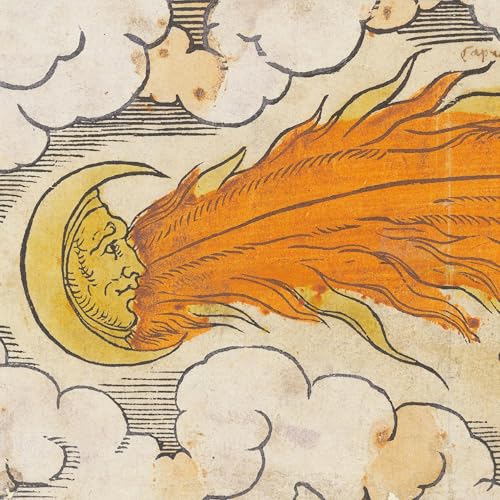
    In this episode of High Theory, Gloria Fisk talks to Kim about Prolepsis. Defined by Gerard Genette in the 1970s, prolepsis is a flash forward, the opposite of analepsis, a flash back. Initially the province of high modernism, this rhetorical device has become a well-worn trope with a surprising aptitude for representing violence in our current moment. Fisk shows us how prolepsis dramatizes the workings of structural violence in narrative form. In the episode, Gloria references Stokely Carmichael and Charles Hamilton’s Black Power: The Politics of Liberation (Random House 1967) and Michael Dango's Crisis Style: The Aesthetics of Repair (Stanford UP 2021). The transcript lives here as a WordDoc and here as a PDF. Gloria Fisk writes about contemporary literature in a global context, with a particular interest in the novel. She works as an associate professor of English at Queens College, CUNY. Her areas of interest include the critical debates surrounding world literature in the U.S. as well as novel theory, postcolonial studies, translation theory, and critical writing. In her first book, Orhan Pamuk and the Good of World Literature (Columbia UP 2018), Gloria reads the Turkish novelist Orhan Pamuk as a case study in the unevenness of Western canons’ expansion across the eastern border of Europe. She theorizes the ways the Turkish novelist arrives among his readers in the U.S. and Europe, where he meets a standard for literary value that that emerges in tandem with him. In this episode, we discuss her current book project, in which Gloria theorizes the ethics and politics of prolepsis in contemporary world literature. Her project asks why so many novels that reach Anglophone readers today begin with a scene of terrible violence — a chemical spill, maybe, or untimely death at sea; incarceration, or a terrorist attack — to narrate in retrospect the paths that converge to create it? This use of prolepsis is historically specific to the contemporary period, so Gloria sets out to explain why. She shows that proleptic representations of violence were rare in Western literary traditions until the turn of the twenty-first century, but they have become ubiquitous now, because they work well to express new anxieties and hopes about the limits of our political communities, within and beyond the nation. The working title of her book is We Know How This Will End: Prolepsis, Tragedy, and the Representation of Structural Violence on a Global Scale. Look forward to seeing it in print! The image for this episode is an anonymous illustration from a 1554 broadsheet depicting celestial phenomenon over Salon-de-Provence. It was found for High Theory by Lily Epstein on the Public Domain Image Archive. Learn more about your ad choices. Visit megaphone.fm/adchoices Support our show by becoming a premium member! https://newbooksnetwork.supportingcast.fm/critical-theory
    Show more Show less
    17 mins
All stars
Most relevant
Dignity - in my lifetime, (I’m 60), I’ve witnessed the change from the New Deal economy as a child and it’s cultural precepts going on well into my 20’s, to a Neoliberal economy where social relations have been ebbed away to where everything is transactional and competitive.
We NEED janitors, pre-school teachers, grocery store workers - aka “essential workers”.
As a child, very few people would have been comfortable saying that these people don’t deserve a living wage or healthcare. My own father was a bartender, yet we owned a modest house, cars that ran etc. - in other words WE WERE ABLE TO LIVE A LIFE WITH DIGNITY AND RESPECT.
I am so grateful to Mr. Arnade for bringing the concept of DIGNITY to the fore.

Common People Deserve Dignity

Something went wrong. Please try again in a few minutes.