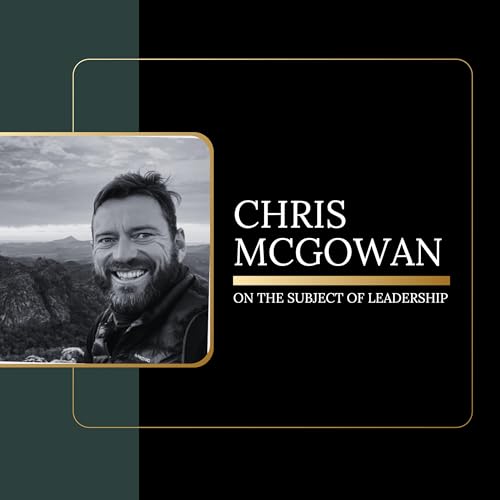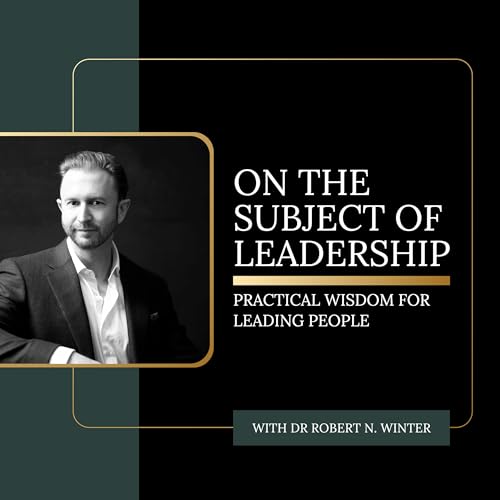
On the Subject of Leadership Podcast By Dr Robert N. Winter cover art

On the Subject of Leadership

On the Subject of Leadership

By: Dr Robert N. Winter
Listen for free

On the Subject of Leadership is a long-form conversation with business leaders and practitioners about the people side of management—culture, incentives, decision-making, and what really drives behaviour at work. Guest bringing hard-won experience from the field which are explored through frank, critical discussion. The aim isn't polite consensus; it's clarity. We challenge assumptions and stress-test popular leadership advice against reality—what holds up in the boardroom, in the open plan office or in the small meeting room where most leaders actually operate. Expect practical insights you can use, whether you lead a team of five or five thousand.Copyright 2026 Dr Robert N. Winter Economics Management Management & Leadership Philosophy Social Sciences
Episodes
  • Martin Kearns: From Empowerment to Ritual—Agile’s Unintended Consequences
    Mar 28 2026
    Agile promised empowered teams and faster learning. In many organisations, it has delivered something closer to ritual—stand-ups, sprints, and dashboards—often without the autonomy those practices were meant to enable.Martin Kearns has observed this shift from the inside. An early Scrum practitioner and now an enterprise agility advisor, he has spent two decades helping organisations rethink how work is structured and decisions are made. That experience gives him a clear view of where Agile has travelled—and where it has lost its way.In this conversation, we examine the gap between the rhetoric of empowerment and the reality of managed workflows. Why do frameworks designed to increase adaptability so often produce compliance? When does cadence become control? And why do large organisations struggle to grant autonomy while still demanding predictability?We also explore the broader system: how metrics shape behaviour, how technical debt and complexity are routinely underestimated, and why new technologies such as AI risk amplifying existing organisational confusion rather than resolving it.At its core, this is a discussion about judgement. What does it take to build organisations where professionals are trusted to think, not merely to execute—and where that trust does not come at the expense of coherence or accountability?TakeawaysAgile's original promise was autonomy. In many organisations, however, the language of empowerment has survived while genuine discretion has quietly disappeared.Ritual is not the same as agility. Stand-ups, sprints, and dashboards can create the appearance of progress while masking deeper organisational rigidity.Frameworks often satisfy managerial desire for control. The attraction of scaled Agile models lies partly in their promise of predictability—yet that predictability can undermine adaptability.Complex systems resist simplistic management. Real organisational resilience requires leaders who understand uncertainty, technical debt, and the limits of planning.Leadership in complexity begins with humility. Curiosity, facilitation, and systemic awareness matter far more than adherence to any particular methodology.Technological enthusiasm should be treated cautiously. AI and automation may transform work, but they cannot substitute for clear thinking about how organisations actually function.Chapters[00:00] - Intro[05:12] - The promise vs. reality of frameworks like Scrum and SAFe[07:07] - The systemic roots of organisational dysfunction[09:35] - Navigating the push for certainty in complex work[11:17] - Strategic partnerships versus contractual thinking[13:26] - The challenge of translating strategy to teams[15:35] - The danger of technical debt and iterative band-aids[17:29] - AI hype, failure rates, and agility in the age of technology[19:57] - The influence of investment bubbles on organisational agility[22:36] - The importance of self-awareness and psychological safety[24:53] - Handling complex problems and avoiding oversimplification[27:51] - The role of creativity and discovery in continuous learning[31:28] - The path of least resistance and reframing change[35:32] - Facilitating with authenticity and emotional intelligence[38:33] - The importance of reflection and stopping habits[41:52] - The limitations of NLP, life coaching, and systemically focused agility[44:40] - The leadership boundary of influence and expertise[46:51] - Legal and ethical considerations around mental health at work[51:35] - The value of diverse perspectives and humility in teams[56:52] - The cognitive biases of certainty and overconfidence[61:25] - The power of open dialogue and shared understandingGuest Links & ReferencesMartin Kearns - LinkedInBook (coming soon)About the ShowOn the Subject of Leadership is a long-form conversation series examining leadership, governance, organisational life, and decision-making—without slogans or performative certainty.Hosted by Dr Robert N. Winter.Subscribe / FollowNewsletter / Website: robert.winter.inkLinkedIn: dr-robert-winterX: @DrRobertWinterInstagram: DrRobertWinterMastodon: social.winter.ink/@robertYouTube: @OnTheSubjectOfLeadershipCredits / DisclosuresRecorded remotely via RiversideMusic: The Hidden Thread by Roberto Prado / Artlist
    Show more Show less
    1 hr and 6 mins
  • Abdullah Ramay: The Power of Purpose-Driven Leadership in Business
    Mar 8 2026

    Abdullah Ramay is the Chief Executive Officer of Pablo & Rusty’s Coffee Roasters—a name many listeners will recognise from the label on their morning brew.

    In this episode of On the Subject of Leadership, we explore what it actually means to run a purpose-led business when purpose stops being a slogan and starts imposing constraints. In Abdullah’s world, flavour, margin, agriculture, and environmental stewardship all meet in a single cup. The rhetoric of sustainability is easy; the discipline of it is not.

    Our conversation ranges across the real mechanics of purpose in leadership: how boards weigh financial return against impact, why authenticity is different from popularity, and how leaders maintain focus when fashionable causes and technologies compete for attention. Abdullah makes a simple but demanding argument: profit and purpose are not rivals. Profit is the fuel; purpose is the direction. Remove either and the enterprise stalls.

    We also examine the harder edge of stewardship—what happens when values introduce friction. When decisions disappoint customers. When integrity costs money. When leaders must decide whether coherence matters more than applause.

    If you care about leadership beyond slogans—about governance, conviction, and the long-term stewardship of organisations—this is a conversation worth your time.

    Takeaways
    1. Purpose as an organisational anchor
    2. Balancing profit with sustainability and impact
    3. Authenticity in leadership and organisational culture
    4. Board governance and strategic decision-making
    5. The importance of long-term vision and resilience

    Chapters

    [00:00] - Introduction to Purpose-Driven Leadership

    [04:14] - The Evolution of Purpose in Organisations

    [11:20] - Authenticity vs. Popularity in Leadership

    [20:37] - The Role of Boards in Balancing Purpose and Profit

    [26:09] - The Importance of Certifications and Governance

    [31:49] - Decision-Making in a VUCA World

    [39:05] - Prioritisation, Delegation, and Resource Allocation in Organisations

    [48:13] - Leadership Burnout and Change Management

    [57:10] - Cross-Skilling and Adaptability in the Workforce

    [1:00:21] - The Essence of Leadership and Empowerment

    Guest Links & References

    Abdullah Ramay: https://www.linkedin.com/in/abdullah-ramay-3879476/

    Pablo and Rusty’s Coffee Roasters: https://www.pabloandrustys.com.au

    About the Show

    On the Subject of Leadership is a long-form conversation series examining leadership, governance, organisational life, and decision-making—without slogans or performative certainty.

    Hosted by Dr Robert N. Winter.

    Subscribe / Follow

    Newsletter / Website: robert.winter.ink

    LinkedIn: dr-robert-winter

    X: @DrRobertWinter

    Instagram: DrRobertWinter

    Mastodon: social.winter.ink/@robert

    YouTube: @OnTheSubjectOfLeadership

    Credits

    Recorded remotely via Riverside

    Music: The Hidden Thread by Roberto Prado / Artlist

    Show more Show less
    1 hr and 2 mins
  • Chris McGowan: The Recruitment Insider Who Built a Company With No Managers
    Feb 7 2026
    Chris McGowan is the founder and CEO of ThunderLabs, an Australian firm working across digital experiences, customer identity, and specialist recruitment. Before building ThunderLabs, Chris spent years inside the recruitment industry—giving him a front-row view of how organisations actually coordinate work, reward competence, and quietly fail when hierarchy substitutes for judgment.In this conversation, we examine what happens when you remove general managers and formal executive layers—and what must replace them if the organisation is to function. Chris explains how ThunderLabs operates through informal leadership, discretionary boundary spanning, and high-trust expertise, and why recruitment becomes the central strategic lever in a system built on autonomy rather than control.TakeawaysThe importance of building genuine relationships in business.A networked organizational structure fosters collaboration and innovation.Cultural influences shape leadership styles and team dynamics.Recruitment should focus on finding diverse talents that fit the organizational culture.Language and communication are crucial for team cohesion and understanding.Balancing freedom and structure is essential for effective leadership.Intrinsic motivation leads to greater job satisfaction and performance.Good governance is necessary to prevent ethical lapses in organizations.Leaders must be aware of their influence and responsibility towards their teams.Creating a supportive environment encourages creativity and problem-solving.Chapters[00:00] - Intro[02:00] - Understanding Thunder Labs' Structure[04:22] - The Necessity of Collaborative Problem Solving[07:39] - Navigating Bureaucracy in Organisations[11:02] - The Role of Leadership in Team Dynamics[13:28] - Recruitment and Team Composition[16:05] - The Art of Enabling Others[21:49] - Creating an Adaptive System[23:07] - The Importance of Shared Language[26:06] - Balancing Commercial Focus with Team Culture[32:59] - Organic vs. Structured Organizations: Finding Purpose[34:21] - Organic vs. Structured Organizations: Finding Purpose[37:21] - The Quest for Meaningful Work: Beyond Financial Metrics[40:06] - Unlocking Potential: The Value of Diverse Teams[43:16] - Navigating Leadership: Balancing Individual Strengths[51:11] - Cultural Fit vs. Sameness[52:32] - Motivation vs. Necessity: The Driving Forces in Work[58:57] - Governance and Integrity: Preventing Corporate Malfeasance[01:06:42] - The Role of Leadership: Intrinsic vs. Extrinsic MotivationGuest Links & ReferencesChris McGowan: chris-thunderlabsThunderLabs: www.thunderlabs.com.auAbout the ShowOn the Subject of Leadership is a long-form conversation series examining leadership, governance, organisational life, and decision-making—without slogans or performative certainty.Hosted by Dr Robert N. Winter.Subscribe / FollowNewsletter / Website: robert.winter.inkLinkedIn: dr-robert-winterX: @DrRobertWinterInstagram: DrRobertWinterMastodon: social.winter.ink/@robertYouTube: @OnTheSubjectOfLeadershipCreditsRecorded remotely via RiversideMusic: The Hidden Thread by Roberto Prado / Artlist
    Show more Show less
    1 hr and 12 mins
No reviews yet