Episodes

  • Prof. Brandon Bukowski
    Mar 20 2026

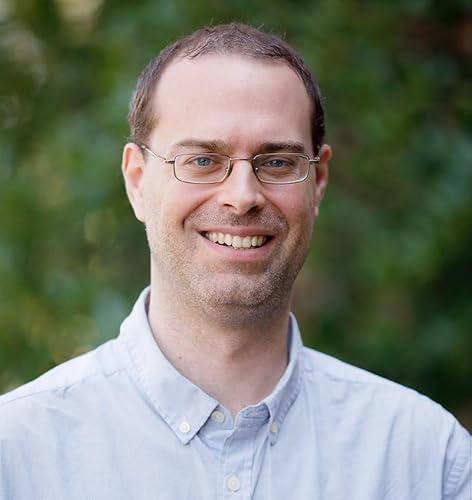
    Prof. Brandon Bukowski is an Assistant Professor in the department of Chemical and Biomolecular Engineering at Johns Hopkins University. He holds BS and PhD degrees in Chemical Engineering from Worcester Polytechnic Institute and Purdue University, respectively. At Purdue he was advised by Jeffrey Greeley where he modeled the kinetics of zeolite and supported nanoparticle catalysts using Density Functional Theory and Molecular Dynamics. He performed post-doctoral research at Northwestern University under the supervision of Randall Snurr studying diffusion in nanoporous materials including metal-organic frameworks (MOFs) and porous polymers. Bukowski started at Johns Hopkins University in July of 2021. He has received a DOE BES Early Career Research Award, an Amazon Research Award, a Doctoral New Investigator grant from the ACS Petroleum Research Fund, a Ralph E. Powe award from Oak Ridge Associated Universities, and a Hopkins Catalyst Award. He is the program chair for the AIChE catalysis and reaction engineering division and program chair of the Northeast Corridor Zeolite Association. It is our pleasure to welcome Prof. Bukowski to PodCAT!

    Show more Show less
    48 mins
  • Prof. Madelyn Ball
    Mar 13 2026

    Prof. Madelyn Ball is an Assistant Professor of Chemical Engineering and Materials Science at Michigan State University. Prof. Ball received her B.S. from University of New Hampshire and Ph.D in Chemical Engineering at the University of Wisconsin Madison under James Dumesic before conducting postdoctoral studies under Prof. Christopher Jones at Georgia Tech. Prof. Ball's research interests are in heterogeneous catalysis, focusing on design of well-controlled nanoparticle materials for CO2 and natural gas conversion reactions to facilitate sustainable chemical production. Her group uses catalysis and synthetic materials chemistry, operando spectroscopic techniques and well-controlled catalyst synthesis methods to elucidate active site structures under reactive environments for designing and developing improved catalysts. It is our pleasure to welcome Prof. Ball to PodCAT!

    Show more Show less
    45 mins
  • Prof. Christopher Paolucci
    Mar 6 2026

    Prof. Christopher Paolucci is an Associate Professor in the Department of Chemical Engineering at the University of Virginia. He is a "Double Domer" having completed his B.S. and Ph.D in Chemical Engineering at the University of Notre Dame. Afterwards, he was a postdoctoral scholar at Stanford University. The Paolucci group focuses on computer simulations of chemical reactions at interfaces. Research areas include computational catalysis (understanding how current catalysts accelerate chemical reactions at the molecular level, and predicting the performance of potential new ones), and modeling of material synthesis and deactivation for both catalysts and other solid materials. The group uses existing quantum and classical simulation methods and also develops new hybrid methods that bridge micro and macroscopic length scales through the use of techniques such as machine learning and Monte Carlo simulation. For this work, he has received numerous awards and honors, including the NSF CAREER award and the invitation to present as an Early Career Investigator at the 2024 Gordon Research Conference on Catalysis. It is our pleasure to welcome Prof. Paolucci on PodCAT!

    Show more Show less
    51 mins
  • Prof. Tibor Szilvási
    Feb 27 2026

    Prof. Tibor Szilvási ( seal-vase-she) studied chemical engineering, chemistry, and physics at the Budapest University of Technology, Hungary, where he completed his PhD degree in 2016. After a postdoctoral stay at the University of Wisconsin–Madison with Prof. Manos Mavrikakis he joined the Department of Chemical and Biological Engineering at The University of Alabama as a tenure-track assistant professor in 2020.

    Prof. Szilvási's research group focuses on computational catalysis and materials design and has published over 140 peer-reviewed publications. Tibor's research group is funded by the National Science Foundation, Department of Energy, Department of Education, Department of Defense, the Krell Institute, and NVIDIA. Tibor has received numerous awards including NSF CAREER Award, and Outstanding Junior Faculty Award from the Computers in Chemistry Division of the American Chemical Society. Most recently, Tibor was announced as the 2026 recipient of the Early Career in Catalysis Award of the Catalysis Science & Technology division of the American Chemical Society. Tibor also serves as the Graduate Program Coordinator of his Department, Early Career Board Member of Journal of Catalysis, President of the Southeastern Catalysis Society, and Programming Chair of the Catalysis & Reaction Engineering division of the American Institute of Chemical Engineers. It is our pleasure to welcome Prof. Szilvasi to PodCAT!

    Show more Show less
    50 mins
  • Prof. Jingguang Chen
    Dec 11 2025

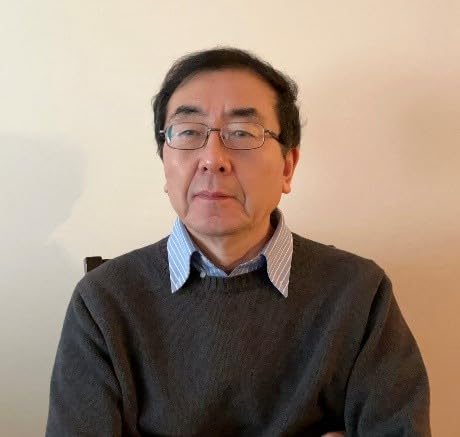
    Prof. Jingguang Chen is the Thayer Lindsley Professor of Chemical Engineering at Columbia University, with a joint appointment at Brookhaven National Laboratory. He received his B.S. degree from Nanjing University and his PhD degree from the University of Pittsburgh. After finishing an Alexander von Humboldt postdoctoral fellowship in Germany, he joined the Exxon Corporate Research Laboratory for several years. He started his academic career at the University of Delaware and rose to the rank of the Claire LeClaire Professor of Chemical Engineering and the Director of the Center for Catalytic Science and Technology. He is the co-author of over 500 journal publications and over 20 United States patents. His research interests include fundamental understanding of carbides, nitrides and bimetallic catalysts for applications in thermocatalysis and electrocatalysis. His research group utilizes a combination of experimental studies, in-situ characterization and density functional theory calculations.

    He served in many leadership positions, including the Chair of the Catalysis Division of the American Chemical Society, the President of the North American Catalysis Society, and the Chair of Gordon Research Conference on Catalysis. He was a co-founder and the director of the Synchrotron Catalysis Consortium, which was established in 2025 with support from the Department of Energy to assist catalysis researchers to utilize synchrotron techniques. He is an Executive Editor of ACS Catalysis and has been on the editorial advisory boards of many journals. He received the George Olah Award on Hydrocarbon Chemistry from the American Chemical Society, the Robert Wilhelm Award on Chemical Reaction Engineering from the American Institute of Chemical Engineers, and the Robert Burwell Lectureship from the North American Catalysis Society. He is a member of the National Academy of Engineering.

    It is our great pleasure to welcome Prof. Jingguang Chen to PodCAT for our 50th episode!


    Show more Show less
    51 mins
  • Prof. Carlos Morales-Guio
    Dec 5 2025

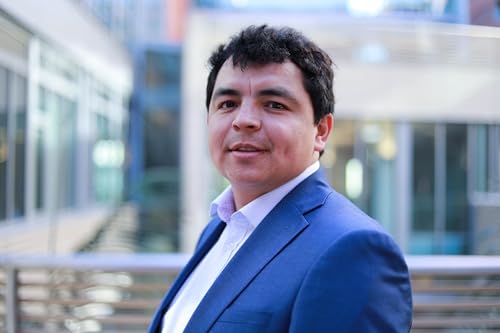
    Prof. Carlos Morales-Guio is an Associate Professor in the Department of Chemical and Biomolecular Engineering at UCLA. His group develops reactor-centric methods that decouple transport from intrinsic kinetics and translate insights to scalable, model-informed electrolyzer designs. Carlos received his B. Eng. degree in Chemical Engineering from Osaka University and his M.S. and Ph.D. in Chemistry and Chemical Engineering from the École Polytechnique Fédérale de Lausanne. Before joining UCLA in the fall of 2018, Carlos was a postdoctoral fellow at Stanford University. Carlos is a recipient of the Swiss National Science Foundation Postdoctoral Fellowship, the Asea Brown Boveri (ABB) Award 2017, a Scialog Fellowship on Negative Emission Sciences, the NSF CAREER Award, and is a Resnick Young Investigator. It is our pleasure to welcome Prof. Morales-Guio on PodCAT!

    Show more Show less
    48 mins
  • Prof. Linsey Seitz
    Nov 20 2025

    Prof. Linsey Seitz is an Associate Professor in the Chemical and Biological Engineering Department at Northwestern University. She received her B.S. (2010) in Chemical Engineering from Michigan State University, supported with a full ride scholarship. She earned her M.S. (2013) and Ph.D. (2015) in Chemical Engineering from Stanford University supported as an NSF Graduate Research Fellow and later as a Stanford DARE Fellow. Linsey completed postdoctoral research at the Karlsruhe Institute for Technology with the Institute of Photon Science and Synchrotron Radiation, supported by a Helmholtz Postdoctoral Fellowship. Her research uses tools at the interface of electrocatalysis and spectroscopy to investigate dynamic catalyst materials and reaction environments towards the sustainable production of fuels and chemicals, as well as upconversion of waste streams. Linsey was recently honored with the ACS Catalysis Early Career Award (2024) and has been recognized as a "Pioneer of the Catalysis and Reaction Engineering Division" of AIChE (2021). She has also received an NSF Career Award (2022), an Alfred P. Sloan Research Fellowship (2025), and a Camille Dreyfus Teacher-Scholar Award (2025). It is our great pleasure to welcome Prof. Seitz to PodCAT!

    Show more Show less
    51 mins
  • Prof. Marcel Schreier
    Nov 11 2025

    Prof. Marcel Schreier received his B.S. degree in Chemistry and Chemical Engineering from EPFL and his M.S. degree in Chemical and Bioengineering from ETH Zurich. During his studies, Schreier worked on Li-Ion Batteries at BASF and investigated Fischer-Tropsch refining mechanisms at the University of Alberta. His master's research was performed in the laboratory of Sossina Haile at Caltech, where he designed materials for fuel cell electrodes. He subsequently joined the laboratory of Michael Grätzel at EPFL, where he developed electrocatalysts and devices for the sunlight-driven conversion of CO2 to fuels. Following his passion for fundamental electrochemistry, he moved to MIT, where he worked with Yogesh Surendranath as an SNSF Postdoctoral Fellow. He subsequently joined the Department of Chemical and Biological Engineering at the University of Wisconsin-Madison as the Richard H. Soit Assistant Professor. He is also an affiliate faculty member of the Department of Chemistry.

    Together with his research group, Prof. Schreier works to understand how the structure of the electrochemical interface and the surface chemistry of catalytic materials influence the fundamental mechanisms which drive chemical transformations using electrical energy. While working at the University of Wisconsin, he has received the Beckman Young Investigator Award, a Packard Fellowship for Science and Engineering, and an NSF CAREER Award. He has been named a Scialog fellow, a Kavli Fellow (National Academy of Science) and has participated in several Frontiers of Engineering meetings of the National Academy of Engineering. Apart from electrochemistry, Prof. Schreier is passionate about modern art, energy systems, technologies of all kinds and policy. It is our pleasure to welcome Prof. Marcel Schreier to PodCAT!

    Show more Show less
    42 mins