Episodes

  • The 2026 Senate Draft! (with Evan Scrimshaw and Ryan Jakubowski)
    Mar 20 2026

    The Iran war is entering a more dangerous phase, not because of troop movements, but because energy infrastructure is now a target and the price tag is starting to match the escalation. At the same time, artificial intelligence is emerging as the next political battlefield, shaping both policy debates and the broader information environment.

    What stood out to me immediately is how the war is evolving. We are no longer just talking about missile launches and leadership strikes. Energy infrastructure has become fair game. Iran hitting a liquefied natural gas facility in Qatar, after Israel struck Iranian gas fields, is a complete and total shift in what counts as a legitimate target.

    Once you start targeting gas fields and LNG infrastructure, you are no longer just fighting a regional war. You are influencing global markets, allies, and supply chains all at once. Energy itself is global. That is usually the phase where conflicts either spiral or move toward negotiation.

    Politics Politics Politics is a reader-supported publication. To receive new posts and support my work, consider becoming a free or paid subscriber.

    My instinct is that this is the point where talks at least become more likely. Not guaranteed, but more likely. Because once energy becomes the battlefield, the costs stop being theoretical.

    Then you get to the update, and this is where things get real. The Trump administration is reportedly preparing a $200 billion supplemental request for the Pentagon.

    That number doesn’t match the messaging. You don’t ask for $200 billion if this is a clean, four-to-six week operation. That’s a number that suggests duration just as much as it suggests uncertainty. It suggests that, whatever the original plan was, the current expectation is something longer and more complicated.

    And politically, that is where the ground starts to shift. Democrats are obviously not going to support that. But more importantly, there are plenty of Republicans who will not put their names behind this action either — epecially the faction that already believes this war risks turning into another Iraq-style commitment.

    So now the question is not just “are we winning?” It is “how long are we staying?” And those are very different political questions.

    Militarily, the signals are still positive for the United States and Israel. There have been clear tactical wins. Iran has taken significant damage. There are even hints of internal instability within the regime. But strategically, it’s still murky.

    We do not know how close the regime is to collapsing. We do not know whether continued strikes accelerate that collapse or entrench resistance. And we do not know whether the administration actually wants regime change or just behavioral change.

    That gap between battlefield success and strategic clarity is where wars tend to get complicated. And when you pair that with a nine-figure funding request, that’s how skepticism starts to grow — and fast.

    Chapters

    00:00:00 - Intro

    00:02:09 - Senate Draft Begins

    00:04:13 - 2026 Senate Draft Round One

    00:28:39 - Iranian Negotiations

    00:30:50 - White House AI Framework

    00:32:35 - 2026 Senate Draft Round Two

    00:49:34 - 2026 Senate Draft Round Three

    01:04:19 - Wrap-up


    This is a public episode. If you'd like to discuss this with other subscribers or get access to bonus episodes, visit www.politicspoliticspolitics.com/subscribe
    Show more Show less
    1 hr and 7 mins
  • The Modern Rebirth of Yellow Journalism. Talking Paxton, Cornyn, and Oklahoma (with Reese Gorman)
    Mar 18 2026
    One of the most striking developments during the Iran war has been the reappearance of something that used to define American media a century ago: yellow journalism. Historically, the term referred to sensationalized reporting that prioritized outrage and emotion over accuracy, often using thin sourcing and dramatic narratives to mobilize public opinion. The Spanish–American War, famously fueled by headlines like “Remember the Maine,” is the classic example.Today the structure is different, but the incentives are remarkably similar. Instead of a handful of powerful newspaper publishers driving the narrative, the modern system is decentralized. Social media users, influencers, and coordinated networks can amplify stories through algorithms until traditional outlets feel compelled to cover them simply because they are trending.All of this results in feedback loop. A rumor or distorted piece of information circulates online, gets boosted within a particular political community, and eventually becomes a topic of mainstream reporting. At that point the original claim, even if false, has successfully entered the public conversation.Politics Politics Politics is a reader-supported publication. To receive new posts and support my work, consider becoming a free or paid subscriber.The Five Tribes of the Iran WarThis dynamic is especially powerful because the online political ecosystem is already divided into ideological “tribes” that interpret events through their own narratives.On the left, there is what might be called the new resistance, Democrats who see every development in the war primarily through the lens of whether it helps or hurts Donald Trump politically. Alongside them sits the progressive anti-war faction, deeply skeptical of Israel and convinced the conflict validates their warnings about American interventionism.On the right, the divide is just as sharp. One faction could be described as the Gnostic MAGA movement, a group of populist conservatives who believe Trump has betrayed the movement’s core promises by engaging in foreign conflict. In contrast, another faction believes Trump is right about everything, arguing that the war’s early results show his strategy is working and that critics are panicking too early.Then there is a final group: the “maybe this time Trump” neoconservatives, longtime critics of the former president who nevertheless support aggressive action against Iran and therefore find themselves, temporarily, aligned with his policy.These communities overlap in complicated ways, but each one is primed to amplify certain narratives that confirm its worldview.How a Rumor Becomes “News”The mechanics of modern yellow journalism often begin with a small piece of truth that can be exaggerated or distorted. Once it is framed in a way that triggers emotional reactions inside one or more of these ideological tribes, the story spreads rapidly through reposts, commentary, and algorithmic amplification.Eventually, the rumor becomes so widely discussed that major media outlets cover it, sometimes simply to debunk it. But by that point the narrative has already achieved its goal: it has entered mainstream awareness and eroded trust in competing sources of information.In wartime, this dynamic becomes even more powerful. Governments themselves may benefit from confusion, exaggeration, or competing narratives. The battlefield isn’t just physical territory, but also public perception.The deeper challenge is that the modern information ecosystem has no central referee. In the past, editors at major newspapers could decide what was credible enough to print. Today, social media algorithms and online communities perform that role collectively, often rewarding the most emotionally compelling stories rather than the most accurate ones.That means the burden increasingly falls on individuals to filter information themselves. If a story makes people furious or ecstatic instantly, that reaction is often a sign to pause before sharing it.A New Information EraThe Iran war may eventually be remembered not only for its military consequences but also for what it revealed about the way modern media operates. The sensationalism that once drove early twentieth-century newspaper empires has reappeared in a decentralized, digital form.Yellow journalism never disappeared — it’s just changed and evolved to keep up with modern times. And in the middle of a war, its power to shape public perception may be greater than ever.Chapters00:00:00 - Intro00:02:14 - Susie Wiles00:03:38 - DHS Shutdown00:04:33 - Yellow Journalism in the Iran War Era00:29:10 - Iranian Security Chief Killed00:33:15 - Joe Kent00:39:29 - Texas AI Ad00:41:32 - Reese Gorman on Texas and Oklahoma01:12:27 - Wrap-up This is a public episode. If you'd like to discuss this with other subscribers or get access to bonus episodes, visit www.politicspoliticspolitics.com/subscribe
    Show more Show less
    1 hr and 16 mins
  • A Deep Dive Into All Things Iran War. Plus, Oscar Nominee Picks (with Ryan McBeth and Jada Yuan)
    Mar 12 2026

    Washington state Democrats have passed a new 9.9 percent income tax on millionaires, the first income tax in the state’s history. The measure now heads to the governor’s desk and represents a major shift in a state long known for its lack of personal income taxes.

    But the policy debate is already colliding with economic reality. Former Starbucks CEO Howard Schultz has announced he is relocating to Florida, a state with no income tax. That move underscores a longstanding pattern in American economics: high earners often respond to aggressive tax policies by moving to lower-tax jurisdictions. If more states pursue similar policies, the migration of wealthy taxpayers to places like Florida, Texas, and Tennessee could accelerate.

    The broader question is what happens if that migration significantly shrinks the tax base in high-spending states. European countries experimented with wealth taxes for years before many rolled them back after wealthy residents simply moved elsewhere. Washington may now be testing whether the same dynamic will play out inside the United States.

    Politics Politics Politics is a reader-supported publication. To receive new posts and support my work, consider becoming a free or paid subscriber.

    The Filibuster Fight and the SAVE Act

    Meanwhile, a new institutional battle is brewing in the Senate. Senator Ron Johnson is pushing for a vote to begin debate on ending the legislative filibuster, at least in its current form. The immediate catalyst is the House-passed SAVE America Act, which focuses on citizenship-based voter registration and voting ID requirements.

    Republicans do not currently have the 60 votes needed to pass the legislation under existing Senate rules. That reality has revived calls to weaken the filibuster by shifting to a “talking filibuster,” forcing senators who want to block legislation to continuously hold the floor rather than simply signaling opposition.

    Institutionalists in both parties warn that such a move could be the beginning of the end for the Senate’s 60-vote threshold entirely. Supporters argue the change is inevitable anyway and that the current rules simply prevent major legislation from passing. Either way, the vote could force senators to go on record about how much they value the chamber’s traditional rules.

    Jim Clyburn and the Persistence of Incumbency

    Finally, South Carolina Congressman Jim Clyburn has announced that he plans to seek reelection at age 85. First elected in 1992, Clyburn remains one of the most influential figures in Democratic politics and a central leader within the Congressional Black Caucus.

    His decision highlights the enduring power of incumbency in American politics. While voters and activists often debate generational change, long-serving lawmakers frequently retain strong political machines and local loyalty that discourage serious primary challenges. For now, there is little sign that anyone in Clyburn’s district is preparing to challenge him.

    Taken together, these developments offer a snapshot of the current political landscape: states experimenting with new tax policies, the Senate wrestling with its own rules of power, and long-time incumbents continuing to dominate the institutions they helped shape.

    Chapters

    00:00:00 - Intro on Iran and Elections

    00:08:47 - Iran Breakdown with Ryan McBeth

    01:07:54 - Update

    01:08:14 - Washington State Tax

    01:09:53 - Filibuster

    01:13:30 - Jim Clyburn

    01:14:37 - Oscar-Nominated Movie Talk with Jada Yuan

    02:38:28 - Wrap-up


    This is a public episode. If you'd like to discuss this with other subscribers or get access to bonus episodes, visit www.politicspoliticspolitics.com/subscribe
    Show more Show less
    2 hrs and 44 mins
  • The Dumb State of Iran Discourse. Scoping Out Trump's Wartime Deadlines (with Kirk Bado)
    Mar 10 2026
    I’ve reached a point where the marketplace of ideas feels broken. The conversation around the Iran war, especially the discussion about oil prices and the Strait of Hormuz, has been less about understanding events and more about reacting to every twitch in the market.This realization hit me last weekend when I watched otherwise smart commentators react breathlessly to oil futures spiking. Writers like Nate Silver and Derek Thompson framed the surge in prices as a potentially catastrophic moment for the Trump administration, a Rubicon that could permanently damage the president’s economic credibility.That logic makes sense in theory. Gas prices are one of the most politically sensitive indicators in American life. If they rise sharply and stay elevated, the economic narrative can turn quickly against any administration. But what bothered me wasn’t the conclusion. It was how little anyone seemed to know about the mechanics behind the story.Politics Politics Politics is a reader-supported publication. To receive new posts and support my work, consider becoming a free or paid subscriber.The Strait of Hormuz, through which a massive share of the world’s oil flows, became the center of speculation. Could Iran shut it down? Had it ever been fully closed before? What would the United States do if shipping lanes were mined?These are complex questions. Yet much of the discussion reduced them to the most basic possible analysis: oil prices go up, oil prices go down.The Problem With Market Narratives and the Age of Info SlopOver the course of a single night, I found myself obsessively researching the issue. I dug into the Iran–Iraq tanker wars of the 1980s, when both countries targeted shipping in the Persian Gulf. I looked at how mines were deployed in the Strait of Hormuz and how the United States eventually intervened to escort tankers and protect trade routes.The historical lesson was clear. Even during the worst periods of that conflict, the strait never truly closed. Oil shipments slowed and risks increased, but global energy markets adapted.By Monday morning, the markets themselves seemed to confirm the lesson. Oil prices surged, then dropped back below their previous levels. The panic narrative collapsed almost as quickly as it appeared.What replaced it was not clarity but confusion. Rumors circulated that Iran was mining the strait. Other reports suggested ships were still passing through after turning off their transponders. At one point, a claim that the U.S. Navy had escorted a tanker through the strait briefly moved markets before the White House denied it.This constant churn of speculation reveals a deeper problem: very few people actually know what is happening.In theory, the modern information environment should make us better informed. Instead, it often produces the opposite result. Analysts extrapolate sweeping conclusions from tiny fragments of data, while social media amplifies every rumor until it looks like evidence.The result is what I can only describe as “info slop.” Bits of partially verified information get passed along, combined, and reinterpreted until the original facts are almost impossible to distinguish from the speculation built around them.In a normal news cycle, that dynamic is frustrating. But in a war, it is dangerous.The Iran conflict carries enormous stakes. A prolonged fight could reshape the Middle East, disrupt global energy markets, or even trigger a wider geopolitical confrontation. Yet the public conversation about the war often resembles message-board debates rather than serious analysis.We are arguing over rumors about oil shipments and naval escorts while the broader strategic picture remains murky.Part of the problem is structural. During wartime, the actors with the most reliable information have strong incentives not to share it. Governments conceal details to protect military operations. Adversaries spread misinformation to manipulate perceptions.Even seemingly straightforward facts become difficult to confirm. Was a school struck by a missile because of a U.S. attack, an Iranian malfunction, or something else entirely? Did Iran mine shipping lanes, or were markets reacting to a rumor?In many cases, the honest answer is simply that we do not know.And yet the conversation continues as if every piece of incomplete information carries definitive meaning.Stepping Back From the NoiseFor me, the lesson is simple. If the discourse is making you feel more confident about events you barely understand, it may not actually be informing you. It may simply be feeding the human instinct to fill gaps in knowledge with speculation.The war with Iran could become one of the defining geopolitical events of this era. It could destabilize a region, reshape energy markets, or even trigger regime change inside Iran itself.But right now, much of what passes for analysis is just noise layered on top of uncertainty. The healthiest response might be the hardest one: consume ...
    Show more Show less
    1 hr and 27 mins
  • Kristi Noem OUT at DHS. The Science of Second Chances in Criminal Justice (with Jennifer Doleac)
    Mar 6 2026
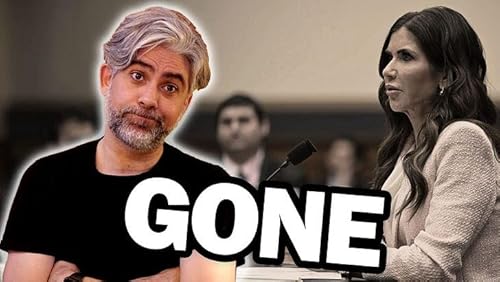
    I didn’t expect the day’s biggest story to land before the show even got rolling, but the first major cabinet domino of the Trump administration has finally fallen. Kristi Noem is out as Secretary of Homeland Security.The immediate cause appears to be a congressional hearing exchange that went sideways. During testimony before Sen. John Kennedy, Noem said that a $200 million ad campaign — one that prominently featured her — had been approved by the president. The White House later said it had not, and it’s that contradiction that seems to have been the final straw for Trump.It’s no secret that the ground had been shifting under Noem for a while. Critical press coverage had been building, particularly around operational issues inside DHS. Some of it focused on headline controversies, but much of it involved the less glamorous details of running a department: delayed contracts, paperwork sitting unsigned, and basic administrative work that insiders say was slipping through the cracks.Politics Politics Politics is a reader-supported publication. To receive new posts and support my work, consider becoming a free or paid subscriber.Complicating matters was the presence of Corey Lewandowski, who had developed a reputation inside the department as a, let’s say, aggressive and polarizing figure. According to people around Washington, he made enemies across the bureaucracy, and those tensions ultimately became inseparable from Noem’s own standing within the administration.Trump’s apparent choice to replace her is Sen. Markwayne Mullin of Oklahoma, a former MMA fighter who has built a reputation in Washington as a loyal Trump ally and a frequent presence on television.In some ways, Mullin is a pragmatic pick. Replacing a cabinet secretary this late in a term can be politically tricky because any nominee must survive Senate confirmation. A sitting senator already has relationships and credibility inside the chamber, making it easier for colleagues to vote yes even if the appointment is politically uncomfortable.That dynamic worked to the administration’s advantage when Marco Rubio moved into a cabinet role earlier in the term, and it could play out similarly here. Senators are often more willing to confirm someone they know than an unfamiliar nominee from outside Washington.Noem’s departure also lands in the middle of a broader policy fight. DHS remains partially shut down due to a standoff between Democrats and the administration over immigration enforcement policies.From my perspective, this moment could provide Democrats with a face-saving off-ramp. With Noem gone, they could claim a political victory and move toward reopening the department without appearing to capitulate entirely on their policy demands. The alternative — maintaining a shutdown while security risks mount — carries its own political dangers.When federal security agencies operate without full funding, the political blame game gets complicated very quickly if something goes wrong.Fallout from the Texas PrimariesMeanwhile, the ripple effects from the Texas primary elections are already shaping the next phase of the campaign cycle. Sen. John Cornyn and Attorney General Ken Paxton are heading toward a runoff, and President Trump has signaled he may intervene with an endorsement.Paxton has already indicated he won’t automatically step aside even if Trump backs Cornyn, raising the possibility that the party’s internal fight could stretch out for weeks. Democrats, for their part, clearly prefer facing Paxton in the general election given his long history of scandals and investigations.Another runoff will take place in Texas’s 23rd congressional district, where Tony Gonzalez is facing intense pressure after admitting he had an affair with a staffer.The admission carries serious implications. Relationships between members of Congress and staff can trigger ethics violations, and Gonzalez now faces an ongoing investigation. Leadership within the Republican caucus is reportedly signaling that even if he wins the runoff, he could still face consequences in Washington.In other words, his political future may already be decided regardless of how the voters rule.Chapters00:00:00 - Intro00:01:01 - Kristi Noem00:08:07 - Markwayne Mullin00:11:19 - Interview with Jennifer Doleac00:33:22 - Update00:33:54 - Cornyn/Paxton00:36:47 - Tony Gonzales00:39:36 - Mullin’s Senate Replacement00:41:36 - Interview with Jennifer Doleac, con’t01:00:14 - Wrap-up This is a public episode. If you'd like to discuss this with other subscribers or get access to bonus episodes, visit www.politicspoliticspolitics.com/subscribe
    Show more Show less
    1 hr and 4 mins
  • Final Texas Primary Predictions! Pentagon vs. Anthropic Explained. The False Front of Executive Actions (with Kenneth Lowande)
    Mar 3 2026
    The fight between Anthropic and the Pentagon goes deeper than a simple contract dispute. In some ways, it’s the culmination of a tech rivalry that’s been simmering since the early days of OpenAI.Anthropic wasn’t some scrappy outsider that stumbled into national security. It’d already had top secret clearance, working with the CIA for years, and had seemingly made peace with the idea that its models would be used inside the American intelligence apparatus. So let’s dispense with the notion that this is a company discovering government power for the first time. The rupture didn’t happen because the Pentagon suddenly knocked on the door. The door had been open.The disagreement came down to terms. Anthropic wanted to draw lines beyond the law. No mass surveillance of civilians. No autonomous weapons without a human in the loop. Not “we’ll follow U.S. statute.” They wanted something stricter, something moral, something aligned with Dario Amodei’s effective altruist worldview. The Pentagon’s response was blunt: we obey US law, but we don’t sign up to a private company’s expanded terms of service.That’s where the temperature rose.Politics Politics Politics is a reader-supported publication. To receive new posts and support my work, consider becoming a free or paid subscriber.Because this isn’t just any company. Dario left OpenAI over exactly this kind of philosophical divide. He believed OpenAI was becoming too commercial, too focused on product, not focused enough on safety and existential risk. So he built Anthropic as the safety lab. The kinder, gentler, crunchier alternative. But ironically, Anthropic was already cashing government checks while telling itself it was the adult in the room.From the Pentagon’s perspective, the risk was operational. If you’re going to integrate a model into defense infrastructure, you can’t have the supplier yank the API mid-mission because the CEO decides the vibes are off. There were even reports that during negotiations, Pentagon officials asked whether Anthropic would allow its technology to respond to incoming ballistic missiles if civilian casualties were possible. The alleged answer, “you can always call,” wasn’t reassuring to people whose job is to eliminate hesitation.And hovering over all of this is Sam Altman.Because while Anthropic was sparring with the Department of Defense, OpenAI was in conversation. The rivalry here isn’t new. The effective altruist faction at OpenAI once helped push Altman out of his own company before he managed to return days later. Anthropic ran a Super Bowl ad that took thinly veiled shots at OpenAI’s commercialization. So when Anthropic stumbled, OpenAI stepped in and secured its own defense agreement.Then came the nuclear option talk: labeling Anthropic a “supply chain risk.” In Pentagon language, this is the category you reserve for companies like Huawei, for hostile foreign hardware, for entities you believe can’t be trusted inside American systems. Most people inside and outside the tech landscape agree that goes too far. Anthropic may be principled. It may be stubborn. It may even be naive. But it isn’t malicious.Meanwhile, something fascinating happened in the market. Claude, Anthropic’s consumer product, exploded in downloads. It became a kind of digital resistance symbol, a signal that you weren’t with the war machine. The company that once insisted it didn’t care about consumer dominance suddenly found itself riding a consumer wave, experience mass traffic it hadn’t planned to account for.What this entire episode reveals is that AI isn’t a lab experiment anymore. It’s infrastructure. It’s missile defense. It’s geopolitical leverage. And when you build something that powerful, you don’t get to exist outside power structures. You either align with them, fight them, or try to morally outmaneuver them. Anthropic tried the third path. The Pentagon reminded them that in wartime procurement, ambiguity isn’t a feature.Cooler heads may yet prevail. Right now, the Pentagon’s got bigger problems than a Silicon Valley slap fight. But this was the moment when AI stopped being a culture war talking point and became a live wire in national security. And once you plug into that grid, there’s no going back.Chapters00:00:00 - Intro00:02:25 - Texas Primary Final Predictions00:15:20 - The Pentagon vs. Anthropic, Explained00:40:30 - Update00:40:52 - Iran00:45:41 - Clintons00:49:08 - Kalshi00:52:19 - Interview with Kenneth Lowande01:18:03 - Wrap-up This is a public episode. If you'd like to discuss this with other subscribers or get access to bonus episodes, visit www.politicspoliticspolitics.com/subscribe
    Show more Show less
    1 hr and 22 mins
  • War with Iran. What Happened and What's Next?
    Mar 1 2026
    The United States is now in open conflict with Iran after a joint U.S.–Israeli operation killed Supreme Leader Ali Khamenei in the opening hours of what the White House has dubbed Operation Epic Fury. The geopolitical aftershocks are already reshaping the Middle East, and could upend the fate of the midterms come November.Over the weekend, American and Israeli forces launched a coordinated campaign targeting Iranian military infrastructure and senior leadership. The United States focused on equipment and strategic assets. Israel targeted personnel. Among the dead: Ali Khamenei, former president Mahmoud Ahmadinejad, and multiple layers of senior command.What we saw was the clearest expression yet of what I would describe as Trump’s second-term regime change playbook. First, engage in extended negotiations, regardless of whether the other side is stalling. Second, quietly position overwhelming military force within striking distance. Third, execute a rapid, highly choreographed strike that immediately removes the head of state.Politics Politics Politics is a reader-supported publication. To receive new posts and support my work, consider becoming a free or paid subscriber.It is ruthlessly efficient. It is high risk. And unlike Iraq in 2003, the primary target was eliminated in the opening salvo. There will be no years of grainy bunker videos from Tehran. The symbolic center of power is gone.But speed does not guarantee stability. The immediate question is not whether the operation succeeded militarily. It did. The question is what comes next.Regional Realignment and the Oil ChessboardOne of the most striking developments has been the reaction across the region. Missiles were fired from Iran into the UAE and Saudi Arabia. Both countries then moved rhetorically closer to the American position. Even the Palestinian Authority condemned the Iranian strikes.If Saudi Arabia was quietly supportive of regime change, as some reporting suggests, then the long arc of the Abraham Accords may be bending toward a new regional bloc: Israel, Saudi Arabia, UAE, and Qatar acting as economic and security anchors. Iran, long positioned as the ideological counterweight, now faces a vacuum.Then there’s China. Iran exports roughly 90 percent of its oil to Beijing at discounted rates. If a post-Khamenei Iran stabilizes and reenters broader markets, China’s leverage shrinks. Add to that Venezuela’s instability and potential changes to Russian oil flows, and Beijing’s energy calculus becomes far more complicated.Energy is not just economics. It’s military capacity. Constrain oil, and you constrain strategic freedom of movement. That dynamic remains very much in play.Washington DividesDomestically, the political fallout is already taking shape. Republicans argue the strike was legal and necessary, pointing to congressional briefings and framing the action as a decisive blow against a long-standing adversary. Democrats are coalescing around a familiar and potent message: anti-war restraint. Senators like Chris Murphy and Chris Coons have questioned both the legality and the long-term strategy, warning of destabilization and regional blowback.This is where the midterm implications become real. The MAGA coalition includes a significant anti-war faction shaped by Iraq and Afghanistan. Many of those voters supported Trump precisely because he promised to avoid prolonged Middle Eastern entanglements. A swift strike is one thing. A sustained conflict is another.Three American service members are already confirmed dead, with five seriously wounded. That fact alone changes the tone. Nothing shifts public opinion faster than a body count.Democrats are often most effective when opposing war. Republicans, meanwhile, are betting that decisive action will project strength. But without an appetite for prolonged conflict in the Middle East, any success in November for Trump very much remains up in the air.The Off-Ramp QuestionThe key variable to when this all wraps up is time. If the United States transitions operational control to regional partners quickly and avoids prolonged occupation, Trump can argue this was a targeted regime decapitation, not a nation-building project. If American forces remain engaged beyond a short window, the political calculus shifts dramatically.Iran is not Venezuela. There was no extraction of a leader for prosecution. There was a killing. What fills the vacuum matters enormously.I have said before that a regime collapse in Iran would be the most consequential geopolitical event since the fall of the Soviet Union. We may now be living through that moment. Whether it becomes a strategic triumph or a prolonged quagmire will depend on decisions made in the coming days, not the strikes already executed.For now, the clock is ticking. And both the Middle East and American voters are watching.Chapters00:00 - Intro02:26 - Justin’s Thought on Iran14:52 - What’s Happened So Far19:14 - Republican Response30:03 ...
    Show more Show less
    55 mins
  • Midterms Ads are Turning NASTY. Decoding the Epstein Files Fallout (with Kevin Ryan)
    Feb 26 2026

    We are officially in the phase of a campaign where decency gets tossed aside and the opposition research file is emptied directly into a 30-second spot.

    One local ad targeting Cook County Commissioner Samantha Steele opens with footage from her DUI arrest and the now-infamous line, “I’m an elected official.” The ad’s structure is ruthlessly efficient. Lead with the footage. Transition from self-importance to alleged abuse of power. Tie it together with a tagline about rules not applying to her. On the nasty scale, it earns high marks. It is disciplined, rhythmic, and unforgiving.

    Then there is the Texas Senate Republican primary, where the National Republican Senatorial Committee and Sen. John Cornyn are going directly at Attorney General Ken Paxton. Divorce. Allegations of infidelity. Wealth accumulation during scandal. Even insinuations about cultural issues designed to rile the base. It is the kind of ad that signals panic or confidence. Sometimes both.

    Politics Politics Politics is a reader-supported publication. To receive new posts and support my work, consider becoming a free or paid subscriber.

    Contrast that with Paxton’s softer spot featuring his daughter speaking about him as a grandfather. It is the standard counterpunch to a scandal narrative: humanize, slow down, soften the edges. When campaigns spend that kind of money on family-centered messaging, it usually means they are trying to cover something sharp underneath.

    The larger point is simple. As we approach primary day, the gloves are off.

    Tariffs, Courts, and the $133 Billion Question

    Beyond campaign warfare, the Trump administration is wrestling with the fallout from the Supreme Court striking down its sweeping tariff regime. Roughly $133 billion in collected duties now sit in limbo.

    Officials are reportedly exploring ways to discourage refund claims, stretch out litigation, or even reimpose tariffs under new legal authorities. Trade lawyers argue the government previously committed to repayment with interest and that courts will scrutinize any attempt to sidestep that obligation.

    This is less about ideology and more about arithmetic. If companies want their money back, they are likely to get it. The administration may find voluntary compliance from firms seeking goodwill, but legally, the leverage is limited. This is the bargaining phase after a judicial loss.

    The Epstein Depositions Begin

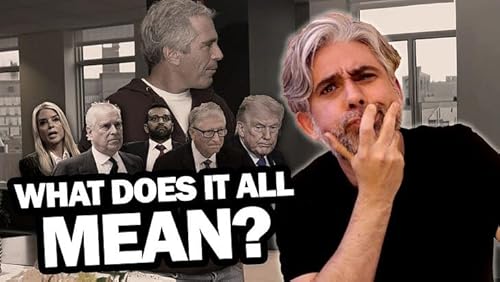
    Hillary Clinton was deposed behind closed doors in Washington as part of the House Oversight Committee’s work on the Epstein files. She maintained that she had no knowledge of wrongdoing involving Jeffrey Epstein or Ghislaine Maxwell.

    Democrats are pushing for a full, unedited transcript release to prevent selective leaks from shaping the narrative. Tensions flared when Rep. Lauren Boebert leaked an image of Clinton during the deposition, briefly halting proceedings.

    Next comes Bill Clinton. For those with long political memories, that sense of history repeating itself is unavoidable. Whether anything explosive emerges remains to be seen, but the optics alone ensure sustained attention.

    Transactional Politics in Real Time

    Perhaps the most revealing political maneuver of the week came from New York Mayor Zohran Mamdani. In an unscheduled trip to Washington, he reportedly presented President Trump with specific names of detained individuals and requested their release. One Columbia-affiliated detainee was subsequently freed.

    The broader lesson is something I have observed for years. With Trump, flattery and direct engagement can yield tangible results. Politics is transactional. If you give him a headline he likes or a symbolic win, you may get policy movement in return. Mamdani appears to understand that dynamic.

    Chapters

    00:00:00 - Intro

    00:03:27 - Nasty Political Ads

    00:10:52 - Interview with Kevin Ryan

    00:51:33 - Update

    00:51:47 - Tariffs

    00:53:13 - Clintons

    00:54:57 - Mamdani and Trump

    00:59:13 - Interview with Kevin Ryan, con’t

    01:38:33 - Wrap-up


    This is a public episode. If you'd like to discuss this with other subscribers or get access to bonus episodes, visit www.politicspoliticspolitics.com/subscribe
    Show more Show less
    1 hr and 43 mins