• PT 652 - Esme Dark - Psychedelics, Somatics and the Shadow
    Mar 25 2026

    Dr. Esme Dark joins Kyle Buller for a conversation on psychedelic therapy, somatic psychotherapy, and shadow work. Based in Australia, Dark is a clinical psychologist, somatic psychotherapist, and psychedelic therapist. She shares her perspective on Australia's authorized prescriber model, the role of psychotherapy in psychedelic care, and what it means to work with the body before, during, and after a psychedelic experience.

    The discussion stays practical. Dark draws on her work in research settings, including psilocybin-assisted psychotherapy for generalized anxiety disorder at Monash University. She explains that Australia has not decriminalized psychedelics. Instead, psilocybin and MDMA can be prescribed in limited cases through a psychiatrist-led system. That distinction matters, especially as public discussion often moves faster than the actual clinical infrastructure.

    Kyle and Dark also explore what happens in the therapy room. They talk about nervous system activation, body-based awareness, co-therapy, breathwork, and the challenge of knowing when to intervene and when to stay out of the way. The episode also turns toward creativity, self-expression, and the parts of the self that often remain split off or underdeveloped.

    Show more Show less
    1 hr and 14 mins
  • Betty Aldworth & Ismail Ali: MAPS Co-Executive Directors on Leadership, Research, and the Future of Psychedelics
    Mar 19 2026

    MAPS co-executive directors Betty Aldworth and Ismail Ali join Psychedelics Today to talk about leading one of the most visible organizations in the psychedelic field during a period of transition. The conversation covers their move into permanent leadership, how they work together, and how MAPS is thinking about research, education, policy, and movement strategy after a difficult period for the organization and the broader field.

    Show more Show less
    1 hr and 22 mins
  • Joe Moore Psychedelics Today on Leadership, Integration, and the Psychedelic Landscape
    Mar 9 2026

    Jen Davenport joins Psychedelics Today to interview co-founder Joe Moore about the growth of Psychedelics Today, the broader psychedelic ecosystem, and how professionals are beginning to engage with psychedelic ideas.

    Davenport is the founder of Iron Thread Partners and a graduate of the Vital psychedelic training program. Her work focuses on executive leadership, decision making, and organizational development. In this conversation she asks Moore about the evolution of Psychedelics Today and the changes he has witnessed across the psychedelic field over the past decade.

    Moore explains that Psychedelics Today began as a podcast exploring psychedelic research, therapy, and culture. Over time the project expanded into a media and education platform covering psychedelic science, harm reduction, and professional training. The organization now produces podcasts, journalism, courses, and public conversations about psychedelics and their place in modern society.

    A central part of the discussion is psychedelic integration. Moore notes that insight during a psychedelic experience does not automatically lead to lasting change. The integration process often requires continued work through journaling, meditation, therapy, and community support. These practices help people translate insights into stable changes in behavior and perspective.

    The conversation also explores policy changes in the United States. Colorado's Natural Medicine framework is creating a regulated system for psychedelic services while the state also maintains a broader decriminalization approach. Moore discusses the tension between regulated access and grassroots psychedelic culture, as well as the questions around accessibility, pricing, and corporate participation.

    Davenport asks how executives and professionals are approaching psychedelics. In some circles psychedelics are framed as tools for creativity or performance. Moore cautions against this framing. Psychedelics often open difficult personal material and should be approached with care rather than treated as productivity tools.

    Education remains a recurring theme throughout the episode. As public interest grows, Moore stresses the importance of studying the legal landscape, understanding the scientific literature, and developing responsible practices for preparation and integration.

    The conversation offers a grounded look at how Psychedelics Today approaches the psychedelic resurgence. Rather than focusing on hype, Moore emphasizes education, safety, and thoughtful engagement with psychedelic experiences.

    Show more Show less
    1 hr and 7 mins
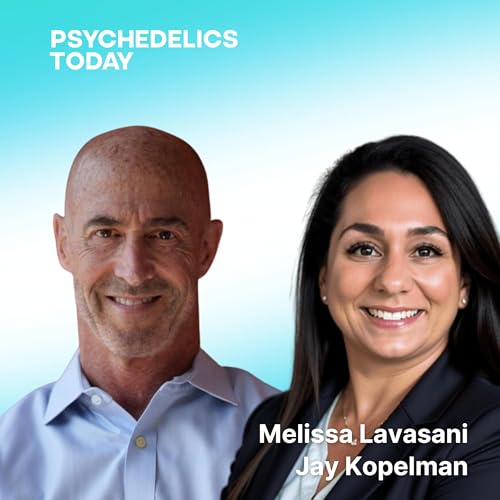
  • PT 649 - Melissa Lavasani and Jay Kopelman
    Feb 19 2026
    Melissa Lavasani & Jay Kopelman join our podcast to discuss how psychedelic policy is actually moving in Washington, DC. Lavasani leads Psychedelic Medicine Coalition, a DC-based advocacy organization focused on educating federal officials and advancing legislation around psychedelic medicine. Kopelman is CEO of Mission Within Foundation, which provides scholarships for veterans and first responders seeking psychedelic-assisted therapy retreats, often outside the United States. The conversation centers on veterans, the VA, and why that system may be the first realistic federal pathway for psychedelic care. Early Themes Lavasani describes PMC's work on Capitol Hill, including hosting events that bring lawmakers, staffers, and advocates into the same room. Her focus is steady engagement. In DC, progress often happens through repeated conversations, not headlines. Kopelman shares his background as a Marine and how his own psychedelic-assisted therapy experience led him to Mission Within. The foundation has funded more than 250 scholarships for veterans and first responders seeking treatment for PTSD, mild traumatic brain injury, depression, and addiction. They connect this work to pending veteran-focused legislation and explain why the VA matters. As a closed health system, the VA can pilot programs, gather data, and refine protocols without the pressures of private healthcare markets. Core Insights A recent Capitol Hill gathering, For Veteran Society, brought together members of Congress and leaders from the psychedelic caucus. Lavasani describes candid feedback from lawmakers. The message was clear: coordinate messaging, avoid fragmentation, and move while bipartisan interest remains. Veteran healthcare is not framed as the final goal. It is a starting point. If psychedelic therapies can demonstrate safety and effectiveness within the VA, broader adoption becomes more plausible. Kopelman raises operational realities that must be addressed: Standardized safety protocols across providersIntegration support, not medication aloneClear training pathways for cliniciansReal-world data beyond tightly screened clinical trials They also address recent negative headlines involving ibogaine treatment abroad. Kopelman emphasizes the need for shared learning across providers, especially when adverse events occur. Lavasani argues that inconsistency within the ecosystem can slow federal confidence. Later Discussion and Takeaways The discussion widens to federal momentum around addiction and mental health. Lavasani notes that new funding initiatives signal growing openness to innovative treatment models, even if psychedelics are not named explicitly in every announcement. Both guests stress that policy moves slowly by design. Meetings, follow-ups, and relationship building often matter more than public statements. For clinicians, researchers, operators, and advocates, the takeaways are direct: Veterans are likely the first federal pathwayPublic education remains essentialSafety standards must be shared and transparentIntegration and workforce development need attention now If psychedelic medicine enters federal systems, infrastructure will determine success. Frequently Asked Questions What do Melissa Lavasani & Jay Kopelman say about VA psychedelic policy? They argue that veteran-focused legislation offers a realistic first federal pathway for psychedelic-assisted care. Is ibogaine currently available through the VA? No. They discuss ibogaine in the context of private retreats and future possibilities, not an existing VA program. Why do Melissa Lavasani & Jay Kopelman emphasize coordination? Lawmakers respond more positively when advocates present aligned messaging and clear priorities. What safety issues are discussed by Melissa Lavasani & Jay Kopelman? They highlight the need for standardized screening, monitoring, integration support, and transparent review of adverse events. Closing Melissa Lavasani & Jay Kopelman provide a grounded look at how psychedelic policy develops inside federal systems. Their message is practical: veterans may be the first lane, but long-term success depends on coordination, safety standards, and sustained engagement. Closing This episode captures a real-time view of how federal policy could shape the next phase of the psychedelic resurgence, especially through veteran-facing legislation and VA infrastructure. Melissa Lavasani & Jay Kopelman argue that coordination, public education, and shared safety standards will shape whether access expands with credibility and care. Transcript Joe Moore: [00:00:00] Hello everybody. Welcome back to Psychedelics Today. Today we have two guests, um, got Melissa Sani from Psychedelic Medicine Coalition. We got Jake Pelman from Mission Within Foundation. We're gonna talk about I bga I became policy on a recent, uh, set of meetings in Washington, DC and, uh, all sorts of other things I'm sure. Joe Moore: But thank you both for ...
    Show more Show less
    1 hr and 10 mins
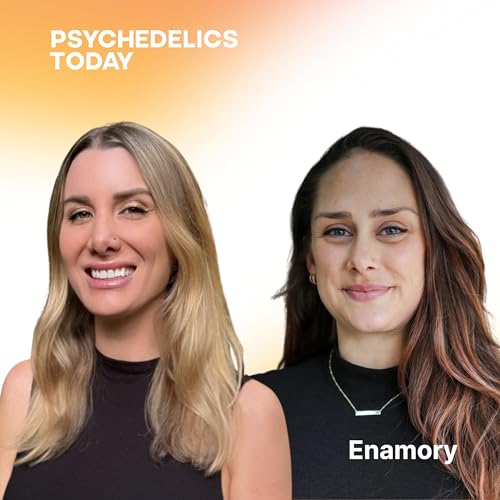
  • PT 648 - Enamory - Couples Therapy with Ketamine
    Feb 10 2026

    Enamory is a clinical practice, training institute, and nonprofit research organization focused on psychedelic assisted couples therapy. In this episode, clinical psychologists Chandra Kian and Kayla Knopp discuss their work integrating ketamine assisted psychotherapy with evidence based couples therapy models.

    Both guests trained as academic researchers at the University of California San Diego Veterans Affairs system, where they worked on large scale couples based PTSD trials. They later co founded Enamory to continue clinical work, train therapists, and conduct research focused specifically on relationships.

    Early Themes in Enamory and Couples Therapy

    The conversation begins with Dr. Kian and Dr. Knopp describing their background in couples based PTSD research and how that work shaped their clinical approach.

    They explain how existing couples therapy models often stall when partners cannot soften, access vulnerability, or understand each other's internal experience. Their early exposure to MDMA assisted therapy research highlighted how psychedelic states can temporarily reduce defensiveness and rigid narratives.

    Show more Show less
    1 hr and 23 mins
  • PT 647 - Joshua White: Fireside Project and Lucy, an AI Training Simulator for Psychedelic Support
    Jan 22 2026

    Fireside Project is a nonprofit that helps reduce the risks of psychedelic experiences through a free support line, coaching, education, and research. In this episode, Joshua White speaks with Psychedelics Today about why real-time support matters, what it takes to run a national hotline, and what Fireside learned after more than 30,000 conversations since launch.

    White shares how his background as a lawyer and his early hotline volunteering shaped Fireside's model. He also describes how festival harm reduction work, including lessons from Zendo-style support spaces, revealed a major gap: people often need help during an experience and after it ends.

    A major focus of the conversation is Lucy, Fireside's new voice-to-voice role-play simulator designed to improve psychedelic support skills through low-stakes practice.

    Early Themes With Fireside Project

    Joshua White introduces Fireside Project as an accessible safety net for people who are actively having psychedelic experiences or processing past ones. The support line launched on April 14, 2021, and relies on trained community volunteers who commit to a year of service.

    White explains why anonymity matters. He argues that a phone-based container can make it easier for callers to share vulnerable material without fear of judgment. He also frames service as a key part of integration for volunteers who want to give back or prepare for work in the psychedelic field.

    Core Insights From Fireside Project

    White describes the early difficulty of building Fireside from scratch, including legal design, insurance hurdles, training development, and fundraising. He credits seed support from David Bronner and Dr. Bronner's for helping Fireside prove that people would actually use a psychedelic support line.

    He also explains a key harm reduction point: calling emergency services during a non-medical psychedelic crisis can escalate risk. Fireside aims to help people regulate, re-orient, and stay safer when panic or fear shows up.

    Key concepts discussed include:

    • The thin line between healing and traumatizing during high-intensity psychedelic states
    • Why callers often need connection, not rescue
    • How volunteer capacity and call volume shape how long conversations run
    • The difference between support during an experience and longer-term coaching support

    Later Discussion and Takeaways With Fireside Project

    The conversation then turns to Lucy, a training tool White describes as a "flight simulator" for psychedelic practitioners. Lucy is not part of the live support line. Instead, it offers emotionally responsive role-play scenarios so trainees can practice staying grounded, tracking consent and boundaries, and responding to crisis cues.

    White also addresses recording and consent. He argues Fireside needs strong training feedback loops to improve safety and quality. He describes an anonymization approach designed to remove phone numbers, strip identifying details, and distort voices while preserving emotional tone. He also explains the post-call option for callers to delete their recorded conversation.

    Practical takeaways include:

    • Simulation can help trainees stay regulated when intense material emerges
    • Better training can reduce unnecessary diversion to emergency rooms
    • Clear consent language and easy deletion workflows matter for trust
    • Coaching can expand the continuum of psychedelic support beyond therapy

    Show more Show less
    1 hr and 11 mins
  • PT 646 - Manvir Singh: Shamanism the Timeless Religion
    Jan 6 2026

    Manvir Singh joins Psychedelics Today to unpack what shamanism means and why the term matters now. Singh is an anthropologist and author of Shamanism: The Timeless Religion. He argues that shamanism is not limited to "remote" societies or the past. Instead, it reliably reappears because it helps humans manage uncertainty, illness, and the unknown.

    This episode is relevant for the psychedelic community because "shaman" often gets used loosely, or avoided entirely. Singh offers a clear framework for talking about shamanic practice without leaning on romantic myths, drug-centered assumptions, or rigid definitions that do not fit the cross-cultural record.

    Early Themes With Manvir Singh

    Early in the conversation, Manvir Singh explains why many classic definitions of shamanism break down when tested across cultures, including in Siberia where the term originated. He discusses how popular images of shamanism often center "soul flight" and fixed cosmologies. However, ethnography shows more variation, including possession, spirit proximity, and different ways practitioners describe altered experience.

    Singh also traces his path into anthropology, including long-term fieldwork with the Mentawai people off the west coast of Sumatra. There, he studied ritual specialists known as kerei and saw how central they are to healing, ceremony, and community life.

    Core Insights From Manvir Singh

    At the center of the episode, Manvir Singh offers a practical three-part definition. He emphasizes these shared traits as the "beating heart" of shamanism across many settings:

    • A non-ordinary state (trance, ecstasy, or another altered mode)

    • Engagement with unseen beings or realities (spirits, gods, ancestors, witches, ghosts)

    • Services such as healing and divination

    Singh also explores taboo, restriction, and "otherness." He explains how shamans often cultivate social and psychological distance through initiations, deprivation, and visible markers. This helps communities experience the practitioner as different in kind, which increases credibility when the practitioner claims access to hidden forces.

    Later Discussion and Takeaways With Manvir Singh

    Later, Manvir Singh challenges common psychedelic narratives that treat psychedelics as the universal engine of religion or shamanism. He notes that many shamanic traditions do not rely on psychedelics at all, and that rhythmic music, drumming, dance, and social ritual can reliably produce trance states.

    He also clarifies a key mismatch in many contemporary "ayahuasca tourism" settings: in many traditional contexts, the specialist takes the substance to work on behalf of the patient, rather than turning the participant into the primary visionary practitioner.

    Practical takeaways for the psychedelic field include:

    • Use definitions that fit cross-cultural evidence, not marketing language.

    • Avoid assuming psychedelics are required for mystical experience.

    • Notice how authority gets built through ritual, training, and otherness, not only through pharmacology.

    Show more Show less
    1 hr and 8 mins
  • PT 645 - Oli Genn-Bash: Functional Mushrooms, Hype Cycles, and Mycelial Thinking
    Dec 28 2025
    Oli Genn-Bash (Brighton, UK) joins Joe Moore for a grounded conversation on the boom in functional mushrooms and why the category may be moving too quickly. As the founder of The Fungi Consultant, Oli works with consumers and brands to demystify functional mushrooms, with a focus on education, traceability, and realistic expectations. The conversation begins with a critique of wellness hype cycles. Oli explains how consumer desperation for help with anxiety, sleep, stress, and cognition can create an opening for a rapid wave of products that are not always grounded in careful sourcing or clear science. Using lion's mane as a case study, he contrasts popular cognitive claims with traditional use, arguing that the most useful path forward is to slow down, get more literate about mechanisms, and build a market that can sustain trust over time. Systems and Culture Oli describes how individual health is inseparable from community realities, including food access, class dynamics, and what wellness advice can sound like when it lands from a place of privilege. They discuss mycelial thinking as a practical framework for collaboration and resource-sharing, and why mushrooms tend to attract unusually generous "teach everyone" communities. They also explore the role of mushrooms in meaning-making and consciousness. Oli shares personal reflections on mushrooms as allies, the felt sense of "agency" in psychedelic experiences, and how those experiences can encourage behavioral change without forcing it. The conversation touches on alcohol culture in the UK and the possibility of non-alcoholic alternatives, including how functional mushrooms, microdosing, and other botanicals can support social confidence and energy for some people. Finally, they look ahead at fungal innovation beyond supplements: materials, soil health, regenerative approaches, bioremediation, and what the broader psychedelic movement might learn from fungi's patience, symbiosis, and balance. Key themes and takeaways 1) Why functional mushrooms feel "too fast" right now Oli argues that functional mushrooms have accelerated into a high-pressure wellness marketplace, with brands rushing products to market and consumers struggling to determine what is legitimate, traceable, and effective. He draws parallels to the UK CBD market, describing how oversaturation and inconsistent quality can erode trust and collapse prices. 2) Lion's mane, tradition, and mechanism Lion's mane is a useful example of how modern marketing can outrun nuance. Oli notes the gap between popular cognitive claims and traditional use, and points toward the gut-brain axis as one plausible bridge that requires more careful explanation and patience. 3) "Functional mushrooms" as a frame Oli prefers the term functional mushrooms over medicinal mushrooms, emphasizing systems-level support rather than a pharmaceutical model. He describes a view of health that starts on the cellular level and asks what supports function, resilience, and prevention. 4) Health is individual and collective Oli speaks candidly about barriers to wellness in the UK, including food poverty, access to education about cooking, and how class dynamics shape what health messaging sounds like. The broader point is structural: it is difficult to talk about supplements without considering the baseline conditions of daily life. 5) Mycelial thinking, futures work, and collaboration The conversation highlights "mycelial thinking" as more than a metaphor. Oli describes collaborations in futures-oriented communities and how fungal logic can inform collaboration, non-zero-sum outcomes, and resource sharing. 6) Mushroom culture and the instinct to share Joe notes how strikingly generous mushroom communities can be, especially around cultivation and identification. Oli agrees and adds a provocative angle: the possibility of "agency" in fungi and a sense that mushrooms invite humans into relationship, curiosity, and participation. 7) Alcohol culture and alternatives Oli reflects on nearly three years without alcohol and describes how functional mushrooms and other botanicals can support mood, energy, and social confidence for some people. They also discuss the realities of events culture, including the need for more inclusive non-alcoholic options and sensitivity to addiction histories. 8) The next 10 years of fungi They look at the expansion of fungi into materials, fashion, regenerative agriculture, soil health, and bioremediation. Oli emphasizes balance: fungal innovations are promising, but scaling and real-world constraints matter. 9) What the psychedelic movement can learn from fungi Oli critiques extractive, capital-driven dynamics in the psychedelic ecosystem and suggests fungi offer a different ethic: patience, humility, symbiosis, and realism about parasitism and imbalance.
    Show more Show less
    1 hr and 15 mins