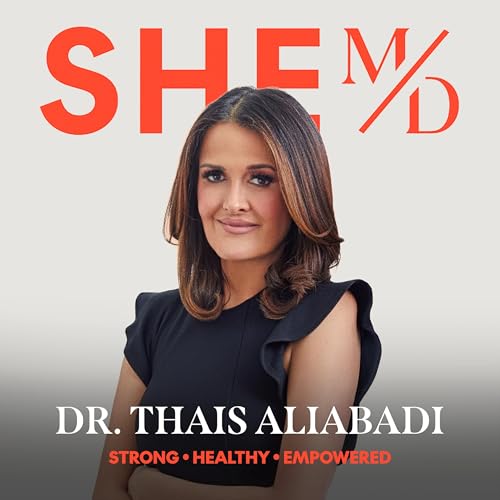
SHE MD Podcast By Dear Media cover art

SHE MD

SHE MD

By: Dear Media
Listen for free

SHE MD is a weekly podcast hosted by world-renowned OBGYN, Dr. Thais Aliabadi, “Dr. A,” and women's advocate and influencer, Mary Alice Haney. Their candid conversations with celebrity guests and today's leading experts about women's health topics, such as menopause, endometriosis, PCOS, and fertility empower their audience with the knowledge and tools to become their own health advocates.Dr. A and Mary Alice dive deep into critical health issues, offering women the knowledge and tools to become their best health advocates.At SHE MD, we believe that every woman deserves access to the latest medical insights, personalized care strategies, and expert advice to navigate their health journey. From breaking down myths to providing practical tips, Dr. Aliabadi and Mary Alice Haney create a welcoming and informative space for women to take control of their health. The podcast features exclusive interviews with top-tier celebrity guests and leading experts across the medical, wellness, and health industries. Together, they explore real-world stories, struggles, and successes to ensure that every listener can feel heard and supported.SHE MD aims to change that by providing a platform where women can receive trustworthy, expert advice on key health issues affecting their lives. Whether you’re dealing with painful menstrual cycles, navigating fertility challenges, or going through menopause, SHE MD brings clarity to these topics in a way that feels personal, approachable, and actionable. Dr. Thais Aliabadi provides expert insights into the most pressing women’s health issues, offering listeners a chance to learn from one of the leading voices in the field. Her knowledge is complemented by Mary Alice Haney's ability to relate to everyday challenges, offering a compassionate and approachable perspective on complex topics.Meet the HostsDr. Thais Aliabadi, "Dr. A"Dr. Thais Aliabadi is a renowned board-certified OBGYN, known for her compassionate, patient-first approach. Specializing in fertility, high-risk pregnancies, menopause, and minimally invasive surgeries, Dr. A has spent her career guiding women through all stages of life. With experience treating high-profile patients and a commitment to public health education, she’s a trusted voice advocating for better healthcare access for women globally. Dr. Aliabadi frequently appears in major media to discuss key women’s health issues.Mary Alice HaneyMary Alice Haney is a prominent women's advocate and lifestyle influencer who empowers women to take control of their health and wellness. With a background in fashion and lifestyle, she brings a holistic approach to well-being. As co-host of SHE MD, Mary Alice fosters open, relatable conversations on often-overlooked women's health topics, helping women break down barriers and gain the knowledge they need to advocate for themselves. Her commitment to providing practical, actionable advice has made her a trusted figure in the health community.ResourcesSHE M/D- https://www.shemdpodcast.comSHE M/D YouTube- https://www.youtube.com/@SHEMDPodcastInstagram- https://www.instagram.com/shemdpodcast/Mary Alice Haney Instagram- https://www.instagram.com/haneyofficial/Dr A Instagram- https://www.instagram.com/drthaisaliabadi/Tik Tok- https://www.tiktok.com/@shemdpodcastFacebook- https://www.facebook.com/profile.php?id=61556530329981&sk=aboutTwitter- https://x.com/shemdpodcast#SHEMDPodcast #WomensHealth #HealthAdvocacy #DrThaisAliabadi #MaryAliceHaney #MenopauseMatters #EndometriosisAwareness #PCOS #FertilityJourney #OBGYN #HealthAndWellness #MedicalInsights #HealthEducation #EmpoweringWomen #HealthcareSelfAdvocacy #HealthTips #BreakingHealthMyths #WomenSupportingWomen #HealthJourney Hygiene & Healthy Living Personal Development Personal Success Physical Illness & Disease
Episodes
  • Ask Dr. A: Painful Periods are Not Normal! Endometriosis Deep Dive
    Mar 24 2026
    In this episode of SHE MD, Mary Alice Haney sits down with Dr. Thaïs Aliabadi to break down endometriosis, an often misunderstood condition that goes far beyond painful periods. Dr. A explains why endometriosis is a systemic inflammatory disorder, the wide range of symptoms it can cause, and why so many patients are dismissed or misdiagnosed for years before getting answers.They discuss how endometriosis presents, from chronic pelvic pain and bloating to bladder, bowel, and even mental health symptoms, and why it can’t reliably be detected through standard imaging. Dr. A also covers how the condition can impact fertility, ovarian reserve, and overall quality of life if left untreated.The episode also walks through treatment options, including hormonal therapies, IUDs, medications that suppress estrogen, and the importance of finding a highly trained surgeon for laparoscopic excision. This conversation offers both validation and clear guidance for anyone struggling with symptoms and looking for real answers.Subscribe to SHE MD Podcast for expert tips on PCOS, endometriosis, fertility, hormonal balance, mental health, and more. Share with friends and visit SHE MD website and Ovii for research-backed resources, holistic health strategies, and expert guidance on women’s health and well-being.SponsorsPremier Protein: Find your favorite flavor at PremierProtein.com or at Amazon, Walmart, and other major retailers. Butcherbox: As an exclusive offer, new listeners can get their choice between chicken breast or top sirloin for a year OR ground beef for life, PLUS $20 off when you go to ButcherBox.com/shemdMill: Try Mill risk-free for 90 days and get $75 off at mill.com/SHEMD and use code SHEMD at checkout.Myriad: List GetMyRisk.com to learn more about hereditary cancer testing and how you can use Myriad’s virtual care option for fast, at-home testing - no office visit required. Gusto: Try Gusto today at gusto.com/sheMD, and get three months free when you run your first payroll. That’s three months of free payroll at gusto.com/sheMD.Ancient + Brave: Go to Ancientandbrave.com/planet and use the code SHEMD for 10 dollars off any purchase. What You’ll LearnWhy painful periods are not normal, and when to take them seriouslyThe most common (and often overlooked) symptoms of endometriosisWhy it can take up to a decade to get properly diagnosedHow endometriosis affects the gut, brain, and mental healthThe connection between endometriosis and infertilityWhy ultrasounds and tests often miss endometriosisThe difference between hormonal treatments and surgical optionsHow to advocate for yourself and find the right specialistKey Timestamps(0:00) Introduction to SHE MD(2:33) What Is Endometriosis?(3:10) Why Diagnosis Takes Years(4:33) Key Symptoms You Shouldn’t Ignore(6:36) Why Women Get Dismissed(7:58) Stages of Endometriosis Explained(8:57) What Causes Endometriosis?(10:39) How It Spreads & Affects the Body(12:13) Chronic Pain & Brain Rewiring(13:17) Painful Sex Explained(14:47) Gut Health, IBS & Inflammation(18:31) Mental Health Impact(23:56) Gold Standard Treatment (Surgery)(28:31) Hormonal Treatments Explained(31:05) Medications That Lower Estrogen(32:46) Fertility & Egg Freezing(38:06) Endometriosis & Pregnancy(40:13) Menopause & Hormone Therapy Risks(47:46) Tamoxifen & Endometriosis Risk(49:17) Rapid Fire Q&A (Symptoms, Pain, IBS)(51:21) Can Endometriosis Spread?(51:35) Finding the Right Surgeon(52:38) Why Ultrasounds Miss It(54:16) Final Advice: Advocate for YourselfKey TakeawaysEndometriosis is a systemic inflammatory condition, not just a reproductive issue.Pain is the most common symptom, including painful periods, sex, bowel movements, and urination.Many patients are misdiagnosed with IBS, anxiety, or “normal cramps” before receiving the correct diagnosis.Diagnosis often takes 9-11 years due to lack of awareness and limitations in imaging.Endometriosis can impact fertility by affecting egg quality, ovarian reserve, and the pelvic environment.Laparoscopic excision surgery is the gold standard for treatment, but requires a highly trained specialist.Hormonal treatments, including progestin IUDs and medications that suppress estrogen, can help manage symptoms.Early diagnosis and treatment are critical to prevent disease progression and long-term complications.See Privacy Policy at https://art19.com/privacy and California Privacy Notice at https://art19.com/privacy#do-not-sell-my-info.
    Show more Show less
    56 mins
  • Colon Cancer Is Rising in Women under 50—What You Need to Know Now ft. Dr. Beth Moore
    Mar 17 2026
    In this episode of SHE MD, Mary Alice Haney and Dr. Thaïs Aliabadi sit down with colorectal surgeon Dr. Beth Moore to talk about colon cancer, colonoscopies, and the importance of screening. Dr. Moore explains how colon cancer develops, why it affects women just as much as men, and why most people diagnosed with colon cancer do not have a family history of the disease.The conversation breaks down how colonoscopies work and why they remain the gold standard for screening. Dr. Moore also explains the different types of colon polyps, what symptoms to watch for, and how colon cancer is staged and treated depending on how advanced it is.They also discuss lifestyle risk factors, newer screening options like Cologuard and virtual colonoscopy, and emerging topics including GLP-1 medications and digestive health. This episode offers clear, practical information to help women better understand colon cancer risk, screening options, and why early detection is so important.To learn more about MyRisk, visit this link: https://myriad.com/genetic-tests/myrisk-hereditary-cancer-risk-test/Subscribe to SHE MD Podcast for expert tips on PCOS, endometriosis, fertility, hormonal balance, mental health, and more. Share with friends and visit SHE MD website and Ovii for research-backed resources, holistic health strategies, and expert guidance on women’s health and well-being.SponsorsPremier Protein: Find your favorite flavor at PremierProtein.com or at Amazon, Walmart, and other major retailers. R+Co: Visit randco.com and use code SheMD20 at checkout for 20% off your first purchase. Use code SheMD20 for 20% off your first orderMidi: Ready to feel your best and write your second act script? Visit JoinMidi.com today to book your personalized, insurance-covered virtual visit. Peloton: Let yourself run, lift, sculpt, push and GO. Explore the new Peloton Cross Training Tread+ at onepeloton.com Warby Parker: Our listeners get 15%+ free shipping when they buy 2 or more pairs of prescription glasses at WarbyParker.com/SHEMD Babbel: Get up to 60% off your Babbel subscription at Babbel.com/SHEMD What You’ll LearnWhy colon cancer affects women just as much as menHow colonoscopies can actually prevent colon cancerThe symptoms of colon cancer you should never ignoreWhy most colon cancer cases occur without a family historyThe biggest lifestyle risk factors for colon cancerThe truth about Cologuard and other screening alternativesHow GLP-1 medications may impact digestive health and cancer riskWhat your bowel habits can reveal about your healthKey Timestamps(00:00) Introduction to SHE MD(01:23) Colon Cancer Affects Women Too(02:16) Personal Story: Losing a Grandfather to Colon Cancer(03:08) Meet Colorectal Surgeon Dr. Beth Moore(05:15) What the Colon Actually Does(05:44) How Colon Cancer Starts (Polyps Explained)(06:25) Colon Cancer Stages Explained (1–4)(09:27) Immunotherapy: A Breakthrough in Colon Cancer Treatment(10:08) Why Colonoscopies Can Prevent Cancer(12:26) Colonoscopy Prep: What to Expect(18:27) What Happens During a Colonoscopy(20:33) Early Warning Signs of Colon Cancer(42:13) Cologuard Test: Does the “Poop Test” Really Work?(58:16) HIPEC Surgery: Heated Chemotherapy Explained(1:05:24) How Often You Should Actually PoopKey TakeawaysColon cancer is the third most common cancer in women.Nearly 80% of colon cancer cases occur without a family history.Colonoscopies not only detect cancer but prevent it by removing precancerous polyps.Screening should begin at age 45, or earlier for higher-risk individuals.Lifestyle factors such as diet, obesity, alcohol, smoking, and low fiber intake can increase colon cancer risk.Paying attention to symptoms like rectal bleeding, changes in bowel habits, or unexplained weight loss is important.Preventive screening and early detection dramatically improve survival rates.Guest BioDr. Beth A. Moore is a colon and rectal surgeon in West Hollywood, California, affiliated with Cedars-Sinai Medical Center. She received her medical degree from the Lewis Katz School of Medicine at Temple University and has been in practice for more than 20 years. She has expertise in treating colonoscopies, colon removal, and other conditionsSee Privacy Policy at https://art19.com/privacy and California Privacy Notice at https://art19.com/privacy#do-not-sell-my-info.
    Show more Show less
    1 hr and 17 mins
  • Do You Have Anxiety... Or Could It Be ADHD? ft. Dr. Steven Storage
    Mar 10 2026
    In this episode of SHE MD, Mary Alice Haney and Dr. Thaïs Aliabadi sit down with Dr. Steven Storage to unpack one of the most common mental health misdiagnoses affecting women today: ADHD being mistaken for anxiety or depression. Dr. Storage explains why ADHD is often overlooked in girls and women, and how many patients spend years being treated for anxiety before discovering the real cause of their symptoms.The conversation explores how ADHD can present differently in women, including emotional overwhelm, chronic stress, brain fog, and difficulty focusing. Dr. Storage also discusses the role of brain imaging in ADHD diagnosis and how different brain patterns may require different treatment approaches, highlighting why traditional symptom checklists often miss the full picture.They also discuss how hormonal changes, especially during perimenopause, can intensify ADHD symptoms, which is why many women first seek answers later in life. This episode sheds light on the importance of accurate diagnosis and brain-based approaches to better support women navigating ADHD.Subscribe to SHE MD Podcast for expert tips on PCOS, endometriosis, fertility, hormonal balance, mental health, and more. Share with friends and visit SHE MD website and Ovii for research-backed resources, holistic health strategies, and expert guidance on women’s health and well-being.SponsorsPremier Protein: Find your favorite flavor at PremierProtein.com or at Amazon, Walmart, and other major retailers. R+Co: Visit randco.com and use code SheMD20 at checkout for 20% off your first purchase. Use code SheMD20 for 20% off your first orderButcherBox: As an exclusive offer, new listeners can get their choice between organic ground beef, chicken breast or ground Tucker in every box for a year, PLUS $20 off when you go to ButcherBox.com/SHEMDPique Tea: Redefine your standard of health. Secure 20% off your order and begin your intentional wellness journey today at Piquelife.com/shemd. Bobbie: If you want to feed with confidence too, head to hibobbie.com - to the formula trusted by parents and loved by their babies - 700k and counting. Myriad: GetMyRisk.com to learn more about hereditary cancer testing and how you can use Myriad’s virtual care option for fast, at-home testing - no office visit required. What You’ll LearnWhy ADHD is so often misdiagnosed as anxiety or depression in womenThe key differences between ADHD and anxiety symptomsWhy many women are diagnosed with ADHD later in lifeHow hormonal shifts like perimenopause can worsen ADHD symptomsHow brain imaging may help identify different types of ADHDKey Timestamps(0:00) Introduction to SHE MD(03:09) What ADHD Actually Is (And Why the Name Is Misleading)(07:05) ADHD in Women: Why It’s Often Missed or Misdiagnosed(11:35) The ADHD Brain Explained: Dopamine & the Prefrontal Cortex(18:08) ADHD Medications: Stimulants vs Non-Stimulants Explained(21:28) ADHD vs Bipolar Disorder: Why Misdiagnosis Happens(30:12) The 7 Different Types of ADHD(39:12) Alcohol, Cannabis & the ADHD Brain(45:46) How to Naturally Increase Dopamine(47:45) Sleep, Exercise & Diet for ADHD Brain Health(57:10) Perimenopause, Hormones & ADHD Symptoms in Women(01:03:30) ADHD During Pregnancy & Natural Treatment Strategies(01:12:30) Final Thoughts: Rethinking ADHD & Brain HealthKey TakeawaysADHD in women is frequently misdiagnosed as anxiety or depression.Symptoms can present differently in women, often showing up as overwhelm, brain fog, and emotional dysregulation rather than hyperactivity.Hormonal changes, particularly during perimenopause, can make ADHD symptoms significantly worse.Traditional diagnostic methods may overlook ADHD, especially in adults.Brain imaging may help identify different ADHD patterns and support more personalized treatment.Guest BioDr. Steven Storage is a board-certified psychiatrist specializing in brain health and ADHD in both adults and children. His work focuses on helping patients who are often overlooked or misdiagnosed better understand the root causes of their symptoms. Using a comprehensive, brain-based approach, he works with patients to identify patterns in attention, mood, and behavior and develop more personalized treatment strategies.See Privacy Policy at https://art19.com/privacy and California Privacy Notice at https://art19.com/privacy#do-not-sell-my-info.
    Show more Show less
    1 hr and 14 mins
No reviews yet