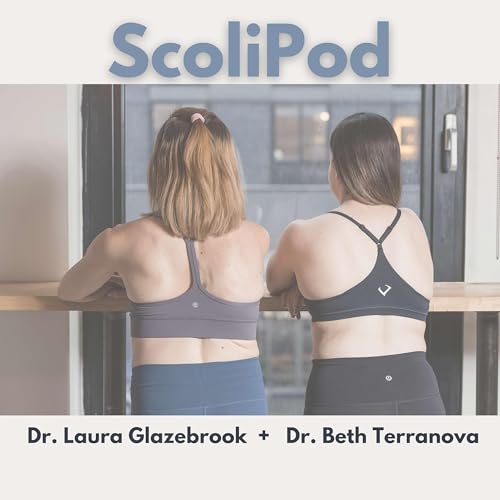
ScoliPod Podcast By Beth & Laura cover art

ScoliPod

ScoliPod

By: Beth & Laura
Listen for free

Welcome to Scolipod, the show that’s rewriting the rules about living with a curved spine! Hosted by Dr. Laura Glazebrook and Beth Terranova —two physical therapists, scoliosis superheroes, and movement enthusiasts—this podcast brings you research-backed solutions, expert insights, and real-life stories that prove one thing: you are more than your scoliosis diagnosis.

© 2026 ScoliPod
Hygiene & Healthy Living Politics & Government
Episodes
  • 18: From Patient to Expert — Bonus Episode feat. Dr. Laura
    Mar 25 2026

    This special bonus episode contains audio from the Columbia University Annual Pediatric Scoliosis Symposium, where Dr. Laura was invited to present on her lived experience, from being a fearful young girl in a doctor's office, to becoming an expert in the field advocating for others with spinal conditions.

    Diagnosed with adolescent idiopathic scoliosis at age 10 and undergoing spinal fusion surgery at 11, Dr. Laura opens up about the emotional weight of that experience — the fear, uncertainty, and lasting impact of navigating a major diagnosis as a child. She reflects on what care looked like then, how treatment options have evolved, and why so many families still receive inconsistent guidance today.

    Drawing from both lived experience and clinical expertise through the Rigo Concept and PSSE (Physiotherapeutic Scoliosis-Specific Exercises), Dr. Laura discusses the urgent need for collaborative, evidence-based, team-centered care — and why emotional and psychological support must be part of the treatment conversation.

    She also shares what it’s like now raising a child showing early signs of scoliosis, how early intervention and bracing have progressed, and why language matters when discussing this condition.

    Themes of this discussion:

    • Dr. Laura’s personal story of scoliosis diagnosis and spinal fusion
    • The emotional experience of being diagnosed as a child
    • The importance of early referral and proactive treatment
    • Common misconceptions about bracing and PSSE
    • The role of collaborative care: physicians, PTs, orthotists, mental health providers, and peer support
    • The psychological impact of scoliosis in adolescence
    • Raising a child with early scoliosis signs and following current research
    • The importance of neutral, patient-centered language
    • How kids with scoliosis become adults with scoliosis — and what that means for long-term care
    • Building online community, advocacy, and accessible resources for families

    Resources Mentioned:

    • Scoliosis Research Society (SRS)
    • SOSORT
    • Curvy Girls – Peer-led support for girls with scoliosis
    • Higgy Bears – Virtual support and education resources

    Key quote:

    "Scoliosis can be both our origin story, and our superpower."


    If you’re curious about working virtually with a scoliosis-trained pro, connect with Dr. Laura or Dr. Beth:

    • Dr. Laura's website
    • Dr. Beth’s website


    Join the conversation:

    Have questions about scoliosis-specific PT or want help finding a trained therapist? Reach out to Dr. Laura or Dr. Beth

    And don’t forget to follow, rate, and share ScoliPod to help more people discover evidence-based scoliosis care.


    Finally, don't forget to subscribe to ScoliPod on your favorite pod catcher so you never miss an episode!

    • Listen on Apple Podcasts
    • Listen on Spotify

    Support the show

    Support the show

    Show more Show less
    11 mins
  • 17: Come to BioniCon: A New Event for the Scoliosis Community
    Mar 17 2026

    Living with scoliosis or spinal fusion can sometimes feel isolating—especially when you grow up without knowing anyone else who shares your experience. In this episode, Dr. Beth and Dr. Laura talk about the importance of finding your community living with scoliosis and spinal fusion.

    They reflect on their own journeys, including how neither of them knew many people with scoliosis growing up and how social media eventually helped them connect with others who truly understood their experiences. They also discuss how sharing stories, comparing experiences, and learning from others can be incredibly validating and healing.

    The conversation highlights the growing scoliosis community both online and in person—including local meetups and the upcoming BioniCon, a first-of-its-kind conference designed specifically for adults with scoliosis and spinal fusion. Learn more about the Bionic Project and its founder, Meredith Montana.

    If you’ve ever felt like you’re navigating scoliosis alone, this episode is a reminder that there is a community out there—and that connection can make a powerful difference.

    Topics in This Episode

    • Why scoliosis can feel isolating—especially at the time of diagnosis
    • Growing up without knowing others with scoliosis
    • How social media helped build a global scoliosis community
    • The value of sharing experiences with others who “get it”
    • In-person meetups and events like Spine & Wine
    • The healing power of community connection
    • An introduction to BioniCon, a new conference for adults with scoliosis and spinal fusion
    • What attendees can expect at the event (education, movement sessions, and community activities)


    BioniCon – April 17–19 | Philadelphia, PA

    Tickets available until March 31st!!!

    BioniCon is a new conference created for adults living with scoliosis and spinal fusion. The event will include:

    • Educational talks from scoliosis professionals and advocates
    • Movement sessions including yoga, Pilates, and strength training
    • Community activities and social events
    • Opportunities to connect with others who share similar experiences

    Dr. Beth will be presenting on getting started with strength training for scoliosis and spinal fusion, and Dr. Laura will be presenting on the connection between scoliosis and the pelvic floor, along with a session on pregnancy with scoliosis and spinal fusion.

    Connect With Us

    If you’re planning to attend BioniCon, send us an email at scolipodcast@gmail.com —we’d love to meet you in person!


    Finally, don't forget to subscribe to ScoliPod on your favorite pod catcher so you never miss an episode!

    • Listen on Apple Podcasts
    • Listen on Spotify

    Support the show

    Support the show

    Show more Show less
    19 mins
  • 16. Living Well with Prolapse & Scoliosis: What Women Should Know feat. Dr. Margo
    Mar 11 2026

    In this third installment of the pelvic floor series, Dr. Laura and Dr. Beth welcome pelvic health specialist Dr. Margo Kwiatkowski for an in-depth conversation about pelvic organ prolapse:

    • What it is
    • Why it happens
    • Most crucially, why it doesn’t have to mean the end of lifting, movement, or feeling strong in your body.

    Dr. Margo shares her personal story of being diagnosed with prolapse after the birth of her first child. Though she was already a pelvic floor physical therapist, she craved connection & community with others managing this diagnosis. As a young mom in search of support, she found mostly discouraging information geared toward much older women. That gap led her to create education and resources specifically for younger, active women navigating postpartum recovery.

    Together, they discuss:

    • What pelvic organ prolapse actually is (and what it feels like)
    • Why symptoms like heaviness, leaking, or back pain can occur
    • The difference between being diagnosed with prolapse and having symptoms
    • Why lifting weights does not cause prolapse — and may actually be protective
    • How proper pressure management and core coordination matter more than avoiding heavy loads
    • The “retirement account” analogy for pelvic health and menopause
    • The role of genetics, hypermobility, and vaginal delivery as risk factors
    • The possible connection between scoliosis and pelvic floor dysfunction
    • How fear of movement can worsen symptoms over time

    One major takeaway of this discussion is the use of pessaries as a treatment option— supportive medical-grade silicone devices that can act like a “sports bra for the pelvic floor.” Dr. Margo explains how pessaries can reduce symptoms, improve muscle activation, and allow women to return to lifting and exercise with more confidence — without replacing the need for strength training and rehab.

    Dr. Margo shares her own experience managing scoliosis, working with Dr. Laura and how improving spinal alignment and rotational balance has positively impacted her pelvic floor function and lifting performance.

    In summary, prolapse is common and manageable. Most importantly, having a pelvic organ prolapse does not mean you have to stop lifting, moving, or living fully. With the right tools, education, and support, women can build strength, confidence, and long-term resilience.

    About Our Guest

    Dr. Margo Kwiatkowski is a pelvic floor physical therapist based in Ventura, California and founder of P4Moms. She specializes in helping postpartum women manage pelvic organ prolapse, return to lifting, and feel strong and confident in their bodies again.

    Find her at:

    • Website: P4Moms.com
    • Instagram: @postpartum_pop_pt

    If you or someone you know has scoliosis, has had a baby, or struggles with pelvic floor symptoms, do not miss this one!


    If you’re curious about working virtually with a scoliosis-trained pro, connect with Dr. Laura or Dr. Beth:

    • Dr. Laura's website
    • Dr. Beth’s website


    Join the conversation:

    Have questions about scoliosis-specific PT or want help finding a trained therapist? Reach out to Dr. Laura or Dr. Beth

    And don’t forget to follow, rate, and share ScoliPod to help more people discover evidence-based scoliosis care.


    Finally, don't forget to subscribe to ScoliPod on your favorite pod catcher so you never miss an episode!

      Support the show

      Show more Show less
      36 mins
    No reviews yet