• Peter Gustafson: The Warren Buffett Path to Your Financial Freedom: 2,200 Hours of Research, a Hurdle Rate Hidden in Plain Sight, and Why Intelligence Alone Won't Make You Rich
    Mar 23 2026

    Peter Gustafson is a Danish investor, former business journalist, founder of Prospect Family Office, and author of The Business Investor: The Warren Buffett Path to Your Financial Freedom—a book born from 2,200 hours of writing, 15 years of market-beating returns, and annual lectures at the Genius of Warren Buffett seminar in Omaha, where several Berkshire directors and members of the Buffett family also participate.

    The episode is sponsored by TenzingMEMO — the AI-powered market intelligence platform I use daily for smarter company analysis. Code BILLIONS gets you an extended trial + 10% off.

    https://www.tenzingmemo.com/

    [3:00] Peter shares how growing up in a family of Danish business owners and a house full of books shaped his love of numbers and business thinking.

    [5:00] Discovering Buffett: Peter read Buffett and The Intelligent Investor in 2007 and "clicked right away"—leading him to close his 15-year consultancy and become a full-time co-owner of businesses through the stock market.

    [6:30] The speculation trap: "The desire to get rich has nothing to do with intelligence." Peter explains why the stock market is presented as entertainment and why even smart people blow up.

    [10:00] Private vs. public ownership: When Peter ran his consultancy, he never had a stock price. He argues many investors would be more profitable owning non-listed companies—free from the distraction of daily prices.

    [14:00] Return on capital as the true north: "All the company will produce for the owners is the discounted cash flow of the earnings." Peter introduces return on unlevered net tangible assets as the key metric.

    [21:00] The six-category framework: Peter maps businesses from bad to great using two metrics—return on operating capital and growth rate—highlighting compounding machines vs. value destroyers.

    [27:00] Moats and the share of mind: Consumer moats live in the customer's mind; B2B moats are embedded in operational systems. Both require circle-of-competence understanding.

    [32:00] Founder-led companies: A founder's baby vs. a hired CEO's career stepping stone. Culture survives transitions when the successor is raised inside it—relevant now as Berkshire transitions to Greg Abel.

    [38:00] Capital allocation pitfalls: The five uses of capital, why M&A adrenaline is dangerous, and why dividends should always be a residual decision.

    [45:00] Buffett's 10% hurdle rate: Peter used his journalist training to piece together Buffett's personal hurdle—"10% before tax real return"—from annual letters and meeting transcripts.

    [50:00] Margin of safety reframed: Buffett's margin of safety isn't just buying at a discount—it's ensuring a higher-than-average return. For high-growth companies, the growth itself becomes the margin.

    [54:00] The 6-bagger that should have been 46x: Peter shares his biggest blunder—selling a Norwegian insurance company during an operational (not systemic) problem, and the psychological barrier of re-entering.

    [59:00] Stoic philosophy for investors: "You have to spend a lot of time alone." Peter's daily two-hour forest walk replaces market-watching, drawing on Roman Stoic lessons about controlling what's inside.

    [1:04:00] Success...

    Podcast Program – Disclosure Statement

    Blue Infinitas Capital, LLC is a registered investment adviser and the opinions expressed by the Firm’s employees and podcast guests on this show are their own and do not reflect the opinions of Blue Infinitas Capital, LLC. All statements and opinions expressed are based upon information considered reliable although it should not be relied upon as such. Any statements or opinions are subject to change without notice.

    Information presented is for educational purposes only and does not intend to make an offer or solicitation for the sale or purchase of any specific securities, investments, or investment strategies. Investments involve risk and unless otherwise stated, are not guaranteed.

    Show more Show less
    1 hr and 13 mins
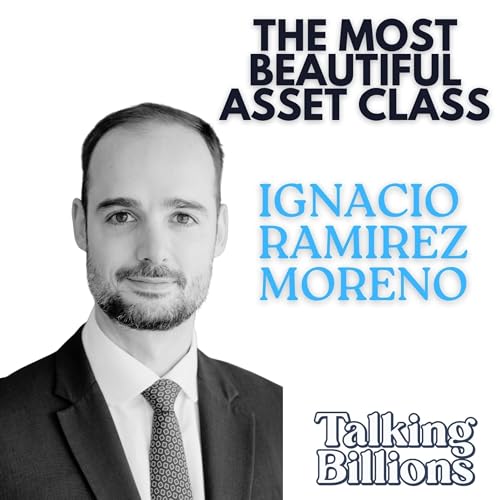
  • Two Podcasters, Two Asset Classes, One Philosophy: A Conversation with Ignacio Ramirez Moreno
    Mar 21 2026

    Ignacio Ramirez Moreno, CFA, is a fixed income advisor at Pictet Wealth Management in Geneva, host of the Blunt Dollar podcast, and Switzerland’s number one LinkedIn financial markets creator with close to 20 million views, known for turning bonds and market risk into viral stories with humor and raw honesty.

    3:00 — Ignacio shares his multicultural upbringing: born in Madrid, raised in Brussels, exchange programs at Warwick, Berkeley, Copenhagen, and Stockholm. Eight countries before settling in Geneva.

    5:00 — Bogumil traces his own journey: communist Poland, Brussels, Sciences Po in Paris, then New York. Picking up Peter Lynch’s One Up on Wall Street in Brussels as a turning point.

    7:30 — Ignacio’s accidental arrival in Switzerland via HSBC graduate program. “They said Hong Kong, then Mexico City, then Geneva — and 15 years later, still here.”

    9:30 — Both reflect on the gifts of living abroad: expanded worldviews, lifelong friendships, blind spots revealed through different perspectives.

    12:30 — The origin stories of both podcasts. Bogumil’s goal was six episodes; Ignacio started out of frustration after a dinner party where “fixed income advisor” put everyone to sleep while his art-advisor wife captivated the room.

    16:00 — Ignacio: “Finance is the most fascinating topic in the world. Financial markets touch upon everything — economics, politics, psychology.”

    23:30 — Deep dive into the craft of asking great questions. Bogumil: “Having a podcast makes me a better investor.” Ignacio preps 50 questions per episode, uses about five to eight.

    28:30 — The human side of finance. Bogumil: “There’s a person with a heartbeat behind the portfolio.” Both champion interdisciplinary knowledge — reading across fields to make unexpected connections.

    38:00 — Fixed income vs. equities: Ignacio explains bonds as the deepest market in the world; Bogumil shares the cathedral metaphor — “I’m not just picking stocks, I’m putting down bricks that create a cathedral.”

    48:45 — AI in finance. Both optimistic and thoughtful. Ignacio: concerned for junior roles. Bogumil: “AI empowers us to do more, but the human presence — the doctor holding your hand — can’t be replaced.”

    59:00 — Career advice for young professionals. “Nothing beats passion.” Both agree: genuine interest outlasts any competition.

    Podcast Program – Disclosure Statement

    Blue Infinitas Capital, LLC is a registered investment adviser and the opinions expressed by the Firm’s employees and podcast guests on this show are their own and do not reflect the opinions of Blue Infinitas Capital, LLC. All statements and opinions expressed are based upon information considered reliable although it should not be relied upon as such. Any statements or opinions are subject to change without notice.

    Information presented is for educational purposes only and does not intend to make an offer or solicitation for the sale or purchase of any specific securities, investments, or investment strategies. Investments involve risk and unless otherwise stated, are not guaranteed.

    Show more Show less
    1 hr and 10 mins
  • Money Is Never Just Money with Bogumil Baranowski: What is a Good Life?
    Mar 18 2026

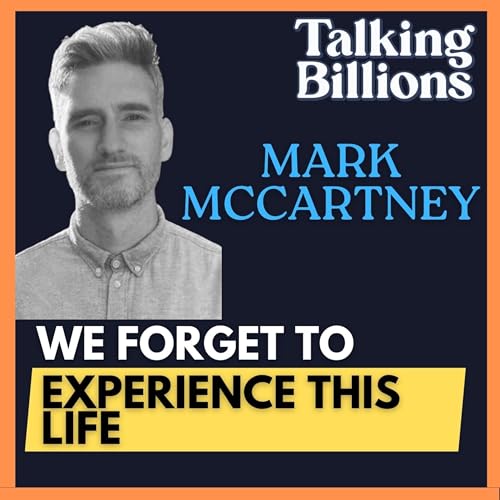
    I was a guest on Mark McCartney's wonderful podcast: What is a Good Life? https://www.whatisagood.life/p/what-is-a-good-life-165

    Reposted here with his permission.

    I trust you’ll enjoy it!


    Hello and welcome to What is a Good Life? A project exploring the big questions around how we live, who we are and what actually matters.

    This week, I’m reflecting on my conversation with Bogumil Baranowski, investment advisor, author, host of Talking Billions podcast, and a profound thinker on the intersection of wealth and human experience. We go deeper on why money is one of the most emotionally charged forces and why being truly present might be the most undervalued skill of our time.

    If this project resonates with you, thank you for being here — and if you’d like to support it, consider a paid subscription, sharing, or subscribing.

    Take care, Mark

    Podcast Program – Disclosure Statement

    Blue Infinitas Capital, LLC is a registered investment adviser and the opinions expressed by the Firm’s employees and podcast guests on this show are their own and do not reflect the opinions of Blue Infinitas Capital, LLC. All statements and opinions expressed are based upon information considered reliable although it should not be relied upon as such. Any statements or opinions are subject to change without notice.

    Information presented is for educational purposes only and does not intend to make an offer or solicitation for the sale or purchase of any specific securities, investments, or investment strategies. Investments involve risk and unless otherwise stated, are not guaranteed.

    Show more Show less
    1 hr and 2 mins
  • Arie van Gemeren: What 2,000 Years of History Teach Us About Building Wealth Today - The Investing Mistakes Empires and Billionaires Keep Repeating
    Mar 16 2026

    Find me on Substack!

    Arie van Gemeren is a CFA, Goldman Sachs veteran, and CEO of Lombard Equities Group who translates 2,000 years of wealth-building history into actionable modern real estate and investment strategy.

    Episode Sponsor: Fiscal AI is a modern data terminal that gives investors instant access to twenty years of financials, earnings transcripts, and extensive segment and KPI data—use my link for a two-week free trial plus 15% off: https://fiscal.ai/talkingbillions/

    3:00 – Ari's family origin story: grandmother fled Nazi Berlin to South America, father grew up fatherless in Bolivia, came to the U.S. at 18 speaking no English, put himself through medical school. History was alive in the household.

    5:15 – The contrarian leap from Wall Street to real estate. Started at Fisher Investments, moved to Goldman Sachs, but it was his Persian father-in-law who kept asking: "Why would I do that when I could buy a good property?"

    7:30 – The live-in flip that changed everything. Bought a Bay Area bungalow for $515K, invested $60K in renovations, saw equity jump to $850–900K. "I was hooked."

    9:18 – At Goldman, wealthiest clients — especially Middle Eastern tech entrepreneurs — were pouring profits into real estate, not stocks. Pattern recognition clicked.

    11:59 – Real estate vs. stocks: "They're both tremendous wealth-building asset classes." Ari argues for a portfolio approach — stocks as majority for passive investors, real estate as complement. Introduces the scarcity insight: the stock market is the only market where inventory shrinks over time via buybacks.

    19:51 – Timeless principles and behavioral finance. Nothing new under the sun — 8,000 years of recorded history isn't enough for human nature to evolve. Patience, discipline, avoiding excessive leverage are the throughlines of lasting fortunes.

    21:43 – Hitler's invasion of the Soviet Union as an investing parable: certainty vs. conviction. "If you are so convinced of your thesis that you cannot hear contrary advice… guys confuse having a strong thesis with it being the absolute truth."

    33:27 – Concentrated wealth creation. 67% of the world's billionaires are self-made first-generation who built companies — a form of concentration investing.

    40:17 – Generational wealth traps. The "first generation builds, second maintains, third loses" proverb exists in Italian, Japanese, Mandarin, Russian, Spanish. Contrasts Vanderbilt collapse with Walton and Grosvenor family structures.

    47:12 – The Hanseatic League: 500+ years of patient, boring warehouse ownership that generated extraordinary wealth and even conquered Copenhagen.

    57:33 – Success redefined: "What we're really looking for is freedom and independence."

    Podcast Program – Disclosure Statement

    Blue Infinitas Capital, LLC is a registered investment adviser and the opinions expressed by the Firm’s employees and podcast guests on this show are their own and do not reflect the opinions of Blue Infinitas Capital, LLC. All statements and opinions expressed are based upon information considered reliable although it should not be relied upon as such. Any statements or opinions are subject to change without notice.

    Information presented is for educational purposes only and does not intend to make an offer or solicitation for the sale or purchase of any specific securities, investments, or investment strategies. Investments involve risk and unless otherwise stated, are not guaranteed.

    Show more Show less
    1 hr and 7 mins
  • Vitaliy Katsenelson on Investing Amid Extreme Uncertainty: Survival First. Returns Second (Excess Returns Pod)
    Mar 13 2026

    I join Matt Zeigler for one more special episode of Excess Returns. Available now on Excess Returns Podcast and Talking Billions. 🎧

    I’m excited to share this episode with you—it’s reposted here with permission and blessing from both Matt and Jack. Don’t miss it! And follow their work, links below.

    [Vitaliy was on TB before, scroll down to find the episode, it's very different, but equally worthwhile. Enjoy!]

    In this episode of Excess Returns, Matt Zeigler and Bogumil Baranowski speak with Vitaliy Katsenelson, CEO of Investment Management Associates and author of Soul in the Game. The conversation explores how value investing is evolving in a world shaped by artificial intelligence, rapidly changing economic dynamics, and historically high market valuations. Vitaliy discusses why humility and diversification are increasingly important for investors today, how to balance quality and valuation when selecting stocks, and what he has learned about selling decisions, portfolio construction, and long-term investing discipline. The discussion also moves beyond markets into deeper ideas about passion, creativity, and why investing, like art, is ultimately a creative pursuit driven by curiosity and lifelong learning.
    Topics covered in this episode

    • The math behind long-term stock market returns and the role of earnings growth versus valuation changes

    • Whether the dominance of mega-cap technology companies represents a structural shift in markets

    • Why AI investment could lead to both massive innovation and large amounts of wasted capital

    • The importance of humility in investing during periods of rapid technological and economic change

    • Why Vitaliy increased the number of stocks in his portfolio due to greater uncertainty

    • How investors can think about what will not change in a rapidly evolving world

    • The evolution from statistical value investing to focusing on business quality and management

    • Why cheap stocks are often expensive and how narrative bias can trap value investors

    • The importance of evaluating management integrity and avoiding companies with questionable leadership

    • How Vitaliy thinks about selling decisions and recognizing when an investment thesis is broken

    • Why many investors make their biggest mistakes by selling winners too early

    • The concept of being a value buyer but a growth holder when fundamentals improve

    • Lessons learned from great investors and the importance of surrounding yourself with thoughtful peers

    • The idea of building a personal operating system for investing and life

    • Passion, patience, and process as the three pillars of long-term investment success

    • Why investing is fundamentally a creative pursuit similar to art and music

    • The deeper motivations behind investing and why for many great investors it is not ultimately about money


      Podcast Program – Disclosure Statement

      Blue Infinitas Capital, LLC is a registered investment adviser and the opinions expressed by the Firm’s employees and podcast guests on this show are their own and do not reflect the opinions of Blue Infinitas Capital, LLC. All statements and opinions expressed are based upon information considered reliable although it should not be relied upon as such. Any statements or opinions are subject to change without notice.

      Information presented is for educational purposes only and does not intend to make an offer or solicitation for the sale or purchase of any specific securities, investments, or investment strategies. Investments involve risk and unless otherwise stated, are not guaranteed.

      Information expressed does not take into account your specific situation or objectives, and is not intended as recommendations appropriate for any individual. Listeners are encouraged to seek advice from a qualified tax, legal, or investment adviser to determine whether any information presented may be suitable for their specific situation. Past performance is not indicative of future performance.

    Show more Show less
    1 hr and 12 mins
  • Matt Reustle: What Makes a Business Last Centuries? & Why the Best Investors Change Their Minds: Compounders, Stewardship & the Art of Business Dissection
    Mar 9 2026

    Find me on Substack!

    Matt Reustle is the former CEO of Colossus and architect of the Business Breakdowns podcast, who spent a decade at Goldman Sachs mastering business dissection before building one of the investment world’s most influential media platforms.

    The episode is sponsored by TenzingMEMO — the AI-powered market intelligence platform I use daily for smarter company analysis. Code BILLIONS gets you an extended trial + 10% off.

    3:00 – Matt reflects on his upbringing: engineer father, educator mother, and how dinner table conversations about managing teams shaped his thinking on accountability and action.

    5:00 – The pivot from Goldman Sachs to Colossus: Matt describes the frustration with compliance-driven communication at large firms and the freedom podcasting offered to reach wider audiences with authentic analysis.

    7:15 – Second-order impact of content: how episodes designed for investors also reach management teams, founders, and unexpected audiences who extract different lessons.

    10:51 – From analyzing businesses to running one: Matt describes eating “humble pie” when moving from the investor seat to the operator seat, gaining appreciation for nuance, experimentation, and details that don’t scale.

    15:06 – The Patek Philippe episode and stewardship: watches powered by human movement, built to last centuries, and the marketing genius of positioning a product as something you never truly own but look after for the next generation.

    19:09 – Long-term thinking benefits you now: Bogumil argues that applying a multi-generational filter to decisions delivers returns in the current generation, not just future ones.

    22:58 – What makes a compounder: Matt identifies three characteristics — a self-reinforcing sales model, religious cost efficiency, and disciplined capital allocation — set against the macro backdrop of industries growing faster than GDP.

    31:35 – Mapping value chains: finding mission-critical, low-cost components with high barriers to entry where small players capture outsized profits.

    37:34 – Financial hygiene: management teams that communicate future flexibility and demonstrate depth of knowledge signal discipline; track records outweigh rhetoric.

    43:40 – Evolutionary DNA of businesses: the ability to adapt and pivot, what Henry Ellenbogen calls “act two companies,” and why the best investors change their minds when information changes.

    49:30 – Audience of one philosophy: creating content for a specific person breeds focus, quality, and trust — and paradoxically reaches far more people than content designed for mass appeal.

    54:35 – AI as a creative superpower: interacting with your own content library in new ways, finding use cases from peers, and owning the technology rather than letting it own you.

    58:20 – Success as fulfillment: family, creation, and relationships — Matt’s definition shaped by watching his parents balance it all.


    Podcast Program – Disclosure Statement

    Blue Infinitas Capital, LLC is a registered investment adviser and the opinions expressed by the Firm’s employees and podcast guests on this show are their own and do not reflect the opinions of Blue Infinitas Capital, LLC. All statements and opinions expressed are based upon information considered reliable although it should not be relied upon as such. Any statements or opinions are subject to change without notice.

    Information presented is for educational purposes only and does not intend to make an offer or solicitation for the sale or purchase of any specific securities, investments, or investment strategies. Investments involve risk and unless otherwise stated, are not guaranteed.

    EPISODE NOTES

    Show more Show less
    1 hr and 8 mins
  • The Question No One Asks | What Great Investors Taught Us About Portfolio and Purpose -- Excess Returns Pod
    Mar 6 2026

    I join Matt Zeigler for one more special episode of Excess Returns.

    Available now on Excess Returns Podcast and Talking Billions. 🎧

    I’m excited to share this episode with you—it’s reposted here with permission and blessing from both Matt and Jack. Don’t miss it! And follow their work, links below.

    In this episode of Excess Returns, we explore one of the most important but overlooked questions in investing: what is the purpose of your portfolio? Through a series of powerful clips and reflections from Aswath Damodaran, Meb Faber, Ben Hunt, Cullen Roche, Corey Hoffstein, Daniel Crosby, Larry Swedroe, and Wes Gray, we examine how goals like financial freedom, funded contentment, liability driven investing, retirement planning, and multi generational wealth shape the way we invest. This conversation goes beyond beating the market and focuses on preserving and growing wealth, reducing financial stress, aligning money with meaning, and defining what a life well lived truly looks like.
    Topics covered include:
    * Why the end game of investing matters more than beating the market
    * Preserving and growing wealth vs trying to get rich
    * Freedom as the ultimate goal of financial independence
    * Funded contentment and what it means to live a life well lived
    * Liability driven investing and matching assets to future needs
    * The difference between getting rich and staying rich
    * Needs vs desires and understanding marginal utility of wealth
    * Retirement planning and redefining success beyond a number
    * Multi generational wealth and thinking beyond your own lifetime
    * The psychological impact of growing up with or without money
    * Financial freedom, stress reduction, and peace of mind
    * Tactical financial goals vs long term purpose driven investing
    * Education, legacy, and investing in the next generation
    * Why once you win the game you may not need to keep playing

    Podcast Program – Disclosure Statement

    Blue Infinitas Capital, LLC is a registered investment adviser and the opinions expressed by the Firm’s employees and podcast guests on this show are their own and do not reflect the opinions of Blue Infinitas Capital, LLC. All statements and opinions expressed are based upon information considered reliable although it should not be relied upon as such. Any statements or opinions are subject to change without notice.

    Information presented is for educational purposes only and does not intend to make an offer or solicitation for the sale or purchase of any specific securities, investments, or investment strategies. Investments involve risk and unless otherwise stated, are not guaranteed.

    Information expressed does not take into account your specific situation or objectives, and is not intended as recommendations appropriate for any individual. Listeners are encouraged to seek advice from a qualified tax, legal, or investment adviser to determine whether any information presented may be suitable for their specific situation. Past performance is not indicative of future performance.

    Show more Show less
    1 hr and 8 mins
  • Mark McCartney: What Does a Good Life Actually Look Like? | He Rang the Bell at the NYSE—Then Walked Away & 300 Conversations That Changed Everything
    Mar 2 2026

    Mark McCartney is an Irish-born coach, host of the acclaimed What Is a Good Life podcast with nearly 300 conversations, and facilitator who helps leadership teams move from performative to genuine authenticity through presence, silence, and radical honesty.

    3:00 Mark describes his early career in corporate banking and capital markets in Ireland and Canada, passing the CFA Level I but realizing finance wasn't his calling: "If I do the next versions of this, I just haven't had a better idea yet as to what I want to do with my life."

    5:00 The New York Stock Exchange bell-ringing moment—what looked like a career peak became the catalyst for leaving finance. "I felt like a bit of an imposter where people really seemed to love their work."

    7:00 Mark's sabbatical to India—meditation, ashrams, Vipassana—and the surprise of meeting his future wife in McLeod Ganj, proposing within five weeks. Ten years later, the story holds.

    10:00 Turning down a 40% pay increase after a body-scan meditation revealed total clarity. His wife's response: "Yeah, I know you can't. It's fine." They sell everything and leave for Peru's Sacred Valley.

    15:00 Patterns from 300+ interviews on "What is a good life?"—the deeply individual nature of the answer, the importance of presence, and how people who say they're living a good life have often endured divorce, addiction, or depression.

    20:00 Authenticity as inner and outer coherence—not sharing everything, but no longer saying things your heart doesn't believe to be true. Tom Morgan reference: "When I said something that my heart didn't believe to be true, it hurt."

    25:00 Silent conversations explained—groups sit in silence for 10-45 minutes before speaking. Vulnerability isn't sharing your biggest trauma; it's sharing what's alive in this moment.

    32:00 Leadership teams moving from performative to genuine—creating conditions where defenses lower, elephants get named, and "I don't trust you right now" becomes a conversation starter, not a threat.

    39:00 Intellectual understanding as a "consolation prize"—the difference between reading Eckhart Tolle and embodying the teaching. "The lived experience of our life equates more to wisdom than sharing intellectual ideas."

    47:00 Belonging through attention—how a Peruvian woman's daily eye contact gave Mark a sense of home, and why belonging is built through tending to the people around you, not nationality.

    51:00 Transactional vs. relational living—Bogumil's infinite game tennis analogy and Mark's insight on the psychic toll of pretending something is important when it isn't.

    59:00 Mark's definition of success: spending days doing something you care about, being with people you love, and having the financial foundation to support it. "It feels like I've created the foundation for something that I hope to enjoy for many more years in this life."

    Podcast Program – Disclosure Statement

    Blue Infinitas Capital, LLC is a registered investment adviser and the opinions expressed by the Firm’s employees and podcast guests on this show are their own and do not reflect the opinions of Blue Infinitas Capital, LLC. All statements and opinions expressed are based upon information considered reliable although it should not be relied upon as such. Any statements or opinions are subject to change without notice.

    Information presented is for educational purposes only and does not intend to make an offer or solicitation for the sale or purchase of any specific securities, investments, or investment strategies. Investments involve risk and unless otherwise stated, are not guaranteed.

    Show more Show less
    1 hr and 7 mins