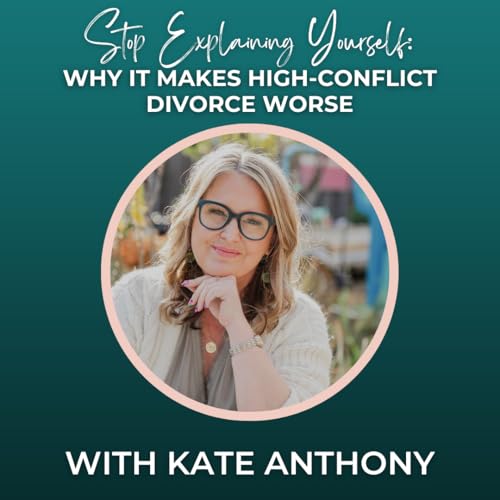
The Divorce Survival Guide Podcast Podcast By Kate Anthony CPCC cover art

The Divorce Survival Guide Podcast

The Divorce Survival Guide Podcast

By: Kate Anthony CPCC
Listen for free

On the Divorce Survival Guide Podcast we have open and honest conversations about co-parenting, separation, divorce, and the hardest question of all, should you stay or should you go? Hosted by Kate Anthony, your Divorce Survival Guide.©2019-2025 Kate Anthony CPCC, all rights reserved Personal Development Personal Success Relationships Social Sciences
Episodes
  • Episode 361: Why Dropping Divorce Rates Are Not Always Good News with Dr. Amelia Kelley
    Mar 19 2026
    TEDx speaker, author, neurodiversity and mental health advocate, and host of the Sensitivity Doctor podcast. Her work centers on relationship trauma and gaslighting recovery, and she brings over 20 years of clinical experience to everything she does. We have done some incredible episodes together, and this is no exception. Amelia recently brought to my attention a study exploring the impact of Kentucky's 50/50 shared custody ruling, which has been credited with dropping divorce rates by 25% or more. Articles are celebrating the decrease in divorce. And that is exactly what alarmed us. Here's why: Divorce rates are not dropping because people are happier in their marriages. What this ruling is actually doing is forcing victims to stay in unsafe marriages because they are terrified of their children being alone with their abuser 50% of the time. Now other states are looking at Kentucky as a model of success worth replicating. So we are digging into what this actually means from a trauma-informed perspective. What happens in the nervous system when the legal system puts the burden of proof on the victim. Why a child witnessing abuse meets the clinical definition of PTSD, and why courts are not looking at it that way. And what it does to a survivor, psychologically and physiologically, when they are told they must hand their child to their abuser half of the time. This is a legal conversation, but we are not here as attorneys. We are here as trauma-informed professionals who see what this is doing to survivors every single day. What you'll hear about in this episode: Why dropping divorce rates are not always a good thing and what is actually keeping people from leaving (2:40)The burden of proof is on the victim, and what that does to them psychologically (10:46)What happens in the nervous system when you are told you must share your child 50% of the time with your abuser (12:00)Why your attorney is not your therapist or divorce coach and why an interdisciplinary team matters (15:08)Aimee Says AI, the tool built for survivors that helps document, organize, and categorize abuse evidence (18:16)Why a child witnessing abuse is, by definition, a traumatized child and why courts don't see it that way (21:26)How to find a therapist who will testify, and why you need to ask upfront before you need them (23:42) Learn more about Dr. Amelia Kelley: Dr. Amelia Kelley is a trauma-informed therapist, professor, TED speaker, author, and neurodiversity and mental health advocate, as well as the host of The Sensitivity Doctor podcast. Her work centers on relationship trauma and gaslighting recovery, supporting those impacted by emotional and psychological harm in rebuilding self-trust, clarity, and nervous-system stability. With over 20 years of clinical experience, she takes an integrative, science-grounded approach informed by IFS, EMDR, somatic and polyvagal theory, and ADHD research. She is currently writing her forthcoming book on ADHD treatment in women with Norton Publishing. Resources & Links: Get Your Curated Podcast PlaylistFocused Strategy Sessions with Kate The Divorce Survival Guide Resource BundlePhoenix Rising: A Divorce Empowerment CollectiveKate on InstagramKate on FacebookKate's Substack Newsletter: Divorce Coaching Dispatch The Divorce Survival Guide Podcast Episodes are also available YouTube! Seven Step Mindset Reset for Divorce Dr. Amelia Kelley's website Dr. Kelley on Facebook Dr. Kelley on Instagram Dr. Kelley on LinkedIn Episode 353: Aimee Says Updates: How Women Are Documenting Abuse in Real Time with Anne Wintemute Episode 335: Making Your Trauma Responses Work For You with Dr. Amelia Kelley Article: Kentucky's Equal Custody Law Shows Why America Needs Shared Parenting Presumptions =================== DISCLAIMER: THE COMMENTARY AND OPINIONS AVAILABLE ON THIS PODCAST ARE FOR INFORMATIONAL AND ENTERTAINMENT PURPOSES ONLY AND NOT FOR THE PURPOSE OF PROVIDING LEGAL OR PSYCHOLOGICAL ADVICE. YOU SHOULD CONTACT AN ATTORNEY, COACH, OR THERAPIST IN YOUR STATE TO OBTAIN ADVICE WITH RESPECT TO ANY PARTICULAR ISSUE OR PROBLEM. =================== Episode link: https://kateanthony.com/podcast/episode-361-why-dropping-divorce-rates-are-not-always-good-news-with-dr-amelia-kelley/
    Show more Show less
    55 mins
  • Episode 360: Stop Explaining Yourself: Why It Makes High-Conflict Divorce Worse
    Mar 12 2026

    One of the things I see so often with women going through divorce, especially high conflict divorce, is this instinct to explain yourself, to clarify, to defend yourself, to make sure the other person understands what actually happened. But here's the problem: in a high conflict divorce, explaining yourself is often the very thing that keeps you stuck in the conflict. In this episode, I walk you through why the communication playbook that works in healthy relationships completely backfires when you're dealing with a high conflict personality, and what to do instead.

    Here's the thing: high conflict dynamics operate like a fire. Explanations are oxygen. Every time you write a long response or try to defend yourself, you're actually blowing air into the flames. Every explanation keeps you in the engagement. Every defense keeps you in the arena.

    You don't have to keep exhausting yourself trying to explain the truth to someone who has already decided not to hear it. You get to step out of that cycle and you get to move forward with a playbook that actually works in high conflict divorce.

    What you'll hear about in this episode:

    • Why explanations don't resolve conflict in high conflict dynamics, they extend it

    • How your words become fuel: long texts, clarifying emails, and attempts to correct the narrative all give the other person material to twist, screenshot, and weaponize

    • The difference between the explanation mindset and the documentation mindset

    • The BIFF method (Brief, Informative, Friendly, Firm) and how to use it

    • Why silence isn't capitulating and why not every accusation requires a response

    Resources & Links:

    Get Your Curated Podcast Playlist
    Focused Strategy Sessions with Kate
    The Divorce Survival Guide Resource Bundle
    Phoenix Rising: A Divorce Empowerment Collective
    Kate on Instagram
    Kate on Facebook
    Kate's Substack Newsletter: Divorce Coaching Dispatch
    The Divorce Survival Guide Podcast Episodes are also available YouTube!
    Seven Step Mindset Reset for Divorce

    ===================

    DISCLAIMER: THE COMMENTARY AND OPINIONS AVAILABLE ON THIS PODCAST ARE FOR INFORMATIONAL AND ENTERTAINMENT PURPOSES ONLY AND NOT FOR THE PURPOSE OF PROVIDING LEGAL OR PSYCHOLOGICAL ADVICE. YOU SHOULD CONTACT AN ATTORNEY, COACH, OR THERAPIST IN YOUR STATE TO OBTAIN ADVICE WITH RESPECT TO ANY PARTICULAR ISSUE OR PROBLEM.

    ===================
    Episode link: https://kateanthony.com/podcast/episode-360-stop-explaining-yourself-why-it-makes-high-conflict-divorce-worse/

    Show more Show less
    21 mins
  • Episode 359: Assessing High Conflict Divorce Risk with Sarah McDugal
    Mar 5 2026
    Sarah McDugal is back on the podcast, and this time we're talking about what it actually takes to protect your children inside a family court system that often reframes abuse as "mutual high conflict" and makes the protective parent look like the problem. Sarah is a clarity coach and founder of Freedom Navigator and Wilderness to Wild, where she works exclusively with protective parents navigating high-conflict divorce and custody battles. In this conversation, we talk about why the ways most of us instinctively respond—explaining, defending, and trying to get people to understand the truth—can actually work against us in court. We also dive into Sarah's High Conflict Court Risk Index, an assessment designed to help parents understand early how likely their case is to become a long, drawn-out legal battle. The earlier you can see the terrain you're walking into, the more strategically you can move through it. And we talk about the kids. One of the most powerful reframes Sarah offers is that protecting our children doesn't always mean shielding them from harm. Sometimes the greatest protection we can give them is helping them learn how to navigate difficult realities with clarity, resilience, and support. If you're deep in a high-conflict case and feel like everything you do somehow gets used against you, you're not imagining it. The family court system is not what most of us think it is—and fighting it the way we naturally want to can sometimes make things worse. This conversation offers a different playbook. What you'll hear about in this episode: Why what family court labels "high conflict" is very often an abuser-victim dynamic, not a mutual conflict situation (5:28)How you can shift the dynamics in court by changing yourself, not by trying to change the other person or the system (11:10)The High Conflict Court Risk Index, what it assesses, who it is for, and why taking it early means you can start the right conversations sooner (12:28)Why an interdisciplinary divorce team saves you time, money, and unnecessary damage (24:28)What to do when your high conflict court risk comes back moderate to high, and where to go for support (23:30)Why protecting your kids from all harm is not the goal and how to start teaching them to navigate tricky people and tricky situations instead (31:30) ✨ If you'd like to watch the video version of this episode, you can find it here. Learn more about Sarah McDugal:Sarah McDugal is a clarity coach and founder of FREEDOM Navigator and Wilderness to WILD. She works exclusively with protective parents in high-conflict divorce and custody battles. In addition to a master's degree, Sarah holds certifications and training in: Master Certified Professional Coach (MCPC), Certified High Conflict Legal Dispute Resolver, High Conflict Institute, Certified Assessor: Danger and Lethality Assessment, Johns Hopkins University School of Nursing, Deceptive Sexuality and Trauma Treatment (DSTT) Training, Dr. Omar Minwalla, and APSATS Model for Multi-Dimensional Partner Trauma (MPTM) Training. After surviving nearly a decade of custody litigation herself, Sarah equips her clients with trauma-informed tools, court-ready case prep resources, and strategic battle plans to fight smarter for the long haul — without losing their sanity, their kids, or their voice. Known for her blend of ethical precision and empathetic strength, Sarah empowers protective parents to transform survival into strategy — guiding weary warriors to rise with endurance, resilience, and courage. Resources & Links: Get Your Curated Podcast PlaylistFocused Strategy Sessions with Kate The Divorce Survival Guide Resource BundlePhoenix Rising: A Divorce Empowerment CollectiveKate on InstagramKate on FacebookKate's Substack Newsletter: Divorce Coaching Dispatch The Divorce Survival Guide Podcast Episodes are also available YouTube! Seven Step Mindset Reset for Divorce High Conflict Court Risk Index Freedom Navigator WebsiteSarah on LinkedIn Sarah on Instagram Sarah on YouTube Episode 109: DSG Abuse Mini-Series: Escaping Toxic Relationships and Abuse in Faith-Based Communities with Sarah McDugal =================== DISCLAIMER: THE COMMENTARY AND OPINIONS AVAILABLE ON THIS PODCAST ARE FOR INFORMATIONAL AND ENTERTAINMENT PURPOSES ONLY AND NOT FOR THE PURPOSE OF PROVIDING LEGAL OR PSYCHOLOGICAL ADVICE. YOU SHOULD CONTACT AN ATTORNEY, COACH, OR THERAPIST IN YOUR STATE TO OBTAIN ADVICE WITH RESPECT TO ANY PARTICULAR ISSUE OR PROBLEM
    Show more Show less
    51 mins
All stars
Most relevant
I love how knowledgeable and trauma-informed the host and guests are, and how uplifting and holistic the podcast episodes are, without being in any way forced.

The host Kate is wonderful - inspired, sensitive, open and honest.

Something went wrong. Please try again in a few minutes.

I can not recommend this series enough - for women in the middle of the eye of storm in a divorce, for women who need more knowledge and information in a controlling marriage, and heck, even for women who are engaged and set to marry. Knowledge is power, sharing information makes us (women) go further and be more successful. I wish I had access to this BEFORE my married my spouse...
xo

This is the equivalent of a personal floatation device if you feel you are drowning in a rip tide, under current

Something went wrong. Please try again in a few minutes.