Episodes

  • How Janelle Lynch Sees Beyond the Image
    Mar 25 2026

    A great photograph does not always start with an idea. Sometimes the physical 'yes' forms within the body when the light hits the subject just right. ☀️

    We talk with photographer Janelle Lynch about her creative process in landscape photography, her more recent portraits, and her cyanotypes, made with a nineteenth-century cameraless technique. Janelle shares how she developed her love for the camera from her early experiences of being seen by others, why she avoids the word 'capture,' and how her images often emerge through a conversation with her subjects. We also get into her craft and the work that she does with her 8x10 view camera. 📸

    Janelle draws inspiration from various sources and incorporates practices into her routine, such as yoga, proprioception, and perceptual drawing and painting with others. One of the visuals Janelle shares with us is an eight-minute exposure taken in near darkness, which leads to a discussion of what exists even when we cannot see it. 🍃

    ____________________________________

    “To have a meaningful connection with nature, you don’t have to go far.”

    Photographer Janelle Lynch shares a perspective that finds nature where most people don’t think to look. 🍃📸

    Support the show

    Show more Show less
    40 mins
  • Safe by Design: How Terra Innovatum’s Micro Reactors Are Changing Nuclear Energy
    Mar 20 2026

    The grid is strained, AI data centers are exploding in demand, and clean baseload is once again on the table. Alessandro Petruzzi, Co-Founder and CEO of Terra Innovatum, joins the show to talk about a different kind of nuclear power: micro modular reactors that are safe by physics, not by emergency equipment. ☢️

    Terra Innovatum has developed the Solo, a 1 megawatt electric micronuclear reactor. Alessandro discusses how 1 megawatt is physically small-scale, how the low power makes decay heat much easier to manage, and how the reactor is engineered so it cannot melt down. He also shares how the company is using existing nuclear fuel and supply chains to build the reactor, which will shorten the timeline to building the first one. 🏭

    For use cases, Alessandro shares how these nuclear reactors could supply power to AI data centers waiting on grid transmission upgrades, mining operations that need to reduce their CO2 emissions, and even provide bonus outputs that may be even more important. Microreactors can provide desalinated water to areas with water scarcity issues or produce medical radioisotopes for hospitals to treat cancer patients. ⚡

    ___________________________________________

    “Energy means progress. Without energy, you don’t progress.”

    Alessandro Petruzzi, Co-Founder and CEO of Terra Innovatum, explains how micro nuclear reactors could bring reliable power to industries, data centers, and remote communities worldwide. ⚡🌍

    Support the show

    Show more Show less
    28 mins
  • Almost Human: How Realbotix Is Redefining Humanoid Robots
    Mar 13 2026

    “We started with the human form and asked how do we add mechanics and motors to maintain the human figure.”

    Andrew Kiguel, CEO of Realbotix, explains how the company builds humanoid robots designed to interact naturally with people. 🤖🧠

    Support the show

    Show more Show less
    36 mins
  • Gabriel Willow and the Hidden Nature of New York City
    Feb 5 2026

    Learn more about Gabriel Willow here!

    What does biodiversity look like within a city? How can people get closer to nature in their urban environments? As an urban naturalist and artist, Gabriel Willow explores the beauty of biodiversity through urban environments and encourages people to get outside and look up.

    In this episode, we get practical tips and ideas from Willow on how to view cities and incorporate nature more into our urban spaces. Tools from iNaturalist to birding apps help you identify birds, insects, flowers, and more while out on a walk. Find out why cities are great for wildlife and your health, but also hear stories that inspire a sense of awe for the nature that surrounds us - from rooftop eagle sightings to sandhill cranes and even the day pigeons flew with bread “necklaces,” there are plenty of giggle-worthy moments.

    We also discuss seeing extinct species draw overlay art on city landscapes, as well as new projects like a small eco-lodge in the cloud forest in Ecuador, which, as one of the most biodiverse regions on the planet, supports artists and scientists who want to collaborate and learn more in these special habitats. If you’ve ever wanted to live the green life or need help seeing the nature that surrounds you every day, Willow has thought-provoking comments for everyone in this show.

    Support the show

    Show more Show less
    33 mins
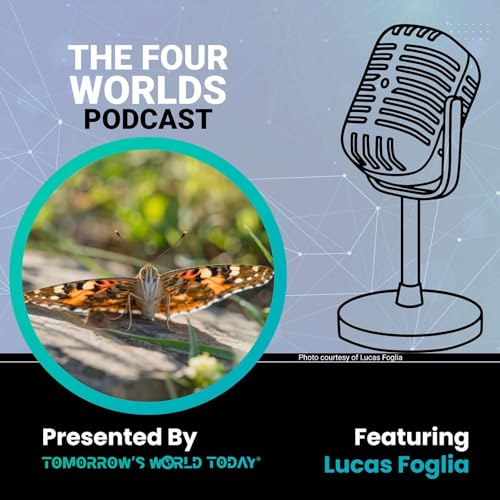
  • Constant Bloom: Following the World’s Longest Butterfly Migration with Lucas Foglia
    Jan 29 2026

    This episode features the guest Lucas Foglia, a photographer with a deep connection to nature. From the micro to the macro, from intimate to planetary systems, Lucas captures the nuances behind his subjects and helps usher in real-world change. From his Long Island farm childhood, Lucas creates a body of work that pulls nature back from any notion of a museum diorama or a lost paradise.

    His newest book, Constant Bloom, sheds light on the longest known butterfly migration from Kenya to Norway and back. A photo he took in Barcelona shows blooms above a melting glacier, taken by a researcher who happened to be on his own scientific journey across borders.

    In this episode, you will hear about his other compelling books, such as A Natural Order, which explores off-grid lives after the recession, and Front Country, which balances Western wildness and extraction. You'll also hear about Human Nature's blend of neuroscience and conservation.

    Lucas speaks about his photographic processes, practices, and philosophy, offering an excellent taste of how art goes from "huh" to "wow" and how a quiet picture from the Rikers Island garden program helped expand it.

    He talks about collaborating with people, calling it "photographing with, not of," and giving practical guidance like making friends, not networks, starting with one honest question, and offering counterpoints to today's loudest headlines.

    If you're feeling squeezed by algorithms or doom, this is a reminder that depth still matters, and that images can open doors to empathy and action. If the stories resonate, please subscribe, share the episode with a friend, and leave a review telling us the last image that changed how you see the world.

    Purchase a copy of Constant Bloom here!

    Support the show

    Show more Show less
    29 mins
  • How Selin Balci Turns Microorganisms Into Living Works of Art
    Jan 23 2026

    In this episode, we are joined by artist Selin Balci, whose art begins not with paint but with living microorganisms.

    A former forestry and microbiology student, Selin explains how she collects microbes from soil, trees, water, and even the human body, then isolates and cultivates them into controlled art pieces.

    We talk about the science and art of sterilizing tools, nutrient mediums, contamination, and how she decides when to stop and when a piece is finished. We touch on her project, Echoes of Nature, in which mold consumes Polaroids of actual nature scenes to signify the end of nature as we know it, and 30 Faces, where people’s microbes reform the portraits of their faces over time, making them interactive.

    Selin also ponders imperfection, rot, why contamination is not always a mistake, and the questions her art evokes about identity and sustainability.

    If you’re interested in where art, science, and the natural world intersect, this is a rare glimpse into microscopic art.

    Support the show

    Show more Show less
    34 mins
  • Turning Over a New Leaf: How Christina Selby Is Revolutionizing Plant Conservation
    Jan 16 2026

    More on Christina Selby:

    • Photographer Christina Selby Uses Visual Storytelling to Connect Us With the Natural World
    • How Christina Selby is Using Photography to Encourage Others to be a ‘Voice for Nature’
    • Creating Climate Resilience: The Art of the Refuge

    A photograph is more than just something to look at. It can influence what we pay attention to, what we name, and what we choose to protect. In this episode, we talk with conservation photojournalist and visual artist Christina Selby. She shares her journey from growing up in the Midwest and studying ecology to exploring the mountains of the Southwest and the rivers of the Amazon. Christina shows how she combines science, art, and community in her work. She discusses her view of the “more-than-human world” and how this outlook helps people. We talk about telling powerful conservation stories using portraits of scientists and ranchers at work, sweeping landscapes, drone photos that help people connect with a place, and close-up shots that reveal details of plants and pollinators. We look at ways to show nature’s beauty without focusing only on the damage from clear-cutting and habitat loss, which can make people feel hopeless. We also share field stories, like mistaking the target species, hiking for miles, and searching for a rare bloom that took a week to find. These behind-the-scenes moments offer new insights into capturing amazing images.

    We talk about plant blindness and how learning the names of plants in your backyard or local park can inspire care and curiosity. We discuss how sharing knowledge in the community can lead to real solutions. Our conversation touches on the changing alpine ecosystem in the southern Rockies, the hope offered by climate refuges, new ways to recover from wildfires that support biodiversity, and lessons from Korea. Christina also tells us about the International League of Conservation Photographers and how teamwork can bring attention to issues like giant salamanders and native sunflowers.

    If you want to learn how photography can help protect nature or are looking for practical ways to reconnect with the world around you, this episode is for you. Tune in, share it with a friend who loves nature, and tell us your thoughts. What species will you learn to name in your backyard this week?

    Support the show

    Show more Show less
    34 mins
  • Threads of Change: How SMART Is Redefining Textile Production
    Nov 14 2025

    Ever wonder who stands between a pile of cast-off clothes and a landfill? We sit down with Jessica Franken, Director of Government Affairs at SMART, to unpack how a reuse-first approach turns textiles into a second-life economy—and why the right rules can scale it globally. Jessica takes us inside the quiet infrastructure of circularity: collectors sourcing from charities and institutions, expert sorters finding the best next use, and recyclers turning what can’t be worn into insulation and padding. Along the way, we dig into Extended Producer Responsibility for textiles, and explore how reuse-first language can lock in real environmental gains. 👖

    The policy stakes are high. UN conversations about what counts as “reusable” versus “waste” could reshape cross-border flows overnight, affecting both landfill diversion and livelihoods built around quality secondhand apparel. Jessica breaks down how SMART is advocating for definitions and standards that reflect operational reality, not just theory. We also touch on the Americas Act’s nod to textile reuse and recycling infrastructure, as well as ongoing U.S. efforts to open market access where demand for secondhand goods is strong. 👕

    If you care about sustainability, supply chains, or the future of fashion, this conversation connects the dots from sorting floors to statehouses. You’ll learn how to prepare for data and reporting under textile EPR, what success should look like in measurable outcomes, and how individuals and companies can engage—whether by tracking state bills, submitting comments, or partnering with trade groups. ♻️


    Support the show

    Show more Show less
    39 mins