The Generalist Podcast By Mario Gabriele cover art

The Generalist

The Generalist

By: Mario Gabriele
Listen for free

“The future is already here. It’s just not evenly distributed.” The Generalist Podcast brings you weekly conversations with the people who live in these pockets of the future – visionary founders, prescient investors, and original thinkers. Each episode is designed to introduce you to new ideas, technologies, and markets and help you prepare for the world of tomorrow.Mario Gabriele
Episodes
  • Why One Superintelligence Is More Dangerous Than a Thousand (Vincent Weisser, CEO & Co-Founder of Prime Intellect)
    Mar 24 2026
    Much of the fear around AI centers on misalignment – the idea that powerful systems might act against human interests. Vincent Weisser worries about something different: what happens if advanced AI systems are perfectly aligned with the interests of a small group of institutions? That concern led him to co-found Prime Intellect, a startup building open infrastructure for training and deploying advanced AI models. Before Prime Intellect, Weisser helped organize Vitalik Buterin’s Zuzalu experiment and worked in decentralized science, where he helped unlock roughly $40 million in funding for unconventional research. Today, he’s applying that same open ethos to AI, working to ensure the tools that shape superintelligence remain broadly accessible rather than concentrated in the hands of a few.—In our conversation, we explore:Why Vincent believes multiple superintelligences are safer than oneThe intellectual influences that shaped Vincent’s thinking about intelligence and progress, including David Deutsch and Nick BostromPrime Intellect’s evolution from distributed compute infrastructure to frontier model training and reinforcement learning toolsWhy Vincent believes open and decentralized science could accelerate discoveryThe Zuzalu experiment and what it suggests about the future of scientific communitiesThe role of aesthetics and craft in building technologyWhy Europe might have a cultural advantage in a post-superintelligence worldVincent’s predictions for the next five years of AI—Thank you to the partners who make this possibleGranola: The app that might actually make you love meetings.Brex: The intelligent finance platform.Rippling: Stop wasting time on admin tasks, build your startup faster.—Transcript: https://www.generalist.com/p/why-one-superintelligence-is-more—Timestamps(00:00) Introduction to Vincent Weisser(03:28) The book behind Prime Intellect’s name(07:35) The case for suffering(09:35) An overview of Prime Intellect(13:03) Why open source models matter(21:18) Vincent’s intellectual influences(25:17) Early years in the startup scene(31:48) Funding science outside traditional institutions(41:22) The past 6 months of AI progress(43:45) Deciding to build Prime Intellect(46:55) Why GPUs were the right starting point(51:39) Training models on Prime Intellect(59:48) Why beauty matters(1:03:48) The Zuzalu experiment(1:06:27) Prime Intellect’s AGI Easter egg(1:11:13) Predictions for the next five years(1:15:09) Final meditations—Follow Vincent WeisserLinkedIn: https://linkedin.com/in/vincentweisserX: https://x.com/vincentweisserGoodreads: https://www.goodreads.com/user/show/69248416-vincent-weisserWebsite: https://primeintellect.ai—Resources and episode mentions: https://www.generalist.com/p/why-one-superintelligence-is-more⁠—Production and marketing by penname.co. For inquiries about sponsoring the podcast, email jordan@penname.co.
    Show more Show less
    1 hr and 19 mins
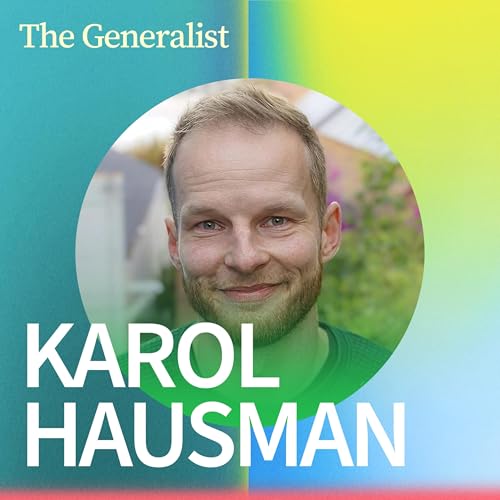
  • Why Robots Still Struggle With Simple Tasks (And What Might Finally Change That) | Karol Hausman, Co-Founder & CEO of Physical Intelligence
    Mar 17 2026

    Karol Hausman is the co-founder and CEO of Physical Intelligence, a robotics company building a general-purpose “AI brain for the physical world.” The company has raised more than $1 billion in funding to develop foundation models that allow robots to operate across many machines, environments, and tasks rather than being programmed for a single purpose. The core thesis: the same scaling dynamics that transformed language models may also unlock robotic intelligence. But only if you resist every commercial pressure pushing you toward specialization. The central challenge isn’t mechanical design. It’s intelligence: how robots learn, generalize, and interact with a physical world that is far harder to simulate than it is to describe. Before launching Physical Intelligence, Karol worked at Google Brain and Stanford University, studying robot learning alongside researchers Sergey Levine and Chelsea Finn, who later became his co-founders.


    In our conversation, we explore:

    • How growing up in a small town in Poland and watching Star Wars sparked Karol’s fascination with robots
    • The moment a lecture from Sergey Levine convinced him to abandon his PhD research direction and pivot fully to deep learning
    • Why robotics has historically lagged behind breakthroughs in language models
    • The case for building a general “AI brain” for the physical world rather than a single specialized robot
    • The role of real-world data in training robots, the limits of simulation, and how deployment could create a powerful data flywheel
    • The return of reinforcement learning and the parallels between human learning and robot training
    • The unique challenges of physical intelligence and why robots must operate with far higher reliability than language models

    Thank you to the partners who make this possible

    Brex: The intelligent finance platform.

    Granola: The app that might actually make you love meetings.

    Transcript: https://www.generalist.com/p/karol-hausman-physical-intelligence

    Timestamps

    (00:00) Intro

    (04:05) Karol’s early fascination with robots

    (07:38) How Karol relates to Fei-Fei Li’s biography

    (08:52) What inspired Karol to build better robots

    (11:19) Philosophical influences

    (15:33) Parallels between The Inner Game of Tennis and robotics

    (18:21) Karol’s entry point to robotics and PhD program

    (25:49) Combining robotics with LLMs: The Taylor Swift demo

    (30:48) The 1970s SHRDLU AI experiment

    (32:33) Founding Physical Intelligence

    (35:13) How Lachy Groom got involved

    (39:40) How research shapes what Physical Intelligence builds

    (45:22) The importance of real-world data

    (49:07) The return of reinforcement learning in robotics

    (53:31) The risk of commercializing too early

    (55:47) Finding the right partners for the business

    (57:13) Open research questions

    (1:00:00) NVIDIA’s simulation engines

    (1:01:57) The surprising speed of progress

    (1:04:16) Reliability in robotics

    (1:07:31) Compensating for missing senses

    (1:12:28) Book recommendation

    Follow Karol Hausman

    LinkedIn: https://www.linkedin.com/in/karolhausman

    X: https://x.com/hausman_k

    Resources and episode mentions: https://www.generalist.com/p/karol-hausman-physical-intelligence

    Production and marketing by penname.co. For inquiries about sponsoring the podcast, email jordan@penname.co.

    Show more Show less
    1 hr and 14 mins
  • America’s Electric Power Grid Is Broken. This Startup Is Trying to Fix It. (Zach Dell, co-founder & CEO of Base)
    Mar 10 2026

    For decades, America’s electrical system has rewarded utilities for building more infrastructure, not for lowering costs. The result is a grid that expanded but rarely improved. Zach Dell, co-founder and CEO of Base, is building a different kind of power company. In under three years, Base has grown into a vertically integrated business valued in the billions. It combines home batteries and software to store electricity when it is cheap and deliver it when demand spikes. Dell’s interest in energy began long before Base. In college, he tried to lease a Hawaiian lava field for a solar project. He also experimented with anaerobic digestion systems in India and worked at Blackstone and Thrive Capital, where he met his co-founder. His bet is simple but ambitious: the next phase of the grid will come from increasing utilization rather than constantly building new infrastructure.


    In our conversation, we explore:

    • How a failed college solar project and early energy experiments in India pulled Zach into the power industry
    • The lessons he absorbed from his parents, including truth-seeking, reinvention, and competitive endurance
    • How the U.S. grid’s regulatory structure discourages innovation and why Texas’s deregulated market creates space for new power companies
    • Why batteries are best understood as a time-shifting technology that increases grid utilization and reduces total system costs, not simply as energy generators
    • Base’s “make, move, store, sell” framework for thinking about the full power stack
    • How Base aims to become the first beloved energy company
    • How Zach identified Justin as a world-class operator and built the trust needed to go all-in together on a non-obvious idea
    • How aggressive AI adoption is compressing cycle times and why slow adopters risk falling behind

    Thank you to the partners who make this possible

    Granola: The app that might actually make you love meetings

    Brex: The intelligent finance platform.

    Transcript: https://www.generalist.com/p/americas-electric-power-grid-is-broken⁠

    Timestamps

    (00:00) Introduction to Zach Dell and Base

    (02:08) The Hawaiian lava field solar project and early energy curiosity

    (07:03) Investing vs. operating

    (09:31) Lessons from Phil Jackson on aligning talented teams

    (14:27) Lessons from his parents

    (18:20) The loneliness of solo founding and the value of co-founders

    (23:45) Justin’s strengths as a co-founder and how their partnership formed

    (29:55) Why Base became the obvious focus

    (32:08) The original vision and the three reversals

    (34:58) The US power grid and what makes Texas different

    (39:19) Why batteries matter and what Base is building

    (41:12) How Base works in two market types

    (45:10) Base’s core product

    (46:50) The software behind Base’s battery network

    (48:20) Base’s partnerships with battery cell makers

    (49:51) The Gen 2 hardware mistake and the lesson in risk management

    (51:08) Dino’s strengths as Head of Hardware

    (52:36) Base’s positioning as grid infrastructure

    (53:29) Building a beloved energy brand

    (58:01) How hiring at Base has evolved

    (1:01:10) AI workflows at Base

    (1:03:00) Zach’s dedicated deep work time

    (1:05:54) Final meditations

    Follow Zach Dell

    LinkedIn: https://www.linkedin.com/in/zach-dell-a631a554

    X: https://x.com/ZachBDell

    Resources and episode mentions: https://www.generalist.com/p/americas-electric-power-grid-is-broken

    Production and marketing by penname.co. For inquiries about sponsoring the podcast, email jordan@penname.co.

    Show more Show less
    1 hr and 12 mins
No reviews yet