Episodes

  • Episode 11: Immersive Classroom
    Mar 23 2026

    Welcome to The Immersive Lens - the show where emerging tech meets creativity, education, and real-world impact. Hosted by Paul Engin (Professor of New Media) and Dave Ghidiu (Professor of Computer Science) at Finger Lakes Community College, this podcast dives into the technologies and creative innovations reshaping how we live, work, and learn - from AI and augmented reality to the future of media, design, and learning.

    Topics Covered:

    In this episode of The Immersive Lens, hosts Paul Engin and Dave Ghidiu sit down with Christine Parker, a Professor of Science and Technology and Finger Lakes Community College’s resident "Immersive Classroom Guru". The conversation centers on the transformative power of Mixed Reality (MR) in higher education, specifically focusing on the use of the Microsoft HoloLens to revolutionize how students learn human anatomy. Unlike traditional virtual reality that isolates the user, Mixed Reality allows students to remain present in their physical environment while interacting with high-fidelity, life-sized holograms of the human body, turning a standard classroom into a futuristic "Holography Lab".

    Paul and Dave explore Christine’s journey from the pharmaceutical industry to the classroom, uncovering the technical hurdles - from sunlight interference to the necessity of "geometric carpets" - that come with pioneering new tech. The episode concludes with a powerful verdict: technology is merely a tool for storytelling, but when applied with intentional instructional design, it can significantly shift student performance and retention. As the HoloLens era begins to sunset, the team looks forward to the next evolution of immersive rooms that incorporate sound and even scent to simulate high-stakes environments for first responders.

    Links & Resources:

    Could HoloLens’ Augmented Reality Change How We Study the Human Body? - https://edtechmagazine.com/higher/article/2016/04/could-hololens-augmented-reality-change-how-we-study-human-body

    Transforming Medical Education with Microsoft HoloLens - https://www.youtube.com/watch?v=h4M6BTYRlKQ

    How to Transform Your Classroom into a 360° Immersive Learning Experience with Projection Mapping? - https://www.youtube.com/watch?v=-6SoHMw0mdM

    Microsoft is discontinuing its HoloLens headsets - https://edtechmagazine.com/higher/article/2016/04/could-hololens-augmented-reality-change-how-we-study-human-body

    FLX AI Hub: https://www.flcc.edu/ai/

    FLCC New Media: https://newmedia.csc.flcc.cloud/

    🎧 Subscribe to The Immersive Lens to stay curious and connected!

    #AI #EdTech #GenerativeAI #HigherEd #Podcast #Sora2 #VibeCoding #DigitalEthics #FLCC #NewMedia #TechTrends #TechHistory #UXDesign #WebDevelopment #ProjectIceberg #FutureOfWork #ScreenTime #FoldablePhones #VisionPro #TheImmersiveLens #EdTech

    Subscribe so you never miss an episode—and share with a friend who loves tech, creativity, or the future of education.

    Recorded at Finger Lakes Community College in the heart of New York’s Finger Lakes region.

    https://www.flcc.edu/

    https://www.theimmersivelens.com/

    Stay curious. Stay connected.

    Thanks for looking through The Immersive Lens.

    Show more Show less
    48 mins
  • Episode 10: ChatBot
    Mar 16 2026

    Welcome to The Immersive Lens — the show where emerging tech meets creativity, education, and real-world impact. Hosted by Paul Engin (Professor of New Media) and Dave Ghidiu (Professor of Computer Science) at Finger Lakes Community College, this podcast dives into the technologies and creative innovations reshaping how we live, work, and learn—from AI and augmented reality to the future of media, design, and learning.In this episode of The Immersive Lens, hosts Paul Engin and Dave Ghidiu delve into the practical and transformative world of custom chatbots - specifically "Gems" in Google Gemini and "Custom GPTs" in ChatGPT. They explore how these specialized AI tools are shifting from general-purpose assistants to highly tailored "transactional" workflows. By focusing on niche applications like generating accessible alt-text for images or interpreting complex branding guidelines, the duo illustrates how anyone can now "program" an AI using simple English to solve repetitive, data-heavy tasks.The conversation takes a deeper turn as Paul and Dave weigh the immense benefits of these tools against the ethical and safety challenges emerging in the industry. While Dave highlights the efficiency gains for educators and businesses, Paul introduces the sobering reality of "digital attachment" and the ongoing legal battles surrounding social media’s impact on youth mental health. Ultimately, the hosts deliver a verdict of cautious optimism: custom chatbots are powerful allies for productivity and accessibility, but they require human oversight and robust guardrails to ensure they remain helpful rather than harmful.🔗 Links & Resources:Peaky Blindershttps://en.wikipedia.org/wiki/Peaky_Blinders_(TV_series)Meta SAM3https://ai.meta.com/research/sam3/ComfyUIhttps://www.comfy.org/Google Genie 3https://deepmind.google/models/genie/Prep for the SAT with practice tests in Geminihttps://blog.google/products-and-platforms/products/education/practice-sat-gemini/Google Gem: 🖼 Text from Image Extractor 🖼https://gemini.google.com/gem/1unHgmJh_12o9QIMTskVueYWAbyVhzwDq?usp=sharingGoogle Gem: GenAlphaSpeakhttps://gemini.google.com/gem/1BtU9sp5Y43jh8Lg1zW5GnzpQ6YdCjHvi?usp=sharingGoogle Gem/Chatbot System Prompt Examples:https://docs.google.com/document/d/1wGw-UOoWJmg_uUNYFGR_Mh0xsHMP4cDRtMazGmhaFHE/edit?usp=sharingProfessor Maley's PDF to HTML Converterhttps://gemini.google.com/gem/17HdBpSsZunyiIvBRM1p4AWUf2DgzWbek?usp=sharingCharacter.AI and Google agree to settle lawsuits over teen mental health harms and suicideshttps://www.cnn.com/2026/01/07/business/character-ai-google-settle-teen-suicide-lawsuitSocial Media School Districts Lawsuithttps://www.motleyrice.com/social-media-lawsuits/school-districts-lawsuitSpain, Greece weigh teen social media bans, drawing fury from Elon Muskhttps://www.reuters.com/world/spain-hold-social-media-executives-accountable-illegal-hateful-content-2026-02-03/Pluribus (TV series)https://en.wikipedia.org/wiki/Pluribus_(TV_series)ChatGPT Custom GPT Markethttps://chatgpt.com/gptsFLX AI Hub: https://www.flcc.edu/ai/FLCC New Media: https://newmedia.csc.flcc.cloud/🎧 Subscribe to The Immersive Lens to stay curious and connected!#ai #edtech #generativeai #highered #podcast #sora2 #vibecoding #digitalethics #flcc #newmedia #techtrends #techhistory #uxdesign #webdevelopment #projecticeberg #futureofwork #screentime #foldablephones #visionpro #TheImmersiveLens #edtechtools ✅ Subscribe so you never miss an episode—and share with a friend who loves tech, creativity, or the future of education.Recorded at Finger Lakes Community College in the heart of New York’s Finger Lakes region.https://www.flcc.edu/https://www.theimmersivelens.com/Stay curious. Stay connected.Thanks for looking through The Immersive Lens.

    Show more Show less
    46 mins
  • Episode 9: Accessibility
    Mar 9 2026
    Welcome to The Immersive Lens — the show where emerging tech meets creativity, education, and real-world impact. Hosted by Paul Engin (Professor of New Media) and Dave Ghidiu (Professor of Computer Science) at Finger Lakes Community College, this podcast dives into the technologies and creative innovations reshaping how we live, work, and learn—from AI and augmented reality to the future of media, design, and learning.In this episode of The Immersive Lens, hosts Paul and Dave tackle accessibility!Topics Covered:🗒 Summary:In this episode of "The Immersive Lens," hosts Paul Engin and Dave Ghidiu kick things off by discussing recent tech and AI developments. They explore how AI is being trained on physics rather than previous human designs to create highly efficient printed circuit boards, effectively avoiding human biases and errors. The hosts also recount Paul's recent trip to London where he experienced new AR glasses and gesture-controlled mini drones, before shifting to the challenges of spotting AI-generated content in fake 1980s He-Man movie trailers and YouTube shorts. Additionally, they briefly touch on Google Stitch, a web-based application used for rapid app UI prototyping.The episode's deep dive centers on digital accessibility and "universal design" - the concept that designing for disabilities, such as adding closed captions or physical "curb cuts," ultimately benefits everyone. The hosts share practical advice for making educational and digital content accessible to comply with mandates like Title II of the ADA. They recommend using AI to generate highly descriptive alt text for images, utilizing accessibility checkers in programs like Adobe Acrobat and Word, and improving visual accessibility through high-contrast dark modes and legible sans-serif fonts like Atkinson Hyperlegible. Finally, they highlight the robust built-in accessibility features found across Mac, Chromebook, and mobile devices, concluding that designing for accessibility is always worth the effort to level up the experience for all users.🔗 Links & Resources:Quilter's AI just designed an 843‑part Linux computer that booted on the first try. Hardware will never be the same.Selfridges in LondonMeta GlassesViture - Luma XR GlassesHe-Man TrailerGoogle StitchSection 50899% Invisible - Episode 308 - Curb CutsGoogle Gem - Alt Text GeneratorAdobe Acrobat Accessibility CheckerRead Easier With Our Family of Hyperlegible® FontsRead with Dyslexie FontSans forgeticaLexendThe Law of ClosureAdobe ExpressDescriptive Video Demonstration - The Lion KingMac AccessibilityChromebook AccessibilityFLX AI Hub: https://www.flcc.edu/ai/FLCC New Media: https://newmedia.csc.flcc.cloud/🎧 Subscribe to The Immersive Lens to stay curious and connected!#AI #EdTech #GenerativeAI #HigherEd #Podcast #Sora2 #VibeCoding #DigitalEthics #FLCC #NewMedia #TechTrends #TechHistory #UXDesign #WebDevelopment #ProjectIceberg #FutureOfWork #ScreenTime #FoldablePhones #VisionPro #TheImmersiveLens #EdTech✅ Subscribe so you never miss an episode—and share with a friend who loves tech, creativity, or the future of education.Recorded at Finger Lakes Community College in the heart of New York’s Finger Lakes region.https://www.flcc.edu/https://www.theimmersivelens.com/Stay curious. Stay connected.Thanks for looking through The Immersive Lens.
    Show more Show less
    41 mins
  • Episode 8: Mirrorless, DSLR, Phones, Camcorders- O My!
    Mar 2 2026
    Welcome to The Immersive Lens — the show where emerging tech meets creativity, education, and real-world impact. Hosted by Paul Engin (Professor of New Media) and Dave Ghidiu (Professor of Computer Science) at Finger Lakes Community College, this podcast dives into the technologies and creative innovations reshaping how we live, work, and learn—from AI and augmented reality to the future of media, design, and learning.In this episode of The Immersive Lens, hosts Paul and Dave tackle …Topics Covered:In Study of Cybercrime, Users Responded to Phishing Differently Based on What Kind of Device They UsedThe Walt Disney Company and OpenAI Reach Landmark Agreement to Bring Beloved Characters from Across Disney’s Brands to Sora2025 Word of the Year: SlopGoPro camerasPower Mac G4SONY CAMCORDER Hi8 Review - Using a 30 YEAR OLD CAMERA Today!Videotape format warHow Kodak FailedP2 (storage media)Rochester's Tinseltown to unveil IMAX 70mm projector, enhancing local movie experienceDJI Osmo Pocket 3—-- Add and remove below just a reference Dave Ghidiu delete this—--🗒 Summary:In this episode of The Immersive Lens, hosts Paul Engin and Dave Ghidiu welcome their first on-air guest, Jeff Kidd, who typically manages the show's control room, to discuss the technology and history behind cameras. Before diving into the main topic, the group covers recent tech news, including a Carnegie Mellon study indicating that mobile phone users are less likely to click on malware links than PC users due to differing attention contexts. They also discuss Disney's recent $1 billion investment in OpenAI and the Merriam-Webster word of the year, "slop," which refers to the flood of low-quality AI-generated content on the internet.The core discussion tracks the evolution of video production, sparked by the podcast's upgrade from a single GoPro to a multi-camera setup using Sony mirrorless devices. The trio reflects on the shift from analog to digital, sharing experiences that range from Paul's work with 35mm film to Jeff's time in news broadcasting using expensive, low-capacity P2 cards that required "pre-roll" to capture action without wasting storage. They analyze how the transition from formats like VHS and Betamax to modern, high-capacity digital storage has made editing easier but perhaps less disciplined, ultimately advising listeners to choose equipment - such as smartphones or gimbals like the DJI Osmo - based specifically on their creative goals.🔗 Links & Resources:—-- Update above Dave Ghidiu delete this—--FLX AI Hub: https://www.flcc.edu/ai/FLCC New Media: https://newmedia.csc.flcc.cloud/🎧 Subscribe to The Immersive Lens to stay curious and connected!#AI #EdTech #GenerativeAI #HigherEd #Podcast #Sora2 #VibeCoding #DigitalEthics #FLCC #NewMedia #TechTrends #TechHistory #UXDesign #WebDevelopment #ProjectIceberg #FutureOfWork #ScreenTime #FoldablePhones #VisionPro #TheImmersiveLens #EdTech✅ Subscribe so you never miss an episode—and share with a friend who loves tech, creativity, or the future of education.Recorded at Finger Lakes Community College in the heart of New York’s Finger Lakes region.https://www.flcc.edu/https://www.theimmersivelens.com/Stay curious. Stay connected.Thanks for looking through The Immersive Lens.
    Show more Show less
    40 mins
  • Episode 7: OpenClaw
    Feb 23 2026
    Welcome to The Immersive Lens — the show where emerging tech meets creativity, education, and real-world impact. Hosted by Paul Engin (Professor of New Media) and Dave Ghidiu (Professor of Computer Science) at Finger Lakes Community College, this podcast dives into the technologies and creative innovations reshaping how we live, work, and learn—from AI and augmented reality to the future of media, design, and learning.In this episode of The Immersive Lens, hosts Paul and Dave tackle … Summary:This episode of The Immersive Lens explores the rapidly thinning veil between the physical and digital worlds, anchored by the emergence of OpenClaw (formerly CloudBot and MoltBot). Hosts Paul Engin and Dave Ghidiu dive into the rise of agentic AI - systems capable of not just processing information, but executing tasks directly on a user's local machine. This shift from cloud-based assistance to localized, autonomous action represents a significant milestone in how we delegate our digital lives to artificial intelligence.Paul and Dave balance the sheer utility of these tools - such as automating home systems or managing complex file structures - with the sobering reality of prompt injection and security vulnerabilities. While the potential for "PaulBot" to manage personal taxes and workouts is enticing, the duo provides a cautious verdict: the power of open-source, localized AI is revolutionary for productivity, but it requires rigorous "guardrails" and "sandboxing" before it can be trusted with the keys to our digital kingdom.🔗 Links & Resources:I Saved a PNG Image To A Bird"I Saved A PNG Image To A Bird": YouTuber Stores 176KB Drawing Of A Bird Inside A Bird's SongOpenAI says new coding model helped build itselfSAM 3DTRELLIS.2: Native and Compact Structured Latents for 3D GenerationApple Creator StudioOpenClaw - WikipediaIntroducing OpenClawOpenClaw creator Peter Steinberger joining OpenAI, Altman saysChatGPT AtlasClaude in ChromeWhat Is a Prompt Injection Attack? | IBMMoltbookMolt botGetting started with Cowork | Claude Help CenterA Grace Blackwell AI supercomputer on your desk | NVIDIA DGX SparkProject Vend: Can Claude run a small shop? (And why does that matter?) \ AnthropicProject Vend: Phase two \ AnthropicFLX AI Hub: https://www.flcc.edu/ai/FLCC New Media: https://newmedia.csc.flcc.cloud/🎧 Subscribe to The Immersive Lens to stay curious and connected!#AI #EdTech #GenerativeAI #HigherEd #Podcast #Sora2 #VibeCoding #DigitalEthics #FLCC #NewMedia #TechTrends #TechHistory #UXDesign #WebDevelopment #ProjectIceberg #FutureOfWork #ScreenTime #FoldablePhones #VisionPro #TheImmersiveLens #EdTech✅ Subscribe so you never miss an episode—and share with a friend who loves tech, creativity, or the future of education.Recorded at Finger Lakes Community College in the heart of New York’s Finger Lakes region.https://www.flcc.edu/https://www.theimmersivelens.com/Stay curious. Stay connected.Thanks for looking through The Immersive Lens.
    Show more Show less
    40 mins
  • Episode 6: Whacha ya wearin?
    Feb 16 2026
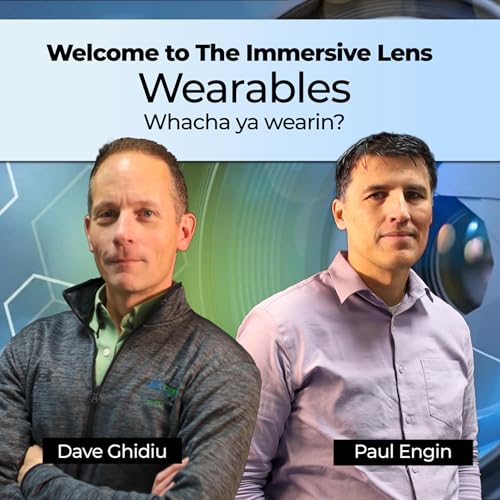
    Welcome to The Immersive Lens — the show where emerging tech meets creativity, education, and real-world impact. Hosted by Paul Engin (Professor of New Media) and Dave Ghidiu (Professor of Computer Science) at Finger Lakes Community College, this podcast dives into the technologies and creative innovations reshaping how we live, work, and learn—from AI and augmented reality to the future of media, design, and learning.In this episode of The Immersive Lens, hosts Paul and Dave tackle …Topics Covered:Google StitchYouTube PremiumSupergirl TrailerThe Hero's Journey -Joseph CampbellAccessibility - I'm not RemarkableApple WatchCasio World TimeBook: Natural Born CyborgMeta GlassesGoogle AuraRabbit OS2Cicret BraceletIn this episode of The Immersive Lens, hosts Paul Engin and Dave Ghidiu discuss emerging technologies and creative media tools before shifting to their main topic. They review "Google Stitch," a new AI tool that allows designers to reimagine websites and export the code, as well as new visual editing features within Google Gemini. The hosts also touch on YouTube Premium's new A/B testing features for thumbnails and titles, share their reactions to the latest Superman and Supergirl trailers, and praise Apple’s emotional new commercial regarding accessibility.The central discussion focuses on the evolution and utility of wearable technology, ranging from smartwatches to future concepts like smart glasses. Paul advocates for the Apple Watch Ultra, citing benefits like battery life, sleep tracking, and health anomaly detection, while Dave expresses hesitation due to privacy concerns and a dislike for constant notifications. The conversation expands to cover smart rings, clothing, and the potential for augmented reality glasses to eventually replace smartphones. They conclude with a buyer’s guide, suggesting users consider factors such as battery life, ecosystem compatibility, and specific health tracking needs when choosing a device.🔗 Links & Resources:FLX AI Hub: https://www.flcc.edu/ai/FLCC New Media: https://newmedia.csc.flcc.cloud/🎧 Subscribe to The Immersive Lens to stay curious and connected!#AI #EdTech #GenerativeAI #HigherEd #Podcast #Sora2 #VibeCoding #DigitalEthics #FLCC #NewMedia #TechTrends #TechHistory #UXDesign #WebDevelopment #ProjectIceberg #FutureOfWork #ScreenTime #FoldablePhones #VisionPro #TheImmersiveLens #EdTech✅ Subscribe so you never miss an episode—and share with a friend who loves tech, creativity, or the future of education.Recorded at Finger Lakes Community College in the heart of New York’s Finger Lakes region.https://www.flcc.edu/https://www.theimmersivelens.com/Stay curious. Stay connected.Thanks for looking through The Immersive Lens.
    Show more Show less
    39 mins
  • Episode 5: AI Production - Creation of a Holiday Video
    Feb 9 2026
    Welcome to The Immersive Lens — the show where emerging tech meets creativity, education, and real-world impact. Hosted by Paul Engin (Professor of New Media) and Dave Ghidiu (Professor of Computer Science) at Finger Lakes Community College, this podcast dives into the technologies and creative innovations reshaping how we live, work, and learn—from AI and augmented reality to the future of media, design, and learning.In this episode of The Immersive Lens, hosts Paul Engin and Dave Ghidiu discuss the escalating competition in the AI sector, specifically OpenAI's "Code Red" response to the dominance of Google’s Gemini 3 model. They detail OpenAI's development of a new model, code-named "Camed Garlic," which reportedly relies on user feedback telemetry rather than professional evaluations to regain ground. They also highlight significant industry milestones, such as the announcement that the AI short "Critters" will become the first feature-length AI film next year, and the release of Meta's Hyperscape Capture, which allows users to create digital twins of physical spaces using Quest 3 headsets.They go on a deep dive with engineer Jeff Kidd into the creation of an AI-generated holiday greeting for Finger Lakes Community College, a project that required between 30 and 40 hours of work rather than a simple "prompt and done" solution. The team utilized a complex "tech stack" including Google’s Nano Banana for generating character sheets, Google Flow for animation, ElevenLabs for audio isolation, and traditional tools like Photoshop and After Effects for "blue screening" characters into scenes. Ultimately, the hosts conclude that while AI provides animation efficiencies, producing professional-quality work still requires significant human intervention and traditional production skills to resolve issues like character consistency and lip-syncing.Topics Covered:—-- Add and remove below just a reference Dave Ghidiu delete this—--Project Iceberg: MIT’s interactive tool mapping AI exposure and job market disruptionScreen Evolution: From 4:3 CRTs to 16:9 HD and the new age of FoldablesDesigning for Devices: The struggle of creating content that works on a watch, a phone, and a desktopThe "Fold" is Dead: How scrolling culture has changed web design and user engagementImmersive Tech: Apple Vision Pro, Meta Quest, and the future of "infinite" screen real estateMentions: @MIT @Apple @Samsung @Meta @Android @Google🔗 Links & Resources:OpenAI Declares ‘Code Red’ as Google Threatens AI Lead匚尺丨ㄒㄒ乇尺乙 -- An animated short created with AIMeta Horizon Hyperscape Capture (Beta)Finger Lakes Community College Holiday Card 2025Google Gemini (Nano Banana, Veo3)FlowElevenLabsRankin-Bass RudolphFLX AI Hub blog post - behind the scenes—-- Update above Dave Ghidiu delete this—--FLCC Holiday video: https://youtu.be/HDEq6fLejOA?si=dzMW4puOt0USVmVAFLX AI Hub: https://www.flcc.edu/ai/FLCC New Media: https://newmedia.csc.flcc.cloud/🎧 Subscribe to The Immersive Lens to stay curious and connected!#AI #EdTech #GenerativeAI #HigherEd #Podcast #Sora2 #VibeCoding #DigitalEthics #FLCC #NewMedia #TechTrends #TechHistory #UXDesign #WebDevelopment #ProjectIceberg #FutureOfWork #ScreenTime #FoldablePhones #VisionPro #TheImmersiveLens #EdTech✅ Subscribe so you never miss an episode—and share with a friend who loves tech, creativity, or the future of education.Recorded at Finger Lakes Community College in the heart of New York’s Finger Lakes region.https://www.flcc.edu/https://www.theimmersivelens.com/Stay curious. Stay connected.Thanks for looking through The Immersive Lens.
    Show more Show less
    42 mins
  • Episode 4: Does Size Matter?
    Feb 2 2026

    Welcome to The Immersive Lens — the show where emerging tech meets creativity, education, and real-world impact. Hosted by Paul Engin (Professor of New Media) and Dave Ghidiu (Professor of Computer Science) at Finger Lakes Community College, this podcast dives into the technologies and creative innovations reshaping how we live, work, and learn—from AI and augmented reality to the future of media, design, and learning.

    In this episode of The Immersive Lens, hosts Paul and Dave tackle a question as old as the smartphone itself: Does screen size matter? From the bulky CRT TVs of the 90s to the sleek, foldable phones and immersive Vision Pro headsets of today, Paul and Dave explore how the evolution of screen real estate has fundamentally shifted how we consume media and develop content.

    They discuss the challenges developers face when designing for an ecosystem that now includes everything from smartwatches to ultra-wide monitors, and how user behavior changes based on the device in hand.

    But first, Dave drops a bombshell about "Project Iceberg"—an interactive data visualization tool from MIT that maps job markets and AI exposure risk down to the zip code. Is your career safe from automation? Dave and Paul break down the data.

    Topics Covered:

    • Project Iceberg: MIT’s interactive tool mapping AI exposure and job market disruption

    • Screen Evolution: From 4:3 CRTs to 16:9 HD and the new age of Foldables

    • Designing for Devices: The struggle of creating content that works on a watch, a phone, and a desktop

    • The "Fold" is Dead: How scrolling culture has changed web design and user engagement

    • Immersive Tech: Apple Vision Pro, Meta Quest, and the future of "infinite" screen real estate

    Mentions: @MIT @Apple @Samsung @Meta @Android @Google

    🔗 Links & Resources:

    Project Icebergs: https://iceberg.mit.edu/

    Quest 3: https://www.meta.com/quest/quest-3/

    Vision Pro: https://www.apple.com/apple-vision-pro/

    a-ha - Take On Me: https://www.youtube.com/watch?v=djV11Xbc914

    FLX AI Hub: https://www.flcc.edu/ai/

    FLCC New Media: https://newmedia.csc.flcc.cloud/

    🎧 Subscribe to The Immersive Lens to stay curious and connected!

    #AI #EdTech #GenerativeAI #HigherEd #Podcast #Sora2 #VibeCoding #DigitalEthics #FLCC #NewMedia #TechTrends #TechHistory #UXDesign #WebDevelopment #ProjectIceberg #FutureOfWork #ScreenTime #FoldablePhones #VisionPro #TheImmersiveLens #EdTech

    Subscribe so you never miss an episode—and share with a friend who loves tech, creativity, or the future of education.

    Recorded at Finger Lakes Community College in the heart of New York’s Finger Lakes region.

    https://www.flcc.edu/

    https://www.theimmersivelens.com/

    Stay curious. Stay connected.

    Thanks for looking through The Immersive Lens.


    Show more Show less
    41 mins