• For Richer
    Mar 5 2026
    Originally broadcast on December 10, 1939, For Richer—For Richer was written by True Boardman for the CBS radio program Silver Theatre, a prestigious dramatic anthology series sponsored by the International Silver Company. The episode starred Clark Gable as Chris Morgan and Mary Taylor as Peggy Turner. The Silver Theatre program was known for pairing major Hollywood stars with entertaining romantic or dramatic stories crafted specifically for radio audiences. These productions blended cinematic storytelling with the immediacy of live radio performance, supported by orchestral scoring and vivid sound effects. In this era—often called the Golden Age of Radio—millions of Americans gathered around their radios on Sunday evenings to hear productions like this one. For Richer—For Richer belongs to the tradition of the screwball romantic comedy, a genre popular in the late 1930s. Like films such as It Happened One Night or Bringing Up Baby, the story begins with a clash of personalities and a battle of wits between a cynical man and a determined woman. For Richer—For Richer reminds us that love and practicality are not always opposites—and that even the most calculating arrangements can lead to unexpected romance. This Naples Players Radio Theatre production features the vocal talents of Jim Heffernan as Chris Morgan, Pamela Austin as Peggy Turner, Jim Corsica who vocalizes the roles of Mr Turner, the police officer, the Justice of the Peace and the sea captain, and Cynthia Hile as Susan Turner . This audio file was recorded, mixed and mastered by Michael Troop. Music Acknowledgment & Fair Use Notice Music and sound effects were obtained through a special license from pond5.com and may not be copied or reproduced for any reason. Excerpts of historic recordings are used in this production for purposes of dramatic illustration, historical reference, and artistic context and have been edited and altered for dramatic purpose. All music excerpts are the property of their respective copyright holders and are used here in accordance with U.S. copyright law under the doctrine of fair use (17 U.S.C. §107). This audio presentation features: “You and the Night and the Music” Music by Arthur Schwartz, lyrics by Howard Dietz. Performed by The Melachrino Strings and Orchestra (1964). Courtesy of Blue Pie Publishing USA. No ownership of these works is claimed, and no commercial use is intended. Listeners are encouraged to seek out and enjoy the complete original recordings from authorized sources. This performance is presented as a historical recreation of a classic radio broadcast. All rights to the original script and characters remain with their respective copyright holders. This production is non-commercial and for educational and entertainment purposes only.
    Show more Show less
    33 mins
  • Ever After
    Mar 1 2026
    Originally broadcast on April 14, 1938 as part of The Royal Desserts Hour, Ever After is a whimsical and gently satirical sequel to Walt Disney’s breakthrough animated film Snow White and the Seven Dwarfs, released just the year before in 1937. At the time, Snow White had become a cultural sensation — praised as a “work of perfection” by critics and adored by audiences of all ages — and radio producers moved quickly to create stories that played with the world and characters that Disney had brought to life. Ever After was written by Keith Fowler and performed by an impressive pair of stage actors: Edith Barrett as Snow White and Vincent Price — yes, that Vincent Price — as Prince Charming. Before Price became famous for his iconic horror roles, he appeared frequently on radio dramas, bringing his suave theatricality to comedic and romantic parts alike. Their segment aired within a live variety program hosted by singer Rudy Vallée, blending music, comedy, and short dramatic sketches for a national radio audience. This playful “what happened next?” story imagines Snow White and Prince Charming three years into marriage — long after the traditional fairy-tale ending. Unlike Disney’s pristine fade-out, Ever After explores the humorous realities of royal domestic life: a distracted prince buried under affairs of state, a princess longing for affection, a forgotten anniversary, and the gentle chaos of learning how to live together once the magic settles. Part parody, part romantic comedy, and part affectionate tribute, the sketch offers audiences a charming glimpse into the ordinary marital squabbles of extraordinary characters. It blends familiar fairy-tale elements with smart, snappy 1930s radio humor, ultimately landing on the hopeful message that “happily ever after” is less a perfect ending and more a commitment to finding joy together — even when tempers flare and royal paperwork piles up. In revisiting this delightful radio gem, we honor a unique moment in entertainment history: when early Hollywood, Broadway talent, and national radio combined to breathe new life into beloved fairy tales. This Naples Players Radio Theatre production features the vocal talents of Michael Santos , Amy Hughes, Pat Ashton, Kip Jones, and Michael Troop . This audio file was recorded, mixed and mastered by Michael Troop. Music Acknowledgment & Fair Use Notice Music and sound effects were obtained through a special license from pond5.com and may not be copied or reproduced for any reason. Excerpts of historic recordings are used in this production for purposes of dramatic illustration, historical reference, and artistic context and have been edited and altered for dramatic purpose. All music excerpts are the property of their respective copyright holders and are used here in accordance with U.S. copyright law under the doctrine of fair use (17 U.S.C. §107). Featured recordings include brief excerpts from: •Heigh Ho - from Readers Digest Music, Wish Upon a Star Vol 2, film and fantasy favorites for the young at heart. No ownership of these works is claimed, and no commercial use is intended. Listeners are encouraged to seek out and enjoy the complete original recordings from authorized sources. This performance is presented as a historical recreation of a classic radio broadcast. All rights to the original script and characters remain with their respective copyright holders. This production is non-commercial and for educational and entertainment purposes only.
    Show more Show less
    17 mins
  • The Thought
    Feb 1 2026
    "The Thought" is an episode from the mid-1940s radio anthology series The Haunting Hour, which ran in syndication between 1945 and 1946. Although the program was produced in the United States, it had no single sponsor and was distributed through transcription, allowing local stations to insert their own commercial messages. Because of this, The Haunting Hour is sometimes referred to as a “mystery anthology without a name” — one that thrived on atmosphere rather than brand recognition. Unlike more famous radio thrillers such as Suspense or The Whistler, The Haunting Hour did not feature a recurring narrator or signature character. Instead, each half-hour play stood on its own, dramatizing tales of mystery, fear, and psychological unease. The Thought, first aired in 1945, exemplifies the program’s blend of noir-tinged melodrama and supernatural suggestion. The story reflects two popular trends in 1940s American entertainment: -Psychic phenomena and mind-reading acts, which were a staple of vaudeville and nightclub stages during the period. -Domestic mystery thrillers, where jealousy, suspicion, and betrayal played out against shadowy backdrops such as isolated lodges or smoky nightclubs. Although The Haunting Hour lasted only about a year in production, episodes like The Thought capture the mood of wartime and postwar America — a public fascinated by crime stories, the power of the subconscious, and the possibility of hidden dangers lurking in everyday life.
    This Naples Players Radio Theatre production features the vocal talents of Pam Austin, Vic Caroli, Jim Heffernan, Kip Jones, James Corsica, and Michael Troop . This audio file was recorded, mixed and mastered by Michael Troop. All music and sound effects were obtained through a special license from pond5.com and may not be copied or reproduced for any reason. “This performance is presented as a historical recreation of a classic radio broadcast. All rights to the original script and characters remain with their respective copyright holders. This production is non-commercial and for educational and entertainment purposes only.
    Show more Show less
    29 mins
  • Cowboy and the Lady
    Jan 1 2026
    In April of 1950, The Camel Screen Guild Theater treated radio audiences to "The Cowboy and the Lady" - a romantic comedy adapted from the 1938 film starring Gary Cooper and Merle Oberon. Like many shows of the golden age of radio, it featured Hollywood voices spinning a tale of love, laughter, and culture clash between a high-society lady and a rodeo cowboy. But just as famous as the stories were the sponsors who kept the microphones humming. On that night, Camel cigarettes were the real scene-stealers. The announcer confidently proclaimed, “In a coast-to-coast test of hundreds of people who smoked only Camels for thirty days, not one single case of throat irritation was reported! Test Camels in your T-Zone—T for taste, T for throat—and see how mild a cigarette can be.” Later, as if to prove it, he told listeners that people whose voices were their fortune—opera stars, sportscasters, comedians—swore by Camels. And to top it all off, he closed the show with this gem: “According to a survey of over one hundred thirteen thousand doctors, more doctors smoke Camels than any other cigarette!” Hearing those claims today might make us chuckle—and cough a little too –but they’re a colorful reminder of the era. And the play itself? Still as funny, romantic, and full of charm as it was back then. So light up your imagination (and only your imagination, please) and enjoy "The Cowboy and the Lady!" This Naples Players Radio Theatre production features the vocal talents of Pamela Austin as Mary, Patti Caroli as Elly, and Jim Heffernan as Stretch. The supporting characters of Shorty, Judge Smith, Ma, and the carpenter were vocalized by Michael Troop. This audio file was recorded, mixed, and mastered by Michael Troop. All music and sound effects were obtained through a special license from pond5.com and may not be copied or reproduced for any reason. This performance is presented as a historical recreation of a classic radio broadcast. All rights to the original script and characters remain with their respective copyright holders. This production is non-commercial and for educational and entertainment purposes only.
    Show more Show less
    31 mins
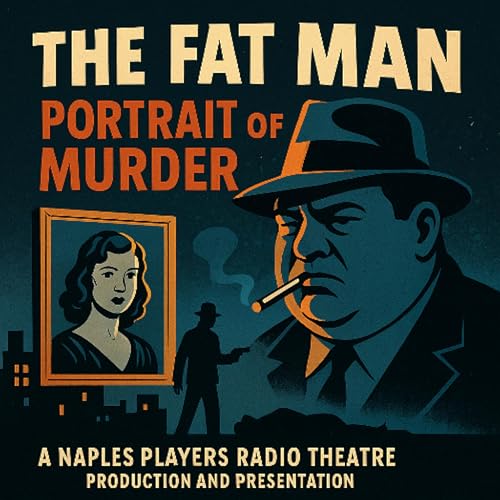
  • Fat Man_Portrait_of_murder
    Dec 3 2025
    Weight… 239 pounds. Fortune… Danger.” With those words — and the creak of a drugstore scale — 1940s radio audiences were introduced to one of the most distinctive sleuths of the Golden Age of Detective Drama: Brad Runyon, The Fat Man. Created (at least in name) by famed mystery writer Dashiell Hammett, The Fat Man premiered on ABC Radio in January 1946 and ran for five suspense-filled years. The title role was played by J. Scott Smart, whose deep, sardonic voice gave Runyon the perfect mix of toughness, intelligence, and dry humor. Beneath the tongue-in-cheek title was a detective every bit as capable as Sam Spade or Philip Marlowe — shrewd, streetwise, and always a step ahead of danger. Each week, listeners followed Runyon through smoky backrooms, city streets, and dark corners of post-war America as he solved murders, blackmail plots, and crimes of passion. The show’s hook — the detective’s size — became more than a gimmick; it was a symbol of confidence and self-possession. The Fat Man proved that courage and intellect, not appearance, were the real measures of a man. In 1951, Runyon made the leap to film in The Fat Man, directed by William Castle, with Smart reprising his role and circus legend Emmett Kelly appearing in a rare dramatic performance. Though only a handful of radio episodes survive, The Fat Man remains a classic example of American radio noir — a blend of wit, grit, and danger that still tips the scales of suspense. This Naples Players Radio Theatre production features the vocal talents of Jim Heffernan, Kenneth Wetcher, Eric Sivertson, Vic Caroli, Pam Dollak, Betty Whitmore and Michael Troop . This audio file was recorded, mixed and mastered by Michael Troop. All music and sound effects were obtained through a special license from pond5.com and may not be copied or reproduced for any reason.
    Show more Show less
    31 mins
  • Mary and the Fairy
    Nov 1 2025
    In 1941, at the height of radio’s golden age, writer-director Norman Corwin—the poet laureate of the airwaves—penned a satirical fable that sparkled with humor and humanity. Mary and the Fairy debuted on the Columbia Workshop, with Elsa Lanchester and Ruth Gordon lending their comic brilliance to a story that pokes gentle fun at American advertising, wish fulfillment, and the dream of instant happiness. The play follows Mary Pooter, a sweet but simple shopgirl from Punxsutawney, Pennsylvania, who wins a radio contest sponsored by Crinkly-Crunkly Bread—“Nature’s Own All-Out Campaign to Build Sturdy Bodies and Strong Nerves.” Her prize? A visit from the company’s Good Fairy, who promises to grant her five wishes. Unfortunately, this particular fairy is less enchanted than overworked—a weary cog in a corporate promotion machine whose magic, like most advertising promises, comes with fine print. As Mary’s dreams unravel—romance, fame, sophistication, and all—Corwin’s script veers from whimsy to poignancy, reminding us that no magic wand can grant self-worth or love. Mary and the Fairy is both poignant and comedic, a wry commentary on consumer culture that still feels surprisingly fresh today. In this Naples Players Radio Theatre revival, the story takes on new resonance—a laugh, a sigh, and a knowing nod to anyone who’s ever wished for more than life could deliver.
    Show more Show less
    31 mins