• Dad Bod, Big Heart, Spectrum Smart with Brad and Nathan
    Mar 25 2026

    Send us Fan Mail

    This episode of "The Polaris Connection" podcast focuses on the role of fathers in parenting, particularly in families with autistic children. The hosts discuss the common perception that mothers are more involved in the care of autistic children and emphasize the importance of fathers being actively engaged. They explore topics such as the difference between responding and reacting, the significance of understanding rather than trying to "fix" children, and the unique roles fathers play in providing emotional support and play.

    The episode highlights the importance of acceptance and understanding in parenting, encouraging fathers to connect with their children through play and intentional involvement. The hosts share personal anecdotes and humor, including dad jokes, to illustrate their points and make the conversation engaging. They also discuss studies that show the positive impact of involved fathers on children's empathy and social relationships.

    Overall, the episode aims to motivate fathers to be more intentional and engaged in their parenting roles, emphasizing the value of connection, play, and understanding in fostering healthy family dynamics.

    Share this episode with a father who works hard on being there for his kids.


    Follow us on Instagram at PolarisAcademySocial and reach us at Info@PolarisAcademy.com

    Show more Show less
    34 mins
  • The Hidden Power of Connection in Autism: How Small Triumphs Change Everything
    Mar 18 2026

    Send a text

    Are we really giving our kids the best shot at a full life? Here's what Carrie Cariello has learned from the stories and struggles of parents navigating autism.
    Drop a 💙 if you're doing your best and needed to hear this today.
    As a parent of a child with autism, we’ve seen how small moments of connection, like petting a dog or sharing a cookie are real victories.
    Our guest, Carrie shares how understanding meltdowns, building safety, and loving on purpose can transform our approach and help our kids thrive.
    It’s not about fixing, they’re not puzzles to solve, but lives to love deeply.

    Worth thinking about.

    Remember, every step forward is a win.

    https://carriecariello.com/

    #AutismJourney #ParentingWithLove #AutismSupport #ColorfulMondays

    Follow us on Instagram at PolarisAcademySocial and reach us at Info@PolarisAcademy.com

    Show more Show less
    46 mins
  • Care 4 the Caregivers: Support and Resources for YOU
    Mar 11 2026

    Send a text

    This episode features Dr. Gabrielle Ficchi and Michele Thorne discussing Care for the Caregivers, an Arizona-based nonprofit, with hosts Brad Broyles and Nathan Palmer. They cover the organization’s founding story, mission to support caregivers of children with disabilities, and efforts to combat caregiver isolation through therapy, parent training, and community events.

    The conversation emphasizes disability pride, the social model of disability, and the principle of presumed competency; encouraging independence and practical skills while avoiding overprotection. Practical engagement steps are highlighted and resources designed to help families build their village and stay connected. The episode gives reassurance that families are not alone and it is important to care for yourself as a caregiver.

    Follow us on Instagram at PolarisAcademySocial and reach us at Info@PolarisAcademy.com

    Show more Show less
    43 mins
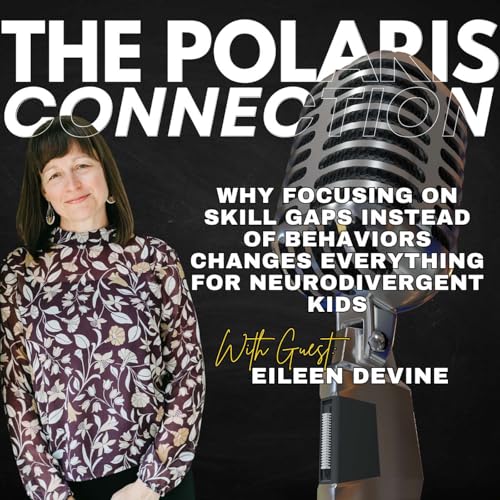
  • Why Focusing on Skill Gaps Instead of Behaviors Changes Everything for Neurodivergent Kids
    Mar 4 2026

    Send a text

    Listen as our guest, Eileen Devine discusses Brain First Parenting, focusing on supporting neurodivergent children by understanding their unique brain functions and nervous systems rather than just their behaviors.

    Key themes include:

    • Brain-First Approach: Emphasizes the importance of recognizing neurodiversity as a difference, not a defect, and the need for tailored accommodations.
    • Behavior as a Symptom: Behaviors are seen as signals of underlying skills gaps and environmental mismatches, not character flaws.
    • Cognitive and Relational Skills: Differentiates between cognitive skills (like executive function) and relational skills (like emotional regulation), both crucial for development.
    • Three Rs of Parenting: Regulate, relate, and reason are foundational for effective parenting, focusing on co-regulation and connection before reasoning.
    • Processing Pace: Highlights the need to adjust communication to match the child's processing speed.
    • Maturity Gap: Discusses the uneven development in children and the importance of responding to their developmental age.
    • Parent Well-being: Stresses the importance of parental self-care and community support to maintain resilience and effective parenting.

    The episode provides practical guidance for parents, emphasizing skill-building, environmental adaptation, and the importance of community support.

    Find more at https://www.eileendevine.com/

    Follow us on Instagram at PolarisAcademySocial and reach us at Info@PolarisAcademy.com

    Show more Show less
    47 mins
  • The Power of Early Identification and Intervention in Autistic Children
    Feb 26 2026

    Send a text

    At Starlight Behavior Academy, every decision is intentional. Every routine has purpose. Every moment matters.


    In this episode of Polaris Connection, Director Haley Palmer shares the powerful impact of early identification and early intervention for autistic children.
    From predictable morning routines to thoughtfully structured learning environments, Starlight Academy focuses on helping young learners feel safe, confident, and ready to engage each day. Because when children understand what to expect, they are free to learn, communicate, and grow.


    Early support doesn’t just change behavior.
    It changes outcomes.


    This conversation is a reminder that the smallest intentional choices made early in a child’s journey can create lifelong progress.


    🎧 Listen now and learn how early intervention empowers autistic children and the families who support them.

    Follow us on Instagram at PolarisAcademySocial and reach us at Info@PolarisAcademy.com

    Show more Show less
    40 mins
  • The Hidden Power of Educational Freedom for Neurodiverse Children
    Feb 18 2026

    Send a text

    Unlock the transformative power of educational freedom for children with autism and neurodiversity. In this episode, George Khalaf, an expert in public policy and founder of innovative school models, reveals how parents can champion their kids’ unique needs and unlock opportunities previously out of reach. Discover why the conventional system often falls short and how advocacy, storytelling, and strategic programs like ESA can create real change.

    This episode matters because long-term outcomes depend on the quality of early education—and many children with autism are underserved by a one-size-fits-all system. Missing out on this knowledge risks leaving neurodiverse kids behind, but with the insights shared here, you can be a catalyst for change. Whether you’re a parent, educator, or policy advocate, this conversation will inspire you to leverage every tool and voice to create lasting impact.

    George, managing partner at Polaris Academy and advocate for educational innovation, brings a wealth of experience from the public policy arena, helping launch programs nationwide that give children better opportunities. His story is rooted in personal passion and a commitment to fairness—all driven by his faith in tailored, inclusive education.

    If you're passionate about giving every child a fighting chance—especially those on the autism spectrum—this episode is essential listening. Use this insight to turn frustration into action and learn how your voice can make a difference. Together, we can build a future where educational options aren’t just available—they're designed for every child's success.

    Follow us on Instagram at PolarisAcademySocial and reach us at Info@PolarisAcademy.com

    Show more Show less
    46 mins
  • Protecting Autism Services: What Families Need to Know Right Now
    Feb 11 2026

    Send a text

    In this episode of The Polaris Connection, Brad and Nathan sit down with Ann Monahan, Board President of the Arizona Autism Coalition and longtime healthcare and policy advocate, to talk about how autism and IDD services are changing and what families can do right now to stay informed and prepared.
    Ann shares how the Arizona Autism Coalition brings together families, providers, educators, insurers, and legislators to collaborate, share resources, and solve problems together — with a strong focus on facts, not sales pitches.

    🧭 Key Takeaway for Parents
    Do not panic — but do get informed.
    Ann emphasizes that families do not need to attend every meeting or become policy experts, but they do need to know where to get solid, factual information and how to understand their child’s services and benefits. Gather your records, understand your insurance, ask questions, and stay connected to trusted organizations.


    Empowered parents are better prepared to navigate changes and advocate for quality care.

    Follow us on Instagram at PolarisAcademySocial and reach us at Info@PolarisAcademy.com

    Show more Show less
    45 mins
  • Why Most Autism Environments Fail and How Small Changes Make a Big Difference
    Feb 4 2026

    Send a text

    Discover innovative home and school environment strategies to support children on the autism spectrum. Host Brad and Nathan explore practical design tips, sensory regulation tools, and neurological insights that can transform daily living spaces into calming, engaging environments for autistic children.

    Key Points:

    • Tailor environment modifications to individual needs, avoiding one-size-fits-all solutions.
    • Use adaptive lighting, like Kelvin-range bulbs, to influence focus and regulation.
    • What are sensory alcoves for self-regulation.
    • Implement sound dampening with carpets and sound diffusers for sensory comfort.
    • Experiment with lighting, textures, and sound to support each child's wellbeing

    What is your favorite tip you use in your home to help your child feel comfortable and not overstimulated?

    Follow us on Instagram at PolarisAcademySocial and reach us at Info@PolarisAcademy.com

    Show more Show less
    35 mins