Episodes

  • When Democracy Fell: The Wilmington Coup of 1898 | Guy Hill
    Mar 23 2026

    In 1898, a democratically elected government in Wilmington, North Carolina was overthrown in a violent coup, the only successful coup d’état in United States history. For decades, the truth of what happened was buried.

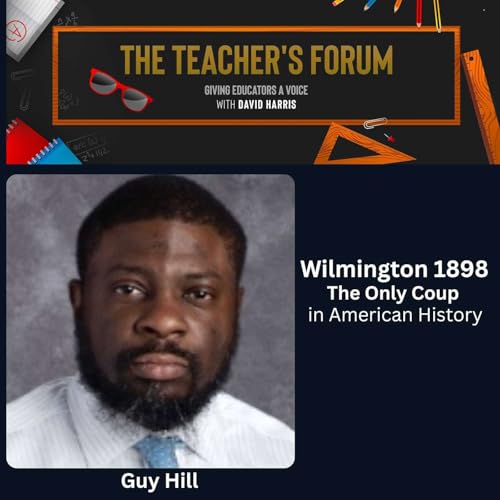
    In this episode of The Teacher’s Forum, David speaks with Guy Hill about the Wilmington Coup of 1898 and the destruction of a thriving Black community. Together, they unpack how white supremacist violence reshaped the city, why this history was suppressed, and what it reveals about the fragility of democracy in America.

    Guy also reflects on his journey into education and his commitment to teaching African American history with honesty and care. This conversation connects Wilmington to other moments of racial violence, including Tulsa, and challenges us to confront the stories we’ve been taught and the ones we haven't.

    This is not just a history lesson. It is a reckoning.

    Send us a text with your thoughts or ideas, and follow and subscribe to The Teacher’s Forum so you don’t miss future episodes.

    Join the Conversation:

    • david@theteachersforum.org
    • @theteachersforum.bsky.social
    • X (formerly Twitter) @theforum1993

    Please subscribe, share and leave us a review wherever you listen to podcasts. Help us amplify the voices and issues of K-12 educators all over the world.

    Show more Show less
    55 mins
  • Teaching Islam in America | Dr. Celene Ibrahim
    Mar 9 2026

    Send us a text message and let us know what you think and for ideas for future episodes.

    In this episode of The Teacher’s Forum, David speaks with Dr. Celene Ibrahim, about teaching Islam in America, religious misconceptions, and how educators can approach religion in the classroom. They discuss her personal journey from Catholicism to Islam, the role of religion in public life, and how educators can approach complex religious topics in the classroom. Dr. Ibrahim also addresses common misconceptions about Islam, the historical presence of Muslims in America, and the importance of fostering thoughtful dialogue and deeper understanding across religious and cultural differences.

    Join the Conversation:

    • david@theteachersforum.org
    • @theteachersforum.bsky.social
    • X (formerly Twitter) @theforum1993

    Please subscribe, share and leave us a review wherever you listen to podcasts. Help us amplify the voices and issues of K-12 educators all over the world.

    Show more Show less
    54 mins
  • Black History at 100: Resilience, Resistance, and Responsibility in an Age of Backlash
    Feb 24 2026

    Send us a text message and let us know what you think and for ideas for future episodes.

    In this special episode of The Teacher’s Forum, David shares the keynote address he delivered at Providence Day School’s Black History Month celebration, marking one hundred years since Carter G. Woodson founded Negro History Week, the foundation of what would become Black History Month.

    Drawing on Toni Morrison’s assertion that “definitions belong to the definers,” David reflects on Woodson’s determination to build an institution that would allow Black people to research, write, and teach their own history. He situates Woodson’s work within the violent and contested landscape of the late nineteenth and early twentieth centuries and considers what it means to define ourselves when Black history is under fierce attack.

    At the heart of the address is a central question: What does Black history teach us in this challenging moment? David offers three enduring lessons, resilience, resistance, and responsibility, and invites listeners to consider how those lessons shape both our understanding of the past and our obligations in the present.

    Join the Conversation:

    • david@theteachersforum.org
    • @theteachersforum.bsky.social
    • X (formerly Twitter) @theforum1993

    Please subscribe, share and leave us a review wherever you listen to podcasts. Help us amplify the voices and issues of K-12 educators all over the world.

    Show more Show less
    19 mins
  • AI in Education: Jeffrey Riley on AI Literacy, Teachers, and the Future of Learning
    Feb 3 2026

    Send us a text message and let us know what you think and for ideas for future episodes.

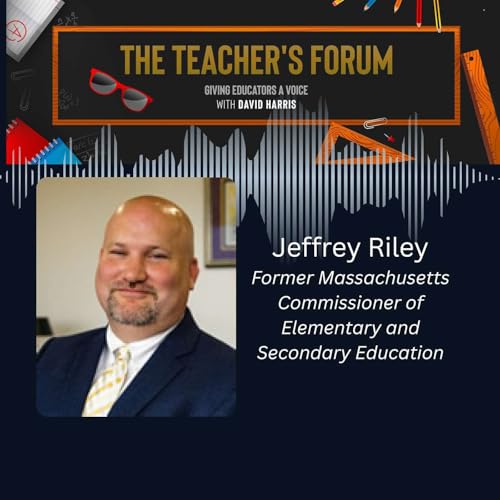
    In this episode of the Teachers Forum, David speaks with Jeffrey Riley, former Massachusetts Commissioner of Elementary and Secondary Education, about the intersection of artificial intelligence and education. They discuss the importance of AI literacy for both educators and students, the potential benefits and pitfalls of AI in the classroom, and the evolving role of teachers in an AI-driven world. Jeff emphasizes the need for educators to understand AI's capabilities and limitations, and the importance of teaching students to critically evaluate AI-generated information. The conversation also touches on the challenges of bias in AI systems and the necessity of democratizing access to AI literacy for all students.

    To reach Jeffrey Riley and learn more about his organization visit dayofai.org


    Join the Conversation:

    • david@theteachersforum.org
    • @theteachersforum.bsky.social
    • X (formerly Twitter) @theforum1993

    Please subscribe, share and leave us a review wherever you listen to podcasts. Help us amplify the voices and issues of K-12 educators all over the world.

    Show more Show less
    1 hr and 7 mins
  • Where Do We Go from Here: Chaos or Community? Ernest Crim III on Teaching Martin Luther King Jr. Honestly in an Age of American Backlash
    Jan 19 2026

    Send us a text message and let us know what you think and for ideas for future episodes.

    In this special episode of the Teachers Forum, David is joined by Emmy-nominated producer and anti-racist educator Ernest Crim III to honor the legacy of Dr. Martin Luther King Jr. on his 97th birthday. Together, they delve into the complexities of King's later years, exploring his evolving views on economic justice, non-violence, and the ongoing struggle for civil rights. Through a rich dialogue, they challenge listeners to reflect on King's question, "Where do we go from here: chaos or community?" and consider its relevance in today's socio-political climate.

    If you would like to contact Ernest you can reach him by visiting his website: ernestcrimm.com

    Speech: Where Do We Go From Here - August 16, 1967

    Where do We Go From Here: Chaos or Community by Martin Luther King, Jr.


    Join the Conversation:

    • david@theteachersforum.org
    • @theteachersforum.bsky.social
    • X (formerly Twitter) @theforum1993

    Please subscribe, share and leave us a review wherever you listen to podcasts. Help us amplify the voices and issues of K-12 educators all over the world.

    Show more Show less
    1 hr and 1 min
  • Gender and the Education Gap: Dr. Charlotte Jacobs and Dr. Roderick Carey on Boys, Girls, and Student Belonging
    Jan 5 2026

    Send us a text message and let us know what you think and for ideas for future episodes.

    In this thought-provoking episode of The Teacher’s Forum, David Harris is joined by Charlotte Jacobs and Roderick L. Carey to examine the narratives shaping conversations about gender and education. The episode opens with a classroom incident that raises questions about how boys experience discipline, attention, and belonging in schools (01:44), before turning to reactions to the CBS documentary Boys to Men and the media framing of a so-called “boy crisis” (04:05).

    The conversation critiques this framing by situating it in historical and social context, including how Black boys have long been viewed as problems to be managed rather than young people to be supported (06:35). Dr. Jacobs challenges zero-sum thinking around resources for girls and boys, emphasizing that equity work for girls addressed centuries of exclusion and remains unfinished (09:25). Dr. Carey reframes the idea of boys being “overlooked,” arguing instead that Black boys are hyper-visible in discipline but emotionally invisible in schools (12:56).

    The discussion then explores how boys are navigating a changing cultural landscape, including the pull of the “manosphere” and growing skepticism about traditional college-to-career pathways (15:00). Both guests stress the importance of validating boys’ interior lives (20:30) and moving from a narrow focus on achievement toward self-actualization and well-being (24:45). The episode concludes with a call to reimagine schools as centers of care rather than test-driven institutions (29:05), along with recommended readings that center healing, love, and human flourishing in education (32:45).


    Join the Conversation:

    • david@theteachersforum.org
    • @theteachersforum.bsky.social
    • X (formerly Twitter) @theforum1993

    Please subscribe, share and leave us a review wherever you listen to podcasts. Help us amplify the voices and issues of K-12 educators all over the world.

    Show more Show less
    1 hr and 3 mins
  • Teaching Through Crisis in Charlotte: Dr. James Ford on Immigration Raids, Student Safety, and Educational Equity
    Nov 21 2025

    Send us a text message and let us know what you think and for ideas for future episodes.

    In this episode of The Teacher’s Forum, David Harris speaks with Dr. James Ford about the recent immigration enforcement actions in Charlotte and their impact on students, families, and schools (02:35). Dr. Ford discusses what educators must do during moments of crisis to ensure students’ physical and emotional safety (05:46), the pressures teachers feel to remain silent (10:30), and why claims of classroom “objectivity” can become harmful when discussing issues of human dignity (14:40).

    The conversation then turns to the values public schools claim versus the values they practice (21:00), the fragility of rights like those affirmed in Plyler v. Doe (25:42), and the trauma today’s youth navigate in a digital age (29:00). Dr. Ford offers historical insight into the role of Black private schools as spaces of autonomy and safety (33:15), distinguishes between reform and true transformation in education (36:00), examines the “illusion of inclusion” many students of color experience (38:50), and reflects on the teacher who deeply shaped his own journey (41:10).

    If you want, I can also produce a one-sentence summary for Spotify/Apple Podcasts.

    To contact Dr. Form and learn more about the Center for Racial Equity in Education (CREED) please visit their site at https://www.creed-nc.org/

    Join the Conversation:

    • david@theteachersforum.org
    • @theteachersforum.bsky.social
    • X (formerly Twitter) @theforum1993

    Please subscribe, share and leave us a review wherever you listen to podcasts. Help us amplify the voices and issues of K-12 educators all over the world.

    Show more Show less
    1 hr and 6 mins
  • From ER Doctor to Middle School Teacher: Dr. Keith Pochick on Trust, Equity, and Education Reform
    Nov 17 2025

    Send us a text message and let us know what you think and for ideas for future episodes.

    In this episode of The Teacher’s Forum, David sits down with Dr. Keith Pochick, an ER doctor turned middle school teacher, to explore his remarkable journey from emergency medicine to the classroom at Providence Day School in Charlotte. Dr. Pochick reflects on what pushed him to leave the ER and pursue teaching (01:37), sharing the rewards and challenges of life as an emergency physician (05:24) and how the changing landscape of healthcare shaped his views on equity (08:46). Throughout the conversation, he discusses the role of trust in both patient care and student learning, the inequities he witnessed in healthcare, and why he believes meaningful education reform is urgently needed.

    Dr. Pochick discusses the deep inequities he witnessed in healthcare and how those disparities affect patient outcomes (11:49). He also explains why building trust is foundational—both when treating patients and when supporting students (18:50). Later, he opens up about the moment he decided he could no longer continue practicing medicine (25:13) and what it felt like to navigate the transition into teaching (29:46).

    David and Dr. Pochick explore the striking common threads between medicine and education (34:57), from human connection to managing anxiety in high-stakes moments. Dr. Pochick then reflects on the ideas behind his book Tickled Soul and the philosophical journey that shaped it (38:08). The conversation turns to the future of education at (41:03), where he considers whether meaningful reform—or outright revolution—is needed to address issues of equity, funding, and student support.

    The episode closes with Dr. Pochick honoring the influential teachers who shaped his own life and career (43:28).


    Join the Conversation:

    • david@theteachersforum.org
    • @theteachersforum.bsky.social
    • X (formerly Twitter) @theforum1993

    Please subscribe, share and leave us a review wherever you listen to podcasts. Help us amplify the voices and issues of K-12 educators all over the world.

    Show more Show less
    38 mins