Episodes

  • Why is Cuba in crisis?
    Mar 19 2026
    Cuba is on the brink of collapse – a scenario that 13 U.S. presidents have tried to engineer with no success. Today on the show, the making of the Cuban crisis and what might come next.

    Guests:
    Eloy Viera, lawyer and journalist for El Toque

    Lillian Guerra, Cuban-American history professor at the University of Florida

    Maria De Los Angeles Torres, professor of Latin American and Latino Studies at the University of Illinois in Chicago

    To access bonus episodes and listen to Throughline sponsor-free, subscribe to Throughline+ via Apple Podcasts or at plus.npr.org/throughline.

    To manage podcast ad preferences, review the links below:

    See pcm.adswizz.com for information about our collection and use of personal data for sponsorship and to manage your podcast sponsorship preferences.

    Learn more about sponsor message choices: podcastchoices.com/adchoices

    NPR Privacy Policy
    Show more Show less
    48 mins
  • The confederates who left the USA
    Mar 17 2026
    After the Civil War, while America was rebuilding itself, some Southerners made a different kind of move — they packed up and left. Today on the show: the Confederados, the American settlers who fled to Brazil chasing wealth, land, and a chance to keep slavery alive.

    To access bonus episodes and listen to Throughline sponsor-free, subscribe to Throughline+ via Apple Podcasts or at plus.npr.org/throughline.

    To manage podcast ad preferences, review the links below:

    See pcm.adswizz.com for information about our collection and use of personal data for sponsorship and to manage your podcast sponsorship preferences.

    Learn more about sponsor message choices: podcastchoices.com/adchoices

    NPR Privacy Policy
    Show more Show less
    17 mins
  • 3 key moments that led to the U.S.-Iran war
    Mar 12 2026
    Military confrontations, early-morning attacks, and digital warfare: the story of Iran and the U.S. from the 1979 Iranian revolution to the fraught moment we're in today. This episode originally ran in 2019 as Rules of Engagement. You can find more of Throughline's coverage into the origins of the conflict in the Middle East here.

    Guests:
    Karim Sadjadpour, senior fellow at the Carnegie Endowment for International Peace

    Michael Eisenstadt, director of the Washington Institute's military and security studies program

    Kim Zetter, writer for WIRED magazine and author of Countdown to Zero Day: Stuxnet and the Launch of the World's First Digital Weapon

    To access bonus episodes and listen to Throughline sponsor-free, subscribe to Throughline+ via Apple Podcasts or at plus.npr.org/throughline.

    To manage podcast ad preferences, review the links below:

    See pcm.adswizz.com for information about our collection and use of personal data for sponsorship and to manage your podcast sponsorship preferences.

    Learn more about sponsor message choices: podcastchoices.com/adchoices

    NPR Privacy Policy
    Show more Show less
    48 mins
  • Everyone should have a voice
    Mar 10 2026
    The story of Frederick Douglass’s fight for universal suffrage from the Civil War to the rise of Jim Crow.

    To access bonus episodes and listen to Throughline sponsor-free, subscribe to Throughline+ via Apple Podcasts or at plus.npr.org/throughline.

    To manage podcast ad preferences, review the links below:

    See pcm.adswizz.com for information about our collection and use of personal data for sponsorship and to manage your podcast sponsorship preferences.

    Learn more about sponsor message choices: podcastchoices.com/adchoices

    NPR Privacy Policy
    Show more Show less
    22 mins
  • Iran and the Jewish people: An alliance before war
    Mar 5 2026
    Israel and Iran have been in almost constant conflict for nearly 50 years. Media tends to frame the violence as endemic, and inevitable — but it’s not.

    Between the creation of Israel in 1948 and Iran’s Islamic Revolution in 1979, the countries cooperated, if cautiously. And the bridge between them was one of the largest and oldest Jewish populations in the Middle East: a thriving community of Iranian Jews.

    Today on the show, the story of Iran and Israel, told through the life of Jewish Iranian Habib Elghanian.

    Guests:
    Roya Hakakian, author of Journey from the Land of No: A Girlhood Caught in Revolutionary Iran

    Shahrzad Elghanayan, author of Titan of Tehran: From Jewish Ghetto to Corporate Colossus to Firing Squad - My Grandfather's Life

    Meir Javedanfar, Israeli-Iranian political scientist and teacher at Reichman University
    To access bonus episodes and listen to Throughline sponsor-free, subscribe to Throughline+ via Apple Podcasts or at plus.npr.org/throughline.

    To manage podcast ad preferences, review the links below:

    See pcm.adswizz.com for information about our collection and use of personal data for sponsorship and to manage your podcast sponsorship preferences.

    Learn more about sponsor message choices: podcastchoices.com/adchoices

    NPR Privacy Policy
    Show more Show less
    52 mins
  • We the People, Redefined
    Mar 3 2026
    When the 14th amendment was ratified after the Civil War, it redefined what it meant to be an American. Today on the show, we bring you the story of how the 14th amendment was created, and the intention behind equal protection for all.


    To access bonus episodes and listen to Throughline sponsor-free, subscribe to Throughline+ via Apple Podcasts or at plus.npr.org/throughline.

    To manage podcast ad preferences, review the links below:

    See pcm.adswizz.com for information about our collection and use of personal data for sponsorship and to manage your podcast sponsorship preferences.

    Learn more about sponsor message choices: podcastchoices.com/adchoices

    NPR Privacy Policy
    Show more Show less
    19 mins
  • Why Super PACs have more power than ever in elections
    Feb 26 2026
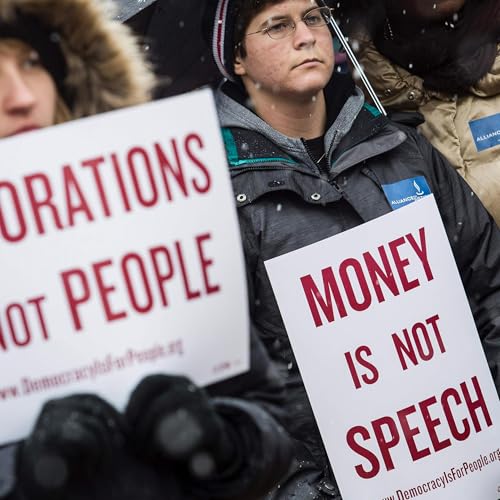
    What’s one thing people across the U.S. can agree on? Hint – it’s about money. Voters from all political parties overwhelmingly see unlimited spending in elections as a threat to our democracy. So if most people don’t like all this money in politics, then who does? The answer, on this episode of Throughline.

    This episode has been updated to eliminate an audio glitch.

    Guests:

    Michael Kang, Class of 1940 Professor of Law at Northwestern Pritzker School of Law.

    Henrik Schatzinger, professor of political science at Ripon College and author of forthcoming book Super PACs in the City: How Outside Money is Reshaping Local Elections

    To access bonus episodes and listen to Throughline sponsor-free, subscribe to Throughline+ via Apple Podcasts or at plus.npr.org/throughline.

    To manage podcast ad preferences, review the links below:

    See pcm.adswizz.com for information about our collection and use of personal data for sponsorship and to manage your podcast sponsorship preferences.

    Learn more about sponsor message choices: podcastchoices.com/adchoices

    NPR Privacy Policy
    Show more Show less
    50 mins
  • How the Civil War changed how we vote
    Feb 24 2026
    When President Abraham Lincoln signed the Emancipation Proclamation in the middle of the Civil War, he was not just changing the terms of peace, he was risking his own political future and forcing the nation to confront what its democracy really stood for. On this week’s episode, how the presidential election of 1864 changed the way we vote and who we are as a country.


    To access bonus episodes and listen to Throughline sponsor-free, subscribe to Throughline+ via Apple Podcasts or at plus.npr.org/throughline.

    To manage podcast ad preferences, review the links below:

    See pcm.adswizz.com for information about our collection and use of personal data for sponsorship and to manage your podcast sponsorship preferences.

    Learn more about sponsor message choices: podcastchoices.com/adchoices

    NPR Privacy Policy
    Show more Show less
    16 mins