• How bipolar and ADHD shaped Heston Blumenthal’s creative genius
    Mar 20 2026

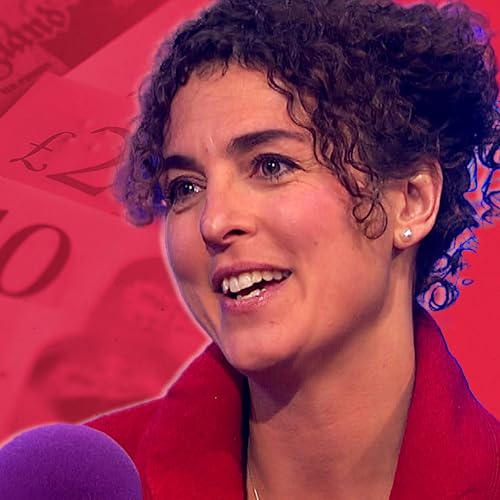
    Heston Blumenthal is one of the world’s most innovative chefs, known for transforming the way we think about food, flavour and the dining experience. From his self-taught beginnings to building one of the most celebrated restaurants in the world, his career has been defined by curiosity, experimentation and a refusal to follow convention. But beyond the kitchen, Blumenthal has also been navigating deeply personal mental health challenges that almost led him to death at one point.

    In 2023, his wife Melanie Ceysson had him sectioned under the Mental Health Act following a severe manic episode and bipolar diagnosis.

    On this episode of Ways to Change the World, Krishnan Guru-Murthy speaks to Heston Blumenthal about his approach to mindful and sustainable eating, living with ADHD and bipolar disorder, and why he is determined to challenge stigma.


    Show more Show less
    47 mins
  • Eric Schlosser: Why the real cost of cheap food is hidden
    Mar 13 2026

    My guest this week is Eric Schlosser, the investigative journalist and author whose work has fundamentally changed how we think about what we eat. Fast Food Nation was a landmark book that exposed the abuse of animals and the exploitation of workers at the heart of America's food industry.

    Now, 25 years after it was first published, Schlosser says he is astonished that not only has the industry failed to improve, in many ways it has gotten worse. And yet, despite this, he still believes change is possible.


    Show more Show less
    41 mins
  • Ece Temelkuran: democracies don’t collapse overnight
    Mar 6 2026

    Warning: moderate strong language

    Ece Temelkaran is an award-winning journalist and novelist who has spent years warning that the collapse of democracy rarely announces itself with a bang. Instead, it happens gradually - institution is weaken, truth is eroded and what once felt unthinkable becomes normal.

    Ece knows this first hand. After being fired from her newspaper in Turkey amid mounting political pressure, she watched her country slide towards what she says is authoritarianism, a story she believes is no longer uniquely Turkish but part of a wider global pattern. In her writing, she argues that the real danger isn't just strong men or populist leaders, but how easily societies adapt to them. Her latest book, Nation of Strangers, explores belonging and exile. But beneath it lies the same urgent question that has defined much of her work. How do democracies fail? And can they still be saved?

    On this episode of Ways to Change the World, Krishnan Guru-Murthy speaks to Ece about democratic backsliding, the moral crisis she believes sits at the heart of modern politics, the experience of exile, and why rebuilding democracy may require not just political change, but a deeper transformation in how we see ourselves and each other.

    This interview was recorded on 13 February 2026.


    Show more Show less
    39 mins
  • Guardian editor Katharine Viner: “Facts are essential, but they’re not enough”
    Feb 27 2026

    Katharine Viner has spent the past decade running one of the most influential news organisations in the world, steering it through profound industry change, digital upheaval and intense political pressure. She became the first woman to lead The Guardian in its 205-year history. Under her editorship the paper has transformed its funding model, expanded globally, and fought to preserve the idea of independent public interest journalism at a time when trust in the media is under sustained strain.

    On this episode of Ways to Change the World, Krishnan Guru-Murthy speaks to Katharine about defending liberal values in a polarised age, navigating internal editorial battles during turbulent political moments, and why The Guardian sees itself as a global mainstream newsroom.

    Show more Show less
    42 mins
  • ‘We are being beaten into submission with lies’ - writer George Saunders on Trump, truth and power
    Feb 20 2026

    “It's really a deep irony that this guy who has really never set foot in a normal American street was mistaken as a man of the people”, writer George Saunders says of the US President, Donald Trump. His work has long centred on the very people who live with the consequences of decisions made far above them, ordinary and fallible individuals navigating increasingly hostile conditions.

    In a world marked by political lies, climate denial and the erosion of shared reality, Saunders’ fiction interrogates moral ambiguity, human weakness and the forces that draw individuals toward destructive choices.

    In this episode of Ways to Change the World, Krishnan Guru-Murthy speaks to Saunders about the collapse of truth in public life, why satire no longer pierces political leaders who feel no shame, and whether storytelling can still help us understand one another in an age of polarisation.

    Show more Show less
    42 mins
  • Clara Mattei: capitalism is not natural - it’s enforced
    Feb 13 2026

    Clara Mattei is an economist who wants us to rethink the idea that capitalism is simply the natural order of things.

    She is an author and professor of economics whose work explores how economic ideas become tools of power, shaping policy while masking the political decisions beneath.

    Her new book, Escape from Capitalism, argues that many of the problems that we see as inevitable - poverty, unemployment, inflation - are built into the system and shored up by models and theories designed to convince us that there is no alternative.

    On this episode of Ways to Change the World, Krishnan Guru-Murthy speaks to Mattei about whether there is an alternative to capitalism.


    Show more Show less
    38 mins
  • How Europe can end the Russia-Ukraine war - Kishore Mahbubani
    Feb 5 2026

    For decades veteran Singaporean diplomat Kishore Mahbubani has challenged what he sees as Western complacency, warned of the irreversible rise of Asia, and argued that the global order must adapt to a world no longer dominated by Europe and the United States.

    And now it appears Western leaders have caught up with him as a new world order is declared in the wake of the “rupture”, as Canadian Prime Minister Mark Carney called it, of President Trump’s second term.

    Born into poverty in Singapore, he rose through the country’s foreign service to become its ambassador to the United Nations and then president of the UN security council.

    He joined Krishnan Guru-Murthy on this episode of Ways to Change the World.

    Show more Show less
    36 mins
  • ‘Existential threat’ - Mehdi Hasan on Trump, Farage and Gaza
    Jan 26 2026

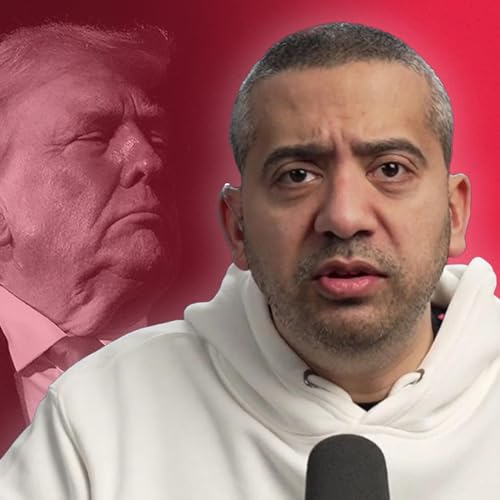
    Mehdi Hasan is a prominent broadcast journalist in America who’s forthright anti-Trump and pro-Palestinian opinions have thrust him to the fore of many of the big issues facing the country today.

    He is the founder and editor-in-chief of Zeteo, previously hosting The Mehdi Hasan Show on MSNBC, and his work straddles the line between conventional journalism and advocacy-driven argument.

    In this episode of Ways to Change the World he tells Krishnan Guru-Murthy why he believes American democracy is facing an “existential threat’, what he expects to happen next in Gaza and whether Labour can withstand the rise of Nigel Farage’s Reform UK.

    In the podcast, Mehdi makes accusations against several US companies.

    Comcast rejects any suggestions it may have engaged in misconduct by donating to the new $400 million ballroom under construction at the Trump White House. Responding to Sen. Elizabeth Warren, who asked the media and Internet company if there had been a quid pro quo, they said: “Comcast’s pledged donation included no specific limitations or conditions on how the proceeds were to be used or spent. Furthermore, Comcast made the donation with no expectations of receiving anything in return and the implication that the donation has anything to do with a potential transaction involving Warner Brothers Discovery is categorically false.”

    When Paramount settled their lawsuit with President Trump they said the money was going to be allocated to Trump's future presidential library, not paid to him "directly or indirectly".

    The company also noted the settlement does not include a statement of apology or regret.

    Responding to reports in the Financial Times that a donor to Donald Trump’s reelection campaign had received the first barrels of oil obtained from Venezuela after America seized president Maduro, a White House spokesman said: “President Trump always does what is in the best interest of the American people, such as brokering this historic energy deal with Venezuela immediately following the arrest of narcoterrorist Nicolás Maduro. The media’s continued attempts to fabricate conflicts of interest are a tired attempt to distract from the incredible work only this president is capable of achieving.”

    The White House has also rejected accusations of corruption.

    Israel denies accusations of genocide and ethnic cleansing.

    Show more Show less
    47 mins