• Cynthia Kenyon: Switching on Resilience
    Mar 18 2026

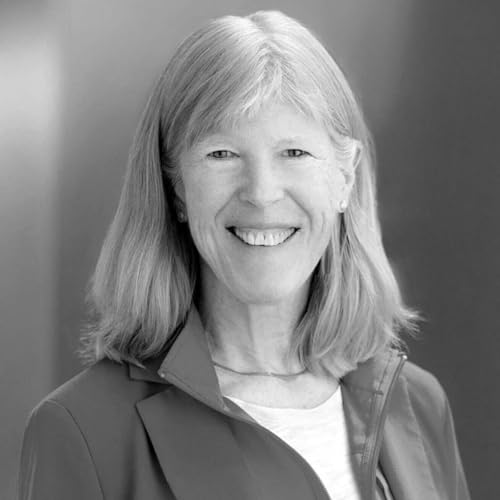
    Eric Verdin sits down with Dr. Cynthia Kenyon, a true pioneer in the field of geroscience and the Vice President of Aging Research at Calico. Dr. Kenyon recounts the revolutionary discovery that aging is not merely a process of "wearing out," but is a genetically regulated biological program. In 1993, Cynthia’s pioneering discovery that a single-gene mutation could double the lifespan of C. elegans roundworms while preserving function sparked an intensive study of the molecular biology of aging. The conversation explores how these findings translate from worms to mammals, the potential of drugs like Ozempic and Acarbose to extend human healthspan, and Dr. Kenyon’s proposal for a "World Healthspan Organization" to fund large-scale clinical trials for off-patent, low-cost compounds that currently lack traditional industry incentives.

    Cynthia Kenyon graduated valedictorian in chemistry and biochemistry from the University of Georgia in 1976 and received her PhD from MIT in 1981. She then did postdoctoral studies with Nobel laureate Sydney Brenner at the MRC Laboratory of Molecular Biology in Cambridge, UK. In 1986, she joined the University of California, San Francisco as a Professor of Biochemistry and Biophysics. Dr. Kenyon is a member of the US National Academy of Sciences, the American Academy of Arts and Sciences, and the Institute of Medicine and she is a past president of the Genetics Society of America. She is now the Vice President of Aging Research at Calico.

    Support the show

    Show more Show less
    38 mins
  • Ana Maria Cuervo: Cellular Recycling
    Mar 4 2026

    What if the secret to a longer, healthier life isn’t found in a new supplement or a complex medical procedure, but in your cells' own innate ability to "take out the trash"? In this episode, host Eric Verdin is joined by Dr. Ana Maria Cuervo, a pioneer in the biology of aging and professor at the Albert Einstein College of Medicine. The conversation explores the critical roles of proteostasis—the cell's protein quality control factory—and autophagy, the body's natural recycling system. Dr. Cuervo explains her discovery of Chaperone-Mediated Autophagy (CMA) and how keeping these cellular "cleaning crews" active can help prevent neurodegenerative diseases like Alzheimer’s and Parkinson’s. The episode concludes with actionable insights into how sleep, exercise, and meal timing can naturally jumpstart these longevity-promoting pathways.

    Ana Maria Cuervo is a Spanish-American physician, researcher, and cell biologist. She is a professor in developmental and molecular biology, anatomy and structural biology, and medicine and co-director of the Institute for Aging Studies at the Albert Einstein College of Medicine. She is best known for her research work on autophagy, the process by which cells recycle waste products, and its changes in aging and age-related diseases.

    Support the show

    Show more Show less
    47 mins
  • Jamie Justice: The New Metrics of Functional Aging
    Feb 18 2026

    XPRIZE Healthspan Executive Director Jamie Justice joins Brianna Stubbs to discuss the $101 million race to restore 10 years of muscle, cognitive, and immune function within a single year. Moving past binary "alive or dead" metrics—famously called the "toes test" in animal research—the conversation focuses on reclaiming functional independence through clinical trial innovation. Together they explore the potential of accessible markers like RDW (Red Cell Distribution Width), the risks of overlapping treatments, and how unlocking "dark data" can help shift medicine from treating isolated diseases to scaling human healthspan globally.

    Jamie is the Executive Vice President of the Health Domain at XPRIZE Foundation, and Adjunct Professor in Internal Medicine Section on Gerontology and Geriatric Medicine, and Sticht Center on Healthy Aging and Alzheimer’s Prevention at Wake Forest University School of Medicine (WFUSM). She is dedicated to Geroscience research that advances the hypothesis that by targeting the basic biology of aging the incidence of multiple age-related diseases can be delayed or prevented.

    Support the show

    Show more Show less
    35 mins
  • Tony Wyss-Coray: Rejuvenating the Brain
    Feb 4 2026

    In this episode, Eric Verdin, CEO of the Buck Institute, and Stanford University’s Dr. Tony Wyss-Coray discuss the groundbreaking science of brain rejuvenation through heterochronic parabiosis, a process where young blood factors are shown to restore cognitive function and potentially extend lifespan. Moving from the lab to the clinic, they explore the next frontier: Proteomic Clocks. By measuring thousands of proteins, scientists can now determine the biological age of individual organs, allowing for the detection of Alzheimer’s and other neurodegenerative diseases up to 15 years before symptoms appear. This shift toward high-precision organ tracking marks a new era in preventative geroscience and personalized longevity.

    Tony Wyss-Coray is a Professor of Neurology and Neurological Sciences and the Director of the Phil and Penny Knight Initiative for Brain Resilience at Stanford University. His lab studies brain aging and neurodegeneration with a focus on age-related cognitive decline and Alzheimer’s disease. The Wyss-Coray research team discovered that circulatory blood factors can modulate brain structure and function and factors from young organisms can rejuvenate old brains. Current studies focus on the molecular basis of the systemic communication with the brain by employing a combination of genetic, cell biology, and –omics approaches in killifish, mice, and humans. Wyss-Coray has presented his ideas at Global TED, the Tencent WE Summit, and the World Economic Forum. He co-founded Alkahest Inc. and several other companies targeting Alzheimer’s and neurodegeneration and has been the recipient of an NIH Director’s Pioneer Award, a Zenith Award from the Alzheimer’s Association, and a NOMIS Foundation Award.

    Support the show

    Show more Show less
    46 mins
  • George Church: Rewriting The Rules of Aging
    Jan 21 2026

    What if aging is less a fate and more an engineering challenge? We sit down with George Church to unpack a future where gene therapy, cellular reprogramming, and AI-driven delivery systems converge to extend healthspan—and possibly lifespan—without sacrificing identity or safety. From bowhead whales and cancer risk to ethics, trial rigor, and how to deliver rejuvenation to the brain, this is a deep dive into what’s coming next and what it will take to get there.

    George Church is Professor of Genetics at Harvard Medical School and Professor of Health Sciences and Technology at Harvard and the Massachusetts Institute of Technology (MIT). He is Director of the U.S. Department of Energy Technology Center and Director of the National Institutes of Health Center of Excellence in Genomic Science. He has received numerous awards including the 2011 Bower Award and Prize for Achievement in Science from the Franklin Institute and election to the National Academy of Sciences and Engineering.

    Support the show

    Show more Show less
    40 mins
  • Season 3 Trailer
    Jan 14 2026

    We're back! Meet our new hosts Eric Verdin, CEO of the Buck Institute, and Brianna Stubbs, Director of Translational Science at the Buck. We're excited to bring you new insights into the fast-moving science of longevity with guests such as George Church, Jamie Justice, Peter Attia, and many more.

    Support the show

    Show more Show less
    1 min
  • Nathan Price: Scientific Wellness and AI at the Forefront
    Jul 24 2024

    What do we really want from our healthcare system, and how can AI help us get it sooner? In our final episode of season two, Gordon talks with visionary systems biology expert Nathan Price about the emergence of scientific wellness, what we can learn from our digital twins, and how using AI to predict health outcomes can help us transform our understanding of aging and disease—potentially adding years of healthy life.

    Dr. Nathan Price is a distinguished scientist and leader in the field of healthy aging, holding dual roles as Professor and Co-Director of the Center for Human Healthspan at the Buck Institute for Research on Aging and Chief Scientific Officer at Thorne. He co-authored the bestselling book The Age of Scientific Wellness with Dr. Lee Hood, and has an extensive publication record, including over 200 scientific papers and contributions to prominent media outlets. Recognized as one of the National Academy of Medicine's Emerging Leaders in Health and Medicine in 2019, Dr. Price also serves on the Board on Life Sciences of the National Academies of Sciences, Engineering, and Medicine. His career includes significant positions such as CEO of Onegevity, a health AI company, and a decade-long tenure at the Institute for Systems Biology. Dr. Price's contributions to science and business have earned him numerous awards, including an NSF CAREER award and the Grace A. Goldsmith Award. He has also been elected a fellow of the American Institute for Medical and Biological Engineering and recognized as a Notable Leader in Healthcare by Crain's New York. His advisory roles span prestigious organizations like Roche, Providence St Joseph Health, and the American Cancer Society.

    Support the show

    Show more Show less
    33 mins
  • Luigi Ferrucci: Resilience as Medicine
    Jul 10 2024

    Few people have as much experience with patient care and long-term research as the celebrated geriatrician and epidemiologist Luigi Ferrucci. Listen in as he speaks with Gordon about his journey from acute care to population studies, the effective design of clinical trials, and moving towards predictive medicine so we can use our natural resilience to maintain health as we age.

    Dr. Luigi Ferrucci is a geriatrician and an epidemiologist who conducts research on the causal pathways leading to progressive physical and cognitive decline in older persons. In September 2002, he became the Chief of the Longitudinal Studies Section at NIA and the Director of the Baltimore Longitudinal Study on Aging. Dr. Ferrucci received a Medical Degree and Board Certification in 1980, a Board Certification in Geriatrics in 1982 and Ph.D. in Biology and Pathophysiology of Aging in 1998 at the University of Florence, Italy. Between 1985 and 2002 he was Chief of Geriatric Rehabilitation at the Department of Geriatric Medicine and Director of the Laboratory of Clinical Epidemiology at the Italian National Institute of Aging. During the same period, he collaborated with the NIA Laboratory of Epidemiology, Demography, and Biometry where he spent several periods as Visiting Scientist at NIH. Dr. Ferrucci has made major contributions in the design of many epidemiological studies conducted in the U.S. and in Europe, including the AKEA study of Centenarians in Sardinia and the Women's Health and Aging Study. He was also the Principal Investigator of the InCHIANTI study, a longitudinal study conducted in the Chianti Geographical area (Tuscany, Italy) looking at risk factors for mobility disability in older persons. In 2002, Dr. Ferrucci refined the design of the Baltimore Longitudinal Study of Aging to focus on the Geroscience Hypothesis, which states the pace of biological aging is the root cause of many age-related chronic diseases, as well as physical and cognitive disability. He has made major contributions to the literature and is one of the most cited scientists in the field of aging. Dr. Ferrucci has been Scientific Director at NIA since May 2011.

    Support the show

    Show more Show less
    46 mins