Episodes

  • Episode 24: Caleb Lara
    Mar 15 2026

    In this episode of Words on a Wire, host Will Rose speaks with Caleb Lara, whose work on social media and through community projects has brought renewed attention to the rich and often overlooked history of the borderland.

    Lara shares how a childhood fascination with downtown architecture grew into a lifelong passion for documenting the stories hidden in El Paso’s buildings, neighborhoods, and landscapes. Known for his engaging historical videos, he discusses how he researches local history—combining archival materials, oral histories, and conversations with descendants of key figures to uncover the personal stories behind the city’s past.

    The conversation ranges from surprising details about historic buildings and rumored underground tunnels to the ways El Paso has quietly influenced national and even global events. Lara also talks about his nonprofit initiative Builders of the Desert, which aims to preserve regional history, restore historic sites such as gravestones at Concordia Cemetery, and help residents reconnect with the cultural legacy of the borderland.

    At its heart, the discussion is about civic pride and historical awareness—how understanding the stories beneath our feet can help communities see their home in a new light.

    Show more Show less
    29 mins
  • Episode 23: Richie Marrufo
    Feb 23 2026

    In this episode of Words on a Wire, host Daniel Chacón sits down with poet, educator, and community organizer Richie Marrufo for a wide-ranging conversation about art, identity, and what it means to stay human in a digital world.

    They explore how AI is changing the way students write—and what may be lost when language becomes too polished. Marrufo reflects on teaching bilingual writers, balancing six classes a semester, and building one of El Paso’s most vibrant literary spaces through the Barbed Wire Open Mic Series. For him, poetry isn’t just something you publish—it’s something you perform, share, and build community around.

    The conversation turns deeply personal when Marrufo reads a new poem written after the passing of his father. He speaks about grief as “love that doesn’t know where to go,” and about the moon as witness to every version of ourselves.

    This episode is about authenticity in an age of algorithms, the power of live performance, creative burnout, aging, and the quiet work of sustaining a literary community. At its heart, it’s a conversation about connection—between teachers and students, poets and audiences, and the living and the lost.

    Show more Show less
    51 mins
  • Episode 22: Jessica Goudeau
    Feb 15 2026

    In this episode, host Will Rose sits down with journalist and author Jessica Goudeau to discuss her ambitious and deeply personal new book, We Were Illegal. After writing about refugee families rebuilding their lives in Texas, Goudeau began asking a question she had never considered about herself: how did her own family get here?

    What followed was a years-long investigation into her ancestry — and into the foundations of Texas history itself. Through archival research, family records, and hard conversations, Goudeau uncovered stories of land speculation, slavery, vigilante violence, erased Indigenous communities, and long-buried family secrets. Her book challenges the triumphalist myths many Texans learn in school and offers a fuller, more complicated picture of how the state was built.

    In this conversation, Goudeau discusses the writing process behind such an ambitious work of narrative nonfiction, the emotional weight of discovering uncomfortable truths about your own ancestors, the politics of history and textbook narratives, and why telling the whole story — even when it implicates your own family — is an act of responsibility rather than shame.

    This is a powerful conversation about memory, myth, erasure, and the courage it takes to confront the past.

    Show more Show less
    29 mins
  • Episode 21: Maria Esquinca
    Feb 15 2026

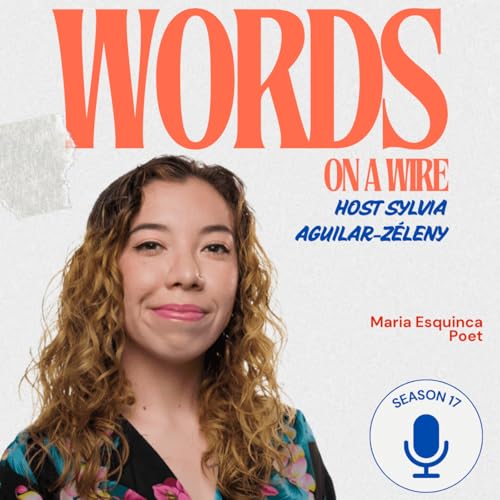
    On this episode of Words on a Wire, host Sylvia Aguilar Zéleny guides us through an inspiring conversation with acclaimed poet, journalist, and educator Maria Esquinca. Maria, the 2024 Andres Montoya Poetry Prize winner for her collection "Where Heaven Sings," reveals how her multifaceted identities influence her artistry and world view.


    Maria Esquinca opens up about her journey from journalism to poetry, detailing how the rigid structures of news reporting sparked her desire to embrace the freedom of verse. In her poetry, she blends personal narratives with collective experiences, confronting socio-political issues like immigration and border life with a sense of urgency and emotional depth. She emphasizes the freedom poetry offers—a stark contrast to her journalistic past—allowing her to creatively explore language and form.


    This episode is a must-listen for anyone interested in the intersection of art and identity. Engage with Esquinca’s insight into the creative process, her commitment to highlighting marginalized voices, and her unique approach to braiding the personal with the political. Hermetic yet expansive, her poetry captures both the intimate and the universal, making this episode a compelling exploration of contemporary writing.


    Join Sylvia and Maria for a conversation that will resonate with aspiring writers, educators, and anyone intrigued by the transformative power of words. Tune in for an episode that promises to stretch your understanding of what poetry can achieve.


    Show more Show less
    53 mins
  • Episode 20: Stephanie Austin
    Jan 25 2026

    In this episode, host Will Rose speaks with author Stephanie Austin about her debut novel, Burn, which will be released on February 3, 2026, from Cowboy Jamboree Press.


    Stephanie reflects on the novel’s remarkable twenty-year journey to publication, tracing how the story evolved across drafts, forms, and decades before finally finding its true shape. She discusses why returning the book's setting to the 1990s was essential -- not as nostalgia, but as a narrative necessity -- and how themes of longing, miscommunication, and self-discovery depend on a world without constant digital access. The conversation also explores Stephanie’s relationship with her protagonist, the sense of grief that comes with finishing a long-gestating book, and the challenges of letting a beloved character go.


    You can learn more about Stephanie Austin and her books at https://www.stephanieaustin.net/.

    Show more Show less
    30 mins
  • Episode 19: Jeff Roche
    Jan 18 2026

    In this episode of Words on a Wire, host Will Rose speaks with historian Jeff Roche, author of The Conservative Frontier: Texas and the Origins of the New Right (University of Texas Press), about how West Texas became one of the most conservative regions in American political life. Roche traces the roots of modern conservatism back to the late nineteenth century, beginning with the rise of ranching culture after the displacement of Indigenous peoples and the collapse of the bison economy. He explains how the entrepreneurial, anti-state ethos of early ranchers—embodied by figures like Charles Goodnight—combined with the mythology of the cowboy to form a durable regional identity centered on self-reliance, individualism, and suspicion of government authority.


    The conversation also explores the defining role of geography and environment in shaping West Texas culture, from its flat, arid plains to its chronic vulnerability to drought. Roche highlights the Dust Bowl as a turning point that shattered faith in agricultural abundance while deepening resentment toward federal intervention. The episode concludes with a discussion of Barry Goldwater’s influence on the rise of the New Right, showing how West Texas conservatives helped redefine American conservatism in the mid-twentieth century and laid the groundwork for the modern Republican Party.


    Show more Show less
    29 mins
  • Episode 18: Christian Iglesias (@ChristianChurches)
    Jan 9 2026

    In this episode of Words on a Wire, host Will Rose speaks with El Paso–based photographer and videographer Christian Iglesias, widely known on social media as @ChristianChurches. Iglesias has built a devoted following by documenting the landscapes, people, and everyday moments of the borderlands.


    The conversation traces Iglesias’s journey from shooting high school football games at Eastwood High School to becoming one of the most recognizable visual storytellers in the El Paso region. With roots in journalism, Iglesias explains how the discipline of photojournalism—speed, relevance, and presence—continues to shape his approach.


    Iglesias also shares insights into the craft itself, discussing camera gear, lenses, and the enduring belief that great photography is driven by the artist’s eye rather than expensive equipment. He reflects on the rise of social media as a platform for documentary storytelling and how the pandemic pushed him to fully commit to sharing his work online.


    At the heart of the conversation is a deep love for El Paso. Iglesias speaks passionately about the people of the borderlands, the city’s resilience, and the quiet beauty that is often overlooked.

    Show more Show less
    29 mins
  • Episode 17: Scótt Russell Dúncan
    Jan 3 2026

    In this episode of Words on a Wire, host Daniel Chacón speaks with writer, editor, and cultural critic Scótt Russell Dúncan about identity, futurity, and the politics of who gets to imagine the future. Dúncan discusses Chicanx futurism as an act of reclamation—of land, history, and possibility—pushing back against dominant narratives that exclude brown and Indigenous communities from visions of tomorrow. Through examples drawn from science fiction, publishing, and popular culture, he reflects on how mainstream media reinforces colonial power while marginalizing Chicanx voices.


    The conversation also explores Dúncan’s work as an editor and publisher, including his commitment to community-centered storytelling through Mais Poppin Press and the Puertas del Pueblo writing workshops. He speaks candidly about gatekeeping in the publishing industry, the pressure for Chicanx writers to filter their work for white audiences, and the importance of writing to one’s community rather than explaining it to outsiders. Grounded, critical, and hopeful, the episode highlights literature and collective imagination as essential tools for cultural survival and self-determination.

    Show more Show less
    51 mins