Episodios

  • Why so many studies can’t be replicated
    Apr 11 2026

    How do we know what we know? That's where science comes in—it gives us a method for testing our ideas and getting trustworthy results. But some researchers have warned that many scientific studies can't be replicated.

    To find out how deep the problem goes, the US Defense Advanced Research Projects Agency funded one of the largest analyses of social science, called the SCORE project. They checked the results of thousands of papers across economics, education, and psychology—and found that only half of them could be replicated.

    Joining Host Ira Flatow to discuss the findings are Tim Errington, one of the leads on this project, and economist Abel Brodeur, who recently released the results of a separate replication study that found more encouraging results than SCORE did.

    Guest:

    Dr. Tim Errington is senior director of research at the Center For Open Science in Washington, D.C.

    Dr. Abel Brodeur is a professor of economics at the University of Ottawa and founder of the Institute for Replication.

    Transcripts for each episode are available within 1-3 days at sciencefriday.com.

    Subscribe to this podcast. Plus, to stay updated on all things science, sign up for Science Friday's newsletters.

    Más Menos
    18 m
  • How a sound designer gave an alien its voice (and 250 words)
    Apr 10 2026

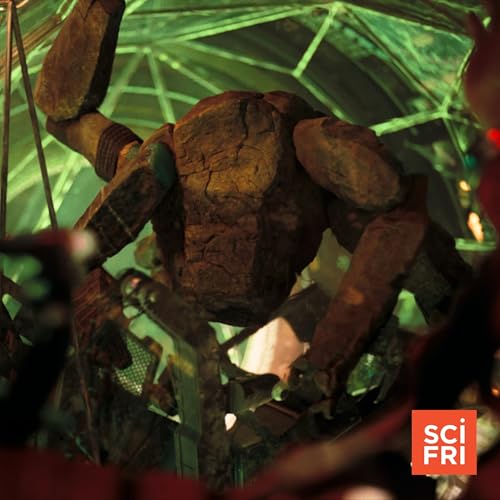
    Movies may be a largely visual medium, but sound plays a huge role in setting tone, creating new worlds, and fleshing out characters. Sound designer Erik Aadahl has brought some of Hollywood’s iconic creatures to life with sound, like the Transformers, 2014’s Godzilla, and Rocky the alien from “Project Hail Mary.” He joins Flora to talk about the science of sound design, and how he uses his background in biology to look for sounds in the animal kingdom.

    Guest:

    Erik Aadahl is a sound designer and editor at E² in Los Angeles, California.

    Transcripts for each episode are available within 1-3 days at sciencefriday.com.

    Subscribe to this podcast. Plus, to stay updated on all things science, sign up for Science Friday's newsletters.

    Más Menos
    18 m
  • Can GLP-1 drugs treat addiction?
    Apr 9 2026

    GLP-1 drugs like Ozempic, Wegovy, and Zepbound are prescribed for weight loss, diabetes, and blood-sugar management. But as more people use them, patients are reporting a decrease in cravings for drugs and alcohol. Researchers are now investigating whether GLP-1s might be effective for treating alcohol and drug addiction.

    How much do we know? What are the risks? And do these drugs tell us anything new about the biology of addiction?

    Host Flora Lichtman talks with neuroscientist Joseph Schacht, who is conducting a clinical trial on GLP-1s and alcohol use; and Sarah Carstens, addictions clinical director of Outpatient Services at Penn Medicine’s Princeton House Behavioral Health.

    Guests:

    Dr. Joseph Schacht is the co-director of the Division of Addiction Science, Prevention, and Treatment at the University of Colorado Anschutz School of Medicine.

    Sarah Carstens is the addictions clinical director of Outpatient Services at Penn Medicine’s Princeton House Behavioral Health.

    Transcripts for each episode are available within 1-3 days at sciencefriday.com.

    Subscribe to this podcast. Plus, to stay updated on all things science, sign up for Science Friday's newsletters.

    Más Menos
    19 m
  • What a sperm whale’s birth tells us about whale culture
    Apr 8 2026

    Scientists recently published the first footage of a sperm whale birth, and it was a crowded ordeal. More than 10 other sperm whales were there for the delivery and helped keep the baby whale afloat—and not all of them were related to mom. How much do we actually understand whale culture? And how should we think about altruism in the animal kingdom?

    Host Flora Lichtman chats with whale biologist Shane Gero about what it was like to witness this birth and what it tells us about whale culture.

    Guest:

    Dr. Shane Gero is a whale biologist at Carleton University, founder of The Dominica Sperm Whale Project, and biology lead for Project CETI. He’s based in Ottawa, Canada.

    Transcripts for each episode are available within 1-3 days at sciencefriday.com.

    Subscribe to this podcast. Plus, to stay updated on all things science, sign up for Science Friday's newsletters.

    Más Menos
    13 m
  • Is the US backing out of the electric vehicle market?
    Apr 7 2026

    Last year, Chinese carmaker BYD sold millions of electric vehicles, overtaking Tesla to become the world’s biggest seller of EV cars. And BYD cars weren’t just for the Chinese market. They went to Europe, Asia, and Mexico, and may soon be available in Canada. But thanks to tariffs and regulations, BYDs are not available to U.S. buyers.

    China policy expert Kyle Chan joins Host Ira Flatow for a look at the growing EV market worldwide, and how the U.S. seems to be putting the brakes on battery-powered cars.

    Guest:

    Kyle Chan is an expert on Chinese technology and industrial policy.

    Transcripts for each episode are available within 1-3 days at sciencefriday.com.

    Subscribe to this podcast. Plus, to stay updated on all things science, sign up for Science Friday's newsletters.

    Más Menos
    14 m
  • Can algae help pull microplastics out of our water supply?
    Apr 6 2026

    Microplastics and nanoplastics have been found just about everywhere: in our soil, our bodies, and our water. Recent research involving bioengineered algae has had success in capturing and removing microplastics from water.

    Environmental reporter Kate Grumke joins Producer Kathleen Davis to talk about the latest approaches to addressing microplastics, and researcher Susie Dai discusses her work using algae to pull them out of wastewater.

    Guests:

    Dr. Susie Dai is a professor of chemical and environmental engineering at the University of Missouri.

    Kate Grumke is a senior environmental reporter for St. Louis Public Radio.

    Transcripts for each episode are available within 1-3 days at sciencefriday.com.

    Subscribe to this podcast. Plus, to stay updated on all things science, sign up for Science Friday's newsletters.

    Más Menos
    13 m
  • Artemis II test flight heads toward the moon
    Apr 3 2026

    On Wednesday, NASA’s Artemis II mission launched, kicking off on a roughly 10-day trip that will carry four astronauts around the moon and back to Earth. The flight is another test of the Space Launch System rocket and the Orion capsule that are intended to be used for an eventual crewed lunar landing.

    Space reporter Brendan Byrne joins Producer Kathleen Davis to share his impressions of the launch and what’s ahead for the Artemis program. Then, moon book author Rebecca Boyle joins the discussion to tackle an important listener question: What if Earth didn’t have a moon?

    Guests:

    Brendan Byrne is the host of the “Are We There Yet?” podcast, and assistant news director for Central Florida Public Media in Orlando, Florida.

    Rebecca Boyle is a science journalist and author of “Our Moon: How Earth's Celestial Companion Transformed The Planet, Guided Evolution, And Made Us Who We Are.”

    Transcripts for each episode are available within 1-3 days at sciencefriday.com.

    Subscribe to this podcast. Plus, to stay updated on all things science, sign up for Science Friday's newsletters.

    Más Menos
    18 m
  • Should Pluto be a planet again?
    Apr 2 2026

    In 2006, a vote by the International Astronomical Union determined that Pluto was no longer a planet. The decision sparked a heated public debate, and many planetary scientists disagreed with kicking Pluto out of the planet club.

    Twenty years later, Pluto is back in the news: NASA administrator Jared Isaacman said he wants to make Pluto great again by declaring it… a planet again. And he’s urging President Trump to do so by executive order. Why does this Plutonian debate keep rearing its head? And does the president have the power to do that?

    To answer those questions and more, Host Ira Flatow talks with planetary scientists and Pluto champions Amanda Bosh and Alan Stern.

    Guests:

    Dr. Amanda Bosh is the executive director of the Lowell Observatory in Arizona, where Pluto was first discovered.

    Dr. Alan Stern is the vice president at the Southwest Research Institute and principal investigator of the New Horizons mission to Pluto.

    Transcripts for each episode are available within 1-3 days at sciencefriday.com.

    Subscribe to this podcast. Plus, to stay updated on all things science, sign up for Science Friday's newsletters.

    Más Menos
    19 m