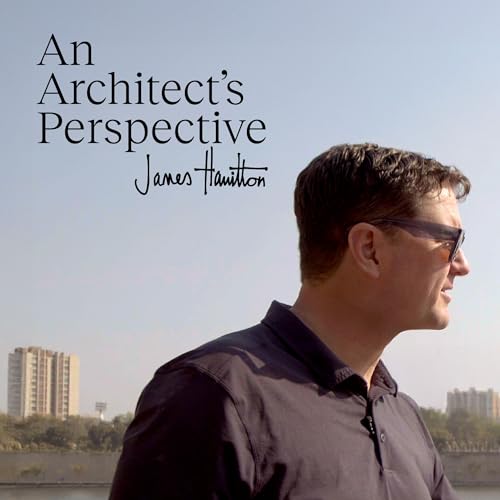
Episodes

  • Can architecture be both strict and sensual?
    Mar 24 2026

    In this episode of An Architect’s Perspective, I’m joined by architect and designer Eva

    Jiřičná to revisit Villa Tugendhat, Mies van der Rohe’s 1930 masterwork in Brno. We

    explore how the house’s radical openness, material refinement, and structural precision

    helped shape the language of early modernism - and how its influence continues to ripple

    through contemporary architecture.

    Eva reflects on her visits to the house, her Czech roots, and what Mies’s architecture taught

    her about space, clarity, and light. This is a conversation about discipline, elegance, and the

    quiet ambition of one of modernism’s most iconic homes.


    Key Topics:

    - Mies van der Rohe’s revolutionary use of glass and steel

    - Spatial clarity as a form of elegance

    - The ethics of early modernism — simplicity as principle

    - How Villa Tugendhat influenced Eva Jiřičná’s own design philosophy

    - Restoration, memory, and the architectural legacy of modernism


    Guest Info:

    Eva Jiřičná is a Czech-born architect and designer known for her precision, use of glass

    and steel, and elegant spatial compositions. She has worked across Europe and is

    internationally recognised for her commercial and residential projects.


    Quotes from the Episode:

    On early modernism:

    "It wasn’t about aesthetics. It was about how people could live — with honesty, with clarity,

    with light."

    On Mies’s restraint:

    "To use marble, steel, and glass — but with such discipline. That’s where the beauty lies."

    On architectural legacy:

    "The house doesn’t shout. It speaks quietly, with conviction. That’s the kind of modernism I

    believe in."


    Website: www.jameshamiltonarchitects.com

    Instagram: @jameshamiltonarchitects

    Production: OneFinePlay.com

    Show more Show less
    40 mins
  • Inside Mies van der Rohe's iconic Villa Tugendhat
    Mar 17 2026

    This episode of An Architect’s Perspective takes you directly inside Villa Tugendhat, Mies van der Rohe’s landmark of early modernism, completed in 1930 in Brno, Czech Republic. It’s a house that stripped away ornament and introduced a new kind of spatial order — radical in its time, and still breathtaking today.

    I walk the site, tracing how Mies used structure, material, and movement to create a home of extraordinary grace. The famous retractable glass wall, the flowing interior plan, and the onyx partition all speak to a design philosophy that values restraint, logic, and light.

    This is early modernism before the clichés — architecture as clarity, not austerity. Not a machine for living, but a place for thinking, pausing, and seeing.

    Key Topics:

    ● The use of structural grids to shape movement

    ● Light as an architectural material

    ● The philosophical underpinnings of Mies’s design

    ● What Villa Tugendhat reveals about early modernist priorities

    ● Architecture as experience, not statement


    Quotes from the Episode:

    On structure and space: "The grid here isn’t restrictive. It’s musical — it gives rhythm, not rigidity."

    On the retractable glass wall: "With one movement, the house opens to the garden. It’s theatrical, but also utterly practical."

    On design intention: "Mies didn’t just make a house. He made a way of thinking visible."


    Production: OneFinePlay.com

    Website: www.jameshamiltonarchitects.com

    Instagram: @jameshamiltonarchitects

    Show more Show less
    18 mins
  • Inside Richard Rogers' most personal work
    Mar 10 2026

    In this episode, I sit down with Ab Rogers, designer and son of Richard Rogers, to revisit the house he grew up in - Wimbledon House, a prototype of high-tech modernism designed by his father in 1968.

    This conversation moves between memory and material. Ab shares what it was like to live inside a building that was also an architectural experiment - a modular steel frame dropped into a garden, with transparent walls and exposed services.

    We talk about what the house meant then, and how it feels now. How it blurred the lines between home and studio, and how its spirit — open, adaptable, unpretentious - still shapes Ab’s own approach to design today.

    Key Topics:

    ● Growing up inside Richard Rogers’ radical domestic experiment

    ● The house as a testing ground for flexibility and transparency

    ● How the logic of industry met the softness of family life

    ● Living with architecture that doesn’t hide its workings

    ● Ab’s reflections on high-tech modernism - and where it led


    Guest Info: Ab Rogers is a designer, educator, and creative director. He is the founder of Ab Rogers Design and was formerly Head of Interior Design at the Royal College of Art. He grew up in Wimbledon House, which was designed by his father Richard Rogers.


    Quotes from the Episode:

    On the house as idea: "It was a place where architecture and family life happened at the same time — and didn’t always agree."

    On openness: "You couldn’t hide anything. Emotions, furniture, structure — it was all part of the architecture."

    On growing into the space: "I thought it was normal. Only later did I realise we were living inside a prototype."


    Website: www.jameshamiltonarchitects.com

    Instagram: @jameshamiltonarchitects

    Podcast Production: OneFinePlay.com

    Show more Show less
    35 mins
  • Inside Wimbledon House and the invention of high-tech modernism
    Mar 3 2026

    I visit Wimbledon House — a quiet prototype that helped define the high-tech modernist movement.

    Designed by Richard Rogers in 1968 as a home for his parents, this isn’t a flashy building. But it’s radical in its restraint. Steel frame, panelled infill, exposed systems — a house built like a kit-of-parts, dropped into a leafy London suburb.

    It’s modular, demountable, and endlessly adaptable. But it’s also deeply personal. Wimbledon House translates the principles of industrial logic into the intimacy of domestic life.

    This film-based episode walks you through its structure, its rhythm, and the quiet conviction behind every detail.

    Key Topics:

    ● The origins of high-tech architecture

    ● Domestic scale as a testing ground for big ideas

    ● Transparency, honesty, and the ethics of exposure

    ● The house as a flexible system

    ● Richard Rogers’ early thinking in built form

    Links and Resources:

    ● Watch the film: Wimbledon House

    ● Explore: High-Tech Modernism theme overview

    ● Download: ‘What High-Tech Got Right’ — a guide to materials, systems, and ethics


    Quotes from the Episode:

    On exposed structure: "Nothing is hidden — the frame, the services, the seams. It’s all part of the architecture."

    On domestic radicalism: "This house doesn’t impose. It suggests. It proposes a new way to live."

    On flexibility: "Architecture here isn’t fixed. It’s responsive, adaptable, alive."


    Website: www.jameshamiltonarchitects.com

    Instagram: @jameshamiltonarchitects

    Podcast Production: OneFinePlay

    Show more Show less
    19 mins
  • The house built without drawings - John Pardey on Can Lis
    Feb 24 2026

    I’m James Hamilton, and in this episode I’m joined by architect and writer John Pardey to revisit one of the quietest, most profound acts of modern architecture: Can Lis.

    Perched on a cliff in Mallorca, Jørn Utzon’s retreat is built entirely from local stone and light. It’s a project that came after personal and professional collapse — after Utzon walked away from the Sydney Opera House.

    But what he created here wasn’t a statement. It was a response. Can Lis was a house designed without drawings, shaped on-site using local materials, and aligned with the rhythms of the sun and the sea.

    John Pardey has written extensively about Can Lis. He met Utzon. And in this episode, we unpack the house’s layered meaning — as both an architectural object and a lived philosophy.

    Key Topics:

    - Why Can Lis marked a turning point in Utzon’s life and work

    - Designing without drawings — architecture shaped on-site

    - Marés stone, deep windows, and elemental form

    - How the house dissolves into its landscape

    - What contemporary architects can still learn from Can Lis


    Guest Info:

    John Pardey is a British architect and author, known for his work on residential design and

    architectural writing. He met Jørn Utzon at Can Lis in the 1990s and has written widely on

    Utzon’s legacy.


    Quotes from the Episode:

    On Utzon’s process:

    "He didn’t bring formal drawings. He let the landscape dictate the plan. It was architecture

    as conversation."

    On the building’s honesty:

    "There’s no pretence at Can Lis. The materials do the work. The house listens to the site."

    On legacy:

    "It’s not just a house. It’s a philosophy built in stone."


    Website: www.jameshamiltonarchitects.com

    Instagram: @jameshamiltonarchitects

    Podcast Production: OneFinePlay.com

    Show more Show less
    41 mins
  • Can Lis and the quiet power of vernacular modernism
    Feb 17 2026

    What do you build after the Sydney Opera House? For Jørn Utzon, it was Can Lis - a quiet, elemental retreat on the cliffs of Mallorca that redefined modern architecture.

    In this episode, architect James Hamilton visits Utzon’s home to explore how vernacular materials, sunlight, and silence shaped one of the 20th century’s most poetic buildings. With a special interview from architect John Pardey — who knew Utzon personally — we uncover how this house changed the direction of modernism by rooting itself in place, not prestige.

    You’ll learn

    ● Why Can Lis is a masterclass in site-specific design

    ● How local materials and passive cooling shaped Utzon’s approach

    ● What it meant for Utzon to walk away from the Opera House

    ● How vernacular modernism challenged the International Style

    ● The design secrets behind Can Lis’ famous framed sea views

    Timestamps

    00:00 — Intro

    02:45 — The Crescent Moon Entrance

    07:22 — Framing Views & Light

    12:01 — Building Around Nature

    20:10 — Vernacular vs. Modern

    26:45 — Bedrooms & Contemplation

    34:00 — Interview with John Pardey

    48:25 — Utzon’s Architectural Legacy

    54:43 — Why They Left Can Lis

    58:10 — Final Reflections


    Follow & Listen

    Podcast: An Architect’s Perspective

    Website: https://jameshamiltonarchitects.com

    Instagram: @jameshamiltonarchitects

    TikTok: @jameshamiltonarchitects

    Facebook: @jameshamiltonarchitects

    X: @jameshamiltonarchitects

    Pinterest: @jameshamiltonarchitects

    Show more Show less
    17 mins
  • Welcome To 'An Architect's Perspective'
    Feb 16 2026

    Ever wondered how 20th century modernist architecture shaped the world?

    From cliffside retreats to high-tech homes, the visual podcast “An Architect’s Perspective” is your front-row seat to the 20th century’s most influential architecture.

    Join architect James Hamilton as he travels the globe, unlocking the stories behind modernism’s most iconic buildings with the people who know them best. Walk through Jørn Utzon’s Can Lis, stand inside Mies van der Rohe’s Villa Tugendhat, and experience Charles Correa’s visionary works in India, among many more in this weekly series.

    This is a cinematic series that doesn't just show you the intricacies of architecture, but reveals the radical ideas, risks and convictions that brought the buildings to life.

    Produced by OneFinePlay

    Website: https://jameshamiltonarchitects.com

    Instagram: @jameshamiltonarchitects

    TikTok: @jameshamiltonarchitects

    Facebook: @jameshamiltonarchitects

    X: @jameshamiltonarchitects

    Show more Show less
    1 min