Episodes

  • European rates: Inflation & AI waves collide
    Mar 24 2026

    Markets have been anything but calm lately. Inflation shocks, surging energy prices and the AI narrative have collided to deliver one of the most dramatic periods in rates markets in years, forcing investors to rethink interest‑rate paths in real time.

    In Europe and the UK, that reassessment has been especially stark. Expectations for rate cuts have rapidly flipped to pricing further hikes, with the Bank of England at the centre of the storm. Gilt yields have surged to levels last seen during the 2008 Global Financial Crisis, while German yields have climbed to post‑sovereign‑crisis highs. What began as an energy shock has quickly morphed into a bond‑market shock, lifting borrowing costs for households and businesses alike and delivering a renewed wave of financial whiplash for mortgage holders.

    Against this already fragile backdrop, markets were whipsawed yet again by a single social‑media post, triggering sharp reversals across rates, equities and commodities in the space of hours.

    So how do you trade through volatility of this magnitude? Which signals still matter when headlines dominate price action? And how do inflation risks, AI‑driven narratives and crowded positioning interact in today’s market structure?

    To make sense of it all, Patrick Coffey is joined by Hamza Hoummady, Head of EMEA Rates Trading, for a wide‑ranging discussion on what is driving today’s unprecedented moves, how this episode compares with past crises, and what investors should be watching next.

    Listeners can hear more on this topic:​

    •Episode 23: A bullish view on US equities

    •Episode 22: Processing uncertainty in real time

    •Episode 16: Forces shaping markets in 2026

    Clients can read more on Barclays Live:

    •Recovery delayed redux

    •On hold, holding on

    •Ides of March

    •Dueling mandates

    Important Content Disclosures

    Important non-Research Content Disclosures

    Show more Show less
    11 mins
  • A bullish view on US equities
    Mar 17 2026

    Markets may look relatively steady compared with past oil shocks, but the real story sits in the undercurrents. Despite only a modest pullback in major indices, the Iran‑linked shock has sparked some of the sharpest sector rotations in years as fast‑moving capital unwinds crowded trades and reprices global risk.

    In this episode of Barclays Brief, Patrick Coffey is joined once again by Alex Altmann, Head of Equity Tactical Strategies, to break down what’s really moving markets: crowded international trades unwinding, energy‑importing regions under pressure, and liquidity mismatches accelerating the rotation.

    They also dig into the commodity complex, hit hard as investors absorbed significant losses, and explore why structural forces such as US-China decoupling, strategic reserve building, and critical minerals demand still support a compelling multi‑month (and potentially multi‑year) thematic opportunity.

    Ultimately, the conversation asks: what are market internals signalling that headline indices fail to show?

    From energy‑price anxiety and shifting Fed expectations to private credit concerns, join Patrick and Alex as they assess the pressures facing investors and why strong US corporate margins, healthier private‑sector balance sheets, and powerful AI‑driven capex trends continue to underpin a resilient, fundamentally bullish backdrop for US risk assets.

    Listeners can hear more on this topic:​

    • Metals & mining: meltdown or opportunity?

    • Is US equities exceptionalism finally cracking?

    Clients can read more on Barclays Live:

    • Framework for Modeling AI Demand & Supply – Capex 'Peak' Likely in 2028

    • Energy Sigma - Snowball effect

    • Equity Market Review - Waiting for the Trump put

    • The Long & Short of It - Conflict hits, conviction slips


    Important Content Disclosures

    Important non-Research Content Disclosures

    Show more Show less
    13 mins
  • Processing uncertainty in real time
    Mar 10 2026

    Volatility has returned, and markets are recalibrating risk premia as new sources of uncertainty emerge across oil, inflation expectations, private credit and the AI investment cycle.

    In this episode of the Barclays Brief, Ronnie Wexler speaks with Ajay Rajadhyaksha to break down how markets are processing this uncertainty, and the transmission mechanisms that matter most for the medium-term path.

    They explore how investors are interpreting elevated oil prices and what sustained higher prices could mean for inflation expectations, as well as why private credit concerns remain slow moving rather than systemic. They also examine the structural tailwinds from AI, where hyperscaler CapEx and breakthrough adoption rates may continue to anchor long run productivity and growth.

    As the conversation tracks the market reaction to the escalating conflict in Iran and other recent headline shifts, Ronnie and Ajay focus on the observable indicators and signals shaping the medium-term outlook.

    Clients can read more on Barclays Live:

    Middle East Escalation Hub

    When it rains...

    Barclays Equity Factor Insights: March 2026

    Takeaways From Anthropic's Enterprise Agent Event

    Important Content Disclosures

    Important non-Research Content Disclosures

    Show more Show less
    10 mins
  • Weight loss drugs: Scaling up
    Mar 3 2026

    Weight loss drugs have pushed the obesity therapeutics market to an inflection point, reshaping not only patient behaviour, healthcare spending and investor expectations, but also potentially the global economic outlook, as lower obesity rates could promise higher productivity and reduced long term healthcare costs.

    In this episode of the Barclays Brief, Patrick Coffey speaks with Emily Field, Head of US Biopharmaceuticals Equity Research, to break down the forces driving this shift.

    They pinpoint the key accelerants: the arrival of oral versions, rapid uptake among consumers, shifting cash‑pay models, intensifying pricing pressure, and fierce competition facing the early leaders.

    At the core, the episode answers this question: as these medicines move from specialist treatments to mass‑market consumer products, how will they reshape the market and determine who wins economically?

    They also look ahead to the sector’s next phase, from ex‑US adoption and earnings signals to new entrants, combination therapies and future applications in areas such as addiction.

    Clients can read more on Barclays Live:

    • There’s no place like home; initiating coverage on U.S. Biopharmaceuticals

    • Brave New World: Goodbye MFN, Hello Pipeline

    • Protein Boom: Be prepared…

    Survey source: KFF Health Tracking Poll

    Important Content Disclosures

    Important non-Research Content Disclosures

    Show more Show less
    14 mins
  • Software: In the AI storm
    Feb 24 2026

    Software equities sit in the eye of the AI storm, caught at a decisive inflection point as AI reshapes the sector and investors grapple with one of the sharpest valuation resets in years. ​

    In Episode 20 of the Barclays Brief, Raimo Lenschow, Head of North American Software Research, joins Ronnie Wexler, Global Head of Equities Distribution, to explore what’s driving the sell‑off and why the long‑term software story remains far from written.​

    The discussion examines the forces behind the recent repricing, from the arrival of real, market‑ready GenAI products to intensifying concerns around hyperscaler CapEx, overbuild risk and shifting competitive dynamics. While headlines point to sweeping disruption, Raimo argues that AI is not ending software — it’s redefining the stack and reshaping where value accrues.​

    At the centre of the episode is a simple but critical question: as AI accelerates change across software, what genuinely matters — and what’s being overstated?​

    Raimo and Ronnie also discuss what could shape the sector’s next phase, from how valuations may stabilise to the long, often underappreciated migration timelines that anchor enterprise technology decisions.​

    Listen in for a grounded perspective on where fear may be overstated, where selectivity matters most, and how investors can think about durability and opportunity as AI continues to reshape the software landscape​

    Listeners can hear more on this topic:​​

    1. Barclays Brief #14 – Rise of the humanoid robots
    2. Barclays Brief #12 – The future of mobility
    3. Barclays Brief #4 – AI revolution: China’s five year plan

    Clients can read more on Barclays Live:​

    1. Software Is Not Dead, Just Changing
    2. How to play AI dislocation?
    3. Agentic AI Disruption Risk in Focus

    Important Content Disclosures

    Important non-Research Content Disclosures

    Show more Show less
    11 mins
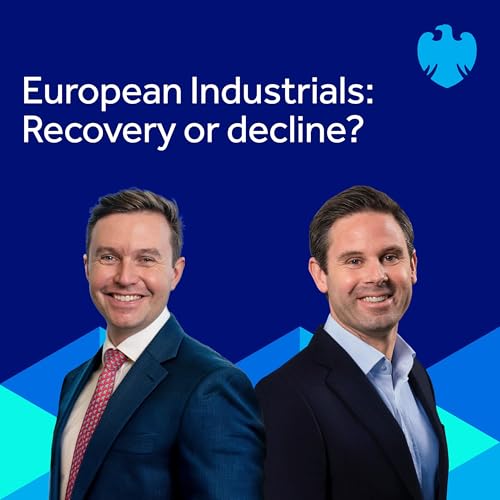
  • European Industrials: Recovery or decline?
    Feb 17 2026

    European Industrials have underperformed for years, but signs of stabilisation are emerging. In Episode 19 of The Barclays Brief, George Featherstone, European Industrials Research Analyst, joins Patrick Coffey to unpack what the next phase of Europe’s Industrial sector could look like – and where early momentum may be building.​

    The conversation explores areas of optimism for the sector, from improving consumer spending and housing activity to renewed grid‑infrastructure investment and robust demand for machinery and mining equipment as electrification accelerates.​

    Despite early signs of improvement, Europe’s outlook remains constrained by deep‑rooted structural challenges – from elevated energy costs to the AI investment gap and intensifying global competition.​

    Listen in for a timely breakdown of the key themes as investors and companies convene at the Barclays 43rd Annual Industrials Select Conference.

    Listeners can hear more on this topic:​

    1. Barclays Brief #17 - Mining & metals: Meltdown or opportunity?
    2. The Flip Side #80 - Is US equities exceptionalism finally cracking?

    Clients can read more on Barclays Live:​

    1. Euro Area Outlook: Europe at Different Speeds
    2. Global Industrials: Supply chain reshuffle: what's now and next?
    3. European Capital Goods: Year Ahead 2026 - Mean Reversion

    This content is for informational purposes only and does not constitute investment advice or a recommendation. Views expressed are those of the speakers and may not reflect those of the firm. Any forward-looking statements are based on current assumptions and subject to risks and uncertainties.

    Important content disclosures

    Important non-Research content disclosures

    Show more Show less
    10 mins
  • Japan decides, global markets move
    Feb 10 2026

    Japan’s decisive election result is recalibrating market expectations, bringing FX, rates and fiscal policy signals into sharper focus. The LDP’s clear mandate will likely feed through to household demand, BoJ decisions and global moves in rates and FX, with implications for global investors’ near-term portfolio positioning.

    In this episode of Barclays Brief, Yun Zhang, Co‑Head of FIC Trading, Asia Pacific and Global Head of MTN & Macro Structured Notes Trading, joins host Patrick Coffey to unpack the market reaction and the indicators to watch.

    Listen in to get a clear, actionable view of how Japan’s post‑election landscape is shaping opportunities for global investors. Clients can also join a Japan post-election webinar to hear timely insights from our Research and Markets experts.

    Listeners can hear more on this topic:

    •Barclays Brief #13 – AI: The macro game changer

    •The Flip Side #77 - Is Japan doubling down on Abenomics, or redefining it?

    Clients can read more on Barclays Live:

    •Japan Economic Update – LDP sweeps more than two-thirds

    •Japan FX and Rates Views - LDP landslide victory to stabilize risk premium

    •Japan Perspectives - Lower house election preview: Strengthening outlook for LDP landslide

    This content is for informational purposes only and does not constitute investment advice or a recommendation. Views expressed are those of the speakers and may not reflect those of the firm. Any forward-looking statements are based on current assumptions and subject to risks and uncertainties.

    Important Content Disclosures

    Important non-Research Content Disclosures

    Show more Show less
    11 mins
  • Metals & mining: Meltdown or opportunity?
    Feb 3 2026

    Sharp swings across precious metals, especially gold, have thrust the sector into the spotlight, sustaining investor interest and stirring fresh debate over whether a new supercycle is emerging. Amos Fletcher, European Metals & Mining Research Analyst, joins Ronnie Wexler on The Barclays Brief to unpack what’s driving the moves.

    A powerful mix of macro and structural forces is at work: shifting Fed rate cut expectations, renewed inflation‑hedging flows, dollar softness and accelerating electrification. Copper sits at the centre of the transition, with EV adoption, renewable build‑out and grid expansion driving demand higher even as supply remains constrained.

    Amos breaks down the mechanics behind the latest volatility and explains how tightening supply across both industrial and precious metals could shape the next leg of price action. He also explores why, despite recent sell‑offs, stronger strategic conviction is still fuelling a rise in big‑ticket M&A across the industry.

    Get a clear, accessible guide to the forces reshaping metals and mining and why this corner of the market is becoming increasingly difficult for investors to ignore.

    Listeners can hear more on this topic:​

    1. Barclays Brief #8 Critical Minerals: the new oil
    2. Barclays Brief #7 US dollar: AI & the capex cycle
    3. Barclays Brief #2 Gold: Unpacking the rally

    Clients can read more on Barclays Live:​

    1. Gold - Pausing for thought
    2. 26 ‘What ifs’ for 2026
    3. European Metals & Mining - What's priced in?

    This content is for informational purposes only and does not constitute investment advice or a recommendation. Views expressed are those of the speakers and may not reflect those of the firm. Any forward-looking statements are based on current assumptions and subject to risks and uncertainties.

    Show more Show less
    10 mins