• Why Sustainable Event Menu Design Starts Outside the Kitchen
    Mar 24 2026

    What if the most interesting ingredient at your next event was already growing just outside the venue?

    I've been thinking about this lately — and then Lotta Giesenfeld Boman introduced me to Lisen Sundgren, and honestly, she made it impossible to think about anything else.

    Lisen is my guest this week on Eating at a Meeting Podcast LIVE — and she is the perfect person to kick off Women's HERstory Month as our very first honoree.

    She is a Swedish herbalist, forager, and author based in Stockholm, but joining me from Nepal. She has spent more than 30 years teaching chefs, curious eaters, and anyone who will listen about wild edible plants — the ones that have shaped human diets forever and that most of us walk past every single day without a second glance.

    She has foraged for some of Stockholm's most celebrated restaurants and worked with Sigtunahöjden Hotel & Conference to weave local wild plants right into their menus. Not as a gimmick. As a genuine expression of place.

    And that is exactly what so many of us are chasing when we plan events, right? A menu that actually means something. Food that tells guests where they are.

    Lisen also leads foraging walks and forest baths as part of conferences and retreats. Fun!

    There is real responsibility here, too. Safe identification, sustainable harvesting, knowing what you are serving and why — Lisen takes all of that seriously, and we are going to talk about it.

    I promise this one will change how you look at the landscape around your next venue. 🌿

    Show more Show less
    53 mins
  • Taste of Place: How to Use Event F&B to Celebrate Local Culture
    Mar 17 2026

    What if your event menu was the most powerful branding tool your destination has?

    In this episode, Tracy is joined by Erik Wolf, Founder and Executive Director of the World Food Travel Association and the pioneer behind the global "Taste of Place" movement.

    We talk about why food and beverage should no longer be treated as a banquet line item—but as the way destinations, hotels, and convention centers express identity, protect culture, and drive measurable economic impact.

    Erik shares insights from the 2026 Taste of Place Report and explains how culinary heritage, terroir, ethical eating, and storytelling are reshaping tourism—and what that means for meetings and events.

    If you're a:
    • Destination marketing organization trying to differentiate your city
    • Hotel or convention center leader looking to move beyond generic banquet menus
    • Event planner wanting your program to actually reflect where it's hosted

    This conversation will challenge how you think about menu design, sourcing, storytelling, and guest engagement. Because when attendees travel for a conference, they don't just want to learn. They want to understand where they are. And sometimes, the fastest way to create a sense of place… is through what's on the plate.

    Show more Show less
    54 mins
  • Black History Month 2026: Designing Events That Honor Culture & Community
    Mar 10 2026

    What does it mean to truly belong at the table — as a guest and as the one designing the experience?

    This Black History Month, I'm hosting an Eating at a Meeting Podcast LIVE conversation with two extraordinary Black women leaders in the events industry: Zoe Moore (Grow with Zomo) and Diane R. Brown, MBA (Derby Brown Productions). We'll explore how to design events that honor Black history, culture, and community—not just in February, but every time we gather.

    We'll cover:
    • What Black History Month means in 2026 for event pros.
    • The real state of equity and belonging in events and hospitality.
    • How food, beverage, and supplier choices can either reinforce or repair harm.
    • Practical ways to source and support Black‑owned caterers, restaurants, and suppliers.

    Food is culture. Gathering is community. Honoring both isn't a checkbox — it's a practice you can design for.

    Show more Show less
    36 mins
  • 357: Why Non-Alcoholic Wine Matters For Inclusive Event Experiences
    Mar 3 2026

    Dry January always gets me thinking about how poorly the event industry still does when it comes to inclusive beverage experiences.

    At one event where I was speaking about inclusive dining, everyone at the table was served sake at dinner that night. One guest quietly pulled me aside and said, "This is exactly what you were talking about." He doesn't drink. Neither do I. And in that moment, we were both left out of the toast.

    The same thing happens when wine is part of the experience.
    So the question becomes: what happens when a guest isn't drinking alcohol?

    This week on Eating at a Meeting Podcast LIVE, I'm joined by Rachel M., a second-generation wine producer and the co-founder and author of AFNA Wine Certified™—the world's first professional certification dedicated to alcohol-free and non-alcoholic wine.

    Rachel brings more than 20 years of experience spanning vineyard development, winemaking, distribution, hospitality, and education. She's also the Founder & CEO of Oceano Wines | Oceano Zero and its luxury non-alcoholic line—showing that non-alcoholic wine can (and should) be treated with the same care, intention, and credibility as traditional wine.

    We're talking about what safe, sustainable, and inclusive beverage programs really look like in hotels, convention centers, restaurants, and even meetings and events—especially when alcohol isn't a given.

    We'll cover:
    ▶ Why non-alcoholic wine is often misunderstood or mis-served
    ▶ How labeling, alcohol transparency, and staff education directly impact guest safety
    ▶ What it looks like when NA wine is integrated into pairings, receptions, and banquet programs—without feeling like an afterthought
    ▶ Why this conversation isn't about removing alcohol, but expanding choice, loyalty, and revenue

    If you're planning events, managing beverage programs, or serving guests during Dry January (and beyond), this conversation will change how you think about what's in the glass.

    Join us LIVE. Bring your questions. Share what you're seeing in your own programs. Let's raise the bar—without needing alcohol to do it.

    Show more Show less
    40 mins
  • How Inclusive Bar Design Improves Guest Experience and Event Revenue
    Feb 24 2026

    If your event bar still treats non-alcoholic drinks as an afterthought, we need to talk.

    I'm sitting down LIVE with Kevin Morgan, Global Head of Tempo by Hilton and a 24-year hospitality veteran who has worked his way through Hilton from front desk agent to brand leadership. Kevin also helped lead Hilton's global CleanStay response—so when he talks about safety, execution, and systems, he's lived it at scale.

    We're talking about Tempo's Free-Spirited beverage program—a non-alcoholic strategy that gives NA cocktails equal billing, thoughtful design, and operational clarity. Not a mocktail menu. Not a compromise. A deliberate approach to inclusion, guest experience, and risk management.

    Here's why this matters for planners and suppliers:
    ▶︎ Bars are social hubs at events—but alcohol-centric design excludes more guests than you think

    ▶︎ Inclusive beverage programs reduce pressure, improve guest confidence, and expand revenue opportunities

    ▶︎ Small operational details (like how drinks are marked and served) can prevent costly mistakes

    ▶︎ Fresh ingredients, reduced waste, and intentional partnerships can support sustainability without adding complexity

    Kevin will share how guest data—not personal preference—drives brand decisions, why inclusion is a baseline expectation, and how Tempo's beverage strategy connects safety, sustainability, and belonging in real, executable ways for hotels, venues, and events.

    If you plan events, design menus, manage food & beverage, or work with hospitality brands, this conversation will change how you think about what's in the glass—and who feels welcome holding it.

    Show more Show less
    58 mins
  • 355: When Event Catering Becomes Community Care: Food that Connects & Gives Back
    Feb 17 2026

    When you're in Philly for PCMA Convening Leaders, you don't just grab a cheesesteak and call it a day. You pay attention to the food culture, the people behind it, and the stories that shape the city. And I couldn't leave town without sitting down with one of the catering chefs doing exactly that.

    This week on Eating at a Meeting Podcast LIVE, I'm talking with Chef Adam DeLosso, Executive Chef and COO of 12th Street Catering—and this conversation goes far beyond what's on the plate.

    Adam and the team at 12th Street believe great event food is about connection just as much as cuisine. Designing menus where every guest feels welcome without extra effort isn't a "nice to have" for him—it's the standard. That mindset shows up everywhere: how his team supports guests with complex dietary needs, how they approach staff training and labeling, and how they think about sustainability and responsibility.

    We talk about what it really means to build safe, sustainable, and inclusive food experiences into events so seamlessly that guests simply feel cared for. Adam shares the story of creating a carbon-neutral menu before the industry was ready—and why that moment still shapes how he approaches innovation today.

    We also dig into 12th Street's Meals With a Mission philosophy and partnerships with Trellis for Tomorrow and Philabundance, showing how catering can nourish communities, not just attendees.

    If you plan events, this matters. Food is where trust, risk, inclusion, and brand values all collide—and Adam offers a real-world look at how thoughtful leadership turns those moments into WOW experiences.

    Because when food is done with care and creativity, it doesn't just feed people.

    It brings them together.

    What does "every guest feels welcome" look like at your events?

    Show more Show less
    54 mins
  • 354: Event F&B: Designing Menus That Respect People & Ingredients
    Feb 10 2026

    Imagine sitting down at an event, ready to enjoy dessert… and realizing the kitchen can't tell you what's in it.

    Tracy is joined by internationally recognized vegan pastry chef, cookbook author, and culinary educator Fran Costigan to talk about what should be one of the easiest wins in event food and beverage: designing menus that respect both people and ingredients.

    Fran has spent decades teaching chefs—many of them in traditional kitchens—how to create plant-based desserts that are stunning, delicious, and practical to execute. And here's the truth she keeps proving: most kitchens already have what they need. What's missing is the mindset, the training, and the commitment to transparency.

    We dig into:
    •⁠ ⁠Why hotel and catering pastry teams still treat vegan (and dairy-free) desserts like a "special request"
    •⁠ ⁠How to build one great dessert for everyone instead of creating multiple "separate but sad" options
    •⁠ ⁠The real issues with hidden ingredients (hello, seasoning mixes with wheat flour) and why labeling matters
    •⁠ ⁠Smarter sweeteners and why "dairy-free" doesn't always mean safe
    •⁠ ⁠Practical swaps and techniques chefs can use right now—without reinventing their pantry
    •⁠ ⁠Why gluten-free isn't automatically "healthier," and what planners should understand when designing menus

    Show more Show less
    56 mins
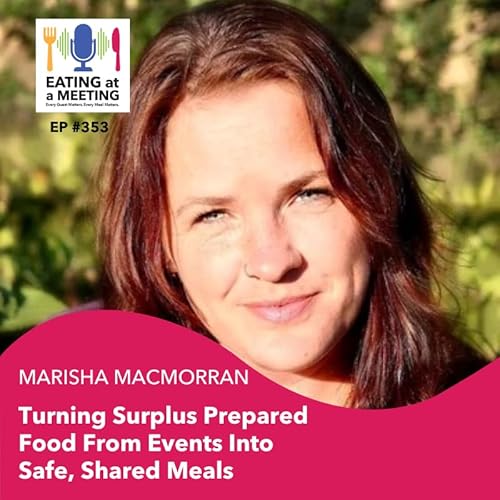
  • 353: Turning Surplus Prepared Food From Events Into Safe, Shared Meals
    Feb 3 2026

    Last year, Les Dames NC selected Food Connection as one of three beneficiaries of our annual holiday cookie sale—and this conversation is exactly why.

    This is the third interview in my series spotlighting organizations that are feeding our communities with food that already exists… including food coming straight from events, catering kitchens, and conference centers.

    I'm sitting down with Marisha MacMorran, Executive Director of Food Connection, an Asheville-based nonprofit that rescues surplus prepared food and redistributes it to neighbors across Western North Carolina. This isn't about scraps or leftovers—it's about smoked brisket, roasted vegetables, crab cakes, veggie couscous… food that was cooked with care and deserves a second purpose.

    Food Connection connects those with too much food to those without enough—keeping hundreds of tons of fresh food out of landfills while delivering hundreds of thousands of heat-and-serve meals with dignity and choice.

    If you've ever wondered what should happen to food after an event—or how your F&B decisions can support the communities we host meetings in—this is a conversation you'll want to be part of.

    Because feeding people is about more than food. It's about connection, dignity, and showing up for one another.

    What questions do you have about rescuing surplus food from events?

    Show more Show less
    53 mins