Episodes

  • Exodus 15: From Singing to Grumbling
    Mar 22 2026

    They had just watched the Red Sea split and sang songs of victory. Three days later, the same people were grumbling in the wilderness.

    In Exodus 15 we see both the beauty of joyful worship and the fragility of human faith—and the unchanging faithfulness of God.

    After Israel’s miraculous deliverance from Egypt, Moses and the Israelites respond the only way a rescued people can: they sing. Exodus 15 records the first great song of redemption in the Bible. Moses leads the people in praising the Lord for defeating Pharaoh’s army and delivering them from slavery.

    “I will sing to the Lord, for He is highly exalted; He has thrown the horse and its rider into the sea.” (Exodus 15:1)

    Soon Miriam the prophetess joins in. With tambourine in hand, she leads the women in music and dancing as the whole community celebrates what God has done. Singing, music, and joyful movement become the natural expression of hearts that have witnessed the power of God.

    But the celebration does not last long.

    Only three days into their journey in the wilderness, the people cannot find drinkable water. When they finally reach water at Marah, it is bitter. The same voices that had just been singing now begin to complain.

    “The people grumbled to Moses, ‘What are we going to drink?’” (Exodus 15:24)

    Exodus 15 reveals how quickly human hearts can move from worship to worry, from praise to complaint. Yet the chapter also reveals the patience and mercy of God. Instead of abandoning His people, the Lord provides a solution. Through Moses, He turns the bitter water sweet and begins to teach Israel what it means to trust and obey Him.

    Here God reveals a powerful name: Yahweh Rapha — “The Lord who heals you.” The God who delivered Israel from Egypt is also the God who sustains and restores His people in the wilderness.

    The chapter closes with a beautiful picture of grace. After the bitterness of Marah, the people arrive at Elim—a place of abundance with twelve springs of water and seventy palm trees. Even though Israel’s faith was shallow, God’s faithfulness was not.

    Exodus 15 reminds us that while our faith may waver, the Lord continues to provide, guide, and heal. The same God who leads His people through the sea also leads them through the wilderness.

    If this episode encouraged you, share it with a friend, subscribe to the podcast, and continue reading through Scripture with us as we follow The One Story That Leads to Jesus.

    Scriptures Referenced:

    Exodus 15:1

    Exodus 15:20–21

    Exodus 15:24

    Exodus 15:26–27

    Show more Show less
    5 mins
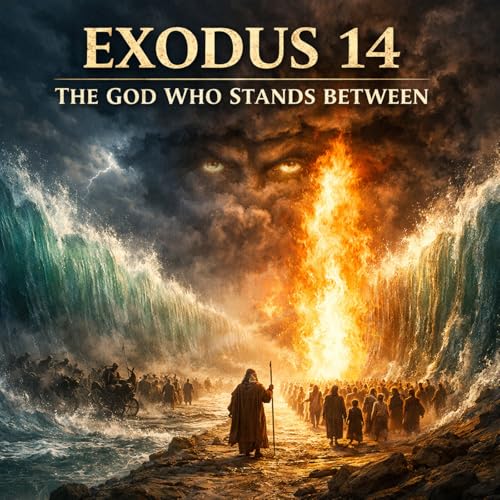
  • Exodus 14: The God Who Stands Between
    Mar 21 2026

    The sea split, the wind roared, and Israel walked through on dry ground—but the greatest revelation in Exodus 14 is not the miracle. It’s the God who stands between His people and their enemies.

    In this episode, we explore how the crossing of the Red Sea echoes the very first days of creation and reveals the Creator who still commands the wind, the waters, and the destiny of nations.

    Exodus 14 is one of the most dramatic moments in the Bible. Israel is trapped between Pharaoh’s army and the Red Sea with no visible escape. But the God who created the heavens and the earth is still present in His creation.

    Before the waters even divide, something extraordinary happens: the pillar of cloud and fire that had been leading Israel moves behind them. God places Himself between His people and the Egyptian army. The same presence that gives light to Israel brings darkness and confusion to Egypt. Salvation for one side, judgment for the other.

    Then the Lord sends a powerful east wind that blows through the night. The waters divide, dry land appears, and Israel walks through the sea. The language echoes Genesis itself—when the Spirit of God moved over the waters and the dry land first appeared. At the Red Sea, the Creator moves again. The wind blows, the waters separate, and a path opens where none existed.

    Scripture even tells us that the Lord looked out from the pillar of fire and cloud upon the Egyptian army. God is not distant in this moment—He is personally present, guiding, protecting, and judging. The same act that delivers Israel becomes the downfall of Pharaoh’s army.

    Exodus 14 reveals a powerful truth about God’s presence. The same God who saves also judges. The same pillar that lights the path for Israel blinds their enemies. It is like a scroll written on two sides—deliverance on one side and judgment on the other.

    When the waters close and the danger is gone, Israel finally sees what God has done.

    They see His power.

    They fear the Lord.

    And they believe.

    But this moment raises a deeper question that will shape the rest of the Bible.

    Will Israel trust God when the sea is no longer splitting?

    Because most of life is not lived in Red Sea moments. Most days are wilderness days—days when miracles are quieter and faith must rest on remembering what God has already done.

    The God who separated the waters at creation, the God who opened the sea for Israel, is still the One who stands between His people and destruction.

    If this episode encouraged you, share it with someone who needs a reminder that God still makes a way where none seems possible. And join us as we continue exploring the story of Scripture—one chapter at a time.

    Keywords: Exodus 14, Red Sea crossing, pillar of fire and cloud, biblical theology, creation echoes, God’s presence, faith in the wilderness, Old Testament study, Bible podcast.

    Scriptures referenced:

    Genesis 1:2–3

    Exodus 14:19–22

    Exodus 14:24

    Exodus 14:31

    Isaiah 60:1–2

    Ezekiel 2:10

    Show more Show less
    6 mins
  • Exodus 13: The Firstborn Belong to God
    Mar 20 2026

    A lamb dies so the firstborn can live. But what happens after the deliverance?

    In Exodus 13, God reveals that every rescued life now belongs to Him—and the story traces all the way back to Isaac and forward to Christ.

    After the night of Passover in the Book of Exodus, Israel begins its journey out of Egypt. But before they travel far, God stops them with an unexpected command: “Consecrate to me all the firstborn.” Every firstborn child and animal now belongs to the Lord because He spared Israel’s sons on the night when Egypt’s firstborn died.

    This moment reveals a central truth of redemption: the life that is saved now belongs to the Savior.

    In this episode of In the Garden, we explore the deeper meaning behind Exodus 13 and how the command about the firstborn connects to one of the earliest stories of substitution in Scripture. Centuries before the Exodus, Abraham climbed Mount Moriah with his beloved son Isaac. Isaac asked a haunting question: “Where is the lamb?” Abraham answered with faith: “God will provide the lamb.”

    At the last moment, a ram caught in a thicket took Isaac’s place.

    That same pattern appears again at Passover. Each household sacrificed a lamb, and the blood was spread on the doorposts with a branch of hyssop. The lamb died, and the firstborn lived.

    In Exodus 13, God establishes a memorial so this truth would never be forgotten. The Feast of Unleavened Bread and the consecration of the firstborn surround the story of Passover like a literary frame, reminding every generation that their deliverance came through substitution.

    But the story does not end in Egypt.

    During another Passover centuries later, Jesus Christ walked toward the cross carrying the wood of His sacrifice—just as Isaac once carried the wood up Mount Moriah. At the crucifixion, even the small detail of a hyssop branch appears again, echoing the Passover night when lamb’s blood marked the doors of Israel.

    What began with one son spared through a substitute in Genesis becomes the salvation of a nation in Exodus—and ultimately the redemption of the world through Christ.

    In this episode, we explore how Exodus 13 reveals the meaning of redemption, why God claims the firstborn, and how the story of Passover points both backward to Isaac and forward to the Lamb of God.

    If this episode deepens your understanding of Scripture, consider sharing it with a friend, subscribing to the podcast, and joining the conversation. Together we are discovering how the entire Bible tells one story that leads to Jesus.

    Scriptures referenced in this episode:

    Book of Exodus 12:13, 12:22, 13:2–16

    Book of Genesis 22:2–14

    Gospel of John 1:29, 19:29

    Show more Show less
    5 mins
  • Exodus 12: The Night to Remember
    Mar 19 2026

    Have you ever faced a moment where obedience felt urgent, even overwhelming? Exodus 12 shows how God turns moments of fear and haste into eternal remembrance.

    In this episode, we journey through the pivotal night of the Exodus. God commands the Israelites to prepare a lamb, apply its blood to their doorposts, and eat bread without leaven—all in anticipation of the 10th Plague, the midnight judgment on Egypt. What began as hurried preparation becomes a profound memorial of faith and deliverance.

    We explore the layers of meaning in this chapter: the lamb as a sign of protection, the unleavened bread as a reminder of readiness, and the establishment of a feast to be observed throughout generations. This is not just a historical event—it’s a spiritual lesson in trust, obedience, and God’s providence that points forward to the ultimate Lamb, Jesus Christ.

    Whether you are reflecting on God’s faithfulness in your own life, seeking courage to obey, or simply desiring to understand the depth of His deliverance, this episode offers a meditation on how God transforms ordinary acts of obedience into memorials of salvation.

    Call to Action:

    Consider your own “midnight moments”—times of uncertainty or urgency where God calls you to trust and obey. How might God turn these moments into a lasting reminder of His faithfulness? Share your reflections, discuss with friends, or journal how God has delivered you in ways that become stories of remembrance.

    Keywords: Exodus 12, Passover, 10th Plague, lamb of God, unleavened bread, deliverance, obedience, faith, memorial, salvation, God’s faithfulness, spiritual reflection, Bible study

    Scriptures Referenced: Exodus 11:4, Exodus 12:6, Exodus 12:14-15

    Show more Show less
    4 mins
  • Exodus 11: The Treasure Before the Trial
    Mar 19 2026

    Before the final plague strikes Egypt, something incredible happens — God provides favor, provision, and promise to His people. In this episode, we explore how the Israelites received silver and gold from the Egyptians before the midnight Passover, and what this teaches us about God’s timing, justice, and care.

    In Exodus 11, God tells Moses that one last plague will come, but first, He instructs the Israelites to ask their Egyptian neighbors for silver and gold. The people obey, and God gives them favor, ensuring they leave Egypt not empty-handed but empowered for the journey ahead. This act of provision is rich in meaning: it demonstrates God’s favor, fulfills divine justice, prepares the Israelites for a new beginning, and teaches a timeless lesson about trusting God’s plan even before the trial is fully revealed.

    We also see the interplay of divine sovereignty and human responsibility. Pharaoh’s heart is hardened, God’s wonders multiply, and yet the Israelites’ obedience and trust are rewarded in advance. The story reminds us that God often provides before the storm, equips His people before the challenge, and guides them through His perfect timing.

    Join us as we unpack this pivotal moment in the Exodus story — the treasure before the trial — and discover how God’s provision, justice, and faithfulness intersect in ways that still speak to us today. Whether you’re facing uncertainty, waiting for deliverance, or learning to trust God’s timing, this episode offers encouragement and insight straight from God’s Word.

    Keywords: Exodus 11, Passover, Israelites, Egypt, silver and gold, God’s provision, divine justice, favor, obedience, trust, faith, deliverance, Bible study, God’s timing, spiritual lessons

    Call to Action:

    If this episode inspired you, share it with a friend, subscribe to In the Garden Podcasts for weekly episodes, and join our community as we journey through the Bible together. Reflect on how God might be providing for you before your trial and consider sharing your story of trust and provision with someone today.

    Scripture References: Exodus 11:1–10 ESV

    Show more Show less
    4 mins
  • Exodus 10: The Point of No Return
    Mar 17 2026

    Exodus 10: The Point of No Return – When Refusal Meets Judgment

    What happens when someone hears God’s voice again and again—and refuses to listen? In Exodus 10, Pharaoh reaches the edge of his limits, and the consequences of hardened hearts become clear. From locusts that devour everything to darkness that covers the land, this chapter reminds us that repeated rejection of God’s will can bring a point of no return.

    In this episode, we explore the ninth plague, Pharaoh’s bargaining, and the dramatic confrontation between Moses and Pharaoh. We uncover why God’s people experience light even in the midst of darkness and why true freedom comes only when hearts choose allegiance to God over worldly authority.

    Join us as we reflect on how the story of Exodus speaks to modern struggles with pride, control, and the temptation to negotiate obedience. Pharaoh’s path serves as a cautionary tale: ignoring God’s voice has consequences, but listening brings light, even in the darkest circumstances.

    Keywords: Exodus 10, Pharaoh, Moses, locusts, darkness, God’s power, hardened heart, biblical freedom, obedience, light in darkness, faith, Bible podcast

    Call to Action: If this episode challenged or encouraged you, share it with someone who needs to hear the message of God’s faithfulness and warning. Subscribe to the podcast to follow the journey through Exodus and experience the unfolding story of God’s power and mercy.

    Scriptures Referenced: Exodus 10:1–29, Exodus 9:15–16, Matthew 22:21, Romans 13:1, Jeremiah 29:7

    Show more Show less
    6 mins
  • Exodus 9: When the Storm Stops
    Mar 16 2026

    When the storm stops, what happens to our promises to God? In Exodus 9, Pharaoh finally admits his sin during a devastating storm—but the moment the thunder fades, his heart hardens again.

    In this episode, we explore the powerful moment in Exodus 9:33–35 when Moses prays, the hail and thunder cease, and Pharaoh immediately returns to rebellion. The plague of hail is more than a natural disaster—it is part of God’s deliberate confrontation with the gods of Egypt. The sky itself, once associated with Egyptian deities like Nut and Shu, obeys the command of YHVH.

    Throughout the plagues, God systematically reveals His authority over everything Egypt believed controlled their world. The Nile turns to blood, frogs overrun the land, dust becomes gnats, livestock die, and boils strike the people. Each event exposes the limits of Egypt’s idols and demonstrates that the God of Israel alone rules creation.

    But Exodus 9 reveals something even deeper than God’s power—it reveals the human heart.

    When Pharaoh is terrified by the storm, he confesses: “I have sinned. The LORD is in the right.” Yet as soon as relief comes, he hardens his heart again. His repentance is driven by fear, not surrender.

    This raises an important question for us today: Do we seek God only when the storm is raging?

    Many people cry out to God in moments of crisis. We promise change, devotion, obedience—if only the trouble will pass. But when the skies clear and life feels normal again, those promises often fade.

    The story of Pharaoh is a warning about temporary repentance—the kind that appears during fear but disappears when comfort returns.

    God explains the purpose of the plagues clearly: He is revealing Himself so that the world will know that there is no one like Him. Even the weather, the land, and the heavens answer to His command.

    Yet Pharaoh shows us that even overwhelming evidence will not soften a heart that refuses to yield.

    In this episode, we reflect on the deeper meaning of the plagues, the spiritual pattern of Pharaoh’s hardened heart, and the question that still confronts us today:

    What will we do when the storm stops?

    If this episode encourages you, consider sharing it with a friend, subscribing to the podcast, and joining the journey as we continue walking through the story of Scripture together.

    Scriptures Referenced

    Exodus 7:14–25 Exodus 8:1–19 Exodus 8:20–32 Exodus 9:1–12 Exodus 9:13–35 Exodus 12:12

    Show more Show less
    5 mins
  • Exodus 8: When Creation Speaks
    Mar 15 2026

    What if the plagues of Egypt weren’t random disasters—but a chain reaction? In Exodus 8, we begin to see how one event in creation triggers another, revealing the power of the God who rules over it all.

    In this episode of In the Garden, we explore Exodus 8 and the fascinating pattern unfolding in the plagues of Egypt. After the Nile is struck and its waters turn to blood, the entire ecosystem begins to unravel. Fish die, frogs flee the poisoned river, and when those frogs die across the land, their decaying bodies create the perfect breeding ground for gnats and flies. Soon insects swarm the land and disease spreads.

    What may look like chaos is actually a cascade of cause and effect—a natural chain reaction within the world God created.

    But understanding the pattern does not remove God from the story.

    The Lord who designed creation can also use creation as His instrument. The rivers, animals, insects, and weather all remain under His authority. In Exodus, the natural world itself becomes a witness to God's power and a challenge to the pride of Pharaoh.

    Pharaoh’s magicians could imitate a few signs, and Pharaoh believed that because he partially understood what was happening, he could endure it. Instead of humbling himself, he hardened his heart. He believed he could control events, survive the crisis, and remain in power.

    That was Pharaoh’s fatal mistake.

    Knowledge is not the same thing as sovereignty. Understanding how something happens does not mean we control it.

    Exodus 8 reminds us that creation still answers to its Creator. The God who spoke the world into existence can use the systems of nature to accomplish His purposes. When creation itself begins to speak, the wise response is humility.

    This episode invites us to step back and see the larger picture: God is not absent from the processes of the natural world—He is the Lord over them.

    🎧 Listen, reflect, and share this episode with someone who is exploring the story of Exodus with you. If you are following The One Story That Leads to Jesus reading plan, today’s episode will deepen your understanding of how God reveals His authority through the events of Exodus.

    Keywords: Exodus 8, Bible study podcast, plagues of Egypt, ecological collapse, cause and effect, Pharaoh’s hardened heart, Moses and Pharaoh, Old Testament teaching, biblical theology, God and creation, In the Garden podcast

    Scriptures Referenced: Exodus 7:20–21 Exodus 8:1–32 Exodus 9:1–7

    Show more Show less
    6 mins