Mom and Mind Podcast By Katayune Kaeni Psy.D. PMH-C cover art

Mom and Mind

Mom and Mind

By: Katayune Kaeni Psy.D. PMH-C
Listen for free

Posptartum Depression is real. And it's only part of the story. We dig in to ALL of the stuff that no one tells you about, but you NEED to know. Dr. Kat, Psychologist and specialist in perinatal mental health, interviews moms, dads, experts and advocates about how to cope, manage and recover from perinatal mood and anxiety disorders. We talk about postpartum depression, postpartum anxiety and SO MUCH MORE! We get real. We get honest. We put on our stigma crushing boots and address the realities of the transition to motherhood and parenthood. Learn about it before you find out about it the hard way! You don't have to suffer! www.momandmind.com Hygiene & Healthy Living Parenting & Families Psychology Psychology & Mental Health Relationships
Episodes
  • 471: A Mother’s Healing Journey Through Postpartum Psychosis with Jade Lloyd
    Mar 16 2026
    Today’s guest shares the events leading up to her postpartum psychosis, what she experienced, and how she managed to recover. It is important to hear stories like this so people understand postpartum psychosis and know how to get help. We all need to recognize the symptoms and get the people we love the help they need. Join us for Jade’s powerful story. Jade Lloyd is a survivor of postpartum psychosis and a maternal mental health advocate from the UK. Her maternal mental health struggles began with anxiety and sleeplessness, soon progressing to scary, intrusive thoughts and hallucinations. Jade shares her story in the hope that more knowledge and understanding about postpartum depression, anxiety, and psychosis will lead to more moms getting the help they need without shame, blame, and stigma. Show Highlights: Jade’s story: An easy pregnancy and plans for an at-home water birth turned into an induction, epidural, followed by a ventouse/forceps delivery. Immediate feelings of shame and failure for not having the delivery she wanted With a December 2020 birth, COVID lockdowns contributed to Jade’s mental health struggles. The first symptom Jade noticed was anxiety. Social media was Jade’s primary socialization, which led her to feel even more inadequate as a new mom. Getting up the courage to admit to the doctor that she was “not ok.” When asking for help makes you feel like an inconvenience A specific event one night that scared Jade because of intrusive thoughts of harming herself Dealing with the self-imposed pressure to be the perfect mom Help from medications and a doctor who checked in with Jade regularly Even with medication, Jade’s struggles continued with intrusive thoughts. Jade’s feelings of losing touch with reality and experiencing hallucinations Treatment in the mother-baby unit Jade’s passion for sharing her story and doing advocacy work for those with PPP Hope for the future Jade’s message to listeners and those who are suffering: “It’s okay to ask for help.” Resources: Connect with Jade Lloyd: Instagram Call the National Maternal Mental Health Hotline at 1-833-TLC-MAMA or visitcdph.ca.gov. Please find resources in English and Spanish at Postpartum Support International, or by phone/text at 1-800-944-4773. There are many free resources, like online support groups, peer mentors, a specialist provider directory, and perinatal mental health training for therapists, physicians, nurses, doulas, and anyone who wants to be more supportive in offering services. You can also follow PSI on social media: Instagram, Facebook, and most other platforms. Visit www.postpartum.net/professionals/certificate-trainings/for information on the grief course. Visit my website, www.wellmindperinatal.com, for more information, resources, and courses you can take today! If you are a California resident seeking a therapist in perinatal mental health, please email me about openings for private pay clients. Learn more about your ad choices. Visit podcastchoices.com/adchoices
    Show more Show less
    53 mins
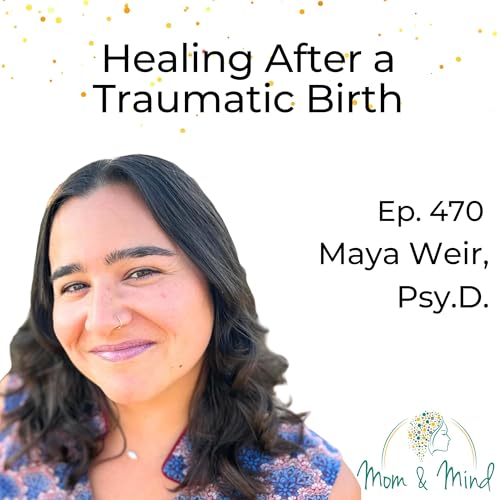
  • 470: Healing After a Traumatic Birth with Maya Weir, Psy.D.
    Mar 2 2026
    A traumatic birth can happen to anyone, and it’s much more common than we might think. Today’s show focuses on birth trauma, what it looks like, and how the healing journey can positively reshape someone’s parenting experience. There is help! Join us to learn more! Dr. Maya Weir is a clinical psychologist who specializes in birth trauma and the emotional transitions of early parenthood. Inspired by her own experience of becoming a parent, she understands how profound, overwhelming, and transformative this stage of life can be. Dr. Weir supports parents in making sense of their journey, healing from birth trauma, and cultivating grounded, connected ways to move forward. She offers short-term therapy for individuals and couples who are processing birth trauma, along with longer-term support for parents navigating the challenges of early parenthood. Based in Napa, CA, Dr. Weir provides virtual therapy throughout CA. Show Highlights: Birth trauma: an explanation and examples Many people go through birth trauma and don’t realize it until later. Invalidation compounds the original trauma. Common symptoms of birth trauma: triggering memories, anxiety, and relationship issues Strategies used to address birth trauma focus on somatic techniques. Expected results of therapy for birth trauma Understanding the intersection of different types of trauma Therapy for birth trauma addresses feelings of guilt, blame, and failure. Huge issues remain in the birthing system regarding how mothers are treated and spoken to in the sacred moments of childbirth. A partner can feel shame for “not showing up” to prevent birth trauma. (Partners can greatly benefit from therapy, too!) Recognizing generational shifts in parenting today Key takeaways from Dr. Weir: “Healing is possible, your birth story deserves space, and you deserve to feel better and have access to parenting resources.” Resources: Connect with Dr. Maya Weir Website and Instagram Call the National Maternal Mental Health Hotline at 1-833-TLC-MAMA or visitcdph.ca.gov. Please find resources in English and Spanish at Postpartum Support International, or by phone/text at 1-800-944-4773. There are many free resources, such as online support groups, peer mentors, a specialist provider directory, and perinatal mental health training for therapists, physicians, nurses, doulas, and anyone who wants to be more supportive in their work. You can also follow PSI on social media: Instagram, Facebook, and most other platforms. Visit www.postpartum.net/professionals/certificate-trainings/for information on the grief course. Visit my website, www.wellmindperinatal.com, for more information, resources, and courses you can take today! If you are a California resident seeking a therapist in perinatal mental health, please email me about openings for private pay clients. Learn more about your ad choices. Visit podcastchoices.com/adchoices
    Show more Show less
    36 mins
  • 469: Intersections of ADHD and Eating Disorders in Perinatal Mental Health with Laudan Gish, LCSW, PMH-C, PPSC
    Feb 16 2026
    Today’s episode focuses on the impacts of ADHD and eating disorders on perinatal mental health. We aim to explore this topic and educate listeners on how these conditions intersect and overlap during life’s transitional periods. Laudan Kermani Gish is a licensed psychotherapist in California, Texas, and Connecticut who also offers coaching to clients worldwide. She specializes in women’s health, particularly eating disorders, ADHD, perinatal mental health, and life transitions; she welcomes clients of all genders. She blends trauma-informed and evidence-based modalities to help clients cultivate resilience, strengthen self-worth, and create lives that feel authentic and nourishing. Laudan provides services in both English and Farsi. Show Highlights: ADHD is a neurodevelopmental disorder that has wide-ranging impacts. Understanding eating disorders in a general sense Examples of eating disorders: anorexia, bulimia, binge eating, and avoidant/restrictive food intake disorder (ARFID) The difference between disordered eating and an eating disorder An increase in ADHD symptoms and eating disorders during the postpartum Simply naming what’s happening makes it easier to seek help. The benefit of the ADHD self-reporting assessment and the eating attitudes test The neuroscience of ADHD, anxiety, and depression Compassion is vital for avoiding self-judgment. Laudan’s advice for family members is to use “the sandwich approach” and come from a place of curiosity, not judgment. Laudan’s key takeaways from today’s conversation Resources: Connect with Laudan Gish: Website, Adult ADHD Self-Report Scale, and Eating Attitudes Test Call the National Maternal Mental Health Hotline at 1-833-TLC-MAMA or visitcdph.ca.gov. Please find resources in English and Spanish at Postpartum Support International, or by phone/text at 1-800-944-4773. There are many free resources, like online support groups, peer mentors, a specialist provider directory, and perinatal mental health training for therapists, physicians, nurses, doulas, and anyone who wants to be more supportive in offering services. You can also follow PSI on social media: Instagram, Facebook, and most other platforms. Visit www.postpartum.net/professionals/certificate-trainings/for information on the grief course. Visit my website, www.wellmindperinatal.com, for more information, resources, and courses you can take today! If you are a California resident seeking a therapist in perinatal mental health, please email me about openings for private pay clients. Learn more about your ad choices. Visit podcastchoices.com/adchoices
    Show more Show less
    38 mins
No reviews yet