• 471: A Mother’s Healing Journey Through Postpartum Psychosis with Jade Lloyd
    Mar 16 2026
    Today’s guest shares the events leading up to her postpartum psychosis, what she experienced, and how she managed to recover. It is important to hear stories like this so people understand postpartum psychosis and know how to get help. We all need to recognize the symptoms and get the people we love the help they need. Join us for Jade’s powerful story. Jade Lloyd is a survivor of postpartum psychosis and a maternal mental health advocate from the UK. Her maternal mental health struggles began with anxiety and sleeplessness, soon progressing to scary, intrusive thoughts and hallucinations. Jade shares her story in the hope that more knowledge and understanding about postpartum depression, anxiety, and psychosis will lead to more moms getting the help they need without shame, blame, and stigma. Show Highlights: Jade’s story: An easy pregnancy and plans for an at-home water birth turned into an induction, epidural, followed by a ventouse/forceps delivery. Immediate feelings of shame and failure for not having the delivery she wanted With a December 2020 birth, COVID lockdowns contributed to Jade’s mental health struggles. The first symptom Jade noticed was anxiety. Social media was Jade’s primary socialization, which led her to feel even more inadequate as a new mom. Getting up the courage to admit to the doctor that she was “not ok.” When asking for help makes you feel like an inconvenience A specific event one night that scared Jade because of intrusive thoughts of harming herself Dealing with the self-imposed pressure to be the perfect mom Help from medications and a doctor who checked in with Jade regularly Even with medication, Jade’s struggles continued with intrusive thoughts. Jade’s feelings of losing touch with reality and experiencing hallucinations Treatment in the mother-baby unit Jade’s passion for sharing her story and doing advocacy work for those with PPP Hope for the future Jade’s message to listeners and those who are suffering: “It’s okay to ask for help.” Resources: Connect with Jade Lloyd: Instagram Call the National Maternal Mental Health Hotline at 1-833-TLC-MAMA or visitcdph.ca.gov. Please find resources in English and Spanish at Postpartum Support International, or by phone/text at 1-800-944-4773. There are many free resources, like online support groups, peer mentors, a specialist provider directory, and perinatal mental health training for therapists, physicians, nurses, doulas, and anyone who wants to be more supportive in offering services. You can also follow PSI on social media: Instagram, Facebook, and most other platforms. Visit www.postpartum.net/professionals/certificate-trainings/for information on the grief course. Visit my website, www.wellmindperinatal.com, for more information, resources, and courses you can take today! If you are a California resident seeking a therapist in perinatal mental health, please email me about openings for private pay clients. Learn more about your ad choices. Visit podcastchoices.com/adchoices
    Show more Show less
    53 mins
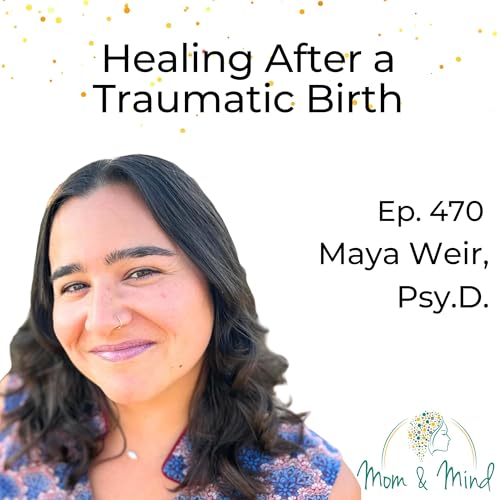
  • 470: Healing After a Traumatic Birth with Maya Weir, Psy.D.
    Mar 2 2026
    A traumatic birth can happen to anyone, and it’s much more common than we might think. Today’s show focuses on birth trauma, what it looks like, and how the healing journey can positively reshape someone’s parenting experience. There is help! Join us to learn more! Dr. Maya Weir is a clinical psychologist who specializes in birth trauma and the emotional transitions of early parenthood. Inspired by her own experience of becoming a parent, she understands how profound, overwhelming, and transformative this stage of life can be. Dr. Weir supports parents in making sense of their journey, healing from birth trauma, and cultivating grounded, connected ways to move forward. She offers short-term therapy for individuals and couples who are processing birth trauma, along with longer-term support for parents navigating the challenges of early parenthood. Based in Napa, CA, Dr. Weir provides virtual therapy throughout CA. Show Highlights: Birth trauma: an explanation and examples Many people go through birth trauma and don’t realize it until later. Invalidation compounds the original trauma. Common symptoms of birth trauma: triggering memories, anxiety, and relationship issues Strategies used to address birth trauma focus on somatic techniques. Expected results of therapy for birth trauma Understanding the intersection of different types of trauma Therapy for birth trauma addresses feelings of guilt, blame, and failure. Huge issues remain in the birthing system regarding how mothers are treated and spoken to in the sacred moments of childbirth. A partner can feel shame for “not showing up” to prevent birth trauma. (Partners can greatly benefit from therapy, too!) Recognizing generational shifts in parenting today Key takeaways from Dr. Weir: “Healing is possible, your birth story deserves space, and you deserve to feel better and have access to parenting resources.” Resources: Connect with Dr. Maya Weir Website and Instagram Call the National Maternal Mental Health Hotline at 1-833-TLC-MAMA or visitcdph.ca.gov. Please find resources in English and Spanish at Postpartum Support International, or by phone/text at 1-800-944-4773. There are many free resources, such as online support groups, peer mentors, a specialist provider directory, and perinatal mental health training for therapists, physicians, nurses, doulas, and anyone who wants to be more supportive in their work. You can also follow PSI on social media: Instagram, Facebook, and most other platforms. Visit www.postpartum.net/professionals/certificate-trainings/for information on the grief course. Visit my website, www.wellmindperinatal.com, for more information, resources, and courses you can take today! If you are a California resident seeking a therapist in perinatal mental health, please email me about openings for private pay clients. Learn more about your ad choices. Visit podcastchoices.com/adchoices
    Show more Show less
    36 mins
  • 469: Intersections of ADHD and Eating Disorders in Perinatal Mental Health with Laudan Gish, LCSW, PMH-C, PPSC
    Feb 16 2026
    Today’s episode focuses on the impacts of ADHD and eating disorders on perinatal mental health. We aim to explore this topic and educate listeners on how these conditions intersect and overlap during life’s transitional periods. Laudan Kermani Gish is a licensed psychotherapist in California, Texas, and Connecticut who also offers coaching to clients worldwide. She specializes in women’s health, particularly eating disorders, ADHD, perinatal mental health, and life transitions; she welcomes clients of all genders. She blends trauma-informed and evidence-based modalities to help clients cultivate resilience, strengthen self-worth, and create lives that feel authentic and nourishing. Laudan provides services in both English and Farsi. Show Highlights: ADHD is a neurodevelopmental disorder that has wide-ranging impacts. Understanding eating disorders in a general sense Examples of eating disorders: anorexia, bulimia, binge eating, and avoidant/restrictive food intake disorder (ARFID) The difference between disordered eating and an eating disorder An increase in ADHD symptoms and eating disorders during the postpartum Simply naming what’s happening makes it easier to seek help. The benefit of the ADHD self-reporting assessment and the eating attitudes test The neuroscience of ADHD, anxiety, and depression Compassion is vital for avoiding self-judgment. Laudan’s advice for family members is to use “the sandwich approach” and come from a place of curiosity, not judgment. Laudan’s key takeaways from today’s conversation Resources: Connect with Laudan Gish: Website, Adult ADHD Self-Report Scale, and Eating Attitudes Test Call the National Maternal Mental Health Hotline at 1-833-TLC-MAMA or visitcdph.ca.gov. Please find resources in English and Spanish at Postpartum Support International, or by phone/text at 1-800-944-4773. There are many free resources, like online support groups, peer mentors, a specialist provider directory, and perinatal mental health training for therapists, physicians, nurses, doulas, and anyone who wants to be more supportive in offering services. You can also follow PSI on social media: Instagram, Facebook, and most other platforms. Visit www.postpartum.net/professionals/certificate-trainings/for information on the grief course. Visit my website, www.wellmindperinatal.com, for more information, resources, and courses you can take today! If you are a California resident seeking a therapist in perinatal mental health, please email me about openings for private pay clients. Learn more about your ad choices. Visit podcastchoices.com/adchoices
    Show more Show less
    38 mins
  • 468: Intersections of Perimenopause, ADHD, and Postpartum in Women’s Mental Health
    Feb 2 2026
    There is much to consider about the intersection of perimenopause, ADHD, and postpartum. With more and more people choosing to have babies later in life, there is the likelihood that the start of perimenopause may coincide with the perinatal period. Those with ADHD have another variable thrown into the mix. We are tackling these topics with our expert guest today. Please join us! Kara Cruz is a Licensed Marriage and Family Therapist, Perinatal Mental Health Specialist, private practice owner, clinical supervisor, women’s mental health advocate, and educator. Her areas of focus are reproductive mental health, ADHD, complex trauma, and mood and anxiety conditions. In addition to psychotherapy with individuals and couples, Kara also facilitates continuing education and mental health training for professionals. One of her favorite projects is her Therapist Group Bootcamp, where she teaches and coaches fellow therapists on building their own wellness and support groups. Kara is an EMDRIA-certified therapist who leads workshops, including her signature group for women, “It Begins With Us.” She is the co-owner/co-founder of Women’s Support Circle, a space for community, resource sharing, and support for women worldwide. She created the Wellness for Women Healers Community, a space for healers of all professions and backgrounds who share the common goal of promoting women’s healing and wellness. Away from work, Kara is a busy wife and mom, enjoying baseball, music, and all nature activities near the beautiful California coast. Show Highlights: Women are suffering in silence, feeling shame and guilt about how they feel. Understanding the basics of perimenopause Perimenopause experiences cannot be compared from woman to woman; everyone is different. The impacts of ADHD on perimenopause Many professionals are not well-trained on menopause and perimenopause. Kara’s personal experience with ADHD Differences in males and females with ADHD (more external in boys/more internal in girls) Kara’s observations with patients who finally admit they are overloaded and are experiencing multiple symptoms of ADHD Similarities in symptoms for those who struggle with perimenopause and postpartum: anxiety, panic attacks, anger/irritability, depression, brain fog, sleep disturbances, sadness/crying, joint pain, etc. The importance of sleep for everyone Kara’s process to help people track their sleep and identify their sleep issues The value of a collaborative effort among a healthcare/treatment team Kara’s trainings offered to therapy professionals (An overview of three core trainings in 2026) How a therapist can help with perimenopause and ADHD Resources: Connect with Kara Cruz: Website, LinkedIn, and Instagram Call the National Maternal Mental Health Hotline at 1-833-TLC-MAMA or visitcdph.ca.gov. Please find resources in English and Spanish at Postpartum Support International, or by phone/text at 1-800-944-4773. There are many free resources, like online support groups, peer mentors, a specialist provider directory, and perinatal mental health training for therapists, physicians, nurses, doulas, and anyone who wants to be more supportive in offering services. You can also follow PSI on social media: Instagram, Facebook, and most other platforms. Visit www.postpartum.net/professionals/certificate-trainings/for information on the grief course. Visit my website, www.wellmindperinatal.com, for more information, resources, and courses you can take today! If you are a California resident seeking a therapist in perinatal mental health, please email me about openings for private pay clients. Learn more about your ad choices. Visit podcastchoices.com/adchoices
    Show more Show less
    46 mins
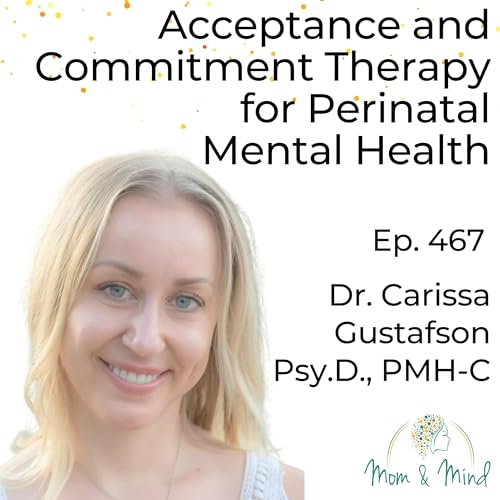
  • 467: Acceptance and Commitment Therapy for Perinatal Mental Health
    Jan 19 2026
    Today’s focus is on Acceptance and Commitment Therapy in treating perinatal mood and anxiety disorders (PMADs). Our expert guest will help us understand this therapy technique, its processes, and the overarching goal of this method. Join us to learn more! Dr. Carissa Gustafson, PMH-C, is a licensed clinical psychologist who specializes in perinatal psychology. She supports clients from preconception through parenting, with a particular focus on pregnancy and postpartum care. As the author of Reclaim Your Life: Acceptance and Commitment Therapy in 7 Weeks, she utilizes Acceptance and Commitment Therapy (ACT) to help clients learn to relate to their thoughts and feelings with acceptance and compassion, while aligning their behavior with their values. Dr. Gustafson sees clients online throughout California and in person at Village Birth, a part of Heartship Psychological Services. In addition to seeing clients, she has been an adjunct professor and clinical faculty at Pepperdine University Graduate School of Education and Psychology. Show Highlights: Dr. Gustafson’s path to serving perinatal mental health clients through ACT Understanding ACT as a therapy technique The unpredictable nuances of the perinatal journey align perfectly with the core processes of ACT, especially for high-achieving women. The need to be present with our difficult emotions Learning to “surf the waves” of emotions and feelings Compassion is essential because of the shame and blame we put on ourselves. ACT core processes: mindfulness, acceptance/compassion, cognitive defusion, the observer self, values, and committed/valued action “Bringing presence to our pain brings peace.” We don’t want to make an enemy of our internal experiences. ACT offers a clear path to relief for PMADs if someone is willing to use the techniques. Psychological health can be improved with flexibility in our thoughts and behaviors. Acceptance doesn’t mean resignation. Advocacy and agency are vital! Learn more about Dr. Gustafson’s book, training courses, and workbook (get yours for free at Dr. Gustafson's website!) Resources: Connect with Dr. Carissa Gustafson: Website, Instagram, and Reclaim Your Life: Acceptance and Commitment Therapy in 7 Weeks Call the National Maternal Mental Health Hotline at 1-833-TLC-MAMA or visitcdph.ca.gov. Please find resources in English and Spanish at Postpartum Support International, or by phone/text at 1-800-944-4773. There are many free resources, like online support groups, peer mentors, a specialist provider directory, and perinatal mental health training for therapists, physicians, nurses, doulas, and anyone who wants to be more supportive in offering services. You can also follow PSI on social media: Instagram, Facebook, and most other platforms. Visit www.postpartum.net/professionals/certificate-trainings/for information on the grief course. Visit my website, www.wellmindperinatal.com, for more information, resources, and courses you can take today! If you are a California resident seeking a therapist in perinatal mental health, please email me about openings for private pay clients. Learn more about your ad choices. Visit podcastchoices.com/adchoices
    Show more Show less
    39 mins
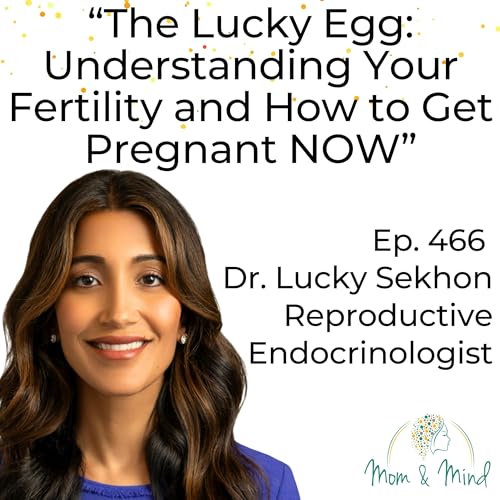
  • 466: “The Lucky Egg: Understanding Your Fertility and How to Get Pregnant NOW”
    Jan 5 2026
    Our discussion focuses on the ways fertility challenges impact mental health, navigating misinformation and pressure from “influencer experts” on social media, and how evidence-based fertility education can empower and support people mentally and emotionally during their reproductive journey. Dr. Lucky Sekhon is a board-certified reproductive endocrinologist, infertility specialist, obstetrician-gynecologist, and assistant clinical professor at the Mount Sinai Health System in New York City. She is the author of The Lucky Egg, a comprehensive, myth-busting guide to understanding reproductive health and overcoming fertility—written to empower anyone navigating the complex and confusing world of fertility. Widely recognized for her expertise in egg freezing, IVF, and LGBTQ+ family building, Dr. Sekhon is a trusted voice in reproductive medicine known for blending cutting-edge science with deeply compassionate patient care. Beyond her busy clinical practice, Dr. Sekhon actively publishes and presents research at national conferences and is passionate about making evidence-based fertility information accessible to all. Through her social media presence, blog, and community outreach, she has become a leading advocate for closing the fertility knowledge gap and helping people make informed, confident decisions about their reproductive futures. Show Highlights: Dr. Lucky’s WHY for writing The Lucky Egg was prompted by her pregnancy during the COVID-19 pandemic. Dr. Lucky’s desire to create a “Fertility Bible” to help people What to expect from The Lucky Egg Fertility challenges are as much a mental health issue as a physical one. There is a wide range of grief experiences with infertility; each journey is unique. Undiagnosed conditions, like endometriosis and PCOS, can complicate the fertility journey. There is bad information on social media. Beware! Dr. Lucky’s challenges in helping patients weed through misinformation and see evidence-based facts Common themes of misinformation: fearmongering, distrust, quick fixes, and fake testimonials Dr. Lucky’s commitment to evidence-based treatments Dr. Lucky’s checklist to evaluate a clinic for quality and success How The Lucky Egg helps people understand the language of embryology, medications, and protocols, even offering scripts and prompts to help deal with uncomfortable questions from others “Who is The Lucky Egg written for?” Messages of hope from Dr. Lucky: “If you’re unsure about your next steps in your fertility journey, you are not alone. Infertility affects 1 in 6 couples. This is a unique struggle with a lot of pressure. Prioritize your mental health, use resources, and find a supportive community.” Resources: Connect with Dr. Lucky Sekhon: Website, Instagram, and The Lucky Egg Call the National Maternal Mental Health Hotline at 1-833-TLC-MAMA or visitcdph.ca.gov. Please find resources in English and Spanish at Postpartum Support International, or by phone/text at 1-800-944-4773. There are many free resources, like online support groups, peer mentors, a specialist provider directory, and perinatal mental health training for therapists, physicians, nurses, doulas, and anyone who wants to be more supportive in offering services. You can also follow PSI on social media: Instagram, Facebook, and most other platforms. Visit www.postpartum.net/professionals/certificate-trainings/for information on the grief course. Visit my website, www.wellmindperinatal.com, for more information, resources, and courses you can take today! If you are a California resident seeking a therapist in perinatal mental health, please email me about openings for private pay clients. Learn more about your ad choices. Visit podcastchoices.com/adchoices
    Show more Show less
    45 mins
  • 465: Parents in Love: A Guide to Great Sex After Kids with Dr. Rebecca Howard Eudy, Ph.D., LMHC, PMH-C
    Dec 29 2025
    Before discussing today’s show, I’d like to provide some updates on what to expect from the podcast in 2026. First of all, there will be no more Behind the Sessions episodes. There could also be changes in the frequency of episodes at some point, but we’ll see how that goes. Life shifts and different needs arise that are pulling me in other directions. Everyone has times when shifts are needed to make space for pressing needs, and that’s what I’m experiencing in my life. I’m still excited about the show and the ten-year milestone that we’ll reach in 2026. Remember, the archive of episodes (almost 500!) is always available through our website. Today’s episode brings important information about how parenthood changes everything, including your sex life. There are new complexities to intimacy and sex after having a child, and parents need to be prepared so they can protect their connection. Our expert guest answers questions about why passion fades, the sexual-emotional cycle that couples get stuck in, and the path back to each other in your relationship. Join us to learn more! Dr. Rebecca Howard Eudy is an AASECT-certified sex therapist and the author of Parents in Love: A Guide to Great Sex After Kids. Certified in Emotionally Focused Therapy, she helps couples navigate sex, desire, and connection in the whirlwind of parenting, even when life and kids make it feel impossible. Show Highlights: Understanding the role of a sex therapist, what sex therapy entails, and Rebecca’s journey to be a sex therapist Identity shifts and body changes that come with having a baby can greatly affect your sex life. There is much shame and stigma around talking about sex and sexuality. The need to be flexible and curious with your partner Factors that impact a couple’s ability to connect and be intimate: time, hormones, exhaustion, and resentment Focusing on the “micromoments” to show your connection to your partner Common themes in sex therapy for new parents Reinvesting in the partnership and understanding each other’s intimacy needs The need for disconnection and solitude (Everyone needs alone time!) The difficult mental shift from “Mommy mode” to adult partner Dealing with mismatched levels of desire, which could become more pronounced after kids Dr. Rebecca’s tips for finding your way back to your partner: Become comfortable talking about sex. Be flexible during the early-parent years. Be open to other intimacies besides intercourse. Consider scheduling sexual activity. Make sure your partner feels seen, appreciated, and desired. Find ways to protect your time for intimacy. The importance of pleasure in all forms of intimacy (“Nobody wants bad sex!”) Resources: Connect with Dr. Rebecca Howard Eudy: Website, Instagram, and Parents in Love: A Guide to Great Sex After Kids Call the National Maternal Mental Health Hotline at 1-833-TLC-MAMA or visitcdph.ca.gov. Please find resources in English and Spanish at Postpartum Support International, or by phone/text at 1-800-944-4773. There are many free resources, like online support groups, peer mentors, a specialist provider directory, and perinatal mental health training for therapists, physicians, nurses, doulas, and anyone who wants to be more supportive in offering services. You can also follow PSI on social media: Instagram, Facebook, and most other platforms. Visit www.postpartum.net/professionals/certificate-trainings/for information on the grief course. Visit my website, www.wellmindperinatal.com, for more information, resources, and courses you can take today! If you are a California resident seeking a therapist in perinatal mental health, please email me about openings for private pay clients. Learn more about your ad choices. Visit podcastchoices.com/adchoices
    Show more Show less
    55 mins
  • 464: Behind the Sessions: Perinatal Mental Health During the Holidays, Part 4, Postpartum
    Dec 25 2025
    Today’s episode finishes the four-part series on perinatal mental health during the holidays. It is also the final Behind the Sessions episode because life’s circumstances are requiring me to shift, change, and prioritize other things as 2025 comes to a close. I will periodically add a solo episode in the future when I want to dive deeper into a relevant subject. There could even be a reduction in the frequency of episodes in 2026, as I see how my focus is needed in other areas. This shift is an example of my need to “practice what I preach” by protecting my time, space, and mental health as life changes. There is an extensive archive of episodes (almost 500 of them!) on my website from which you can search topics of interest to you. Please take advantage of the amazing resources available there! Today’s episode focuses on facing the challenges of the postpartum period during the holidays. Join me! Show Highlights: Hey, Mama: You ARE doing enough! When you throw PPA or PPD into the mix, the holidays can be overwhelming. Doing ALL the things will add more stress and cause burnout. Truths about postpartum life: It’s a BIG change! Worrying about social gatherings and the risk of sickness for your baby is completely normal. You may feel a greater sense of disconnect and loneliness. Watch out for the “comparison trap” that social media can cause. The potential for overstimulation is great. The underlying differences between expectations and reality Make it through the holidays in whatever ways you can—and that’s okay. Holiday problems for people-pleasers An increase in pressure and a decrease in emotional bandwidth can create the perfect storm of stress. Red flags that signal a perinatal mental health condition Steps to better self-care: Manage your self-talk–your inner voice. Pause, sit, and breathe to settle your body and mind. Realize that you don’t have to do everything you’ve always done. Add self-compassion to your life. Protect your energy by resting, limiting social engagements, and setting boundaries. Ask for help—and accept it when it’s offered. The importance of reframing what the holidays mean to you You and your family deserve peace–not perfection. Prioritizing your healing over traditions, expectations, and plans is okay—and encouraged. Resources: Call the National Maternal Mental Health Hotline at 1-833-TLC-MAMA or visitcdph.ca.gov. Please find resources in English and Spanish at Postpartum Support International, or by phone/text at 1-800-944-4773. There are many free resources, like online support groups, peer mentors, a specialist provider directory, and perinatal mental health training for therapists, physicians, nurses, doulas, and anyone who wants to be more supportive in offering services. You can also follow PSI on social media: Instagram, Facebook, and most other platforms. Visit www.postpartum.net/professionals/certificate-trainings/for information on the grief course. Visit my website, www.wellmindperinatal.com, for more information, resources, and courses you can take today! If you are a California resident seeking a therapist in perinatal mental health, please email me about openings for private pay clients. Learn more about your ad choices. Visit podcastchoices.com/adchoices
    Show more Show less
    35 mins