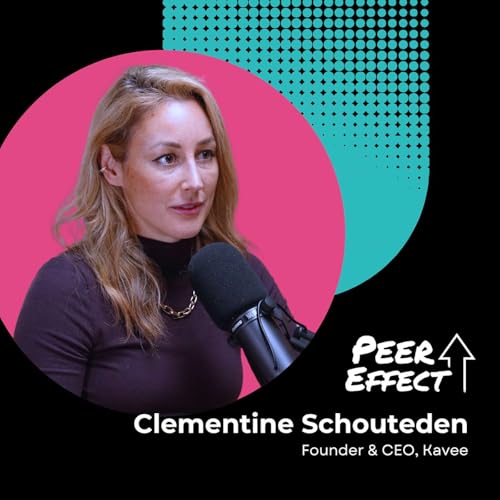
Peer Effect Podcast By James Johnson cover art

Peer Effect

Peer Effect

By: James Johnson
Listen for free

Best way to scale? Your peers have the answers.

This is the podcast for scaleup founders looking for insightful, actionable wisdom from some of the best operators around. Each week we’ll explore one secret that other founders and experts are using right now and how to implement it.

It’s practical wisdom to build the company AND life you want. Hosted by renowned founder coach and advisor James Johnson.

You’ve survived to £1m, now let’s scale to £10m+.


© 2026 Peer Effect
Economics Leadership Management & Leadership
Episodes
  • Niche Business Strategy: Why Narrow Focus Beats Going Broad
    Mar 25 2026

    Clementine Schouteden built a multimillion-pound e-commerce business selling premium products for Guinea pigs.

    Not small pets. Not rodents. Just Guinea pigs.

    As founder and CEO of Kavee (bootstrapped across UK, Europe, and US), Clementine spent 10 years being asked "why not expand?"

    Her answer changed how to think about focus.

    What you'll hear:

    Why 100% relevance to a small community beats 1% relevance to millions. Clementine explains the math behind this that most founders miss. It's not what you'd expect.

    The choice she made at the growth inflection point. Expand to more species or expand geography? One would've been a vanity move that probably killed the business. The other built the foundation for everything.

    How to create a market that didn't exist. Before Kavee, there was no premium Guinea pig market. Clementine built an eight-figure market from scratch. She explains what that actually requires.

    The shift that unlocked growth after two flat years. Clementine changed one question she asks about everything. That question changed how her team works, how they ship, and what they're willing to do.

    Why she gives her team permission to miss deadlines. This sounds risky. What actually happened will surprise you.

    What "ambitious actions" means vs ambitious words. Clementine was always ambitious. But there was wishful thinking in the middle. She breaks down what changed.

    The question every founder should ask. "What does my business need that I can give it?" How Clementine answers this determines everything.

    The reality:

    Focus is underrated. Most founders spread too thin too early. Clementine was nowhere near tapping her market when people said expand.

    Going narrow built muscles she can use anywhere.

    One action: Listen to the end for the question that changed everything.

    More from James:

    Connect with James on LinkedIn or at peer-effect.com


    Show more Show less
    41 mins
  • What to Do When Your Co-Founder Is Micromanaging You
    Mar 23 2026

    "What do I do if I feel like my co-founder is micromanaging me?"

    Anna sent this to James Johnson and Freddie Birley for Peer Effect Post Bag.

    The first question they ask: are they actually micromanaging you, or do you just feel that way?

    The distinction matters. Because micromanagement is usually a symptom, not the problem.

    What you'll hear:

    The co-founder assumption that's often wrong. Most people assume co-founders means equal shares, equal power, and started together. James worked with co-founders where none of that was true. The misalignment at the heart of their dynamic explained everything.

    Why founders micromanage when they feel out of control. There's a specific pattern James and Freddie see repeatedly. It's not about trust. It's about something else entirely. Once you understand it, the behaviour makes sense.

    The one-way contribution problem. When one co-founder can contribute everywhere but the other can't, it creates a specific tension. James and Freddie break down how to navigate this without it killing the relationship.

    James's rule to his team that changed everything. "Don't ask me my opinion unless you really need it." Why this matters and what it reveals about decision-making.

    Why feeling untrusted kills performance. The emotional weight of micromanagement doesn't just affect the relationship. It has a ripple effect on the work itself.

    The reality:

    Micromanagement means something else is broken. Unclear expectations. Unclear roles. One person feeling out of control. Performance issues underneath.

    James and Freddie break down how to diagnose what's actually happening and what to do about it.

    One action: Listen to the end for what to address first if you're feeling micromanaged.

    More from James:

    Connect with James on LinkedIn or at peer-effect.com


    Show more Show less
    14 mins
  • The Wrong Co-Founder Will Kill Your Business (How to Know Before It's Too Late)
    Mar 18 2026

    Fabien Koutchekian built his first company with two co-founders. They were completely misaligned.

    After one year, Fabien left. The company failed.

    As Co-Founder and CEO of Genomines (plant-based metal extraction, £45M Series A, 30 people across France and South Africa), Fabien's second attempt went very differently.

    Here's what he learned about choosing and working with co-founders.

    What you'll hear:

    The questionnaire that reveals misalignment before you start. There are specific questions you can ask your co-founder before you begin. Compare answers. Fabien shares what actually matters and what questions most people miss.

    Three warning signs your co-founder relationship is failing. Fabien breaks down the early signals he missed in his first company and what he tracks now. If you're seeing these, you have a problem.

    How to track productivity from day one. This is your early warning system. Fabien explains how to define productivity for your specific business and why tracking it weekly changes everything.

    The unified front rule. Fabien and his co-founder have one rule they never break. It creates safety in the organisation for creative conflict. He explains why this matters more than most founders realise.

    Why complementary skills matter. Are you bringing the same skills to the table or different ones? Fabien explains how to assess this and why it determines whether you need this co-founder or not.

    How the relationship gets stronger under pressure. When they raised £45M Series A - the most stressful time - they got closer, not more critical. Fabien explains what this signal means and why the opposite is a warning.

    When to leave. Fabien left his first company after one year. Deep down, he knew it wasn't working. He shares how to recognise when it's time to go.

    The reality:

    The wrong co-founder is worse than no co-founder.

    Fabien now works with someone where stress brings them closer together. They've gone from lab to field in 5 years. Industry standard is 10+ years.

    That's what the right co-founder partnership enables.

    One action: Listen to the end for what to assess about your co-founder relationship today.

    Submit your questions: hello@peer-effect.com

    One action: Listen to the end for Fabien's specific advice on what to assess today.

    More from James:

    Connect with James on LinkedIn or at peer-effect.com


    Show more Show less
    35 mins
No reviews yet