Episodes

  • Niche Business Strategy: Why Narrow Focus Beats Going Broad
    Mar 25 2026

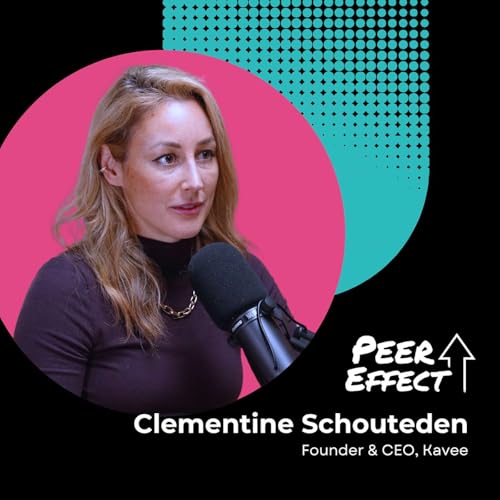
    Clementine Schouteden built a multimillion-pound e-commerce business selling premium products for Guinea pigs.

    Not small pets. Not rodents. Just Guinea pigs.

    As founder and CEO of Kavee (bootstrapped across UK, Europe, and US), Clementine spent 10 years being asked "why not expand?"

    Her answer changed how to think about focus.

    What you'll hear:

    Why 100% relevance to a small community beats 1% relevance to millions. Clementine explains the math behind this that most founders miss. It's not what you'd expect.

    The choice she made at the growth inflection point. Expand to more species or expand geography? One would've been a vanity move that probably killed the business. The other built the foundation for everything.

    How to create a market that didn't exist. Before Kavee, there was no premium Guinea pig market. Clementine built an eight-figure market from scratch. She explains what that actually requires.

    The shift that unlocked growth after two flat years. Clementine changed one question she asks about everything. That question changed how her team works, how they ship, and what they're willing to do.

    Why she gives her team permission to miss deadlines. This sounds risky. What actually happened will surprise you.

    What "ambitious actions" means vs ambitious words. Clementine was always ambitious. But there was wishful thinking in the middle. She breaks down what changed.

    The question every founder should ask. "What does my business need that I can give it?" How Clementine answers this determines everything.

    The reality:

    Focus is underrated. Most founders spread too thin too early. Clementine was nowhere near tapping her market when people said expand.

    Going narrow built muscles she can use anywhere.

    One action: Listen to the end for the question that changed everything.

    More from James:

    Connect with James on LinkedIn or at peer-effect.com


    Show more Show less
    41 mins
  • What to Do When Your Co-Founder Is Micromanaging You
    Mar 23 2026

    "What do I do if I feel like my co-founder is micromanaging me?"

    Anna sent this to James Johnson and Freddie Birley for Peer Effect Post Bag.

    The first question they ask: are they actually micromanaging you, or do you just feel that way?

    The distinction matters. Because micromanagement is usually a symptom, not the problem.

    What you'll hear:

    The co-founder assumption that's often wrong. Most people assume co-founders means equal shares, equal power, and started together. James worked with co-founders where none of that was true. The misalignment at the heart of their dynamic explained everything.

    Why founders micromanage when they feel out of control. There's a specific pattern James and Freddie see repeatedly. It's not about trust. It's about something else entirely. Once you understand it, the behaviour makes sense.

    The one-way contribution problem. When one co-founder can contribute everywhere but the other can't, it creates a specific tension. James and Freddie break down how to navigate this without it killing the relationship.

    James's rule to his team that changed everything. "Don't ask me my opinion unless you really need it." Why this matters and what it reveals about decision-making.

    Why feeling untrusted kills performance. The emotional weight of micromanagement doesn't just affect the relationship. It has a ripple effect on the work itself.

    The reality:

    Micromanagement means something else is broken. Unclear expectations. Unclear roles. One person feeling out of control. Performance issues underneath.

    James and Freddie break down how to diagnose what's actually happening and what to do about it.

    One action: Listen to the end for what to address first if you're feeling micromanaged.

    More from James:

    Connect with James on LinkedIn or at peer-effect.com


    Show more Show less
    14 mins
  • The Wrong Co-Founder Will Kill Your Business (How to Know Before It's Too Late)
    Mar 18 2026

    Fabien Koutchekian built his first company with two co-founders. They were completely misaligned.

    After one year, Fabien left. The company failed.

    As Co-Founder and CEO of Genomines (plant-based metal extraction, £45M Series A, 30 people across France and South Africa), Fabien's second attempt went very differently.

    Here's what he learned about choosing and working with co-founders.

    What you'll hear:

    The questionnaire that reveals misalignment before you start. There are specific questions you can ask your co-founder before you begin. Compare answers. Fabien shares what actually matters and what questions most people miss.

    Three warning signs your co-founder relationship is failing. Fabien breaks down the early signals he missed in his first company and what he tracks now. If you're seeing these, you have a problem.

    How to track productivity from day one. This is your early warning system. Fabien explains how to define productivity for your specific business and why tracking it weekly changes everything.

    The unified front rule. Fabien and his co-founder have one rule they never break. It creates safety in the organisation for creative conflict. He explains why this matters more than most founders realise.

    Why complementary skills matter. Are you bringing the same skills to the table or different ones? Fabien explains how to assess this and why it determines whether you need this co-founder or not.

    How the relationship gets stronger under pressure. When they raised £45M Series A - the most stressful time - they got closer, not more critical. Fabien explains what this signal means and why the opposite is a warning.

    When to leave. Fabien left his first company after one year. Deep down, he knew it wasn't working. He shares how to recognise when it's time to go.

    The reality:

    The wrong co-founder is worse than no co-founder.

    Fabien now works with someone where stress brings them closer together. They've gone from lab to field in 5 years. Industry standard is 10+ years.

    That's what the right co-founder partnership enables.

    One action: Listen to the end for what to assess about your co-founder relationship today.

    Submit your questions: hello@peer-effect.com

    One action: Listen to the end for Fabien's specific advice on what to assess today.

    More from James:

    Connect with James on LinkedIn or at peer-effect.com


    Show more Show less
    35 mins
  • How to Support Team Members Going Through Personal Challenges
    Mar 16 2026

    "How to allow for team member personal challenges as a founder?"

    Katy sent this to James Johnson and Freddie Birley for the Peer Effect Post Bag. James's immediate response: "I always struggle with this."

    This question has no easy answer because personal challenges could mean anything: mental health, divorce, bereavement, or family crises.

    Here's what James and Freddie break down:

    The core principle James always comes back to. You should look after everyone. But you can't look after one person at the expense of everyone else.

    When you overprotect one person, it impacts the whole team.

    The transparency paradox. It's sensitive, so people don't want to share broadly. But without context, the team lacks empathy. When they're negatively impacted by someone's behavior or absence without understanding why, they can't be human first.

    Time horizons matter. A couple of weeks is very different from six months or a year.

    What support actually means. Support doesn't mean carte blanche to behave however you want.

    You can't be a coach to someone you manage. If you can fire someone, you can't be their coach. Your incentives are conflicted.

    What can you do as a manager? Give this a listen to find out

    One action: Listen to the end for how to think about boundaries in these situations.

    More from James:

    Connect with James on LinkedIn or at peer-effect.com


    Show more Show less
    15 mins
  • Everyone Needs to Know Who the Villain Is - Not Just the Hero
    Mar 11 2026

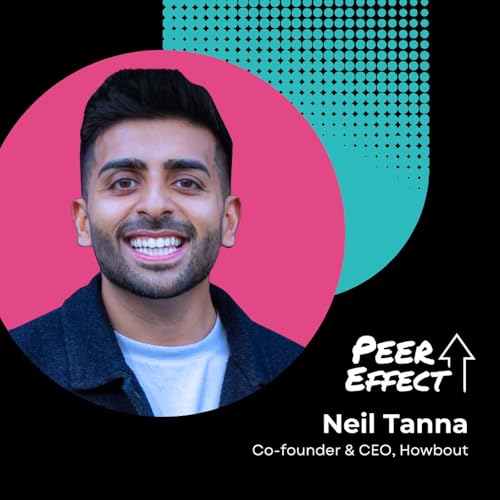
    Neil Tanna's early fundraising mistake: he could articulate the hero perfectly. But he couldn't explain the villain.

    As founder of Howbout (6 million users, backed by VCs and the Sidemen with 300 million followers), Neil learned the hard way that the hero makes no sense without the villain.

    Investors don't care if you can describe your solution. They need to understand the problem you're solving - viscerally.

    What you'll hear:

    Why early Howbout messaging failed. They focused on the solution (social planning app) without making the problem (losing touch with friends) crystal clear. They were brilliant at the hero. Terrible at the villain.

    How the villain evolved as users actually used the product. Initially: scheduling pain, the back-and-forth of group chat. But users weren't just planning events - they were putting their entire lives in the calendar. Everything. The real villain became "losing touch with friends in a world pushing you toward creators over actual connection."

    What to do when users redefine your product. Howbout positioned as "social planner." Users turned it into a "platform to share time." Gen Z were adding when they're on their period, when they have dates, everything. Why? Because they're digital natives who share their live location with 5-15 friends. Time is the same.

    How to pitch the same business to different audiences. US VCs: "Why are we talking about monetisation?" European VCs: "Why are we talking about anything else?" At seed, 10x more monetisation talk. At Series A, barely mentioned it. You have to evolve your story based on who's listening.

    Why you need to define your ethos, not just vision/mission. What is the emotional reason someone uses your product? Why do they share it? Why do they pay for it? Everyone in your business should articulate this in a couple sentences. This is your right to win.

    The CFO growth hack. Every friend group has a Chief Friendship Officer - the Type A planner, the micro-influencer. Neil targeted them through Instagram memes.

    Why focusing on everyone means no one. Howbout only focused on UK 18-22 year olds initially. Then proved US growth before Series A. If you try to be everything to everyone, your messaging becomes mud.

    The insight:

    Listen to find out 😆

    One action: Listen to the end for Neil's framework on defining your right to win.

    More from James:

    Connect with James on LinkedIn or at peer-effect.com


    Show more Show less
    40 mins
  • What to Do When You Can't Trust Your Co-Founder
    Mar 8 2026

    "What do I do if I feel like I can't trust my co-founder?"

    Dan sent this to the Peer Effect Post Bag. And if you're asking this question, James Johnson and Freddie Birley know it's probably not the first time you've had that thought.

    This is Season 6 of Post Bag. James and Freddie are founder coaches who've worked through dozens of co-founder conflicts.

    Here's what they break down:

    Trust has two components.

    (1) Do they have my back emotionally? Are they loyal?

    (2) Can I consistently count on them to follow through on what they say?

    Which one are you actually struggling with? Most people can't separate the two. Once you identify it, you can address it.

    Most co-founder conflict is misalignment on roles and responsibilities. Not personality clashes. Not values misalignment. Just ambiguity around what each person is supposed to do and be accountable for.

    You need clarity on two types of expectations. Business expectations: roles, responsibilities, vision alignment. Personal expectations: how you treat each other as humans, not just co-founders. Most people skip the personal conversation entirely.

    How to actually have the conversation. Express your feelings. Take responsibility for them. Express your need clearly. Give the other person a chance to know what they could do differently.

    You can't control your co-founder. Only your own response. Only your communication. Only whether you create conditions that increase likelihood of it working. If they're not open to feedback, not willing to discuss, not willing to change - that's significant risk to the business.

    Trust can be rebuilt. The idea that "once trust is broken, it's gone" is wrong. Trust can absolutely be rebuilt. It takes time, consistency, great communication, and willingness from both people. But it's possible. Sometimes relationships are stronger after because you've had the hard conversations.

    Crisis either brings you closer or makes differences obvious. Power together or power apart. You don't have to be attached to a certain outcome. But you do have to be willing to have the hard conversations.

    One action: Listen to the end for James and Freddie's specific advice on what to address first.

    More from James:

    Connect with James on LinkedIn or at peer-effect.com


    Show more Show less
    16 mins
  • How to Scale from 80 to 200 People Without Becoming Bloated
    Mar 4 2026

    Dr. Christian Schmierer has 80 people. In two years, he'll have 150-200.

    As CEO and Co-Founder of HyImpulse (building rockets with paraffin fuel, €74M+ raised, successful launch May 2024), Christian knows the challenge isn't just hiring 120 people.

    It's avoiding silos, slow processes, and bloat.

    The decisions he makes now will define what the company looks like at 200-400 people.

    What you'll hear:

    What you're actually building at 50-80 people. Not just executing today's work. You're laying foundations for what the company will be in five years. How you set up hierarchy now, what processes you create, how you handle communication: these decisions compound.

    Why you can't just scale up. You don't launch the same rocket from Earth as from Mars. Different gravity, different atmosphere, completely different design needed. Same with companies. Different sizes need different structures.

    How to avoid silos while adding structure. Christian wants to keep flat hierarchy and agility while growing to 200. That creates questions: How do you make decisions without clear hierarchy? How do you communicate? They're working through this now.

    Why organisational work never feels urgent. Your daily business always has more pressing things. But you need to reserve space for culture, communication, processes. These are difficult to measure. German engineers especially struggle with this: "It's not factual, why worry about it?" But it matters.

    What binary events do for focus. Rocket launches force the entire company to align. Six months before a launch, everything focuses on that one goal. Clear milestone, no ambiguity.

    How four technical co-founders actually work. Weekly meetings when they manage it. Different focuses in their roles. Different points of view. But almost every decision for seven years has been unanimous. Coming from the same background helps.

    The insight:

    At 50-80 people, you're making foundational decisions about how your company operates. Get them wrong and you'll have silos, slow processes, and bloat at 200.

    Christian also shares what happened during three years when HyImpulse stayed at 50-60 people. Huge product progress, but a stable team. That period transformed how they think about organisational design.

    One action: Listen to the end for what to make time for even when it's not urgent.

    Submit your questions: hello@peer-effect.com

    More from James:

    Connect with James on LinkedIn or at peer-effect.com


    Show more Show less
    35 mins
  • Fundraising Is Distracting You? You're Framing It Wrong
    Mar 2 2026

    "Fundraising is distracting and draining. How do I cope?"

    Dave sent this to the Peer Effect Post Bag. And James and Freddie's answer challenges the question itself.

    If fundraising is your responsibility as a founder, calling it a "distraction" reveals the problem. That framing guarantees you'll feel distracted during it, which means you won't perform as well as you could.

    This is Season 6 of Post Bag. James and Freddie are founder coaches who've worked with dozens of scale-ups through fundraising cycles.

    The insight:

    If you see fundraising as a distraction from "real work," you'll feel distracted. Reframe it as your number one priority for that period - and everything changes.

    Fundraising isn't something you do to enable the business. When you're in it, it IS the business. Securing funding is what lets you hire, scale, make payroll, do everything you say you want to do.

    What you'll hear:

    Why each investor conversation should be a learning opportunity (what landed, what didn't, what questions you answered well, what to improve)

    The founder who hates fundraising but crushes it every time, because she treats it as her one thing

    The "is it you or your team" question: If you say it's the team, it's probably you. If you say it's you, it's probably the team.

    Why you need a team that can survive without you, because if you're fundraising every 2 years for 3-6 months, you're spending 25% of your time away from the business

    How to know if you've made yourself the bottleneck

    Why "you're the prize" changes the power dynamic (it's a two-way process, not begging)

    What to focus on beyond the outcome: connections, learning, communication skills, and understanding what you want in an investor

    The reality check:

    Fundraising is brutal for the ego. It's humbling. People pick apart your baby. Half-listen. Don't respond to follow-ups. But if you give it your all, treat it as your priority, and learn from every conversation, you'll be successful even if you don't enjoy it.

    And if you describe yourself as chaotic or ADHD, knowing your #1 priority becomes even more essential. The founders who succeed despite the chaos are the ones who can focus when it matters.

    One action: Listen to the end for how to reframe fundraising before you start.

    More from James:

    Connect with James on LinkedIn or at peer-effect.com


    Show more Show less
    17 mins