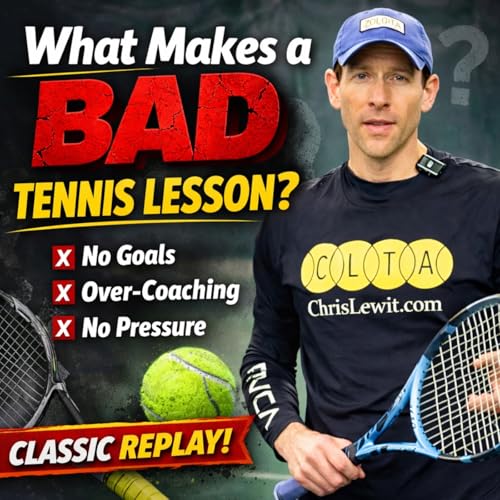
• Tennis Kids and Instagram: Healthy or Harmful?
    Mar 20 2026

    🎾 Tennis Kids & Instagram: Healthy or Harmful?

    More and more junior players are being featured on IG—but is it helping their development or hurting it?

    Chris breaks down the positives, the pitfalls, and the ethical questions every parent and coach should be thinking about.

    👇 Listen now and decide for yourself


    0:00 Should You Put Your Tennis Kid on Instagram?

    0:59 Is It Healthy? The Big Question

    2:08 Casual Sharing vs. Dedicated Accounts

    4:17 Different Types of Tennis Parent Posting

    5:05 When Posting Becomes Branding

    6:20 Proud Parent or Building a Business?

    8:24 Why Parents Build a Brand Around a Child

    10:49 Is It Healthy for Kids?

    12:08 Pressure, Performance, and the Camera

    13:09 The Tony Nadal Perspective on Humility

    15:03 Ego, Attention, and Character Development

    17:05 Protecting Your Child’s Mental Health

    18:54 When Social Media Becomes a Production

    19:44 Scouting, Exposure, and the New Tennis World

    20:56 What If Things Go Wrong?

    22:01 Monetizing a Child’s Tennis the Right Way

    23:39 How to Protect Kids While Using Social Media

    24:10 Preview of the Next Podcast Episode

    🎾 The Prodigy Maker Tennis Show (PMTS) explores the intersection of junior tennis development, cutting-edge sport science, fitness, health, and human performance. Hosted by world-renowned coach Chris Lewit — author of The Secrets of Spanish Tennis and Winning Pretty, and developer of numerous No. 1 juniors in the U.S. — PMTS brings together coaching wisdom, research, and technology to shape the future of tennis and human performance.

    👉 Subscribe and listen on

    https://podcasts.apple.com/us/podcast/the-prodigy-maker-tennis-show/id1456148452

    https://open.spotify.com/show/3Wu0PXf9IXneu0ogrzujZN

    https://www.youtube.com/playlist?list=PLR2QscfBfEs9dtttR6XNhduNlWYmZIfy-

    🌐 https://shows.acast.com/the-prodigy-maker-tennis-show/about

    📖 Books: The Secrets of Spanish Tennis | Winning Pretty

    Hosted on Acast. See acast.com/privacy for more information.

    Show more Show less
    26 mins
  • Why Most Coaches Still Teach the Forehand Wrong!
    Mar 11 2026

    Prodigy Maker Show EP 118

    A replay of one of our popular shows


    Building the Modern Forehand


    Toni Nadal says the forehand is the most important shot in tennis. Chris may not fully agree, but he understands why Toni sees it that way.


    In this replay of Episode 118, Chris breaks down the secrets of the modern Spanish forehand and explains how he teaches players to build it from the ground up.


    This was a lively episode with great audience questions, strong debate, and a special cameo from Chris’s sidekick and cohost, Sammie the Tennis Dog.


    In this episode, Chris discusses:


    Why he broke away from teaching the traditional old-school forehand


    The key technical reference points of the modern forehand


    Whether kids should begin with a closed or open stance


    Eastern vs. semi-western grip


    When to teach the kick serve to children, and how to teach it safely


    The biggest safety concerns for young players learning the kick serve


    How legendary coaches like Robert Lansdorp, Rick Macci, Luis Bruguera, Pato Alvarez, Emilio Sanchez, Toni Nadal, and others teach the forehand


    Important terms Chris uses, including extension, parabolic shape, open stance, inverted finish, and drift


    Spanish terminology and theory for forehand development


    Why the speed at which a coach develops a player matters


    Why the best coaches are often faster and more efficient, and why that affects what they can charge


    Technical trends from the last 40 years on the pro tour


    The dramatic evolution of backhand technique, and where Chris believes forehand training is headed next


    Why it’s important to challenge long-held beliefs in the coaching world


    Why calculated risks are sometimes necessary to develop better training methods


    Why Chris is shocked that Toni Nadal still teaches an old-school forehand model to young players


    Check out Chris’s YouTube channel for more videos and drills used in Spain to help build the Spanish forehand.


    Spanish Forehand Course:

    https://clta.teachable.com/p/whip


    0:00 Intro + Sammy the Tennis Dog

    1:20 Why the show exists

    3:51 Forehand topic overview

    6:17 Why Chris questioned traditional forehand teaching

    10:45 Building a modern forehand safely

    13:37 Q&A: Eastern backhand grip for kick serve

    17:26 Why the “classic” forehand is outdated

    20:35 Teaching open stance first

    24:14 Circular swing shape and inverted finish

    27:19 Hands-on teaching method and feel

    28:11 Grip choice: semi-western and low finish

    30:38 “Drift,” figure-eight patterns, and modern forehand terms

    34:14 Demo: inverted forehand finish

    40:47 Why topspin is essential from the start

    43:29 How Spanish coaches teach the forehand

    46:19 Q&A: String position on the backswing

    48:23 Why speed of development matters

    51:26 Extension vs. cutting the swing short

    56:15 Why many coaches still teach an old model

    1:01:06 Comparison to the evolution of the two-handed backhand

    1:06:19 Why coaches “correct” naturally modern swings

    1:09:18 Forehand finish variations

    1:11:44 The Spanish development path

    1:16:03 “Marathon vs sprint” in junior development

    1:20:12 Final thoughts on faster, safer player development

    1:24:15 Outro + where to follow/listen

    🎾 The Prodigy Maker Tennis Show (PMTS) explores the intersection of junior tennis development, cutting-edge sport science, fitness, health, and human performance. Hosted by world-renowned coach Chris Lewit — author of The Secrets of Spanish Tennis and Winning Pretty, and developer of numerous No. 1 juniors in the U.S. — PMTS brings together coaching wisdom, research, and technology to shape the future of tennis and human performance.

    👉 Subscribe and listen on

    https://podcasts.apple.com/us/podcast/the-prodigy-maker-tennis-show/id1456148452

    https://open.spotify.com/show/3Wu0PXf9IXneu0ogrzujZN

    https://www.youtube.com/playlist?list=PLR2QscfBfEs9dtttR6XNhduNlWYmZIfy-

    🌐 https://shows.acast.com/the-prodigy-maker-tennis-show/about

    📖 Books: The Secrets of Spanish Tennis | Winning Pretty

    Hosted on Acast. See acast.com/privacy for more information.

    Show more Show less
    1 hr and 29 mins
  • The Spanish Forehand: Building a Heavy Ball with Velocity Drills
    Mar 6 2026

    Prodigy Maker Tennis Show – Episode 117


    In Episode 117 of the Prodigy Maker Tennis Show, Chris dives deep into the philosophy behind Spanish tennis development and how elite Spanish players learn to produce the famous “heavy ball.” Drawing inspiration from the training systems that shaped players like Rafael Nadal and the modern generation of clay-court competitors, Chris explains how spin, velocity, and timing combine to create a forehand that feels heavy and explosive to opponents.


    This episode explores the concept of Spanish velocity—training methods that blend high-repetition rally patterns, rotational power, and aggressive topspin mechanics. Chris breaks down a series of Spanish-style drills designed to increase signaling strength between the brain and muscles, helping players improve neuromuscular efficiency, racket head speed, and the rate of force development.


    Listeners will learn how these drills train the body to accelerate faster through contact, build stronger kinetic chain sequencing, and develop the physical qualities needed to generate heavy, high-kicking shots that push opponents off the baseline.


    Whether you’re a player, coach, or parent developing the next tennis prodigy, this episode offers practical insight into how Spanish training principles can be used to build a powerful forehand and a truly heavy ball.


    0:00 Welcome to the Tennis Evolution community chat

    0:25 Sunday night Q&A and this week’s new videos

    1:12 What the Spanish heavy ball really is

    2:23 How Spain spread the heavy ball forehand worldwide

    3:12 Spanish acceleration drills for racket speed

    4:18 Power + spin = the heavy ball

    4:36 Luis Bruguera and the origins of the drills

    5:09 How rapid-feed drills build whip and explosiveness

    6:22 Why the drills also improve endurance on clay

    7:08 Can kids and adults both use these drills?

    7:57 Why Chris became a believer after years of doubt

    8:37 Bruguera vs. Pato Alvarez on acceleration drills

    10:22 Other Spanish coaches who doubted the method

    11:31 First question: returning fast, flat serves

    12:40 Split-step timing for better serve returns

    14:32 Where great returners focus their eyes

    16:10 More return-of-serve resources and tips

    17:01 Why Chris now strongly believes in acceleration training

    18:07 Why the Spanish forehand is special

    19:31 Technical and neuromuscular benefits of the drills

    20:11 Carlos Moya, Sergi Bruguera, and classic Spanish forehands

    22:28 How western-grip players handle low balls

    23:15 Learning to swing fast while staying balanced

    24:23 Do coaches in Spain teach lag directly?

    25:24 The ecological approach and guided discovery

    26:45 Why Spanish coaching feels different

    28:07 Luis Bruguera’s influence on Spanish teaching

    31:59 Is the Rafa Nadal Academy the best in Spain?

    34:31 Key takeaway: the heavy ball is built, not accidental

    36:33 Why Spain had a competitive advantage

    37:21 Common mistakes when doing acceleration drills

    38:35 Why this method helped Spain rise in world tennis

    39:45 Who benefits most from these drills

    40:22 The challenge of combining pace with spin

    41:25 Final thoughts and where to watch more videos

    🎾 The Prodigy Maker Tennis Show (PMTS) explores the intersection of junior tennis development, cutting-edge sport science, fitness, health, and human performance. Hosted by world-renowned coach Chris Lewit — author of The Secrets of Spanish Tennis and Winning Pretty, and developer of numerous No. 1 juniors in the U.S. — PMTS brings together coaching wisdom, research, and technology to shape the future of tennis and human performance.

    👉 Subscribe and listen on

    https://podcasts.apple.com/us/podcast/the-prodigy-maker-tennis-show/id1456148452

    https://open.spotify.com/show/3Wu0PXf9IXneu0ogrzujZN

    https://www.youtube.com/playlist?list=PLR2QscfBfEs9dtttR6XNhduNlWYmZIfy-

    🌐 https://shows.acast.com/the-prodigy-maker-tennis-show/about

    📖 Books: The Secrets of Spanish Tennis | Winning Pretty

    Hosted on Acast. See acast.com/privacy for more information.
    Show more Show less
    43 mins
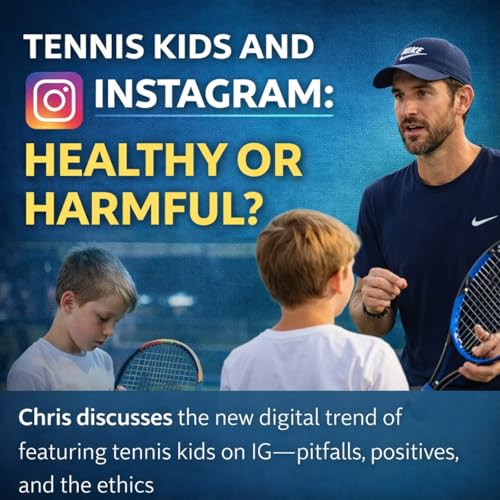
  • What Makes a Bad Tennis Lesson? (High Performance Truth)
    Feb 24 2026

    🎾 EP 116 – Prodigy Maker Tennis Show


    “Bad Tennis Lesson” – What Makes a Lesson Bad?

    Classic archive replay featuring Chris’ high-performance perspective


    In this classic replay episode, Chris breaks down a topic that doesn’t get talked about enough:


    👉 What actually makes a tennis lesson bad?


    From a high-performance coaching lens, it’s not about personality, energy, or even how “fun” the session is. It’s about whether the lesson truly moves the player forward.


    0:00 Intro + show setup

    0:38 Pandemic schedule + summer camp update

    3:37 Topic begins: What makes a bad tennis lesson?

    4:21 U10 / Red-Orange-Green: where bad lessons happen

    5:06 Biggest red flag: too many “PE games,” not enough racket time

    6:23 What a good kids lesson looks like: racket in hand, lots of swings

    7:43 Another red flag: kids not swinging hard / no athletic intent

    9:38 Bad lesson sign: no movement, no footwork, no sweat

    12:50 Kids lessons should be cardio + training the body

    13:29 Bad lesson sign: holding kids back with soft balls / small courts

    16:29 “Typical club lesson” problems (adult + junior)

    18:11 The ball cart trap + wasted pickup time

    20:02 Bad lesson sign: coach talks too much

    21:56 Bad lesson sign: coach on the phone during lesson

    23:12 Live Q&A comment (yellow ball injury myth)

    25:17 Bad lesson sign: outdated technique (1970s strokes)

    26:48 All drills or all live ball = usually not ideal

    29:21 Coach extremes: only tactics or only technique

    30:11 Best coaching = balance + range

    🎾 The Prodigy Maker Tennis Show (PMTS) explores the intersection of junior tennis development, cutting-edge sport science, fitness, health, and human performance. Hosted by world-renowned coach Chris Lewit — author of The Secrets of Spanish Tennis and Winning Pretty, and developer of numerous No. 1 juniors in the U.S. — PMTS brings together coaching wisdom, research, and technology to shape the future of tennis and human performance.

    👉 Subscribe and listen on

    https://podcasts.apple.com/us/podcast/the-prodigy-maker-tennis-show/id1456148452

    https://open.spotify.com/show/3Wu0PXf9IXneu0ogrzujZN

    https://www.youtube.com/playlist?list=PLR2QscfBfEs9dtttR6XNhduNlWYmZIfy-

    🌐 https://shows.acast.com/the-prodigy-maker-tennis-show/about

    📖 Books: The Secrets of Spanish Tennis | Winning Pretty

    Hosted on Acast. See acast.com/privacy for more information.

    Show more Show less
    31 mins
  • How to Handle Moonballers
    Feb 18 2026

    We apologize for the microphone/sound issues!

    In this episode of The Prodigy Maker Show Replay from the archive, Chris breaks down the hot-topic debate around moonballers and moonballing in junior tennis — including the recent controversy at the Little Mo Regionals and Nationals. Chris shares what he thinks is fair, what’s not ideal for development, and how parents/coaches can respond without losing their minds.

    You’ll learn:

    • Is moonballing dirty tennis or honorable?
    • Should tournaments discourage/stop moonballing?
    • The good and bad about moonballing as a junior strategy
    • The difference between true moonballing vs. attacking with a heavy, high topspin ball
    • Do the pros ever moonball?
    • The connection between moonballing, pushing, and drop shots
    • The best way to beat a determined moonballer (and what Chris teaches his players)
    • The best technique to use if you want to “moonball” the right way

    Chris also shares real match observations from Little Mo, why high balls are so disruptive for young kids, and the #1 solution he teaches: the swinging topspin volley.

    Vamos! 🇪🇸🎾

    00:00 Episode intro + location (Manchester, Vermont)

    00:25 Why this show: moonballing frustration + Little Mo controversy

    01:38 Is moonballing a legit strategy in 9s/10s/12s?

    03:11 Does moonballing work long-term? Do pros do it?

    03:42 “Moonball” vs heavy topspin high ball (what Chris teaches)

    04:49 The extreme “cloud ball” example from Little Mo Nationals

    06:13 Why super-high balls are so disruptive (tracking + timing)

    07:22 Is it “dirty”? Comparing moonballing to drop shots/underhand serves

    08:03 Why moonballing works in young juniors (size, strength, overheads)

    09:48 The real solution: teach the swinging topspin volley

    10:39 Take it on the rise vs take it out of the air (what’s more reliable)

    11:21 What if a kid moonballs every single point? (reality check)

    12:03 Respect the tactics, but don’t build bad long-term habits

    13:19 Use high balls selectively + with racket speed and topspin

    14:10 Fixing technique: accelerate, use spin, footwork, positioning

    15:02 “There’s no height limit” — why it’s legal tennis

    16:05 High/slow/short/low: all are valid ways to attack

    17:29 “A slow ball can be an attack” (big tactical lesson)

    18:33 “Disturb your opponent” (Luis Bruguera concept)

    19:42 Develop technique so kids don’t rely on ugly moonballs

    21:22 Moonballing in Little Mo: thoughts + invite comments

    22:24 Put yourself in the kid’s shoes (why they do it)

    23:42 Moonballing vs pushing (and why it wins)

    25:12 Moonballing, pushing, drop shots = psychological warfare

    27:22 Tactical maturity vs overusing the strategy

    29:18 Coaching it right: tools + timing + technique standards

    31:17 Praise creativity, then guide long-term development

    33:23 “Who wants to watch that?” (boring but legal)

    34:19 Final take: don’t villainize — teach better habits

    35:29 Little Mo circuit overview + why Chris recommends it

    36:46 Whooshing vs pushing (racket speed mindset)

    38:06 Training announcements: Florida (Oct 12 week) + Vermont training day

    40:25 Train with Chris in Manchester, VT + closing

    🎾 The Prodigy Maker Tennis Show (PMTS) explores the intersection of junior tennis development, cutting-edge sport science, fitness, health, and human performance. Hosted by world-renowned coach Chris Lewit — author of The Secrets of Spanish Tennis and Winning Pretty, and developer of numerous No. 1 juniors in the U.S. — PMTS brings together coaching wisdom, research, and technology to shape the future of tennis and human performance.

    👉 Subscribe and listen on

    https://podcasts.apple.com/us/podcast/the-prodigy-maker-tennis-show/id1456148452

    https://open.spotify.com/show/3Wu0PXf9IXneu0ogrzujZN

    https://www.youtube.com/playlist?list=PLR2QscfBfEs9dtttR6XNhduNlWYmZIfy-

    🌐 https://shows.acast.com/the-prodigy-maker-tennis-show/about

    📖 Books: The Secrets of Spanish Tennis | Winning Pretty

    Hosted on Acast. See acast.com/privacy for more information.

    Show more Show less
    41 mins
  • Should You Copy Alcaraz’s Strokes?
    Feb 11 2026

    Carlos Alcaraz’s Technique Explained 🎾 | Sunday Evening Q&A with Chris Lewit LIVE


    PMTS 114


    In this session, we talk about Carlos Alcaraz’s technique and, more importantly, what players of all levels can learn from it. This isn’t about copying swings — it’s about understanding the principles behind elite movement, spacing, balance, and shot selection.


    Topics discussed include:

    • What makes Alcaraz’s technique so effective

    • How movement supports every shot

    • Why spacing and balance matter more than mechanics alone

    • What juniors and adult players should actually focus on

    • How Spanish player development shapes modern technique


    These Sunday conversations are designed to be interactive, thoughtful, and practical, giving players, parents, and coaches real insight into high-level tennis development.


    Thanks for being part of the podcast community.


    Drop your questions in the comments — we read and respond.


    0:00 Welcome + Sunday Evening Community Talk

    0:47 Topic: Alcaraz Technique Through the Spanish Method Lens

    1:54 Backhand Changes: Ultra-Compact “Hook Loop” Two-Hander

    2:32 Forehand Grip: Conservative vs Modern Pro Grips

    3:08 Visiting Ferrero Academy: Watching Alcaraz Train Up Close

    4:39 Academy Origins + Antonio Cascales’ Role

    6:10 Coaching Philosophy: Freedom, Variety, All-Court Identity

    7:26 Serve Evolution: The “Cobra” Serve Debate

    9:45 Footwork + Spanish Movement Training

    10:35 Two #1 Players From a Small Academy (Why It Matters)

    12:58 Ferrero–Alcaraz Split: Context + Possible Reasons

    15:01 Q&A: Progress Without Ferrero + Coaching Impact Over a Season

    17:16 Backhand Takeaways: Wide Ball + Open/Semi-Open Stance

    20:01 Compact Backhand Mechanics + Straight-Arm Extension

    22:32 Forehand Takeback: Copy or Not?

    25:36 Forehand Takeaways: Stances + Lateral Movement

    26:10 The Lasso/Helicopter Forehand Trend (Why It’s Spreading)

    29:02 Serve Question: “Palm Up” and the Waiter’s Tray Myth

    33:01 Lasso Follow-Through: Future of the Forehand?

    37:27 Forehand Finish: Palm Down vs Palm Out (Pronation Debate)

    42:03 Q&A: High Elbow Takeback—Should the Elbow Drop?

    48:44 Serve: Is Alcaraz Copying Djokovic?

    49:03 Serve Breakdown: Why He Changed + What Matters Most

    53:02 Coaching Takeaway: Old Serve Easier to Learn

    55:20 Placebo Effect vs Real Biomechanical Advantage

    55:53 Serve Takeaways: Posture, Leg Drive, Simple Fundamentals

    57:02 Wrap-Up + Where to Leave Questions

    🎾 The Prodigy Maker Tennis Show (PMTS) explores the intersection of junior tennis development, cutting-edge sport science, fitness, health, and human performance. Hosted by world-renowned coach Chris Lewit — author of The Secrets of Spanish Tennis and Winning Pretty, and developer of numerous No. 1 juniors in the U.S. — PMTS brings together coaching wisdom, research, and technology to shape the future of tennis and human performance.

    👉 Subscribe and listen on

    https://podcasts.apple.com/us/podcast/the-prodigy-maker-tennis-show/id1456148452

    https://open.spotify.com/show/3Wu0PXf9IXneu0ogrzujZN

    https://www.youtube.com/playlist?list=PLR2QscfBfEs9dtttR6XNhduNlWYmZIfy-

    🌐 https://shows.acast.com/the-prodigy-maker-tennis-show/about

    📖 Books: The Secrets of Spanish Tennis | Winning Pretty

    Hosted on Acast. See acast.com/privacy for more information.

    Show more Show less
    58 mins
  • 🔥 Alcaraz’s Big Win Explained | The Spanish Tennis Method Revealed 🇪🇸🎾
    Feb 4 2026

    🔥 Alcaraz’s Big Win Explained | The Spanish Tennis Method Revealed 🇪🇸🎾


    Prodigy Maker Tennis Show EP 113


    Carlos Alcaraz delivers another statement victory — but how does he keep doing it?


    In this video, a tennis expert breaks down Alcaraz’s big win and goes deep into the Spanish tennis method that has produced champions for decades. From clay-court foundations to modern power tennis, we explain the real secrets behind Spain’s continued success at the very top of the game.


    💡 In this video you’ll learn:

    • What makes the Spanish tennis system different from everyone else

    • How Alcaraz blends traditional clay-court skills with modern aggression

    • The physical, tactical, and mental pillars of Spanish player development

    • Why Spanish players thrive under pressure and in long matches

    • How Alcaraz compares to past legends — and where he’s already ahead

    • Which country is the best in the world in tennis right now? We debate it

    • Viewer questions answered — training, mentality, and future predictions


    Whether you’re a player, coach, or hardcore fan, this breakdown shows why Alcaraz isn’t a fluke — and why Spain keeps producing champions while other nations struggle to keep up.


    👇 Drop your questions in the comments:

    Is Spain still the gold standard in tennis?

    Who’s the real rival nation right now?

    And how long can Alcaraz stay on top?


    👍 Like • 💬 Comment • 🔔 Subscribe for expert tennis analysis


    00:00 – Spanish tennis & show intro (Spanish method, book, Q&A format)

    00:26 – Congrats: Carlos Alcaraz and Spanish tennis excitement

    01:20 – Podcast + “Sunday night” community coaching format (Prodigy Maker Tennis Show)

    02:13 – “Changing of the guard”: Spain shifting from homegrown pipeline to global training destination

    03:01 – Is Spanish tennis declining after Rafael Nadal? (yes/no + context)

    03:33 – Country depth: USA leading in Top 100 numbers; Spain/Italy comparisons

    05:17 – Italy adopting Spanish methodology; Spanish influence through coaches

    06:00 – Spain as a hub: Barcelona/east coast + Spanish coaching “diaspora” worldwide

    07:34 – Examples of Spanish-trained non-Spanish pros (training blocks, Spanish coaches)

    10:27 – Core pillar #1: Movement/footwork, positioning, eyes + feet

    12:00 – Core pillar #2: Racket acceleration drills (power + spin, topspin forehand culture)

    13:30 – Core pillar #3: Consistency, patience, shot tolerance, grinding ability

    15:03 – The Spanish “suffering” ethos: endurance, discipline, fighting spirit

    18:05 – Fitness & physical development: court time vs gym/track/injury prevention

    21:05 – Ecological dynamics / guided discovery: shaping players via constraints & environment

    23:45 – Why Spain produced champions: system vs “lab-built” technique; tennis IQ emergence

    31:04 – Rafa’s impact on topspin; Spanish style evolution & exceptions

    32:18 – Wrap-up: Spanish tennis today—fewer natives in Top 100, but training the world

    34:10 – Young Spanish prospects mentioned (next generation to watch)

    36:15 – Q: Why US men lag in Slams? (numbers strong, champion gap, “suffering” factor)

    37:46 – Closing / goodbye

    🎾 The Prodigy Maker Tennis Show (PMTS) explores the intersection of junior tennis development, cutting-edge sport science, fitness, health, and human performance. Hosted by world-renowned coach Chris Lewit — author of The Secrets of Spanish Tennis and Winning Pretty, and developer of numerous No. 1 juniors in the U.S. — PMTS brings together coaching wisdom, research, and technology to shape the future of tennis and human performance.

    👉 Subscribe and listen on

    https://podcasts.apple.com/us/podcast/the-prodigy-maker-tennis-show/id1456148452

    https://open.spotify.com/show/3Wu0PXf9IXneu0ogrzujZN

    https://www.youtube.com/playlist?list=PLR2QscfBfEs9dtttR6XNhduNlWYmZIfy-

    🌐 https://shows.acast.com/the-prodigy-maker-tennis-show/about

    📖 Books: The Secrets of Spanish Tennis | Winning Pretty

    Hosted on Acast. See acast.com/privacy for more information.

    Show more Show less
    39 mins
  • Let’s Talk Junior Talent
    Jan 26 2026

    What does real junior tennis talent actually look like?


    Prodigy Maker Tennis Show EP 112


    In this episode, Chris breaks down junior tennis talent identification—covering how to spot potential early, what tests actually matter, and common mistakes coaches and parents make when evaluating young players.


    This is one of our most listened-to podcast episodes of the year, brought back from the archive by popular demand.


    Whether you’re developing juniors or trying to understand long-term athlete potential, this episode delivers real insight.


    Enjoy the show.

    0:00 – Introduction: New Topic, Talent & Junior Development

    2:21 – Why Talent Identification Is So Difficult

    3:27 – First Talent Marker: Eyes, Hands & Ball Contact

    6:45 – Movement, Speed & Footwork as Talent Indicators

    9:49 – Stamina, Cardio & Running Ability

    14:03 – Speed Tests & “Fastest Kid in the Class”

    18:22 – Physical Gifts vs Intangibles

    19:12 – Target Hitting & Accuracy Tests

    22:26 – Drop Shot Test: Reaction & Competitive Drive

    24:05 – Early Experience with Prodigies

    27:15 – Talent as a “Video Game Character”

    32:11 – Competitiveness & the Killer Instinct

    37:00 – Wolves vs Sheep: Who Thrives in Tennis

    40:38 – The Most Overlooked Talent: Durability & Injury Resistance

    45:57 – Mental Gifts: Coachability, Learning & Focus

    49:05 – Talent, Time & UTR as a Measurement Tool

    52:12 – Hard Work vs Talent: Limits of the Equation

    55:11 – Personal Playing Career & Max Potential

    58:11 – John Wooden’s Pyramid of Success

    1:00:03 – What Makes a Truly Talented Coach

    1:06:51 – Time Constraints & Player Development Reality

    1:09:45 – When Hard Work Can (and Can’t) Beat Talent

    1:12:31 – Tony Nadal’s View on Work Ethic

    1:15:21 – Can Players Run Out of Time?

    1:18:39 – Evaluating Coaches by Development Speed

    1:22:07 – Emilio Sánchez: Talent vs Federation Belief

    1:25:07 – Practical Advice for Coaches & Parents

    1:30:05 – Final Thoughts: Time, Talent & Coaching Efficiency

    1:32:08 – Closing, Cheating Tease & Show Wrap-Up

    🎾 The Prodigy Maker Tennis Show (PMTS) explores the intersection of junior tennis development, cutting-edge sport science, fitness, health, and human performance. Hosted by world-renowned coach Chris Lewit — author of The Secrets of Spanish Tennis and Winning Pretty, and developer of numerous No. 1 juniors in the U.S. — PMTS brings together coaching wisdom, research, and technology to shape the future of tennis and human performance.

    👉 Subscribe and listen on

    https://podcasts.apple.com/us/podcast/the-prodigy-maker-tennis-show/id1456148452

    https://open.spotify.com/show/3Wu0PXf9IXneu0ogrzujZN

    https://www.youtube.com/playlist?list=PLR2QscfBfEs9dtttR6XNhduNlWYmZIfy-

    🌐 https://shows.acast.com/the-prodigy-maker-tennis-show/about

    📖 Books: The Secrets of Spanish Tennis | Winning Pretty

    Hosted on Acast. See acast.com/privacy for more information.

    Show more Show less
    1 hr and 35 mins